Web3 rails enable women creators to reclaim ownership
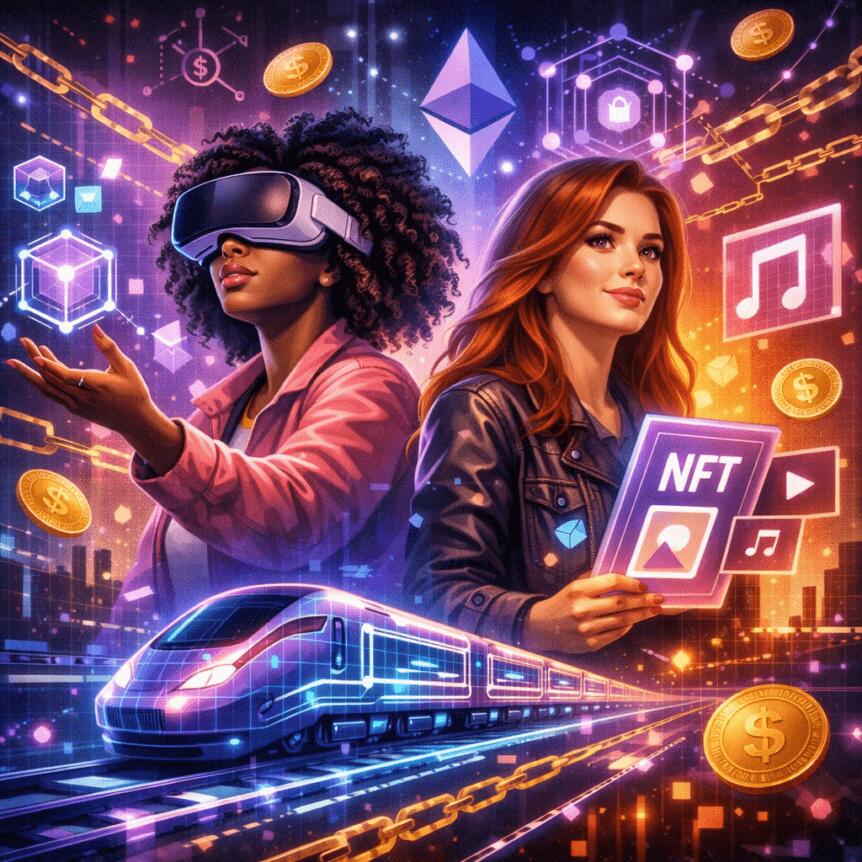
A pair of industry voices argue that Web3 payment rails could redefine financial inclusion for women creators, offering a path around the gatekeeping that has long constrained access to banking and capital. In their view, crypto-based revenue infrastructure can turn creativity into a globally scalable, permissionless endeavor, especially for those in emerging markets who rely on online work as their primary income.
The authors contend that traditional finance underestimates or misclassifies the earnings of women creators—often treating them as non-standard income with limited collateral. They point to broader systemic barriers, including unequal venture-capital funding and credit scoring models, that continue to suppress women-led ventures. Axios data cited in the discussion notes that only a small share of 2024 VC funding went to female-founded companies, underscoring the kind of bias that persists in legacy finance.
Key takeaways
- Legacy finance has historically undervalued women creators, with Axios reporting only 2.3% of 2024 venture capital funding going to female-founded companies.
- Platform revenue models can act as gatekeepers, with claims that up to half of earnings can be siphoned off before reaching a creator’s wallet.
- Smart contracts enable real-time, automatic revenue splits at the point of sale, potentially transforming how creators monetize collaborations and long-term value.
- Stablecoins and cross-border crypto rails offer a borderless, permissionless payments backbone that can empower creators in volatile markets without bank gatekeeping.
From gatekeeping to programmable revenue
The piece frames a financing paradox: while the internet makes it possible for a Lagos-based creator to reach millions, cross-border payments still carry prohibitive fees, delays, and capital controls that erode a creator’s ability to sustain a business. The authors argue that the intersection of the creator economy with crypto payment infrastructure provides a genuine path to financial autonomy—one that doesn’t require prior permission from traditional gatekeepers.
In a world where code can handle the work traditionally performed by banks, the value created by a creator can flow more directly to their own wallet. The article points to smart contracts as a practical mechanism for distributing revenue instantly when a sale clears, rather than tying earnings to a later, platform-controlled payout schedule. In this view, programmable revenue unlocks a form of “participatory capitalism” where the success of the ecosystem benefits the people who built it, not just the platforms that host it.
For context, the piece notes that platforms historically charged significant take rates and fees before creators ever saw funds. While the exact figures vary across marketplaces, the broader argument is that platform tolls have too often eaten into earnings, leaving creators dependent on the terms set by a handful of intermediaries.
On-chain royalties and the end of Net-90
The authors argue that smart contracts can reimagine how royalties work in digital art, music, and other creative outputs. Rather than relying on post-sale royalties negotiated with marketplaces, on-chain royalties can be embedded into the sale itself. In practice, that could mean automatic, hardcoded payments to multiple contributors the moment a transaction clears, ensuring creators retain a larger share of the long-term value of their work.
In parallel, the piece points to changes in royalty policies at major marketplaces. OpenSea and others have moved toward optional royalty enforcement, a shift some view as a step toward a more flexible, user-driven marketplace. The broader implication is a move toward a system where creators are less hostage to a single platform’s policy and more able to capture value across networks and marketplaces over time. The discussion frames this as a shift toward “participatory capitalism”—the growth of the ecosystem should lift the people who built it.
Open questions remain about how broadly such on-chain royalties will be adopted and how they will interact with existing metadata standards, licensing frameworks, and consumer-facing experiences. Still, the logic is clear: when revenue splits occur at the moment of sale rather than after the fact, creators can benefit from the long-term appreciation of their work, even as it changes hands across markets and platforms.
Infrastructure as the foundation of family
Beyond royalties, the authors emphasize the importance of a robust payments backbone—what they describe as infrastructure that goes beyond community to become an engine. For millions of women entering the creator economy, crypto rails can offer a global passport that sidesteps currency volatility and biased banking systems.
Stablecoins are highlighted as a practical bridge for creators who must hold value in volatile regions. By enabling creators to hold the purchasing power of their work without applying for a bank account or awaiting payment rails, stablecoins reduce friction and risk at both ends of the transaction. This, in turn, can accelerate monetization and enable more ambitious cross-border projects.
The piece also notes that reliable payment rails are a crucial factor in turning audience-building into a sustainable business. When creators can monetize globally and promptly, they’re less constrained by local banking restrictions or slow settlement times, a dynamic that disproportionately affects women in emerging markets seeking to scale. The authors point to real-world examples where payments infrastructure has mattered for creators’ ability to participate in global value chains.
Moving toward ownership
Ownership, the authors argue, is not a gift but a status earned through access to the system itself. The pivot to Web3 payment infrastructure is portrayed as a move toward giving creators a deed to their own revenue, reducing dependence on legacy systems that historically have controlled access to capital and markets. The call is for creators—not gatekeepers—to shape the payment rails on which the ecosystem runs, a shift the authors believe is already underway in practice as more projects explore on-chain payments, royalties, and decentralized marketplaces.
As the authors put it, “The infrastructure is ready. The only thing left is for the creators to lead.” The broader implication is clear: if the creator economy is to become truly inclusive and globally scalable, it will rely on decentralized payment paradigms that empower individuals to monetize their work without requiring permission from traditional financial institutions.
Opinion by Ashna Vaghela, chief customer officer at Mercuryo, and Vi Powils, CEO of World of Women, underscores a broader narrative: a future where financial inclusion is shaped by code, not by compliance bottlenecks, could unlock unprecedented opportunities for women creators worldwide.
This article reflects the authors’ viewpoints and has undergone editorial review to ensure clarity and relevance for readers navigating the evolving intersection of crypto, payments, and creative economies. Readers are encouraged to conduct their own research before taking action related to the topics discussed.
This article was originally published as Web3 rails enable women creators to reclaim ownership on Crypto Breaking News – your trusted source for crypto news, Bitcoin news, and blockchain updates.
You May Also Like

SBF Praises Trump’s Crypto and AI Vision From Prison

Petron turns to Russian oil, secures 2.48 million barrels amid disruptions