Researchers at MIT have developed a new approach that uses ai defect detection to identify tiny imperfections in materials without cutting or damaging the samplesResearchers at MIT have developed a new approach that uses ai defect detection to identify tiny imperfections in materials without cutting or damaging the samples

Can ai defect detection map six atomic defects in semiconductors noninvasively?
For feedback or concerns regarding this content, please contact us at crypto.news@mexc.com
ai defect detection

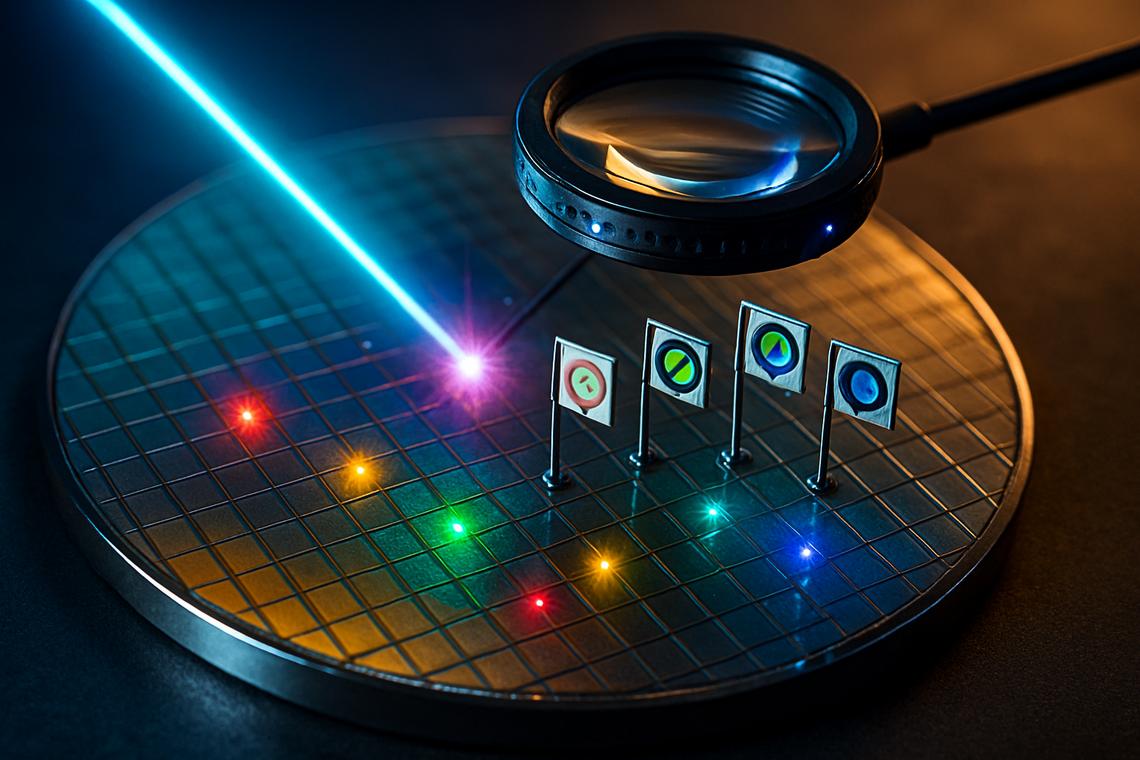
Researchers at MIT have developed a new approach that uses ai defect detection to identify tiny imperfections in materials without cutting or damaging the samples.

AI model targets atomic-scale defects

In materials science, microscopic flaws can be an asset rather than a liability, since deliberately engineered defects often enhance mechanical strength, heat transfer, or energy-conversion efficiency. However, accurately mapping these defects in finished products has long challenged engineers.

To address this problem, a team at MIT has built an AI model that classifies and quantifies atomic-scale defects using data from a noninvasive neutron-scattering technique. The system, trained on 2,000 different semiconductor materials, can simultaneously detect up to six kinds of point defects, something conventional approaches cannot achieve.

“Existing techniques can’t accurately characterize defects in a universal and quantitative way without destroying the material,” explains Mouyang Cheng, a PhD candidate in the Department of Materials Science and Engineering. Moreover, he notes that without machine learning, resolving six distinct defect types in one analysis “is unthinkable.”

The researchers argue that this capability marks a step toward much finer control of defects in products such as semiconductors, microelectronics, solar cells, and advanced battery materials. That said, they stress that complementary methods are still needed to see the “full elephant” of complex defect landscapes.

Limitations of conventional defect analysis

Manufacturers have become adept at deliberately introducing defects through techniques like doping, yet quantifying defect concentrations remains largely an exercise in estimation. “Engineers have many ways to introduce defects, like through doping, but they still struggle with basic questions like what kind of defect they’ve created and in what concentration,” says postdoc Chu-Liang Fu.

Unwanted defects, such as oxidation or impurities introduced during synthesis, further complicate the picture. However, each established method for probing defects has strict limits. X-ray diffraction and positron annihilation can only characterize specific defect types, while Raman spectroscopy can reveal defect categories but not their concentration directly.

Another widely used tool, the transmission electron microscope, requires cutting ultrathin slices of a sample for imaging. That makes it invasive and unsuitable for high-throughput quality control on finished parts. Consequently, many materials harbor multiple, poorly quantified defect populations that may degrade performance in ways manufacturers do not fully understand.

Training the model with neutron data

In earlier work, lead researcher Mingda Li and collaborators showed that machine learning applied to spectroscopy data could classify crystalline materials. For this study, the team expanded that strategy to focus specifically on defects and their concentrations.

The group constructed a computational database of 2,000 semiconductor materials, then generated sample pairs for each: one pristine, one doped to introduce specific defects. Using the same neutron-scattering technique for every pair, they measured the vibrational frequencies of atoms within the solid materials and compiled a rich dataset.

“That built a foundational model that covers 56 elements in the periodic table,” Cheng says. The network uses a multihead attention mechanism, the same architecture underlying tools like ChatGPT. Moreover, it learns to extract subtle differences in vibrational spectra between defect-free and doped samples, then predicts which dopants are present and at what concentrations.

After fine-tuning the system and validating it with experimental measurements, the researchers showed the model could accurately estimate defect concentrations in an alloy widely used in electronics, as well as in a distinct superconductor material. This demonstrated that the approach is not confined to a single compound.

Quantifying multiple point defects at once

To probe the limits of their framework, the scientists doped certain materials multiple times to introduce several kinds of point defects simultaneously. They then asked the model to recover both the types and relative amounts of these defects from neutron-vibration data alone.

The AI proved capable of predicting up to six different point defects within a single material, and it could resolve defect concentrations as low as 0.2 percent. However, this level of performance surprised even the team. “It’s very challenging to decode the mixed signals from two different types of defects — let alone six,” Cheng notes.

According to the researchers, this middle-ground experiment highlights how ai defect detection can distinguish overlapping spectral patterns that would appear nearly identical to human analysts. Moreover, the results point to a more systematic route toward what they call “defect-aware” materials engineering.

From lab method to industrial tool

In current semiconductor and microelectronic manufacturing, companies typically test only a small subset of finished products using invasive characterization. This workflow slows feedback and makes it difficult to spot every problematic defect, especially when multiple types coexist in complex ways.

“Right now, people largely estimate the quantities of defects in their materials,” says undergraduate researcher Bowen Yu. Checking those estimates requires multiple specialized techniques, each probing just a small region or single grain of the sample. As a result, Yu adds, manufacturers can easily misinterpret which defects are actually present and in what amounts.

The MIT team’s approach, based on neutrons and vibrational spectra, offers a more comprehensive picture, but it is not yet practical for most factories. “This method is very powerful, but its availability is limited,” notes master’s student Eunbi Rha. Moreover, she explains that while vibrational spectra are conceptually simple, experimental setups for neutron measurements can be complex and large-scale.

Because of that, Li and colleagues are exploring more accessible pathways. Companies already use Raman-based tools extensively for semiconductor defect detection, and several industrial partners have asked when a similar AI-driven model could work with Raman data instead of neutrons.

Toward broader, noninvasive defect mapping

Responding to this demand, the researchers plan to develop a Raman spectroscopy model that mirrors their neutron-based system but relies on the scattering of light rather than neutrons. In parallel, they aim to extend their framework beyond point defects to capture larger structural features such as grains and dislocations that also influence material performance.

For Yongqiang Cheng and Douglas L Abernathy PhD ’93 of Oak Ridge National Laboratory, who co-authored the paper, the work underscores how combining advanced spectroscopic tools with artificial intelligence can unlock new views of matter. However, they emphasize that experimental validation will remain essential as models expand.

Ultimately, the team sees their study as a proof of concept for deploying ai-powered defect detection across a range of measurement platforms. To the human eye, Li says, defect signals in vibrational spectra often look nearly identical. Yet AI pattern recognition can tease apart subtle variations and infer the true defect landscape with quantitative precision.

“Defects are this double-edged sword,” Li observes. “There are many good defects, but if there are too many, performance can degrade. This opens up a new paradigm in defect science.” The research, published in the journal Matter, received support from the Department of Energy and the National Science Foundation and builds on work dating back to 2021.

In summary, the MIT team has shown that AI, combined with neutron-scattering vibrational data, can map multiple atomic-scale defects at once, offering a powerful noninvasive route to more precisely engineered materials.

Market Opportunity
SIX Logo
SIX Price(SIX)
$0.00844
$0.00844$0.00844
+0.23%
USD
SIX (SIX) Live Price Chart
Disclaimer: The articles reposted on this site are sourced from public platforms and are provided for informational purposes only. They do not necessarily reflect the views of MEXC. All rights remain with the original authors. If you believe any content infringes on third-party rights, please contact crypto.news@mexc.com for removal. MEXC makes no guarantees regarding the accuracy, completeness, or timeliness of the content and is not responsible for any actions taken based on the information provided. The content does not constitute financial, legal, or other professional advice, nor should it be considered a recommendation or endorsement by MEXC.

You May Also Like

Lovable AI’s Astonishing Rise: Anton Osika Reveals Startup Secrets at Bitcoin World Disrupt 2025

Lovable AI’s Astonishing Rise: Anton Osika Reveals Startup Secrets at Bitcoin World Disrupt 2025

BitcoinWorld Lovable AI’s Astonishing Rise: Anton Osika Reveals Startup Secrets at Bitcoin World Disrupt 2025 Are you ready to witness a phenomenon? The world of technology is abuzz with the incredible rise of Lovable AI, a startup that’s not just breaking records but rewriting the rulebook for rapid growth. Imagine creating powerful apps and websites just by speaking to an AI – that’s the magic Lovable brings to the masses. This groundbreaking approach has propelled the company into the spotlight, making it one of the fastest-growing software firms in history. And now, the visionary behind this sensation, co-founder and CEO Anton Osika, is set to share his invaluable insights on the Disrupt Stage at the highly anticipated Bitcoin World Disrupt 2025. If you’re a founder, investor, or tech enthusiast eager to understand the future of innovation, this is an event you cannot afford to miss. Lovable AI’s Meteoric Ascent: Redefining Software Creation In an era where digital transformation is paramount, Lovable AI has emerged as a true game-changer. Its core premise is deceptively simple yet profoundly impactful: democratize software creation. By enabling anyone to build applications and websites through intuitive AI conversations, Lovable is empowering the vast majority of individuals who lack coding skills to transform their ideas into tangible digital products. This mission has resonated globally, leading to unprecedented momentum. The numbers speak for themselves: Achieved an astonishing $100 million Annual Recurring Revenue (ARR) in less than a year. Successfully raised a $200 million Series A funding round, valuing the company at $1.8 billion, led by industry giant Accel. Is currently fielding unsolicited investor offers, pushing its valuation towards an incredible $4 billion. As industry reports suggest, investors are unequivocally “loving Lovable,” and it’s clear why. This isn’t just about impressive financial metrics; it’s about a company that has tapped into a fundamental need, offering a solution that is both innovative and accessible. The rapid scaling of Lovable AI provides a compelling case study for any entrepreneur aiming for similar exponential growth. The Visionary Behind the Hype: Anton Osika’s Journey to Innovation Every groundbreaking company has a driving force, and for Lovable, that force is co-founder and CEO Anton Osika. His journey is as fascinating as his company’s success. A physicist by training, Osika previously contributed to the cutting-edge research at CERN, the European Organization for Nuclear Research. This deep technical background, combined with his entrepreneurial spirit, has been instrumental in Lovable’s rapid ascent. Before Lovable, he honed his skills as a co-founder of Depict.ai and a Founding Engineer at Sana. Based in Stockholm, Osika has masterfully steered Lovable from a nascent idea to a global phenomenon in record time. His leadership embodies a unique blend of profound technical understanding and a keen, consumer-first vision. At Bitcoin World Disrupt 2025, attendees will have the rare opportunity to hear directly from Osika about what it truly takes to build a brand that not only scales at an incredible pace in a fiercely competitive market but also adeptly manages the intense cultural conversations that inevitably accompany such swift and significant success. His insights will be crucial for anyone looking to understand the dynamics of high-growth tech leadership. Unpacking Consumer Tech Innovation at Bitcoin World Disrupt 2025 The 20th anniversary of Bitcoin World is set to be marked by a truly special event: Bitcoin World Disrupt 2025. From October 27–29, Moscone West in San Francisco will transform into the epicenter of innovation, gathering over 10,000 founders, investors, and tech leaders. It’s the ideal platform to explore the future of consumer tech innovation, and Anton Osika’s presence on the Disrupt Stage is a highlight. His session will delve into how Lovable is not just participating in but actively shaping the next wave of consumer-facing technologies. Why is this session particularly relevant for those interested in the future of consumer experiences? Osika’s discussion will go beyond the superficial, offering a deep dive into the strategies that have allowed Lovable to carve out a unique category in a market long thought to be saturated. Attendees will gain a front-row seat to understanding how to identify unmet consumer needs, leverage advanced AI to meet those needs, and build a product that captivates users globally. The event itself promises a rich tapestry of ideas and networking opportunities: For Founders: Sharpen your pitch and connect with potential investors. For Investors: Discover the next breakout startup poised for massive growth. For Innovators: Claim your spot at the forefront of technological advancements. The insights shared regarding consumer tech innovation at this event will be invaluable for anyone looking to navigate the complexities and capitalize on the opportunities within this dynamic sector. Mastering Startup Growth Strategies: A Blueprint for the Future Lovable’s journey isn’t just another startup success story; it’s a meticulously crafted blueprint for effective startup growth strategies in the modern era. Anton Osika’s experience offers a rare glimpse into the practicalities of scaling a business at breakneck speed while maintaining product integrity and managing external pressures. For entrepreneurs and aspiring tech leaders, his talk will serve as a masterclass in several critical areas: Strategy Focus Key Takeaways from Lovable’s Journey Rapid Scaling How to build infrastructure and teams that support exponential user and revenue growth without compromising quality. Product-Market Fit Identifying a significant, underserved market (the 99% who can’t code) and developing a truly innovative solution (AI-powered app creation). Investor Relations Balancing intense investor interest and pressure with a steadfast focus on product development and long-term vision. Category Creation Carving out an entirely new niche by democratizing complex technologies, rather than competing in existing crowded markets. Understanding these startup growth strategies is essential for anyone aiming to build a resilient and impactful consumer experience. Osika’s session will provide actionable insights into how to replicate elements of Lovable’s success, offering guidance on navigating challenges from product development to market penetration and investor management. Conclusion: Seize the Future of Tech The story of Lovable, under the astute leadership of Anton Osika, is a testament to the power of innovative ideas meeting flawless execution. Their remarkable journey from concept to a multi-billion-dollar valuation in record time is a compelling narrative for anyone interested in the future of technology. By democratizing software creation through Lovable AI, they are not just building a company; they are fostering a new generation of creators. His appearance at Bitcoin World Disrupt 2025 is an unmissable opportunity to gain direct insights from a leader who is truly shaping the landscape of consumer tech innovation. Don’t miss this chance to learn about cutting-edge startup growth strategies and secure your front-row seat to the future. Register now and save up to $668 before Regular Bird rates end on September 26. To learn more about the latest AI market trends, explore our article on key developments shaping AI features. This post Lovable AI’s Astonishing Rise: Anton Osika Reveals Startup Secrets at Bitcoin World Disrupt 2025 first appeared on BitcoinWorld.
Share
Coinstats2025/09/17 23:40
XRP Price Outlook For April 2026

XRP Price Outlook For April 2026

The post XRP Price Outlook For April 2026 appeared on BitcoinEthereumNews.com. XRP is entering April 2026, trapped in a descending channel that has defined its
Share
BitcoinEthereumNews2026/03/31 05:19
RWA Sector Gains Attention as Blockchain Meets Real Estate

RWA Sector Gains Attention as Blockchain Meets Real Estate

Market analysts are highlighting the potential of blockchain to reshape property markets by creating new opportunities for digital ownership and […] The post RWA Sector Gains Attention as Blockchain Meets Real Estate appeared first on Coindoo.
Share
Coindoo2025/09/18 00:30