

USD Dollar Softens: Treasury Yields Plunge Sparks Critical Currency Market Analysis
BitcoinWorld
USD Dollar Softens: Treasury Yields Plunge Sparks Critical Currency Market Analysis
The U.S. dollar shows notable weakness in global markets as Treasury yields experience significant downward pressure, creating ripple effects across currency valuations and international trade dynamics. This development follows recent economic data releases and Federal Reserve communications that have reshaped market expectations for monetary policy through 2025. Market participants now closely monitor these interconnected movements between bond markets and currency valuations.
USD Dollar Softens Amid Yield Decline
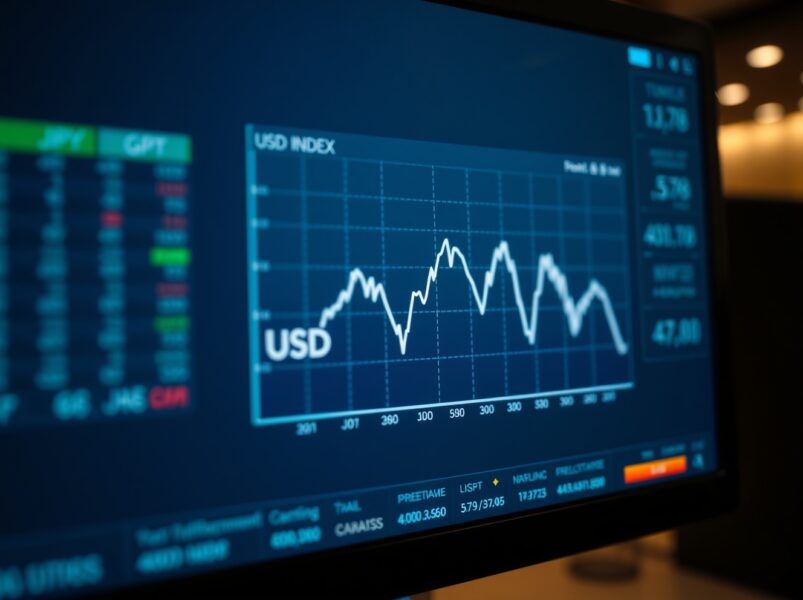
Treasury yields continue their downward trajectory across multiple maturities. The benchmark 10-year Treasury note yield dropped to 3.85% this week, representing a substantial decline from recent peaks. Consequently, the U.S. dollar index (DXY) fell to 103.5 against a basket of major currencies. This correlation between yield movements and currency strength demonstrates the fundamental relationship between fixed income markets and foreign exchange valuations.
Several factors contribute to this synchronized movement. First, inflation expectations have moderated significantly. Second, economic growth projections show signs of deceleration. Third, international capital flows have shifted toward higher-yielding alternatives. Market analysts observe these developments with particular attention to Federal Reserve policy signals.
Federal Reserve Policy Context and Implications
The Federal Reserve maintains its data-dependent approach to monetary policy decisions. Recent statements from Federal Open Market Committee members indicate increased caution regarding further interest rate adjustments. This cautious stance emerges despite persistent concerns about service sector inflation and labor market tightness. The central bank’s balancing act between inflation control and economic stability continues to influence market expectations.
Historical Yield and Currency Correlations
Historical analysis reveals consistent patterns between Treasury yields and dollar strength. During the 2015-2018 tightening cycle, rising yields consistently supported dollar appreciation. Conversely, the 2020 pandemic response saw yields plummet alongside dollar weakness. Current market conditions resemble transitional periods where policy uncertainty creates volatility in both bond and currency markets. This historical context helps analysts interpret present movements.
The following table illustrates recent yield movements and corresponding dollar index changes:
| Time Period | 10-Year Yield Change | DXY Movement | Primary Driver |
|---|---|---|---|
| Previous Month | -25 basis points | -1.8% | Inflation Data |
| Current Week | -12 basis points | -0.7% | Fed Communications |
| Quarter-to-Date | -42 basis points | -3.2% | Growth Revisions |
Global Currency Market Reactions
Major currency pairs show varied responses to dollar weakness. The euro-dollar pair (EUR/USD) climbed to 1.0950, approaching significant technical resistance levels. Meanwhile, the dollar-yen pair (USD/JPY) declined to 147.50 as yield differentials between U.S. and Japanese government bonds narrowed substantially. Emerging market currencies generally benefit from dollar softness, though specific impacts vary by country based on individual economic fundamentals.
Several key developments influence these currency movements:
- European Central Bank positioning remains cautiously hawkish
- Bank of Japan policy normalization expectations continue evolving
- Commodity currency strength emerges as dollar weakens
- Carry trade adjustments reshape capital flows globally
Economic Data and Market Expectations
Recent economic indicators provide crucial context for market movements. Consumer Price Index data shows continued moderation in headline inflation, though core measures remain elevated. Employment figures indicate gradual labor market cooling without significant deterioration. Manufacturing and services PMI readings suggest mixed economic momentum across sectors. These data points collectively inform market expectations for future monetary policy paths.
Inflation Dynamics and Real Yield Considerations
Real yields—adjusted for inflation expectations—present a more nuanced picture than nominal yields alone. Despite nominal yield declines, real yields remain positive across most maturities. This reality suggests monetary policy maintains restrictive characteristics despite recent adjustments. Market participants increasingly focus on real yield differentials between countries as drivers of currency valuations, rather than nominal rate comparisons alone.
The inflation-adjusted perspective reveals important insights. First, breakeven inflation rates have stabilized near Federal Reserve targets. Second, real yield curves maintain upward slopes despite recent flattening in nominal terms. Third, international real yield comparisons show varying patterns across developed economies. These factors collectively influence currency market dynamics beyond simple nominal rate differentials.
Market Structure and Technical Analysis
Technical indicators provide additional perspective on current market conditions. The dollar index faces immediate resistance at 104.20, with support established near 103.00. Treasury yield charts show potential support levels at 3.80% for the 10-year note. Trading volumes indicate increased participation in both bond and currency markets as volatility measures rise from recent lows. These technical factors interact with fundamental developments to shape price action.
Market positioning data reveals several noteworthy trends. First, speculative positioning in dollar futures shows reduced net long exposure. Second, Treasury futures positioning indicates increased duration exposure. Third, options market pricing reflects elevated uncertainty about near-term direction. These positioning metrics help explain recent price movements and potential future volatility.
International Perspective and Coordination
Global central bank coordination remains limited despite synchronized yield movements. The Federal Reserve, European Central Bank, and Bank of England maintain independent policy paths based on domestic economic conditions. However, currency market reactions create indirect coordination through exchange rate channels. This dynamic creates complex interactions between domestic monetary policies and international financial conditions.
Conclusion
The USD dollar softens as Treasury yields experience significant downward pressure, reflecting evolving market expectations about inflation, growth, and monetary policy. These interconnected movements between bond markets and currency valuations demonstrate the complex relationships within global financial systems. Market participants must consider multiple factors—including real yields, international differentials, and economic data—when analyzing currency market developments. The coming months will likely see continued volatility as markets digest new information and adjust expectations accordingly.
FAQs
Q1: What causes Treasury yields and the dollar to move together?
Treasury yields and the dollar often move together because higher yields attract foreign capital seeking better returns, increasing demand for dollars to purchase U.S. assets. Conversely, declining yields reduce this attraction, potentially weakening dollar demand.
Q2: How does Federal Reserve policy affect this relationship?
The Federal Reserve influences both yields through interest rate decisions and bond market operations, and the dollar through policy expectations. Hawkish policy typically supports both yields and the dollar, while dovish shifts can pressure both.
Q3: What are real yields and why do they matter for currencies?
Real yields are nominal yields adjusted for inflation expectations. They matter because investors consider purchasing power when allocating capital internationally. Higher real yields typically support currency strength by offering better inflation-adjusted returns.
Q4: How do other central banks affect the dollar’s value?
Other central banks affect the dollar through relative policy differentials. When other major banks maintain tighter policy than the Fed, their currencies may strengthen against the dollar. Policy divergence creates yield differentials that drive currency flows.
Q5: What economic indicators most impact Treasury yields and the dollar?
Inflation data (CPI, PCE), employment reports, GDP growth figures, and manufacturing surveys most significantly impact both markets. Federal Reserve communications and meeting minutes also directly influence expectations and market pricing.
This post USD Dollar Softens: Treasury Yields Plunge Sparks Critical Currency Market Analysis first appeared on BitcoinWorld.


You May Also Like
U.S. Dollar Plummets to One-Week Low as Hopeful Middle East Ceasefire Talks Intensify

Understanding the Difference Between Pi on Exchanges and Pi in Wallets



