The post Cash prizes and Dubai finals appeared on BitcoinEthereumNews.com. Disclosure: This article does not represent investment advice. The content and materials featured on this page are for educational purposes only. Web3 gaming evolves beyond hype as players seek lasting value after years of broken promises and unstable economies. Summary Mo Akram’s Dubai Challenge ignites MetaSpace, rewarding the first 100 players who find hidden Mystery Boxes. Web3 gamers flock to MetaSpace as Mo Akram’s global challenge promises trips to Dubai for top players. MetaSpace shakes the blockchain gaming world with Mo Akram’s bold Dubai Challenge and NFT-based rewards. Web3 gamers have seen it all, broken promises, unstable economies, and countless projects that faded before they even found their rhythm. What started as a revolution for player ownership quickly turned into a struggle for real, lasting value. Still, the gaming world hasn’t stopped evolving. With giants like Axie Infinity, Illuvium, and The Sandbox leading the charge, blockchain gaming now touches millions worldwide and continues to pull in new players every day. Yet, behind all the hype, one thing is clear — gamers are hungry for something real, something bigger. And that’s exactly what’s happening now. Mo Akram’s latest announcement has the entire web3 community on edge — a challenge that’s already being called one of the boldest moves the industry has seen this year. Mo Akram drops a challenge that shakes the web3 scene No one saw it coming — not even the early adopters. In a surprise announcement, Mo Akram revealed a global Dubai Challenge that’s quickly become the talk of the web3 community. The premise is simple but electrifying: the first 100 players to uncover two hidden Mystery Boxes inside MetaSpace will win a fully sponsored trip to Dubai. Over the past few years, NFT-based games have transformed how communities engage and earn. From Axie Infinity rewarding players over… The post Cash prizes and Dubai finals appeared on BitcoinEthereumNews.com. Disclosure: This article does not represent investment advice. The content and materials featured on this page are for educational purposes only. Web3 gaming evolves beyond hype as players seek lasting value after years of broken promises and unstable economies. Summary Mo Akram’s Dubai Challenge ignites MetaSpace, rewarding the first 100 players who find hidden Mystery Boxes. Web3 gamers flock to MetaSpace as Mo Akram’s global challenge promises trips to Dubai for top players. MetaSpace shakes the blockchain gaming world with Mo Akram’s bold Dubai Challenge and NFT-based rewards. Web3 gamers have seen it all, broken promises, unstable economies, and countless projects that faded before they even found their rhythm. What started as a revolution for player ownership quickly turned into a struggle for real, lasting value. Still, the gaming world hasn’t stopped evolving. With giants like Axie Infinity, Illuvium, and The Sandbox leading the charge, blockchain gaming now touches millions worldwide and continues to pull in new players every day. Yet, behind all the hype, one thing is clear — gamers are hungry for something real, something bigger. And that’s exactly what’s happening now. Mo Akram’s latest announcement has the entire web3 community on edge — a challenge that’s already being called one of the boldest moves the industry has seen this year. Mo Akram drops a challenge that shakes the web3 scene No one saw it coming — not even the early adopters. In a surprise announcement, Mo Akram revealed a global Dubai Challenge that’s quickly become the talk of the web3 community. The premise is simple but electrifying: the first 100 players to uncover two hidden Mystery Boxes inside MetaSpace will win a fully sponsored trip to Dubai. Over the past few years, NFT-based games have transformed how communities engage and earn. From Axie Infinity rewarding players over…

Cash prizes and Dubai finals

Disclosure: This article does not represent investment advice. The content and materials featured on this page are for educational purposes only.

Web3 gaming evolves beyond hype as players seek lasting value after years of broken promises and unstable economies.

Summary

  • Mo Akram’s Dubai Challenge ignites MetaSpace, rewarding the first 100 players who find hidden Mystery Boxes.
  • Web3 gamers flock to MetaSpace as Mo Akram’s global challenge promises trips to Dubai for top players.
  • MetaSpace shakes the blockchain gaming world with Mo Akram’s bold Dubai Challenge and NFT-based rewards.

Web3 gamers have seen it all, broken promises, unstable economies, and countless projects that faded before they even found their rhythm. What started as a revolution for player ownership quickly turned into a struggle for real, lasting value.

Still, the gaming world hasn’t stopped evolving. With giants like Axie Infinity, Illuvium, and The Sandbox leading the charge, blockchain gaming now touches millions worldwide and continues to pull in new players every day. Yet, behind all the hype, one thing is clear — gamers are hungry for something real, something bigger.

And that’s exactly what’s happening now. Mo Akram’s latest announcement has the entire web3 community on edge — a challenge that’s already being called one of the boldest moves the industry has seen this year.

Mo Akram drops a challenge that shakes the web3 scene

No one saw it coming — not even the early adopters. In a surprise announcement, Mo Akram revealed a global Dubai Challenge that’s quickly become the talk of the web3 community. The premise is simple but electrifying: the first 100 players to uncover two hidden Mystery Boxes inside MetaSpace will win a fully sponsored trip to Dubai.

Over the past few years, NFT-based games have transformed how communities engage and earn. From Axie Infinity rewarding players over $4 billion in NFT trades to Illuvium hosting record-breaking token sales, the web3 gaming space has proven that players are more than just users — they’re stakeholders. Now, with Akram’s challenge sparking global buzz, it feels like MetaSpace is taking that same spirit of reward and pushing it to a whole new level.

Beyond the hype: What web3 gamers really want in 2025

The web3 gaming audience has evolved fast — and they’re no longer falling for short-term token hype. In 2024 alone, blockchain games recorded $23 billion in on-chain transactions (DappRadar), yet only a handful truly retained players beyond a few weeks. Around 62% of web3 gamers now say they value long-term engagement and fair gameplay over speculative earnings.

Projects like Axie Infinity, Illuvium, and The Sandbox have already proven that community-driven ecosystems can create billion-dollar economies. But what’s emerging now is a generation of gamers who expect more — not just rewards, but recognition, competition, and experiences that blur the line between digital and real-world achievement.

When avatars take the mic — a first for web3

Web3 has seen its fair share of wild experiments — from Yuga Labs’ Otherside demos to Illuvium’s cinematic live reveals — but what happened recently inside the MetaSpace community feels different. During a live podcast, founder Mo Akram was joined not by influencers or streamers, but by two of the game’s own avatars, Cyto and Flora, who appeared “in character” to drop one of the boldest announcements of the year.

The event instantly went viral across X and Discord servers, with players calling it “a new kind of crossover between community and game world.” But the real shock came when Akram revealed that one lucky viewer commenting on the YouTube stream would also win a fully sponsored trip to Dubai — alongside the 100 in-game challengers racing to claim their spots.

It wasn’t a marketing stunt — it felt like a cultural moment for web3 gaming. For the first time, a community event blurred the line between player, character, and creator — something even leading projects like The Sandbox and Star Atlas haven’t pulled off quite like this.

Web3 esports is getting real — and everyone’s watching

It’s crazy how fast the web3 gaming world is changing. A couple of years ago, play-to-earn was just a buzzword — now we’re seeing over 1.8 million players logging in daily to games built on blockchain. Titles like Illuvium, Big Time, and Guild of Guardians have turned gaming into something much bigger than entertainment. Players aren’t just grinding for points anymore — they’re competing for real value, ownership, and recognition.

What’s even more interesting is how esports in the web3 space is starting to feel real. No empty promises, no inflated rewards — just genuine skill-based competition. And now, with projects like MetaSpace stepping into the arena with its Esports Championship, things are getting serious. It’s not about hype — it’s about setting a new tone for how Web3 gaming should look: fair, fun, and rewarding for those who truly play to win.

Conclusion

Seeing the history of blockchain games, there’s a mix of excitement and caution. The industry has suffered from its own promises. Yet there’s no doubt that things are changing. Prize pools are real cash now, not just gimmicks, and tournament organizers are eyeing global stages and cities like Dubai.

While there remain some important gaming powerhouses, players like Metaspace are making a name for themselves with real rewards and serious player retention ratios.

Disclosure: This content is provided by a third party. Neither crypto.news nor the author of this article endorses any product mentioned on this page. Users should conduct their own research before taking any action related to the company.

Source: https://crypto.news/web3-gaming-gets-real-cash-prizes-and-dubai-finals/
Market Opportunity
Notcoin Logo
Notcoin Price(NOT)
$0.0003686
$0.0003686$0.0003686
-0.37%
USD
Notcoin (NOT) Live Price Chart
Disclaimer: The articles reposted on this site are sourced from public platforms and are provided for informational purposes only. They do not necessarily reflect the views of MEXC. All rights remain with the original authors. If you believe any content infringes on third-party rights, please contact service@support.mexc.com for removal. MEXC makes no guarantees regarding the accuracy, completeness, or timeliness of the content and is not responsible for any actions taken based on the information provided. The content does not constitute financial, legal, or other professional advice, nor should it be considered a recommendation or endorsement by MEXC.

You May Also Like

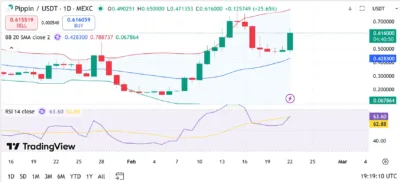
Pippin (PIPPIN) Price Prediction 2026–2030: Can PIPPIN Hit $0.70 Soon?

Pippin (PIPPIN) Price Prediction 2026–2030: Can PIPPIN Hit $0.70 Soon?

PIPPIN has surged sharply on the daily timeframe, printing a powerful bullish candle with over 25% gains. RSI is holding above 60, signaling strengthening momentum
Share
Coinstats2026/02/23 04:29
Will Cardano Reach $10 by 2030? Analysts Break Down ADA’s Growth Cycles

Will Cardano Reach $10 by 2030? Analysts Break Down ADA’s Growth Cycles

The post Will Cardano Reach $10 by 2030? Analysts Break Down ADA’s Growth Cycles appeared first on Coinpedia Fintech News Cardano (ADA) is trading at $0.9024 with a market cap of $32.91 billion. Experts say ADA has the potential to climb much higher, with some placing long-term targets as high as $10. The token continues to benefit from stronger visibility, rising liquidity, and increasing inflows from both institutional and retail markets. Can Cardano Hit $10 …
Share
CoinPedia2025/09/18 17:19
Crypto whale loses $6M to sneaky phishing scheme targeting staked Ethereum

Crypto whale loses $6M to sneaky phishing scheme targeting staked Ethereum

The post Crypto whale loses $6M to sneaky phishing scheme targeting staked Ethereum appeared on BitcoinEthereumNews.com. A crypto whale lost more than $6 million in staked Ethereum (stETH) and Aave-wrapped Bitcoin (aEthWBTC) after approving malicious signatures in a phishing scheme on Sept. 18, according to blockchain security firm Scam Sniffer. According to the firm, the attackers disguised their move as a routine wallet confirmation through “Permit” signatures, which tricked the victim into authorizing fund transfers without triggering obvious red flags. Yu Xian, founder of blockchain security company SlowMist, noted that the victim did not recognize the danger because the transaction required no gas fees. He wrote: “From the victim’s perspective, he just clicked a few times to confirm the wallet’s pop-up signature requests, didn’t spend a single penny of gas, and $6.28 million was gone.” How Permit exploits work Permit approvals were originally designed to simplify token transfers. Instead of submitting an on-chain approval and paying fees, a user can sign an off-chain message authorizing a spender. That efficiency, however, has created a new attack surface for malicious players. Once a user signs such a permit, attackers can combine two functions—Permit and TransferFrom—to drain assets directly. Because the authorization takes place off-chain, wallet dashboards show no unusual activity until the funds move. As a result, the assets are gone when the approval executes on-chain, and tokens are redirected to the attacker’s wallet. This loophole has made permit exploits increasingly attractive for malicious actors, who can siphon millions without needing complex hacks or high-cost gas wars. Phishing losses The latest theft highlights a wider trend of escalating phishing campaigns. Scam Sniffer reported that in August alone, attackers stole $12.17 million from more than 15,200 victims. That figure represented a 72% jump in losses compared with July. According to the firm, the most significant share of August’s damages came from three large accounts that accounted for nearly half…
Share
BitcoinEthereumNews2025/09/19 02:31