Lately, different nations of the world have been working tirelessly and in collaboration with one another to reduce the number of crypto scams and sanction the perpetrators in charge of organizing them. A few hours ago, BBC shared the details of a Chinese businessman who the authorities have finally caught up with after running for […]Lately, different nations of the world have been working tirelessly and in collaboration with one another to reduce the number of crypto scams and sanction the perpetrators in charge of organizing them. A few hours ago, BBC shared the details of a Chinese businessman who the authorities have finally caught up with after running for […]

Chinese Businessman, She Zhijiang, Extradited After the Exposure of His Scam Empire

2025/11/13 06:00
3 min read
scam
  • After years of running from justice, Chinese businessman She Zhijiang has been extradited from Thailand to China to face serious charges of fraud, money laundering, and online gambling.
  • One of his infamous projects, Shwe Kokko city in Myanmar, has been exposed as a hub for human trafficking and a place for running large-scale cyber scams.

Lately, different nations of the world have been working tirelessly and in collaboration with one another to reduce the number of crypto scams and sanction the perpetrators in charge of organizing them. A few hours ago, BBC shared the details of a Chinese businessman who the authorities have finally caught up with after running for too long.

According to the details, he has been sent to China to face charges for all the offenses he has committed, and he would do this with no legal appeals.

 How She Zhijiang Built His Scam Empire Over the Years 

The 41-year-old businessman had his humble beginnings in a rural area.  He was born in Hunan province, China, and started learning computer programming as early as 14 years old. Later on, as he grew older, somewhere around his 20s, he moved to Palestine to join the gambling industry.

For many years, She Zhijiang was a controversial figure and one of the first people that would come to mind whenever you speak about online fraud and gambling networks across Southeast Asia. In fact, the Chinese official claims that he built and controlled an underground organization that made profits from illegal gambling and online scams.

Also Read: U.S. Prosecutors Demand 5-Year Prison Sentence for Samourai Wallet Founders

Zhijang was able to successfully carry out his operations by trapping thousands of Chinese citizens and tricking them into working in his cybercrime compounds.

In 2022, the Thailand police officers arrested him at the request of Chinese authorities through Interpol. And recently, the Thai court has confirmed that he would be extradited, and there would be no more legal appeals. On Wednesday, according to images shared, he was seen at Bangkok’s main airport and was surrounded by security officers as he was prepared for his flight to China. 

Source: BBC

“Shwe Kokko”: The City Used To Carry Out Major Scam

One of She Zhijiang’s most popular projects is the “Shwe Kokko” city in Myanmar, located somewhere very close to the Thai border. This place was promoted as one of the most luxurious cities for Chinese tourists, and it was filled with fancy hotels and tall and shining buildings, as well as entertainment centers. However, behind all the attractive images people could see, it was discovered that the city was a hub for human trafficking, money laundering, and online fraud. 

Earlier this year, a BBC team member visited Shwe Kokko and discovered that, despite the official claims of reform, the area still had so many signs of scam centers that were running quietly. With his extradition now confirmed, She Zhijiang’s future will depend on how the Chinese judicial system decides to handle his case.

Also Read: Visa’s Stablecoin Pilot Breakthrough Enables Instant Payouts

Disclaimer: The articles reposted on this site are sourced from public platforms and are provided for informational purposes only. They do not necessarily reflect the views of MEXC. All rights remain with the original authors. If you believe any content infringes on third-party rights, please contact service@support.mexc.com for removal. MEXC makes no guarantees regarding the accuracy, completeness, or timeliness of the content and is not responsible for any actions taken based on the information provided. The content does not constitute financial, legal, or other professional advice, nor should it be considered a recommendation or endorsement by MEXC.

You May Also Like

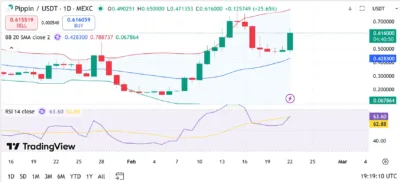
Pippin (PIPPIN) Price Prediction 2026–2030: Can PIPPIN Hit $0.70 Soon?

Pippin (PIPPIN) Price Prediction 2026–2030: Can PIPPIN Hit $0.70 Soon?

PIPPIN has surged sharply on the daily timeframe, printing a powerful bullish candle with over 25% gains. RSI is holding above 60, signaling strengthening momentum
Share
Coinstats2026/02/23 04:29
Will Cardano Reach $10 by 2030? Analysts Break Down ADA’s Growth Cycles

Will Cardano Reach $10 by 2030? Analysts Break Down ADA’s Growth Cycles

The post Will Cardano Reach $10 by 2030? Analysts Break Down ADA’s Growth Cycles appeared first on Coinpedia Fintech News Cardano (ADA) is trading at $0.9024 with a market cap of $32.91 billion. Experts say ADA has the potential to climb much higher, with some placing long-term targets as high as $10. The token continues to benefit from stronger visibility, rising liquidity, and increasing inflows from both institutional and retail markets. Can Cardano Hit $10 …
Share
CoinPedia2025/09/18 17:19
Crypto whale loses $6M to sneaky phishing scheme targeting staked Ethereum

Crypto whale loses $6M to sneaky phishing scheme targeting staked Ethereum

The post Crypto whale loses $6M to sneaky phishing scheme targeting staked Ethereum appeared on BitcoinEthereumNews.com. A crypto whale lost more than $6 million in staked Ethereum (stETH) and Aave-wrapped Bitcoin (aEthWBTC) after approving malicious signatures in a phishing scheme on Sept. 18, according to blockchain security firm Scam Sniffer. According to the firm, the attackers disguised their move as a routine wallet confirmation through “Permit” signatures, which tricked the victim into authorizing fund transfers without triggering obvious red flags. Yu Xian, founder of blockchain security company SlowMist, noted that the victim did not recognize the danger because the transaction required no gas fees. He wrote: “From the victim’s perspective, he just clicked a few times to confirm the wallet’s pop-up signature requests, didn’t spend a single penny of gas, and $6.28 million was gone.” How Permit exploits work Permit approvals were originally designed to simplify token transfers. Instead of submitting an on-chain approval and paying fees, a user can sign an off-chain message authorizing a spender. That efficiency, however, has created a new attack surface for malicious players. Once a user signs such a permit, attackers can combine two functions—Permit and TransferFrom—to drain assets directly. Because the authorization takes place off-chain, wallet dashboards show no unusual activity until the funds move. As a result, the assets are gone when the approval executes on-chain, and tokens are redirected to the attacker’s wallet. This loophole has made permit exploits increasingly attractive for malicious actors, who can siphon millions without needing complex hacks or high-cost gas wars. Phishing losses The latest theft highlights a wider trend of escalating phishing campaigns. Scam Sniffer reported that in August alone, attackers stole $12.17 million from more than 15,200 victims. That figure represented a 72% jump in losses compared with July. According to the firm, the most significant share of August’s damages came from three large accounts that accounted for nearly half…
Share
BitcoinEthereumNews2025/09/19 02:31