The post DeAI startup GAIA opens pre-sale for AI smartphone appeared on BitcoinEthereumNews.com. GAIA, a decentralized AI startup, has kicked off a limited pre-sale for an AI smartphone that runs intelligence and privacy tools directly on the device. Early buyers can earn network rewards, access a pre-loaded web3 domain, and test fully local AI powered by a new software layer on Galaxy S25 Edge hardware. Summary GAIA, a decentralized AI startup, has launched a limited-run AI smartphone with on-device intelligence and privacy tools. Only 7,000 units are available, with early buyers getting network rewards and a pre-loaded web3 domain. The phone runs on Galaxy S25 Edge hardware but adds a software layer for fully local, decentralized AI and staking-based rewards. GAIA, a startup building decentralized artificial intelligence infrastructure, has launched a limited-run AI smartphone that puts on-device intelligence and privacy-first AI tools into early units ahead of a wider release. Only 7,000 units are available in this initial release, and the public sale will follow immediately after the waitlist window, according to a press release shared with crypto.news. Galaxy S25 Edge AI smartphone | Source: GAIA The so-called Gaia AI Phone runs on Galaxy S25 Edge hardware, but the big thing comes from a new infrastructure layer built by Gaia Labs. Shashank Sripada, GAIA’s co-founder and COO, explained in an interview with crypto.news that instead of changing the hardware itself, the team created a software layer between Android and applications that enables decentralized AI inference right on the device. “Previously, mobile ‘AI’ was primarily application-level – individual apps with basic AI features. Our approach coordinates AI requests at the infrastructure level, using localized training models and authentication protocols that work across all applications while keeping processing entirely on-device.” Shashank Sripada The phone’s software stack includes the Gaia AI Platform for decentralized AI tools, a local LLM runtime, a voice-to-agent interface, as well as… The post DeAI startup GAIA opens pre-sale for AI smartphone appeared on BitcoinEthereumNews.com. GAIA, a decentralized AI startup, has kicked off a limited pre-sale for an AI smartphone that runs intelligence and privacy tools directly on the device. Early buyers can earn network rewards, access a pre-loaded web3 domain, and test fully local AI powered by a new software layer on Galaxy S25 Edge hardware. Summary GAIA, a decentralized AI startup, has launched a limited-run AI smartphone with on-device intelligence and privacy tools. Only 7,000 units are available, with early buyers getting network rewards and a pre-loaded web3 domain. The phone runs on Galaxy S25 Edge hardware but adds a software layer for fully local, decentralized AI and staking-based rewards. GAIA, a startup building decentralized artificial intelligence infrastructure, has launched a limited-run AI smartphone that puts on-device intelligence and privacy-first AI tools into early units ahead of a wider release. Only 7,000 units are available in this initial release, and the public sale will follow immediately after the waitlist window, according to a press release shared with crypto.news. Galaxy S25 Edge AI smartphone | Source: GAIA The so-called Gaia AI Phone runs on Galaxy S25 Edge hardware, but the big thing comes from a new infrastructure layer built by Gaia Labs. Shashank Sripada, GAIA’s co-founder and COO, explained in an interview with crypto.news that instead of changing the hardware itself, the team created a software layer between Android and applications that enables decentralized AI inference right on the device. “Previously, mobile ‘AI’ was primarily application-level – individual apps with basic AI features. Our approach coordinates AI requests at the infrastructure level, using localized training models and authentication protocols that work across all applications while keeping processing entirely on-device.” Shashank Sripada The phone’s software stack includes the Gaia AI Platform for decentralized AI tools, a local LLM runtime, a voice-to-agent interface, as well as…

DeAI startup GAIA opens pre-sale for AI smartphone

GAIA, a decentralized AI startup, has kicked off a limited pre-sale for an AI smartphone that runs intelligence and privacy tools directly on the device. Early buyers can earn network rewards, access a pre-loaded web3 domain, and test fully local AI powered by a new software layer on Galaxy S25 Edge hardware.

Summary

  • GAIA, a decentralized AI startup, has launched a limited-run AI smartphone with on-device intelligence and privacy tools.
  • Only 7,000 units are available, with early buyers getting network rewards and a pre-loaded web3 domain.
  • The phone runs on Galaxy S25 Edge hardware but adds a software layer for fully local, decentralized AI and staking-based rewards.

GAIA, a startup building decentralized artificial intelligence infrastructure, has launched a limited-run AI smartphone that puts on-device intelligence and privacy-first AI tools into early units ahead of a wider release. Only 7,000 units are available in this initial release, and the public sale will follow immediately after the waitlist window, according to a press release shared with crypto.news.

Galaxy S25 Edge AI smartphone | Source: GAIA

The so-called Gaia AI Phone runs on Galaxy S25 Edge hardware, but the big thing comes from a new infrastructure layer built by Gaia Labs. Shashank Sripada, GAIA’s co-founder and COO, explained in an interview with crypto.news that instead of changing the hardware itself, the team created a software layer between Android and applications that enables decentralized AI inference right on the device.

The phone’s software stack includes the Gaia AI Platform for decentralized AI tools, a local LLM runtime, a voice-to-agent interface, as well as a custom Agent Launcher for deploying AI agents. On-chain identity and a pre-loaded Gaia Domain are also included, giving users digital ownership from day one.

Open publishing through verification

For developers and AI builders, GAIA is said to be providing access to its node infrastructure through public GitHub repositories. Sripada explained that while the company is currently testing an agent marketplace with vetted developers, the goal is to eventually allow open publishing with proper verification.

Early buyers also get a bundle of perks: priority access to new AI tools, a pre-loaded web3 domain, and network rewards for contributing compute to the Gaia Network in GAIA tokens. Users can stake GAIA for higher-priority rewards, and all inference requests processed on the device contribute to the overall network. For the first 3,000 orders, GAIA is also including a complimentary ticket to Korea Blockchain Week.

Galaxy S25 Edge AI smartphone | Source: GAIA

Behind the screen

GAIA’s setup keeps AI running separately from individual apps, and the team has already run internal security checks to make sure things aren’t leaving the device, Sripada told crypto.news.

As for audits, third-party reviews are expected before shipping, and Sripada said updates to the phone’s software will start off being sent over the air by GAIA directly, with plans to eventually let the network handle verification in a decentralized trust model.

The Gaia AI Phone is designed for a broad range of users — from web3 enthusiasts to privacy advocates —offering fully local AI execution, and integrated identity features, Sripada explained. Hence, AI agents can be migrated between devices running Gaia OS, with user-friendly backup tools in development.

Hardware support follows standard warranties, Sripada said, adding that the open-source software ensures community-driven maintenance and repair options. Full details of the project’s security architecture are scheduled to be released in October, the GAIA co-founder added.

Priced at $1,399, with just 7,000 units available in this first run, the phone seems aimed at early adopters ready to experiment with a new decentralized AI ecosystem. GAIA says it has already onboarded over 10,000 subscribers on the waitlist, though how many actually get their hands on a device won’t be clear until shipping begins later this year.

Source: https://crypto.news/depin-startup-gaia-opens-pre-sale-for-ai-smartphone/
Market Opportunity
Gaia Logo
Gaia Price(GAIA)
$0.01536
$0.01536$0.01536
-0.25%
USD
Gaia (GAIA) Live Price Chart
Disclaimer: The articles reposted on this site are sourced from public platforms and are provided for informational purposes only. They do not necessarily reflect the views of MEXC. All rights remain with the original authors. If you believe any content infringes on third-party rights, please contact service@support.mexc.com for removal. MEXC makes no guarantees regarding the accuracy, completeness, or timeliness of the content and is not responsible for any actions taken based on the information provided. The content does not constitute financial, legal, or other professional advice, nor should it be considered a recommendation or endorsement by MEXC.

You May Also Like

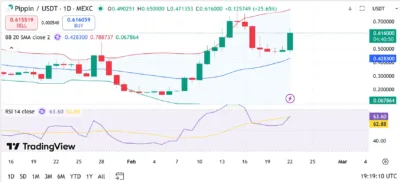
Pippin (PIPPIN) Price Prediction 2026–2030: Can PIPPIN Hit $0.70 Soon?

Pippin (PIPPIN) Price Prediction 2026–2030: Can PIPPIN Hit $0.70 Soon?

PIPPIN has surged sharply on the daily timeframe, printing a powerful bullish candle with over 25% gains. RSI is holding above 60, signaling strengthening momentum
Share
Coinstats2026/02/23 04:29
Will Cardano Reach $10 by 2030? Analysts Break Down ADA’s Growth Cycles

Will Cardano Reach $10 by 2030? Analysts Break Down ADA’s Growth Cycles

The post Will Cardano Reach $10 by 2030? Analysts Break Down ADA’s Growth Cycles appeared first on Coinpedia Fintech News Cardano (ADA) is trading at $0.9024 with a market cap of $32.91 billion. Experts say ADA has the potential to climb much higher, with some placing long-term targets as high as $10. The token continues to benefit from stronger visibility, rising liquidity, and increasing inflows from both institutional and retail markets. Can Cardano Hit $10 …
Share
CoinPedia2025/09/18 17:19
Crypto whale loses $6M to sneaky phishing scheme targeting staked Ethereum

Crypto whale loses $6M to sneaky phishing scheme targeting staked Ethereum

The post Crypto whale loses $6M to sneaky phishing scheme targeting staked Ethereum appeared on BitcoinEthereumNews.com. A crypto whale lost more than $6 million in staked Ethereum (stETH) and Aave-wrapped Bitcoin (aEthWBTC) after approving malicious signatures in a phishing scheme on Sept. 18, according to blockchain security firm Scam Sniffer. According to the firm, the attackers disguised their move as a routine wallet confirmation through “Permit” signatures, which tricked the victim into authorizing fund transfers without triggering obvious red flags. Yu Xian, founder of blockchain security company SlowMist, noted that the victim did not recognize the danger because the transaction required no gas fees. He wrote: “From the victim’s perspective, he just clicked a few times to confirm the wallet’s pop-up signature requests, didn’t spend a single penny of gas, and $6.28 million was gone.” How Permit exploits work Permit approvals were originally designed to simplify token transfers. Instead of submitting an on-chain approval and paying fees, a user can sign an off-chain message authorizing a spender. That efficiency, however, has created a new attack surface for malicious players. Once a user signs such a permit, attackers can combine two functions—Permit and TransferFrom—to drain assets directly. Because the authorization takes place off-chain, wallet dashboards show no unusual activity until the funds move. As a result, the assets are gone when the approval executes on-chain, and tokens are redirected to the attacker’s wallet. This loophole has made permit exploits increasingly attractive for malicious actors, who can siphon millions without needing complex hacks or high-cost gas wars. Phishing losses The latest theft highlights a wider trend of escalating phishing campaigns. Scam Sniffer reported that in August alone, attackers stole $12.17 million from more than 15,200 victims. That figure represented a 72% jump in losses compared with July. According to the firm, the most significant share of August’s damages came from three large accounts that accounted for nearly half…
Share
BitcoinEthereumNews2025/09/19 02:31