The post DePIN Grass raises $10M from Polychain, Tribe Capital appeared on BitcoinEthereumNews.com. Grass, the Solana DePIN project, is raising $10 million in a bridge raise, Blockworks has exclusively learned.  The project previously raised both a seed and a Series A round.  The decentralized AI project which allows folks to sell access to idle internet bandwidth — essentially giving you more power to hand over your data rather than having a large company scrape it for profit.  Polychain and Tribe Capital participated in the bridge round, which is primarily a token purchase, Grass’s Andrej Radonjic told Blockworks. “Grass is a piece of technology that allows companies to access data at an unprecedented scale,” Radonjic said when asked why Grass was interested in a token purchase.  “The possibilities are kind of endless in terms of the directions that you’re able to go. And there are multiple things that we think are vital to build on top of this, namely live context retrieval.” He further explained that, at this moment, the way AI companies are training their models is to scrape search engines such as Google. However, they can’t deploy internet-scale web crawls because they’re being blocked, but Grass offers a solution.  Grass wasn’t necessarily actively looking to raise at the moment, Radonjic said, but it happened at the right time for the team.  “I was mentioning that commercially, things are going really well, and…we’re seeing amazing growth in terms of selling training data to AI companies that are looking to train things like video models and text to speech models,” he said.  “But I had mentioned that one of the things that we’re looking forward to over the next year to two years…[is actually] having Grass become infrastructure for not just training data, but also inference data.” There’ll be a shift from compute cycles on training to inference, and the Grass team wants to… The post DePIN Grass raises $10M from Polychain, Tribe Capital appeared on BitcoinEthereumNews.com. Grass, the Solana DePIN project, is raising $10 million in a bridge raise, Blockworks has exclusively learned.  The project previously raised both a seed and a Series A round.  The decentralized AI project which allows folks to sell access to idle internet bandwidth — essentially giving you more power to hand over your data rather than having a large company scrape it for profit.  Polychain and Tribe Capital participated in the bridge round, which is primarily a token purchase, Grass’s Andrej Radonjic told Blockworks. “Grass is a piece of technology that allows companies to access data at an unprecedented scale,” Radonjic said when asked why Grass was interested in a token purchase.  “The possibilities are kind of endless in terms of the directions that you’re able to go. And there are multiple things that we think are vital to build on top of this, namely live context retrieval.” He further explained that, at this moment, the way AI companies are training their models is to scrape search engines such as Google. However, they can’t deploy internet-scale web crawls because they’re being blocked, but Grass offers a solution.  Grass wasn’t necessarily actively looking to raise at the moment, Radonjic said, but it happened at the right time for the team.  “I was mentioning that commercially, things are going really well, and…we’re seeing amazing growth in terms of selling training data to AI companies that are looking to train things like video models and text to speech models,” he said.  “But I had mentioned that one of the things that we’re looking forward to over the next year to two years…[is actually] having Grass become infrastructure for not just training data, but also inference data.” There’ll be a shift from compute cycles on training to inference, and the Grass team wants to…

DePIN Grass raises $10M from Polychain, Tribe Capital

Grass, the Solana DePIN project, is raising $10 million in a bridge raise, Blockworks has exclusively learned. 

The project previously raised both a seed and a Series A round. 

The decentralized AI project which allows folks to sell access to idle internet bandwidth — essentially giving you more power to hand over your data rather than having a large company scrape it for profit. 

Polychain and Tribe Capital participated in the bridge round, which is primarily a token purchase, Grass’s Andrej Radonjic told Blockworks.

“Grass is a piece of technology that allows companies to access data at an unprecedented scale,” Radonjic said when asked why Grass was interested in a token purchase. 

“The possibilities are kind of endless in terms of the directions that you’re able to go. And there are multiple things that we think are vital to build on top of this, namely live context retrieval.”

He further explained that, at this moment, the way AI companies are training their models is to scrape search engines such as Google. However, they can’t deploy internet-scale web crawls because they’re being blocked, but Grass offers a solution. 

Grass wasn’t necessarily actively looking to raise at the moment, Radonjic said, but it happened at the right time for the team. 

“I was mentioning that commercially, things are going really well, and…we’re seeing amazing growth in terms of selling training data to AI companies that are looking to train things like video models and text to speech models,” he said. 

“But I had mentioned that one of the things that we’re looking forward to over the next year to two years…[is actually] having Grass become infrastructure for not just training data, but also inference data.”

There’ll be a shift from compute cycles on training to inference, and the Grass team wants to get ahead of it. The end goal will be to do an “inner scale web crawl,” which would allow them to build out the live context retrieval. 

“Rarely have we come across a team executing as ferociously as the Grass team does. They are an archetypical example of how businesses built on distributed systems can outcompete web2 peers,” Polychain’s Josh Rosenthal told Blockworks in a statement. 

“After leading their Seed round, participating in their Series A, and now leading this round, this is the third time Polychain Capital has backed Grass…We’re thrilled to triple down on Grass at such a meaningful inflection point of their journey as a leading data and AI business.”

In a cycle that’s hyper-focused on crypto use cases, Grass is offering a more crypto native use case than, say, stablecoins. But it’s also operating in a space — AI — that’s just as lucrative as it is competitive.

“Since we invested in 2023, Grass has served as a benchmark for how we want our portfolio companies to operate — a diabolical focus on product and revenue,” Boris Revsin, CEO and Managing Director of Tribe Capital, told Blockworks. 

“Grass is a product leader and we have seen major 7-figure clients, including the largest AI labs, sign up in the last 12 months. That’s what matters. Everything else follows.” 

In the last 30 days, Grass has had 8.5 million monthly active users and is currently working with around 20 companies, as well as with nonprofits and universities. 

The structuring of the round was never really “a question,” Radonjic explained. 

“The Grass Foundation…faces all of our customers contractually. And all the revenue that these customers are paying is going straight into the Grass Foundation’s bank account…The GRASS token is the primary vehicle for value accrual for everything that we’re doing.”

This is a developing story.


This article was generated with the assistance of AI and reviewed by editor Jeffrey Albus before publication.


Get the news in your inbox. Explore Blockworks newsletters:

Source: https://blockworks.co/news/depin-grass-raise-polychain-tribe
Market Opportunity
GRASS Logo
GRASS Price(GRASS)
$0.1769
$0.1769$0.1769
-2.26%
USD
GRASS (GRASS) Live Price Chart
Disclaimer: The articles reposted on this site are sourced from public platforms and are provided for informational purposes only. They do not necessarily reflect the views of MEXC. All rights remain with the original authors. If you believe any content infringes on third-party rights, please contact service@support.mexc.com for removal. MEXC makes no guarantees regarding the accuracy, completeness, or timeliness of the content and is not responsible for any actions taken based on the information provided. The content does not constitute financial, legal, or other professional advice, nor should it be considered a recommendation or endorsement by MEXC.

You May Also Like

Pippin (PIPPIN) Price Prediction 2026–2030: Can PIPPIN Hit $0.70 Soon?

Pippin (PIPPIN) Price Prediction 2026–2030: Can PIPPIN Hit $0.70 Soon?

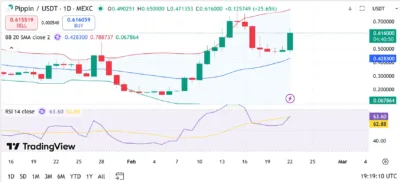
PIPPIN has surged sharply on the daily timeframe, printing a powerful bullish candle with over 25% gains. RSI is holding above 60, signaling strengthening momentum
Share
Coinstats2026/02/23 04:29
Will Cardano Reach $10 by 2030? Analysts Break Down ADA’s Growth Cycles

Will Cardano Reach $10 by 2030? Analysts Break Down ADA’s Growth Cycles

The post Will Cardano Reach $10 by 2030? Analysts Break Down ADA’s Growth Cycles appeared first on Coinpedia Fintech News Cardano (ADA) is trading at $0.9024 with a market cap of $32.91 billion. Experts say ADA has the potential to climb much higher, with some placing long-term targets as high as $10. The token continues to benefit from stronger visibility, rising liquidity, and increasing inflows from both institutional and retail markets. Can Cardano Hit $10 …
Share
CoinPedia2025/09/18 17:19
Crypto whale loses $6M to sneaky phishing scheme targeting staked Ethereum

Crypto whale loses $6M to sneaky phishing scheme targeting staked Ethereum

The post Crypto whale loses $6M to sneaky phishing scheme targeting staked Ethereum appeared on BitcoinEthereumNews.com. A crypto whale lost more than $6 million in staked Ethereum (stETH) and Aave-wrapped Bitcoin (aEthWBTC) after approving malicious signatures in a phishing scheme on Sept. 18, according to blockchain security firm Scam Sniffer. According to the firm, the attackers disguised their move as a routine wallet confirmation through “Permit” signatures, which tricked the victim into authorizing fund transfers without triggering obvious red flags. Yu Xian, founder of blockchain security company SlowMist, noted that the victim did not recognize the danger because the transaction required no gas fees. He wrote: “From the victim’s perspective, he just clicked a few times to confirm the wallet’s pop-up signature requests, didn’t spend a single penny of gas, and $6.28 million was gone.” How Permit exploits work Permit approvals were originally designed to simplify token transfers. Instead of submitting an on-chain approval and paying fees, a user can sign an off-chain message authorizing a spender. That efficiency, however, has created a new attack surface for malicious players. Once a user signs such a permit, attackers can combine two functions—Permit and TransferFrom—to drain assets directly. Because the authorization takes place off-chain, wallet dashboards show no unusual activity until the funds move. As a result, the assets are gone when the approval executes on-chain, and tokens are redirected to the attacker’s wallet. This loophole has made permit exploits increasingly attractive for malicious actors, who can siphon millions without needing complex hacks or high-cost gas wars. Phishing losses The latest theft highlights a wider trend of escalating phishing campaigns. Scam Sniffer reported that in August alone, attackers stole $12.17 million from more than 15,200 victims. That figure represented a 72% jump in losses compared with July. According to the firm, the most significant share of August’s damages came from three large accounts that accounted for nearly half…
Share
BitcoinEthereumNews2025/09/19 02:31