Nigel Farage has pledged to slash crypto taxes and establish a UK Bitcoin reserve if elected. Reform UK’s leader declared at the Digital Asset Summit in London on Monday that “when it comes to your industry, when it comes to growth in this industry, then I am your champion.” The proposed legislation would reduce the capital gains tax on crypto investments from 24% to a flat 10% and mandate that the Bank of England establish a Bitcoin reserve using approximately £5 billion worth of Bitcoin currently held from seized criminal assets. Reform has become the first major UK political party to accept crypto donations, currently receiving Bitcoin, Ethereum, Solana, and USD Coin through its website.Nigel Farage in Bitcoin ‘25 Conference | Source: The London Economic What Reform’s Crypto Bill Would Actually Do Farage’s platform mirrors the approach taken by U.S. President Donald Trump, who cultivated industry support before his 2024 election victory and has pursued a crypto-friendly agenda since taking office in January 2025. The Reform Party chief’s proposed bill would allow British taxpayers to pay taxes directly in Bitcoin, with funds either converted to pounds or directed to the reserve fund. Additionally, banks would be prohibited from denying or withdrawing services to customers based on lawful crypto-related activities, directly addressing industry concerns over “debanking.” Farage connected the debanking issue to his own experience, telling the conference crowd, “I went to 10 banks, all of whom refused me an account,” and adding, “No wonder so many people are going for Bitcoin—because they can’t close you down, and that is the ultimate freedom.” Meanwhile, Farage characterized the Bank of England’s plans for a central bank digital currency as “the ultimate authoritarian nightmare” and vowed to “stop it overnight” should Reform win the next election. He also targeted the Bank of England’s proposed stablecoin holding limits, capping personal holdings at £10,000 to £20,000 and business holdings at £10 million, calling the restrictions “frankly ridiculous.” According to Bloomberg, Farage claimed he had discussed the stablecoin caps directly with Andrew Bailey, the Governor of the Bank of England. The Reform leader stated that the UK government is falling behind international competitors and must act quickly to regulate the crypto industry to safeguard Britain’s position as a financial hub. Farage said “this whole area of digital assets and crypto just isn’t being talked about at all,” and pointed out that “we’ve got no regulated market.” He also said that if Reform wins the next election, his government would enact the Crypto Assets and Digital Finance Bill “very, very quickly.” Reform UK currently leads in numerous polling projections. However, Britain’s first-past-the-post electoral system presents a major structural challenge to translating that support into parliamentary seats, as demonstrated in the 2024 general election when Reform received 4.1 million votes but secured only five seats. The next UK general election is not expected until 2029, leaving four years for both political and market conditions to shift. Why Global Crypto Competition is Forcing UK Regulators to Act Britain’s regulatory environment now faces competitive pressure from the United States, where the Trump administration accelerated crypto-friendly policies, including the GENIUS Act for stablecoin oversight. The European Union has also instituted a unified regulatory framework for digital assets, creating incentives for UK policymakers to clarify their own approach to crypto regulation. Earlier this month, the Bank of England announced that it was considering exemption plans for its proposed stablecoin holding limits for crypto exchanges and other firms requiring large holdings for liquidity purposes. Most recently, Governor Andrew Bailey acknowledged that stablecoins could drive financial innovation and coexist with traditional banking systems. The Bank of England is also preparing to permit stablecoins as settlement assets in its Digital Securities Sandbox, a controlled environment for testing blockchain-based trading and issuance. The uncertain stance of the nation has prompted industry executives to warn that overly restrictive regulations in the UK will risk diverting business and talent to jurisdictions with more favorable crypto frameworks. As it stands now, the Financial Conduct Authority will complete its consultation on whether crypto firms should face the same regulatory standards as traditional financial institutions by year-end, with implementation expected to begin in January 2026Nigel Farage has pledged to slash crypto taxes and establish a UK Bitcoin reserve if elected. Reform UK’s leader declared at the Digital Asset Summit in London on Monday that “when it comes to your industry, when it comes to growth in this industry, then I am your champion.” The proposed legislation would reduce the capital gains tax on crypto investments from 24% to a flat 10% and mandate that the Bank of England establish a Bitcoin reserve using approximately £5 billion worth of Bitcoin currently held from seized criminal assets. Reform has become the first major UK political party to accept crypto donations, currently receiving Bitcoin, Ethereum, Solana, and USD Coin through its website.Nigel Farage in Bitcoin ‘25 Conference | Source: The London Economic What Reform’s Crypto Bill Would Actually Do Farage’s platform mirrors the approach taken by U.S. President Donald Trump, who cultivated industry support before his 2024 election victory and has pursued a crypto-friendly agenda since taking office in January 2025. The Reform Party chief’s proposed bill would allow British taxpayers to pay taxes directly in Bitcoin, with funds either converted to pounds or directed to the reserve fund. Additionally, banks would be prohibited from denying or withdrawing services to customers based on lawful crypto-related activities, directly addressing industry concerns over “debanking.” Farage connected the debanking issue to his own experience, telling the conference crowd, “I went to 10 banks, all of whom refused me an account,” and adding, “No wonder so many people are going for Bitcoin—because they can’t close you down, and that is the ultimate freedom.” Meanwhile, Farage characterized the Bank of England’s plans for a central bank digital currency as “the ultimate authoritarian nightmare” and vowed to “stop it overnight” should Reform win the next election. He also targeted the Bank of England’s proposed stablecoin holding limits, capping personal holdings at £10,000 to £20,000 and business holdings at £10 million, calling the restrictions “frankly ridiculous.” According to Bloomberg, Farage claimed he had discussed the stablecoin caps directly with Andrew Bailey, the Governor of the Bank of England. The Reform leader stated that the UK government is falling behind international competitors and must act quickly to regulate the crypto industry to safeguard Britain’s position as a financial hub. Farage said “this whole area of digital assets and crypto just isn’t being talked about at all,” and pointed out that “we’ve got no regulated market.” He also said that if Reform wins the next election, his government would enact the Crypto Assets and Digital Finance Bill “very, very quickly.” Reform UK currently leads in numerous polling projections. However, Britain’s first-past-the-post electoral system presents a major structural challenge to translating that support into parliamentary seats, as demonstrated in the 2024 general election when Reform received 4.1 million votes but secured only five seats. The next UK general election is not expected until 2029, leaving four years for both political and market conditions to shift. Why Global Crypto Competition is Forcing UK Regulators to Act Britain’s regulatory environment now faces competitive pressure from the United States, where the Trump administration accelerated crypto-friendly policies, including the GENIUS Act for stablecoin oversight. The European Union has also instituted a unified regulatory framework for digital assets, creating incentives for UK policymakers to clarify their own approach to crypto regulation. Earlier this month, the Bank of England announced that it was considering exemption plans for its proposed stablecoin holding limits for crypto exchanges and other firms requiring large holdings for liquidity purposes. Most recently, Governor Andrew Bailey acknowledged that stablecoins could drive financial innovation and coexist with traditional banking systems. The Bank of England is also preparing to permit stablecoins as settlement assets in its Digital Securities Sandbox, a controlled environment for testing blockchain-based trading and issuance. The uncertain stance of the nation has prompted industry executives to warn that overly restrictive regulations in the UK will risk diverting business and talent to jurisdictions with more favorable crypto frameworks. As it stands now, the Financial Conduct Authority will complete its consultation on whether crypto firms should face the same regulatory standards as traditional financial institutions by year-end, with implementation expected to begin in January 2026

Farage Pitches Himself as Crypto’s ‘Champion,’ Proposes UK Bitcoin Reserve and Tax Cuts

2025/10/14 03:52
4 min read

Nigel Farage has pledged to slash crypto taxes and establish a UK Bitcoin reserve if elected. Reform UK’s leader declared at the Digital Asset Summit in London on Monday that “when it comes to your industry, when it comes to growth in this industry, then I am your champion.”

The proposed legislation would reduce the capital gains tax on crypto investments from 24% to a flat 10% and mandate that the Bank of England establish a Bitcoin reserve using approximately £5 billion worth of Bitcoin currently held from seized criminal assets.

Reform has become the first major UK political party to accept crypto donations, currently receiving Bitcoin, Ethereum, Solana, and USD Coin through its website.
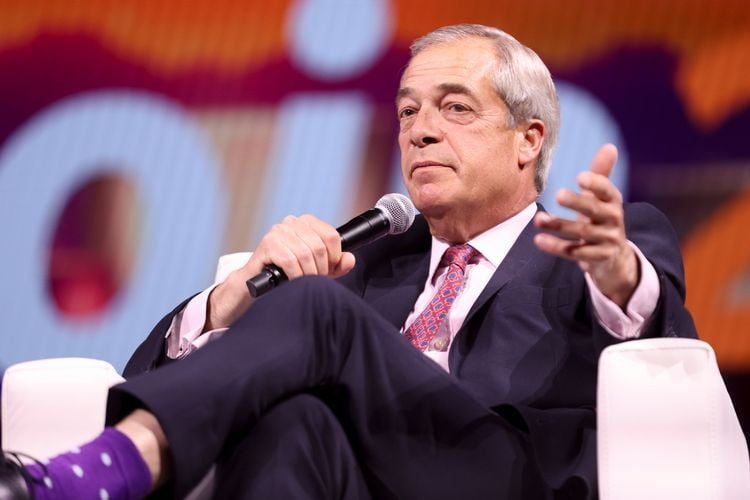
Farage Pitches Himself as Crypto's 'Champion,' Proposes UK Bitcoin Reserve and Tax CutsNigel Farage in Bitcoin ‘25 Conference | Source: The London Economic

What Reform’s Crypto Bill Would Actually Do

Farage’s platform mirrors the approach taken by U.S. President Donald Trump, who cultivated industry support before his 2024 election victory and has pursued a crypto-friendly agenda since taking office in January 2025.

The Reform Party chief’s proposed bill would allow British taxpayers to pay taxes directly in Bitcoin, with funds either converted to pounds or directed to the reserve fund.

Additionally, banks would be prohibited from denying or withdrawing services to customers based on lawful crypto-related activities, directly addressing industry concerns over “debanking.”

Farage connected the debanking issue to his own experience, telling the conference crowd, “I went to 10 banks, all of whom refused me an account,” and adding, “No wonder so many people are going for Bitcoin—because they can’t close you down, and that is the ultimate freedom.”

Meanwhile, Farage characterized the Bank of England’s plans for a central bank digital currency as “the ultimate authoritarian nightmare” and vowed to “stop it overnight” should Reform win the next election.

He also targeted the Bank of England’s proposed stablecoin holding limits, capping personal holdings at £10,000 to £20,000 and business holdings at £10 million, calling the restrictions “frankly ridiculous.”

According to Bloomberg, Farage claimed he had discussed the stablecoin caps directly with Andrew Bailey, the Governor of the Bank of England.

The Reform leader stated that the UK government is falling behind international competitors and must act quickly to regulate the crypto industry to safeguard Britain’s position as a financial hub.

Farage said “this whole area of digital assets and crypto just isn’t being talked about at all,” and pointed out that “we’ve got no regulated market.”

He also said that if Reform wins the next election, his government would enact the Crypto Assets and Digital Finance Bill “very, very quickly.”

Reform UK currently leads in numerous polling projections.

However, Britain’s first-past-the-post electoral system presents a major structural challenge to translating that support into parliamentary seats, as demonstrated in the 2024 general election when Reform received 4.1 million votes but secured only five seats.

The next UK general election is not expected until 2029, leaving four years for both political and market conditions to shift.

Why Global Crypto Competition is Forcing UK Regulators to Act

Britain’s regulatory environment now faces competitive pressure from the United States, where the Trump administration accelerated crypto-friendly policies, including the GENIUS Act for stablecoin oversight.

The European Union has also instituted a unified regulatory framework for digital assets, creating incentives for UK policymakers to clarify their own approach to crypto regulation.

Earlier this month, the Bank of England announced that it was considering exemption plans for its proposed stablecoin holding limits for crypto exchanges and other firms requiring large holdings for liquidity purposes.

Most recently, Governor Andrew Bailey acknowledged that stablecoins could drive financial innovation and coexist with traditional banking systems.

The Bank of England is also preparing to permit stablecoins as settlement assets in its Digital Securities Sandbox, a controlled environment for testing blockchain-based trading and issuance.

The uncertain stance of the nation has prompted industry executives to warn that overly restrictive regulations in the UK will risk diverting business and talent to jurisdictions with more favorable crypto frameworks.

As it stands now, the Financial Conduct Authority will complete its consultation on whether crypto firms should face the same regulatory standards as traditional financial institutions by year-end, with implementation expected to begin in January 2026.

Disclaimer: The articles reposted on this site are sourced from public platforms and are provided for informational purposes only. They do not necessarily reflect the views of MEXC. All rights remain with the original authors. If you believe any content infringes on third-party rights, please contact crypto.news@mexc.com for removal. MEXC makes no guarantees regarding the accuracy, completeness, or timeliness of the content and is not responsible for any actions taken based on the information provided. The content does not constitute financial, legal, or other professional advice, nor should it be considered a recommendation or endorsement by MEXC.

You May Also Like

Pepeto vs Blockdag Vs Layer Brett Vs Remittix and Little Pepe

Pepeto vs Blockdag Vs Layer Brett Vs Remittix and Little Pepe

The post Pepeto vs Blockdag Vs Layer Brett Vs Remittix and Little Pepe appeared on BitcoinEthereumNews.com. Crypto News 18 September 2025 | 05:39 Hunting the best crypto investment in 2025? Presales can flip a portfolio fast and sometimes change a life overnight when you choose well, which is why we start with receipts instead of slogans and cut straight to what’s live, audited, and usable today, not vague aspirations likely to drift as cycles turn and narratives fade for months. In this head-to-head we put Pepeto (PEPETO) up against Blockdag, Layer Brett, Remittix, and Little Pepe using simple yardsticks, team intent and delivery, on-chain proofs, tokenomics clarity, DEX and bridge readiness, PayFi rails, staking, and listing prep, so you can act on facts, not hype, and decide confidently before the next leg higher catches you watching from the sidelines. Pepeto’s Utility Play: Zero-Fee DEX, Bridge, And StrongPotential Pepeto treats the meme coin playbook like a platform brief, not a joke. The team ships fast, polishes details, and shows up weekly, aiming for staying power rather than a momentary pop. A hard-capped design anchors PepetoSwap, a zero-fee exchange where every trade routes through PEPETO for built-in usage instead of buzz. Already 850+ projects have applied to list, fertile ground for volume if listings follow. A built-in cross-chain bridge adds smart routing to unify liquidity, cut extra hops, and reduce slippage, turning activity into steady token demand because every swap touches PEPETO. Pepeto is audited by independent experts Solidproof and Coinsult, a trust marker reflected in more than $6,7 Million already raised in presale. Early momentum is visible. The presale puts early buyers at the front of the line with staking and stage-based price increases, and that line is getting long. Utility plus purpose, culture plus tools, the combo that tends to run farther than hype alone. Translation for you: Pepeto is graduating from noise to usage. If…
Share
BitcoinEthereumNews2025/09/18 10:41
Structural support keeps rally in play – ING

Structural support keeps rally in play – ING

The post Structural support keeps rally in play – ING appeared on BitcoinEthereumNews.com. ING’s Commodities Strategist Ewa Manthey argues that despite recent consolidation
Share
BitcoinEthereumNews2026/02/27 15:32
UNI Price Prediction: Targets $4.28 Resistance by March as Technical Indicators Show Mixed Signals

UNI Price Prediction: Targets $4.28 Resistance by March as Technical Indicators Show Mixed Signals

UNI price prediction shows neutral momentum at $3.91 with immediate resistance at $4.10. Technical analysis suggests potential rally to $4.28 if bulls can break
Share
BlockChain News2026/02/27 14:47