The post Markets, The Economy, And The Environment Working Together appeared on BitcoinEthereumNews.com. When we talk about our changing climate, many begin with focus on carbon emissions from cars, factories, and power plants. But another remarkable driver of rising global temperatures is hiding in plain sight: the beef on our plates. As the 30th United Nations Climate Change Conference, COP30, approaches in Brazil, global attention is once again turning toward bold climate solutions. And one of the most transformative opportunities lies within the agribusiness sector of the host country itself. Brazilian beef is responsible for nearly 25% of total tropical habitat loss each year. As global demand for beef rises, so too does the pressure to convert native forests—especially in the Amazon—into pastureland. This deforestation threatens one of the most biodiverse ecosystems on Earth. It’s also releasing massive planet warming emissions into the atmosphere, jeopardizing not only our precarious climate, but also Brazilian agricultural productivity and global food security. But there is hope—and it’s coming from within Brazil itself. A herd of cattle is seen on a road in Sao Felix do Xingu, Para state, Brazil, on June 20, 2025. (Photo by Nelson ALMEIDA / AFP) (Photo by NELSON ALMEIDA/AFP via Getty Images) AFP via Getty Images In 2023 the state of Pará, located on the eastern edge of the Amazon, launched a groundbreaking initiative that could change the trajectory of cattle production in the region. With support from The Nature Conservancy and a coalition of civil society and private sector leaders, Pará introduced Brazil’s first mandatory cattle traceability program with environmental requirements. More than a bureaucratic checkbox, it’s a bold step toward transforming the cattle industry from a driver of deforestation into a force for conservation and economic growth. Why Traceability Matters Cattle traceability means tracking each animal from birth to slaughter, including where it was raised and how the land was… The post Markets, The Economy, And The Environment Working Together appeared on BitcoinEthereumNews.com. When we talk about our changing climate, many begin with focus on carbon emissions from cars, factories, and power plants. But another remarkable driver of rising global temperatures is hiding in plain sight: the beef on our plates. As the 30th United Nations Climate Change Conference, COP30, approaches in Brazil, global attention is once again turning toward bold climate solutions. And one of the most transformative opportunities lies within the agribusiness sector of the host country itself. Brazilian beef is responsible for nearly 25% of total tropical habitat loss each year. As global demand for beef rises, so too does the pressure to convert native forests—especially in the Amazon—into pastureland. This deforestation threatens one of the most biodiverse ecosystems on Earth. It’s also releasing massive planet warming emissions into the atmosphere, jeopardizing not only our precarious climate, but also Brazilian agricultural productivity and global food security. But there is hope—and it’s coming from within Brazil itself. A herd of cattle is seen on a road in Sao Felix do Xingu, Para state, Brazil, on June 20, 2025. (Photo by Nelson ALMEIDA / AFP) (Photo by NELSON ALMEIDA/AFP via Getty Images) AFP via Getty Images In 2023 the state of Pará, located on the eastern edge of the Amazon, launched a groundbreaking initiative that could change the trajectory of cattle production in the region. With support from The Nature Conservancy and a coalition of civil society and private sector leaders, Pará introduced Brazil’s first mandatory cattle traceability program with environmental requirements. More than a bureaucratic checkbox, it’s a bold step toward transforming the cattle industry from a driver of deforestation into a force for conservation and economic growth. Why Traceability Matters Cattle traceability means tracking each animal from birth to slaughter, including where it was raised and how the land was…

Markets, The Economy, And The Environment Working Together

When we talk about our changing climate, many begin with focus on carbon emissions from cars, factories, and power plants. But another remarkable driver of rising global temperatures is hiding in plain sight: the beef on our plates. As the 30th United Nations Climate Change Conference, COP30, approaches in Brazil, global attention is once again turning toward bold climate solutions. And one of the most transformative opportunities lies within the agribusiness sector of the host country itself.

Brazilian beef is responsible for nearly 25% of total tropical habitat loss each year. As global demand for beef rises, so too does the pressure to convert native forests—especially in the Amazon—into pastureland. This deforestation threatens one of the most biodiverse ecosystems on Earth. It’s also releasing massive planet warming emissions into the atmosphere, jeopardizing not only our precarious climate, but also Brazilian agricultural productivity and global food security.

But there is hope—and it’s coming from within Brazil itself.

A herd of cattle is seen on a road in Sao Felix do Xingu, Para state, Brazil, on June 20, 2025. (Photo by Nelson ALMEIDA / AFP) (Photo by NELSON ALMEIDA/AFP via Getty Images)

AFP via Getty Images

In 2023 the state of Pará, located on the eastern edge of the Amazon, launched a groundbreaking initiative that could change the trajectory of cattle production in the region. With support from The Nature Conservancy and a coalition of civil society and private sector leaders, Pará introduced Brazil’s first mandatory cattle traceability program with environmental requirements.

More than a bureaucratic checkbox, it’s a bold step toward transforming the cattle industry from a driver of deforestation into a force for conservation and economic growth.

Why Traceability Matters

Cattle traceability means tracking each animal from birth to slaughter, including where it was raised and how the land was managed. This level of transparency is critical for enforcing environmental regulations. When producers know their cattle can be traced back to deforested land, they have a strong incentive to comply with conservation laws—or risk being cut out of the market.

Importantly, traceability empowers companies and investors to identify and eliminate deforestation from their supply chains. It shifts market incentives away from habitat destruction and toward smart, sustainable land use. In short, it aligns economic interests with environmental stewardship.

A Win for the Environment—and the Economy

The environmental benefits of traceability are clear. But what’s equally exciting is the economic opportunity it creates.

A recent study by Bain & Company and The Nature Conservancy found that the Pará program could spur nearly 50% growth in the cattle industry. That’s because traceability opens doors to premium markets that demand deforestation-free beef. It also improves farm-level productivity by encouraging better land management practices and providing smallholder farmers with access to new tools and technologies.

Major players in the beef supply chain are already taking notice. Meatpacking giant JBS has launched pilot programs aligned with Pará’s requirements and plans to scale up in the coming year. And in April, Carrefour, the highest-earning supermarket chain in Brazil, joined meatpackers in signing a statement of support for the Pará Sustainable Cattle Program.

This kind of leadership sends a powerful signal: the market is ready for deforestation-free beef.

RIO BRANCO, ACRE STATE, BRAZIL – 6/18/2024: Amazon deforestation for cattle ranching illustrated by a newly cleared pasture dotted with white cattle against a backdrop of intact yet threatened rainforest. This illustrates the escalating transformation of primary forest into grazing land, driven by agribusiness demand and land-use policies . (Photo by Ricardo Funari/Brazil Photos/LightRocket via Getty Images)

Brazil Photos/LightRocket via Getty Images

Changing the Narrative

For too long, the global conversation around conservation and development has been framed as a zero-sum game. Protecting forests, we’re told, comes at the expense of economic growth. But the Pará initiative flips that narrative on its head.

By leaning into the business opportunities created by environmental regulations, companies gain a first-mover advantage in securing resilient, sustainable supply chains. They meet rising consumer demand for ethical products, unlock new trade opportunities in markets that restrict deforestation-linked imports, and make meaningful progress toward their own climate and nature commitments.

That is good policy, but it also is smart business.

A Model for the World

The success of the Pará program could have ripple effects far beyond Brazil. As the host of this year’s UN Climate Conference in Belém, the state has a unique opportunity to showcase how industry and conservation can work hand in hand.

But for this model to reach its full potential, more companies must participate. Carrefour’s support is a promising start, but broader adoption across the retail and food sectors is essential. Governments, too, must play a role by creating enabling environments for traceability and enforcing environmental laws.

Efforts to address a warming planet and increased extreme weather events require bold action on many fronts. But few interventions within the food system offer as much bang for the buck as cattle traceability. It’s a solution that addresses deforestation, supports rural livelihoods, strengthens food security, and contributes to stabilization of the global climate.

The Amazon is often called the “lungs of the Earth.” If we want those lungs to keep breathing, we must act now. And thanks to the leadership of Pará and its partners, we have a blueprint for how to do it.

Source: https://www.forbes.com/sites/billfrist/2025/10/30/deforestation-free-beef-markets-the-economy-and-the-environment-working-together/

Market Opportunity
ChangeX Logo
ChangeX Price(CHANGE)
$0.001443
$0.001443$0.001443
+0.01%
USD
ChangeX (CHANGE) Live Price Chart
Disclaimer: The articles reposted on this site are sourced from public platforms and are provided for informational purposes only. They do not necessarily reflect the views of MEXC. All rights remain with the original authors. If you believe any content infringes on third-party rights, please contact service@support.mexc.com for removal. MEXC makes no guarantees regarding the accuracy, completeness, or timeliness of the content and is not responsible for any actions taken based on the information provided. The content does not constitute financial, legal, or other professional advice, nor should it be considered a recommendation or endorsement by MEXC.

You May Also Like

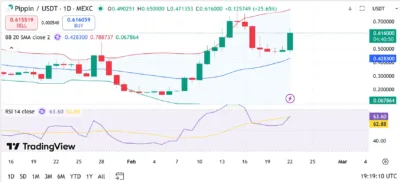
Pippin (PIPPIN) Price Prediction 2026–2030: Can PIPPIN Hit $0.70 Soon?

Pippin (PIPPIN) Price Prediction 2026–2030: Can PIPPIN Hit $0.70 Soon?

PIPPIN has surged sharply on the daily timeframe, printing a powerful bullish candle with over 25% gains. RSI is holding above 60, signaling strengthening momentum
Share
Coinstats2026/02/23 04:29
Will Cardano Reach $10 by 2030? Analysts Break Down ADA’s Growth Cycles

Will Cardano Reach $10 by 2030? Analysts Break Down ADA’s Growth Cycles

The post Will Cardano Reach $10 by 2030? Analysts Break Down ADA’s Growth Cycles appeared first on Coinpedia Fintech News Cardano (ADA) is trading at $0.9024 with a market cap of $32.91 billion. Experts say ADA has the potential to climb much higher, with some placing long-term targets as high as $10. The token continues to benefit from stronger visibility, rising liquidity, and increasing inflows from both institutional and retail markets. Can Cardano Hit $10 …
Share
CoinPedia2025/09/18 17:19
Crypto whale loses $6M to sneaky phishing scheme targeting staked Ethereum

Crypto whale loses $6M to sneaky phishing scheme targeting staked Ethereum

The post Crypto whale loses $6M to sneaky phishing scheme targeting staked Ethereum appeared on BitcoinEthereumNews.com. A crypto whale lost more than $6 million in staked Ethereum (stETH) and Aave-wrapped Bitcoin (aEthWBTC) after approving malicious signatures in a phishing scheme on Sept. 18, according to blockchain security firm Scam Sniffer. According to the firm, the attackers disguised their move as a routine wallet confirmation through “Permit” signatures, which tricked the victim into authorizing fund transfers without triggering obvious red flags. Yu Xian, founder of blockchain security company SlowMist, noted that the victim did not recognize the danger because the transaction required no gas fees. He wrote: “From the victim’s perspective, he just clicked a few times to confirm the wallet’s pop-up signature requests, didn’t spend a single penny of gas, and $6.28 million was gone.” How Permit exploits work Permit approvals were originally designed to simplify token transfers. Instead of submitting an on-chain approval and paying fees, a user can sign an off-chain message authorizing a spender. That efficiency, however, has created a new attack surface for malicious players. Once a user signs such a permit, attackers can combine two functions—Permit and TransferFrom—to drain assets directly. Because the authorization takes place off-chain, wallet dashboards show no unusual activity until the funds move. As a result, the assets are gone when the approval executes on-chain, and tokens are redirected to the attacker’s wallet. This loophole has made permit exploits increasingly attractive for malicious actors, who can siphon millions without needing complex hacks or high-cost gas wars. Phishing losses The latest theft highlights a wider trend of escalating phishing campaigns. Scam Sniffer reported that in August alone, attackers stole $12.17 million from more than 15,200 victims. That figure represented a 72% jump in losses compared with July. According to the firm, the most significant share of August’s damages came from three large accounts that accounted for nearly half…
Share
BitcoinEthereumNews2025/09/19 02:31