Coinbase’s acquisition of Echo accelerates onchain fundraising by linking Echo’s community sale tools with Sonar-powered token.Coinbase’s acquisition of Echo accelerates onchain fundraising by linking Echo’s community sale tools with Sonar-powered token.

Onchain fundraising: Coinbase buys Echo for $375M expansion

Coinbase’s acquisition of Echo accelerates onchain fundraising by linking Echo’s community sale tools with Sonar-powered token sales and plans for tokenized securities support.

What does Coinbase’s purchase mean for onchain capital formation?

What were the deal size and announcement date?

Coinbase announced the acquisition on 21 October 2025, citing a purchase price of roughly $375 million in public statements and media coverage. See the official company post and reporting for the timeline and terms company announcement and external coverage Reuters.

Who is behind Echo?

Echo was founded and popularised by crypto commentator Cobie, who has promoted community-driven investing since Echo’s launch. The platform has helped projects raise more than $200M across roughly 300 completed deals, according to platform data and our coverage Echo founder profile.

How will Echo and Sonar enable a self-hosted token sale or community token sale platform?

What features support a self-hosted token sale and tokenized securities support?

Echo’s private-sale mechanics plus Sonar’s public-sale tooling aim to create a hybrid stack for both self-hosted token sale events and broader community token sale platform models.

Teams can choose private cap-table rounds or public offerings, with onchain cap management and gating features described in early product notes.

Has Sonar already been used in live sales?

Yes — Sonar has been credited with powering the Plasma XPL token sale, an early example of the product in action. Our technical coverage and post-sale analysis are available here, and platform-level fundraising totals appear in Echo’s deal summaries Echo investments.

Before participating, investors should confirm whether a given sale is using KYC/AML gating and check the issuer’s disclosures on tokenized securities support.

Who benefits from these onchain fundraising tools and what are the regulatory risks?

Which users gain from community-driven investing and full-stack crypto fundraising?

Founders gain faster access to onchain capital formation and integrated cap-table tools, while community investors may receive earlier allocation opportunities through community-driven investing platform features.

Coinbase positions the acquisition as part of a larger full-stack crypto fundraising strategy that ties issuance to custody and secondary markets.

What regulatory or market risks should participants consider?

Tokenized securities support raises compliance questions that vary by jurisdiction. Market, custody and disclosure risks remain central — and prior platform integrations, including Coinbase’s earlier strategic moves such as the Liquifi acquisition, signal a push toward more compliant issuance pathways Coinbase blog.

In brief, this deal aims to standardize onchain fundraising and broaden retail access, but outcomes will depend on product rollout and regulatory responses.

The Echo acquisition expands Coinbase’s fundraising stack while leaving significant legal and execution questions to be resolved.

Market Opportunity
Echo Logo
Echo Price(ECHO)
$0.016888
$0.016888$0.016888
+0.16%
USD
Echo (ECHO) Live Price Chart
Disclaimer: The articles reposted on this site are sourced from public platforms and are provided for informational purposes only. They do not necessarily reflect the views of MEXC. All rights remain with the original authors. If you believe any content infringes on third-party rights, please contact service@support.mexc.com for removal. MEXC makes no guarantees regarding the accuracy, completeness, or timeliness of the content and is not responsible for any actions taken based on the information provided. The content does not constitute financial, legal, or other professional advice, nor should it be considered a recommendation or endorsement by MEXC.

You May Also Like

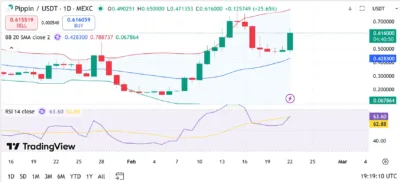
Pippin (PIPPIN) Price Prediction 2026–2030: Can PIPPIN Hit $0.70 Soon?
Pippin (PIPPIN) Price Prediction 2026–2030: Can PIPPIN Hit $0.70 Soon?

PIPPIN has surged sharply on the daily timeframe, printing a powerful bullish candle with over 25% gains. RSI is holding above 60, signaling strengthening momentum
Share
Coinstats2026/02/23 04:29
Will Cardano Reach $10 by 2030? Analysts Break Down ADA’s Growth Cycles

Will Cardano Reach $10 by 2030? Analysts Break Down ADA’s Growth Cycles

The post Will Cardano Reach $10 by 2030? Analysts Break Down ADA’s Growth Cycles appeared first on Coinpedia Fintech News Cardano (ADA) is trading at $0.9024 with a market cap of $32.91 billion. Experts say ADA has the potential to climb much higher, with some placing long-term targets as high as $10. The token continues to benefit from stronger visibility, rising liquidity, and increasing inflows from both institutional and retail markets. Can Cardano Hit $10 …
Share
CoinPedia2025/09/18 17:19
Crypto whale loses $6M to sneaky phishing scheme targeting staked Ethereum

Crypto whale loses $6M to sneaky phishing scheme targeting staked Ethereum

The post Crypto whale loses $6M to sneaky phishing scheme targeting staked Ethereum appeared on BitcoinEthereumNews.com. A crypto whale lost more than $6 million in staked Ethereum (stETH) and Aave-wrapped Bitcoin (aEthWBTC) after approving malicious signatures in a phishing scheme on Sept. 18, according to blockchain security firm Scam Sniffer. According to the firm, the attackers disguised their move as a routine wallet confirmation through “Permit” signatures, which tricked the victim into authorizing fund transfers without triggering obvious red flags. Yu Xian, founder of blockchain security company SlowMist, noted that the victim did not recognize the danger because the transaction required no gas fees. He wrote: “From the victim’s perspective, he just clicked a few times to confirm the wallet’s pop-up signature requests, didn’t spend a single penny of gas, and $6.28 million was gone.” How Permit exploits work Permit approvals were originally designed to simplify token transfers. Instead of submitting an on-chain approval and paying fees, a user can sign an off-chain message authorizing a spender. That efficiency, however, has created a new attack surface for malicious players. Once a user signs such a permit, attackers can combine two functions—Permit and TransferFrom—to drain assets directly. Because the authorization takes place off-chain, wallet dashboards show no unusual activity until the funds move. As a result, the assets are gone when the approval executes on-chain, and tokens are redirected to the attacker’s wallet. This loophole has made permit exploits increasingly attractive for malicious actors, who can siphon millions without needing complex hacks or high-cost gas wars. Phishing losses The latest theft highlights a wider trend of escalating phishing campaigns. Scam Sniffer reported that in August alone, attackers stole $12.17 million from more than 15,200 victims. That figure represented a 72% jump in losses compared with July. According to the firm, the most significant share of August’s damages came from three large accounts that accounted for nearly half…
Share
BitcoinEthereumNews2025/09/19 02:31