The post U.S., Europe brands take on the Chinese consumer appeared on BitcoinEthereumNews.com. Pictured here is Louis Vuitton’s new cruise ship-shaped store in Shanghai, China, on June 28, 2025. Bloomberg | Bloomberg | Getty Images BEIJING — China’s economic slowdown isn’t discouraging U.S. and European brands from revamping their strategies to reach Chinese shoppers. Instead, the allure of the world’s second-largest consumer market is forcing companies to adapt in the face of growing competition from local brands. In the case of Kraft Heinz, getting more people in China to buy ketchup this year also meant hiring a local agency to help create catchy campaigns — decorating subway station columns to mimic ketchup bottles and promoting the condiment as a fresh twist on a popular dish: stir-fried eggs and tomatoes. It’s a hard market to tackle, even for Shanghai-based marketing firm Good Idea Growth Network (GGN). The agency has witnessed at least five different waves of consumer trends in its 14-year history, founder Stephy Liu, said in Mandarin, translated by CNBC. “The gameplay keeps on changing.” But GGN has succeeded even after rejecting an acquisition offer from British advertising giant WPP, Liu said, noting that about half of her clients are foreign brands. While Kraft Heinz isn’t done with its China ketchup campaign yet, the company reported second-quarter net sales in emerging markets climbed by 4.2% from a year ago, helping offset declines in North America. WPP explored a potential acquisition of GGN but did not end up going far in the process, according to a person familiar with the discussions. Kraft Heinz did not immediately respond to requests for comment. Localized social media From Starbucks’ struggles to Lululemon’s successes in China, it’s become clear that the right mix of localization is essential. “Among international brands in China, the winners are often dedicating more than 40% of revenue to marketing, especially content and platform-first… The post U.S., Europe brands take on the Chinese consumer appeared on BitcoinEthereumNews.com. Pictured here is Louis Vuitton’s new cruise ship-shaped store in Shanghai, China, on June 28, 2025. Bloomberg | Bloomberg | Getty Images BEIJING — China’s economic slowdown isn’t discouraging U.S. and European brands from revamping their strategies to reach Chinese shoppers. Instead, the allure of the world’s second-largest consumer market is forcing companies to adapt in the face of growing competition from local brands. In the case of Kraft Heinz, getting more people in China to buy ketchup this year also meant hiring a local agency to help create catchy campaigns — decorating subway station columns to mimic ketchup bottles and promoting the condiment as a fresh twist on a popular dish: stir-fried eggs and tomatoes. It’s a hard market to tackle, even for Shanghai-based marketing firm Good Idea Growth Network (GGN). The agency has witnessed at least five different waves of consumer trends in its 14-year history, founder Stephy Liu, said in Mandarin, translated by CNBC. “The gameplay keeps on changing.” But GGN has succeeded even after rejecting an acquisition offer from British advertising giant WPP, Liu said, noting that about half of her clients are foreign brands. While Kraft Heinz isn’t done with its China ketchup campaign yet, the company reported second-quarter net sales in emerging markets climbed by 4.2% from a year ago, helping offset declines in North America. WPP explored a potential acquisition of GGN but did not end up going far in the process, according to a person familiar with the discussions. Kraft Heinz did not immediately respond to requests for comment. Localized social media From Starbucks’ struggles to Lululemon’s successes in China, it’s become clear that the right mix of localization is essential. “Among international brands in China, the winners are often dedicating more than 40% of revenue to marketing, especially content and platform-first…

U.S., Europe brands take on the Chinese consumer

Pictured here is Louis Vuitton’s new cruise ship-shaped store in Shanghai, China, on June 28, 2025.

Bloomberg | Bloomberg | Getty Images

BEIJING — China’s economic slowdown isn’t discouraging U.S. and European brands from revamping their strategies to reach Chinese shoppers.

Instead, the allure of the world’s second-largest consumer market is forcing companies to adapt in the face of growing competition from local brands.

In the case of Kraft Heinz, getting more people in China to buy ketchup this year also meant hiring a local agency to help create catchy campaigns — decorating subway station columns to mimic ketchup bottles and promoting the condiment as a fresh twist on a popular dish: stir-fried eggs and tomatoes.

It’s a hard market to tackle, even for Shanghai-based marketing firm Good Idea Growth Network (GGN). The agency has witnessed at least five different waves of consumer trends in its 14-year history, founder Stephy Liu, said in Mandarin, translated by CNBC. “The gameplay keeps on changing.”

But GGN has succeeded even after rejecting an acquisition offer from British advertising giant WPP, Liu said, noting that about half of her clients are foreign brands.

While Kraft Heinz isn’t done with its China ketchup campaign yet, the company reported second-quarter net sales in emerging markets climbed by 4.2% from a year ago, helping offset declines in North America.

WPP explored a potential acquisition of GGN but did not end up going far in the process, according to a person familiar with the discussions.

Kraft Heinz did not immediately respond to requests for comment.

Localized social media

From Starbucks’ struggles to Lululemon’s successes in China, it’s become clear that the right mix of localization is essential.

“Among international brands in China, the winners are often dedicating more than 40% of revenue to marketing, especially content and platform-first marketing, while also iterating products locally based on market data,” said Jacob Cooke, co-founder and CEO of WPIC Marketing + Technologies, which helps foreign brands sell in China.

This year, Cooke said that Under Armour has created products under 100 yuan ($14) in order to attract a mass of buyers online, while using livestreams with dedicated users to then build fitness communities and sell more premium products offline.

ByteDance-owned Douyin has become an e-commerce force in the last few years since celebrities and companies started using the app for livestreaming sales during the pandemic. And by the numbers, there’s little question that jumping into the Xiaohongshu and Douyin world is worthwhile for businesses.

Adapting to that new social commerce ecosystem has become the biggest challenge for brands in the last two years, GGN’s Liu said. “Foreign brands will think, ‘Isn’t this just TikTok?'”

She warned that success requires a complex strategy that can involve changing everything from how a team is structured to the kinds of products sold. But the payoff is significant.

“In half a year, it can help you sell more than you sold on [Alibaba‘s] Tmall in two years,” Liu said.

Data is power

In addition to social media, a critical factor in many companies’ strategies is access to hordes of data on what consumers in China are buying.

Chinese e-commerce platforms, including Alibaba’s Tmall, share far more data on what’s popular than Amazon.com does, WPIC’s Cooke said. In China, “people generally know what their competitors are selling and what they’re selling for.”

With that granular data, Chinese makeup brand Perfect Diary was able to succeed by identifying a market pain point and creating a lipstick targeted at that lower price segment, Cooke said. He noted that’s pressured foreign brands to create China-specific products as well, a big shift over the last five years.

E-commerce platforms in China also often show rough figures on how many orders were placed per product, while third-party companies such as Syntun offer significant amounts of product rankings and other online sales data for free.

Weekly analysis and insights from Asia’s largest economy in your inbox
Subscribe now

In the case of Apple‘s iPhone 17 launch on Sept. 19, it was Chinese e-commerce company JD.com that released sales data for mainland China. The electronics-focused platform announced that the first minute of iPhone 17 series preorders surpassed the first-day preorder volume of last year’s iPhone 16 series.

Apple’s story also underscores how it’s possible to reignite local interest despite losing market share to domestic competition. Some customers in Beijing told CNBC that they liked the iPhone’s new cosmic orange color, and that more locals intended to buy their first iPhone this year since they’d heard about new attractive features such as larger internal storage.

China’s factories were quick to jump on the trend, releasing iPhone cases with a similar orange hue even before the 17 model was out.

“Winning brands are those that have established local R&D centers and on-the-ground product teams,” said Ashley Dudarenok, founder of ChoZan, a China marketing consultancy. “This allows them to spot trends early, develop products tailored to local needs, and launch them in months, not years. This is a significant departure from the past, where global products were often simply rolled out in the Chinese market.”

Cultural connection

Even with the right data and social media platforms, cultural integration is becoming increasingly important, especially as Chinese brands find success in tapping the country’s own history of artisanal craftsmanship.

“Brands are moving beyond superficial nods to Chinese culture,” Dudarenok said. She pointed out that Loewe partnered with jade carving masters, while Burberry teamed up with bamboo-weaving artists.

And despite declining sales in China’s luxury market, LVMH this summer opened an eye-catching ship-shaped store in Shanghai — immediately generating much local buzz.

In contrast to LVMH’s luggage-shaped store in Manhattan, the Shanghai location taps into the Chinese city’s history as a port of entry for international travelers to Asia roughly a century ago.

The new store also captures the European brand’s roots in hand-crafted travel trunks — which contrasts with Chinese brands’ inability to offer the same emotional appeal, Joe Ngai, chairman of greater China at McKinsey, pointed out in a LinkedIn post.

“As Chinese customers grow in their confidence and desire for local elements,” he said, “creating more crossovers between West and East is one of the unique opportunities for multinationals in China.”

— CNBC’s Eunice Yoon contributed to this report.

Source: https://www.cnbc.com/2025/10/04/from-data-to-culture-us-europe-brands-take-on-the-chinese-consumer.html

Market Opportunity
Union Logo
Union Price(U)
$0.000799
$0.000799$0.000799
-4.54%
USD
Union (U) Live Price Chart
Disclaimer: The articles reposted on this site are sourced from public platforms and are provided for informational purposes only. They do not necessarily reflect the views of MEXC. All rights remain with the original authors. If you believe any content infringes on third-party rights, please contact service@support.mexc.com for removal. MEXC makes no guarantees regarding the accuracy, completeness, or timeliness of the content and is not responsible for any actions taken based on the information provided. The content does not constitute financial, legal, or other professional advice, nor should it be considered a recommendation or endorsement by MEXC.

You May Also Like

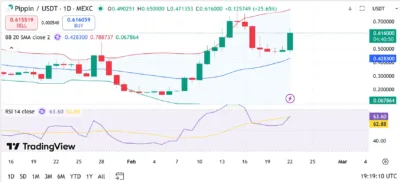
Pippin (PIPPIN) Price Prediction 2026–2030: Can PIPPIN Hit $0.70 Soon?

Pippin (PIPPIN) Price Prediction 2026–2030: Can PIPPIN Hit $0.70 Soon?

PIPPIN has surged sharply on the daily timeframe, printing a powerful bullish candle with over 25% gains. RSI is holding above 60, signaling strengthening momentum
Share
Coinstats2026/02/23 04:29
Will Cardano Reach $10 by 2030? Analysts Break Down ADA’s Growth Cycles

Will Cardano Reach $10 by 2030? Analysts Break Down ADA’s Growth Cycles

The post Will Cardano Reach $10 by 2030? Analysts Break Down ADA’s Growth Cycles appeared first on Coinpedia Fintech News Cardano (ADA) is trading at $0.9024 with a market cap of $32.91 billion. Experts say ADA has the potential to climb much higher, with some placing long-term targets as high as $10. The token continues to benefit from stronger visibility, rising liquidity, and increasing inflows from both institutional and retail markets. Can Cardano Hit $10 …
Share
CoinPedia2025/09/18 17:19
Crypto whale loses $6M to sneaky phishing scheme targeting staked Ethereum

Crypto whale loses $6M to sneaky phishing scheme targeting staked Ethereum

The post Crypto whale loses $6M to sneaky phishing scheme targeting staked Ethereum appeared on BitcoinEthereumNews.com. A crypto whale lost more than $6 million in staked Ethereum (stETH) and Aave-wrapped Bitcoin (aEthWBTC) after approving malicious signatures in a phishing scheme on Sept. 18, according to blockchain security firm Scam Sniffer. According to the firm, the attackers disguised their move as a routine wallet confirmation through “Permit” signatures, which tricked the victim into authorizing fund transfers without triggering obvious red flags. Yu Xian, founder of blockchain security company SlowMist, noted that the victim did not recognize the danger because the transaction required no gas fees. He wrote: “From the victim’s perspective, he just clicked a few times to confirm the wallet’s pop-up signature requests, didn’t spend a single penny of gas, and $6.28 million was gone.” How Permit exploits work Permit approvals were originally designed to simplify token transfers. Instead of submitting an on-chain approval and paying fees, a user can sign an off-chain message authorizing a spender. That efficiency, however, has created a new attack surface for malicious players. Once a user signs such a permit, attackers can combine two functions—Permit and TransferFrom—to drain assets directly. Because the authorization takes place off-chain, wallet dashboards show no unusual activity until the funds move. As a result, the assets are gone when the approval executes on-chain, and tokens are redirected to the attacker’s wallet. This loophole has made permit exploits increasingly attractive for malicious actors, who can siphon millions without needing complex hacks or high-cost gas wars. Phishing losses The latest theft highlights a wider trend of escalating phishing campaigns. Scam Sniffer reported that in August alone, attackers stole $12.17 million from more than 15,200 victims. That figure represented a 72% jump in losses compared with July. According to the firm, the most significant share of August’s damages came from three large accounts that accounted for nearly half…
Share
BitcoinEthereumNews2025/09/19 02:31