When TOKEN2049 Dubai was pushed back to April 21–22, 2027, the headline looked procedural. In reality, it was anything but. A conference has been delayed because regional tensions have made theWhen TOKEN2049 Dubai was pushed back to April 21–22, 2027, the headline looked procedural. In reality, it was anything but. A conference has been delayed because regional tensions have made the
Learn/Market Insights/Hot Topic Analysis/TOKEN2049 D... for Crypto

TOKEN2049 Dubai’s Delay Is More Than an Event Change—It’s a Warning Sign for Crypto

Mar 18, 2026Marcus O'Brien
0m
4
4$0.021988-4.19%
CHANGE
CHANGE$----%
Sign
SIGN$0.012069+0.66%


When TOKEN2049 Dubai was pushed back to April 21–22, 2027, the headline looked procedural. In reality, it was anything but.


A conference has been delayed because regional tensions have made the timing untenable. That may sound like a logistics story. It is not. In crypto, where geography was once treated as secondary and politics as noise, this is a reminder that the industry is now exposed to the same hard constraints as every other serious global business: security, capital confidence, cross-border mobility, and state power.


And that is precisely why the delay matters.


Crypto spent years telling itself a flattering story—that code could outrun borders, that networks could dilute geography, that capital would flow to the most efficient rails regardless of politics. That story was always incomplete. Crypto may be decentralized in architecture, but its institutions are not. Exchanges need licenses. Stablecoin issuers need banks and custodians. Investors need legal certainty. Founders need visas, offices, and functioning financial infrastructure. Conferences need planes to land and people to show up.


The industry does not operate above the map. It operates on top of it.


Why this delay is a bigger deal than it looks


TOKEN2049 is not just another industry gathering. It is one of the few recurring events in crypto that operates as a genuine coordination point for the global market.


By the organizer’s own figures, recent editions have attracted more than 15,000 to 20,000 attendees, 200-plus speakers, and 300-plus side events. That scale matters. In crypto, these conferences are not a sideshow to business activity; they are part of the machinery. Fundraising rounds get accelerated there. Partnerships are initiated there. Listings are discussed there. Funds, exchanges, market makers, founders, developers, and policymakers often use these events not merely to network, but to take the market’s pulse.


So when an event of that scale is postponed, the signal is larger than a date change. It says that even one of the industry’s most important hubs is not insulated from regional instability. And it reveals something crypto has long resisted admitting: policy can help build a hub, but it cannot neutralize geopolitics.


Why Dubai matters so much


That is especially true because Dubai is not peripheral to crypto. It has become central.
Over the past few years, the UAE has positioned itself as one of the industry’s most credible global bases. Chainalysis rankings have placed the country among the world’s more significant crypto markets, reflecting both retail participation and institutional relevance. Dubai created VARA, a dedicated virtual assets regulator, while Abu Dhabi built out its own regulatory architecture through ADGM. Add tax advantages, a highly international business environment, and a location connecting Asia, Europe, and Africa, and the appeal is obvious.


More importantly, the Gulf offers something crypto values highly and often struggles to find elsewhere: capital that is patient, globally connected, and willing to engage with emerging financial infrastructure. Family offices, sovereign pools of capital, and private wealth networks have given the region influence beyond what raw population numbers would suggest.


This is why the postponement lands with unusual force. It interrupts not just an event, but a narrative—the idea that the Gulf could offer crypto a relatively stable strategic base while other jurisdictions remained politically or regulatorily hostile.
Markets can live with risk. What they struggle with is uncertainty.


The fantasy of a borderless industry is over


For much of its history, crypto framed itself as a system that could route around political friction. But the more meaningful and institutional the industry becomes, the less convincing that claim looks.


The market has already learned this repeatedly. Mining migrated when China shut it down. Exchanges restructured as regulatory pressure mounted in the US and elsewhere. Stablecoins have been pulled into debates about dollar power, sanctions enforcement, and offshore liquidity. Every year, crypto becomes more entangled with the real levers of global finance—legal systems, banking rails, reserve assets, and sovereign oversight.


This is not a contradiction of crypto’s original vision so much as a correction to its mythology. A sector can be technologically decentralized and still geopolitically dependent.


That is where the TOKEN2049 delay becomes symbolically important. It is not simply evidence that regional tensions can disrupt industry plans. It is evidence that crypto has become too large, too capital-intensive, and too institutionally exposed to pretend politics is just a macro backdrop.


Stablecoins show where crypto is becoming indispensable


If there is one part of crypto that best captures this shift from ideology to utility, it is stablecoins.
Their role is no longer theoretical. The stablecoin market has in recent periods hovered around $160 billion to $170 billion or more, with Tether and Circle accounting for the overwhelming share of outstanding supply. More telling is transfer activity: by some industry estimates, annual stablecoin transaction volume has run into the trillions of dollars, in certain periods rivaling or even surpassing the throughput of major legacy payment networks depending on how transfers are measured.


That scale exists for a reason. Stablecoins solve practical problems.


They provide dollar access in countries with weak local currencies. They make cross-border settlement faster and cheaper. They serve as core liquidity infrastructure for exchanges and over-the-counter markets. Increasingly, they are being used not because people want exposure to “crypto,” but because they need a better way to move money.


This is where geopolitics becomes central. In periods of conflict, sanctions anxiety, payment fragmentation, or currency instability, the premium shifts. Markets care less about speculative upside and more about whether value can still be held, transferred, and settled with minimal friction. Stablecoins are not important because they are exciting. They are important because they work.


That, more than almost anything else in crypto, explains why the asset class is now relevant to larger geopolitical and monetary questions.


Stablecoin acts as a critical element of the broader crypto landscape. USDe, issued by the Ethereum-based DeFi platform Ethena, aims to address the centralized challenges faced by stablecoins.


MEXC Ventures has allocated $66 million across the Ethena ecosystem. Its latest move includes a $30 million investment in ENA (the governance token of the Ethena protocol) in September 2025. This builds on a $16 million ENA purchase and a $20 million acquisition of USDe made in February of the same year.


What the industry should take from this


The most important effect of geopolitics on crypto may not be price volatility, though that will always grab the headlines. It is structural repricing.


For years, firms could choose locations largely on the basis of regulatory arbitrage. That era is fading. The more serious question now is not where rules are lightest, but where systems are most durable. That means looking at legal clarity, banking access, operational resilience, political stability, and physical security all at once.


In that environment, the future of crypto is unlikely to belong to one uncontested global capital. It is more likely to be distributed across several regional hubs, each offering a different mix of capital, policy, access, and institutional credibility. The United States will matter because it still dominates capital markets. Europe will matter because regulation can create investable certainty. Asia will matter because of user activity and entrepreneurial depth. The Gulf will matter because capital and strategic flexibility still count. But none of these centers can take permanence for granted.


That may be the clearest lesson from Dubai.


Crypto wanted to believe it was building a world beyond politics. In reality, it has grown into an industry important enough to be shaped by politics at the highest level. That is not a sign of failure. It is a sign of arrival.


And that is why TOKEN2049’s delay should not be dismissed as a scheduling footnote. It is a small event carrying a larger truth: crypto’s future will not be determined by technology alone. It will also be determined by where the world remains open, stable, and governable enough for that technology to scale.


The market still likes to talk about what happens on-chain. Increasingly, the more consequential story may be what happens off it.
Oportunidad de mercado
Logo de 4
Precio de 4(4)
$0.021988
$0.021988$0.021988
+1.74%
USD
Gráfico de precios en vivo de 4 (4)
Este artículo es proporcionado por Marcus O'Brien únicamente con fines informativos y no constituye asesoramiento financiero ni de inversión. Los mercados de criptomonedas implican riesgos significativos. Realiza una investigación independiente o consulta a un profesional calificado antes de tomar cualquier decisión de inversión. Las opiniones expresadas no representan necesariamente las de MEXC o sus afiliados.

Artículos populares

Ver más
El IPC se dispara y aviva los temores de una subida de tasas; los rendimientos de los bonos del Tesoro de EE. UU. superan el 5 % y alcanzan máximos de 19 años: ¿qué está descontando el mercado? | Investigación semanal de MEXC Alpha Trader

El IPC se dispara y aviva los temores de una subida de tasas; los rendimientos de los bonos del Tesoro de EE. UU. superan el 5 % y alcanzan máximos de 19 años: ¿qué está descontando el mercado? | Investigación semanal de MEXC Alpha Trader

Septiembre de 2026, semana 2 Período de informe: 9 de septiembre – 15 de septiembre de 2026 Fecha de corte: 15 de septiembre de 2026 Resumen del mercado La semana pasada, el mercado cripto enfrentó un
Exposición a acciones en horario de 24 horas y horario extendido: Liquidez, diferenciales y riesgo

Exposición a acciones en horario de 24 horas y horario extendido: Liquidez, diferenciales y riesgo

Operar fuera de la sesión regular de patrimonio de EE. UU. puede cambiar la liquidez, los diferenciales, los tipos de órdenes disponibles, el descubrimiento de precios y la calidad de ejecución. La se
Cashback de MEXC Card: entre un 4% y un 10% de vuelta en USDT — así funciona

Cashback de MEXC Card: entre un 4% y un 10% de vuelta en USDT — así funciona

Recibir cashback en las compras del día a día es una de las ventajas más prácticas que puede ofrecer una tarjeta cripto, pero no todos los programas de cashback están construidos igual. Las dos tarjet

Investigación semanal de MEXC Alpha Trader | Una rara divergencia entre NFP y ADP desata una lucha de poder en el mercado: ¿subida de tipos o pausa?

Investigación semanal de MEXC Alpha Trader | Una rara divergencia entre NFP y ADP desata una lucha de poder en el mercado: ¿subida de tipos o pausa?

Primera semana de septiembre de 2026 Período estadístico: del 2 al 8 de septiembre de 2026 Fecha de corte de datos: 8 de septiembre de 2026 Narrativa principal Impulsado por datos macroeconómicos y te

Noticias en tendencia

Ver más
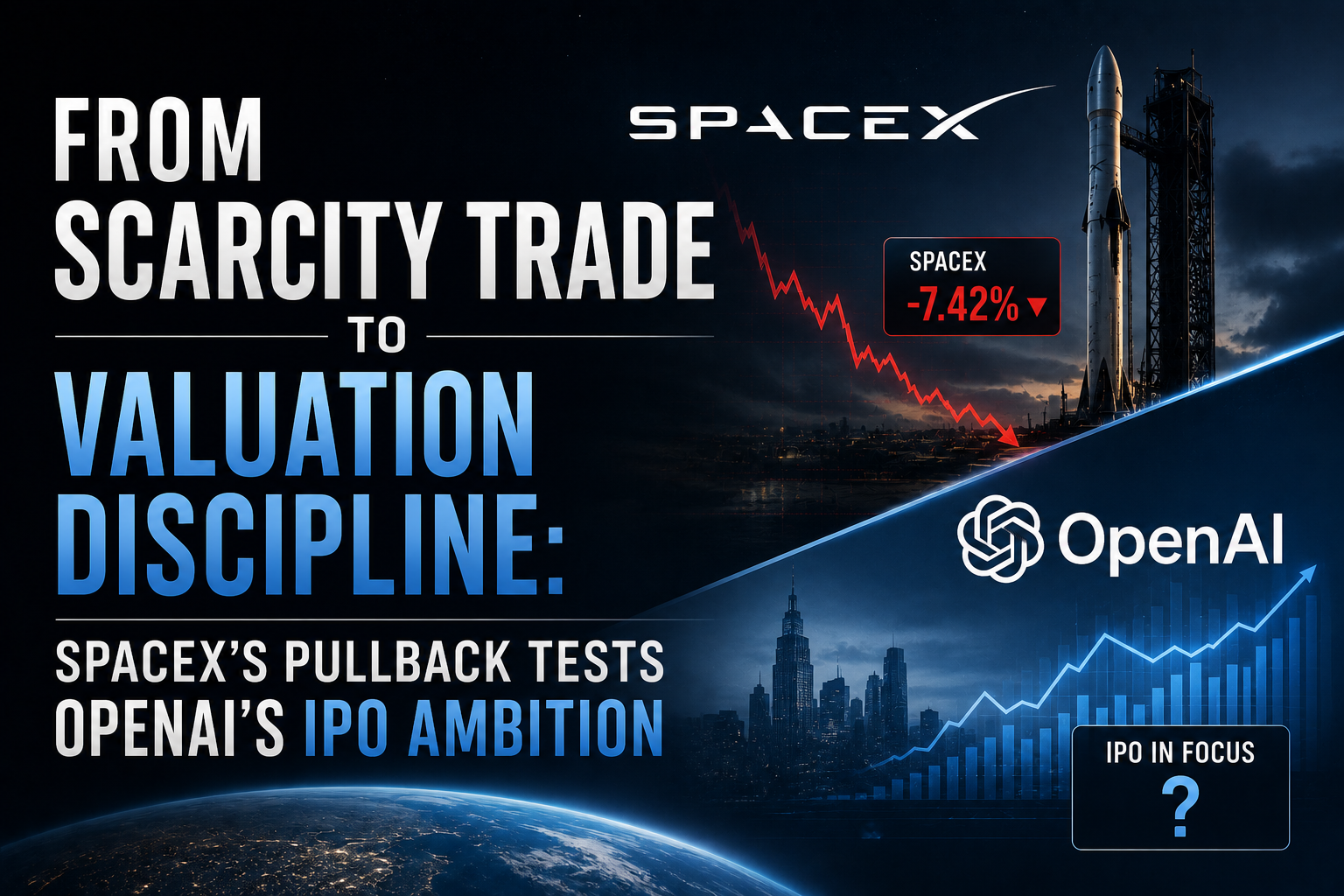
De la Escasez Comercial a la Disciplina de Valoración: El Retroceso de SpaceX Pone a Prueba la Ambición de OPI de OpenAI

De la Escasez Comercial a la Disciplina de Valoración: El Retroceso de SpaceX Pone a Prueba la Ambición de OPI de OpenAI

Según se informa, OpenAI está inclinándose hacia retrasar su OPI hasta 2027, pero la señal de mercado más clara proviene de SpaceX. SpaceX cerró a la baja un 16,4% a $154,60 el 22 de junio, un 31,5% p
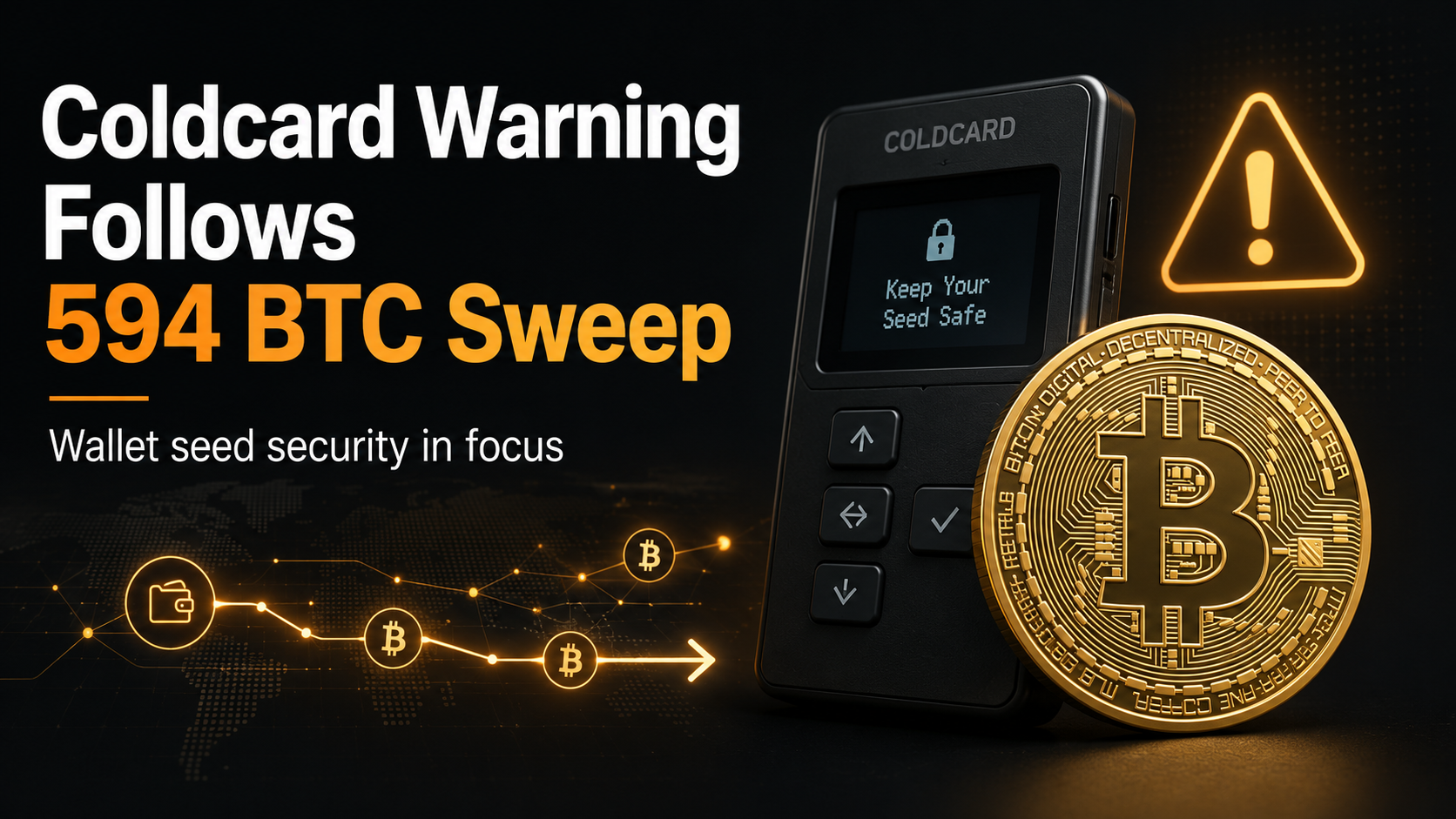
Advertencia de Coldcard Mk3 tras el barrido de 38 millones de dólares en Bitcoin, pero la causa sigue sin confirmarse

Advertencia de Coldcard Mk3 tras el barrido de 38 millones de dólares en Bitcoin, pero la causa sigue sin confirmarse

El fabricante de carteras frías de Bitcoin, Coinkite, ha advertido a los usuarios sobre un problema en la generación de semillas que afecta a los dispositivos Coldcard, incluidas todas las versiones d

Mastercard completa la adquisición de BVNK por hasta 1.800 millones de dólares: las stablecoins entran en el núcleo de los pagos globales

Mastercard completa la adquisición de BVNK por hasta 1.800 millones de dólares: las stablecoins entran en el núcleo de los pagos globales

Mastercard completó su adquisición del proveedor de infraestructura de stablecoin BVNK el 3 de agosto de 2026, tras anunciar la transacción en marzo.

La relación entre el volumen de operaciones al contado de DEX y CEX alcanza el 24 % mientras se debilita la actividad de los exchanges centralizados

La relación entre el volumen de operaciones al contado de DEX y CEX alcanza el 24 % mientras se debilita la actividad de los exchanges centralizados

La relación entre el volumen al contado de los exchanges descentralizados y el volumen al contado de los exchanges centralizados alcanzó el 24,14 % en julio de 2026, según la serie de datos actual de

Artículos relacionados

Ver más
El IPC se dispara y aviva los temores de una subida de tasas; los rendimientos de los bonos del Tesoro de EE. UU. superan el 5 % y alcanzan máximos de 19 años: ¿qué está descontando el mercado? | Investigación semanal de MEXC Alpha Trader

El IPC se dispara y aviva los temores de una subida de tasas; los rendimientos de los bonos del Tesoro de EE. UU. superan el 5 % y alcanzan máximos de 19 años: ¿qué está descontando el mercado? | Investigación semanal de MEXC Alpha Trader

Septiembre de 2026, semana 2Período de informe: 9 de septiembre – 15 de septiembre de 2026Fecha de corte: 15 de septiembre de 2026Resumen del mercadoLa semana pasada, el mercado cripto enfrentó una pr

Investigación semanal de MEXC Alpha Trader | Una rara divergencia entre NFP y ADP desata una lucha de poder en el mercado: ¿subida de tipos o pausa?

Investigación semanal de MEXC Alpha Trader | Una rara divergencia entre NFP y ADP desata una lucha de poder en el mercado: ¿subida de tipos o pausa?

Primera semana de septiembre de 2026Período estadístico: del 2 al 8 de septiembre de 2026Fecha de corte de datos: 8 de septiembre de 2026Narrativa principalImpulsado por datos macroeconómicos y tensio

Investigación semanal de MEXC Alpha Trader | Los comentarios agresivos desde Washington cambian las expectativas: la probabilidad de una subida de tasas se dispara al 56%, presionando a los activos de riesgo

Investigación semanal de MEXC Alpha Trader | Los comentarios agresivos desde Washington cambian las expectativas: la probabilidad de una subida de tasas se dispara al 56%, presionando a los activos de riesgo

4.ª semana de agosto de 2026Período: 26 ago 2026 – 1 sep 2026Fecha límite de datos: 1 sep 2026Narrativa principalDurante la última semana, el mercado cripto experimentó una fuerte reversión, pasando r

MEXC Alpha Trader Investigación semanal de inversiones | La "operación de depreciación del dólar estadounidense" enciende el mercado, BTC y oro rompen al alza simultáneamente—¿un nuevo paradigma o un frenesí a Short-plazo?

MEXC Alpha Trader Investigación semanal de inversiones | La "operación de depreciación del dólar estadounidense" enciende el mercado, BTC y oro rompen al alza simultáneamente—¿un nuevo paradigma o un frenesí a Short-plazo?

3.ª semana de agosto de 2026Período estadístico: 19 de agosto de 2026 – 25 de agosto de 2026Fecha límite de datos: 25 de agosto de 2026Narrativa principalDurante la última semana, el mercado cripto ex


Regístrate en MEXC
Regístrate y recibe hasta 10.000 USDT en bonos
Is Your Stablecoin Truly Safe?
Is Your Stablecoin Truly Safe?Is Your Stablecoin Truly Safe?
Know the risks of USDT, USDC, OpenUSD & USD1