

Järgmine laine: Suitsu puudumise müük
See this article also available in French
First published on February 8, 2026
Selling the absence of smoke
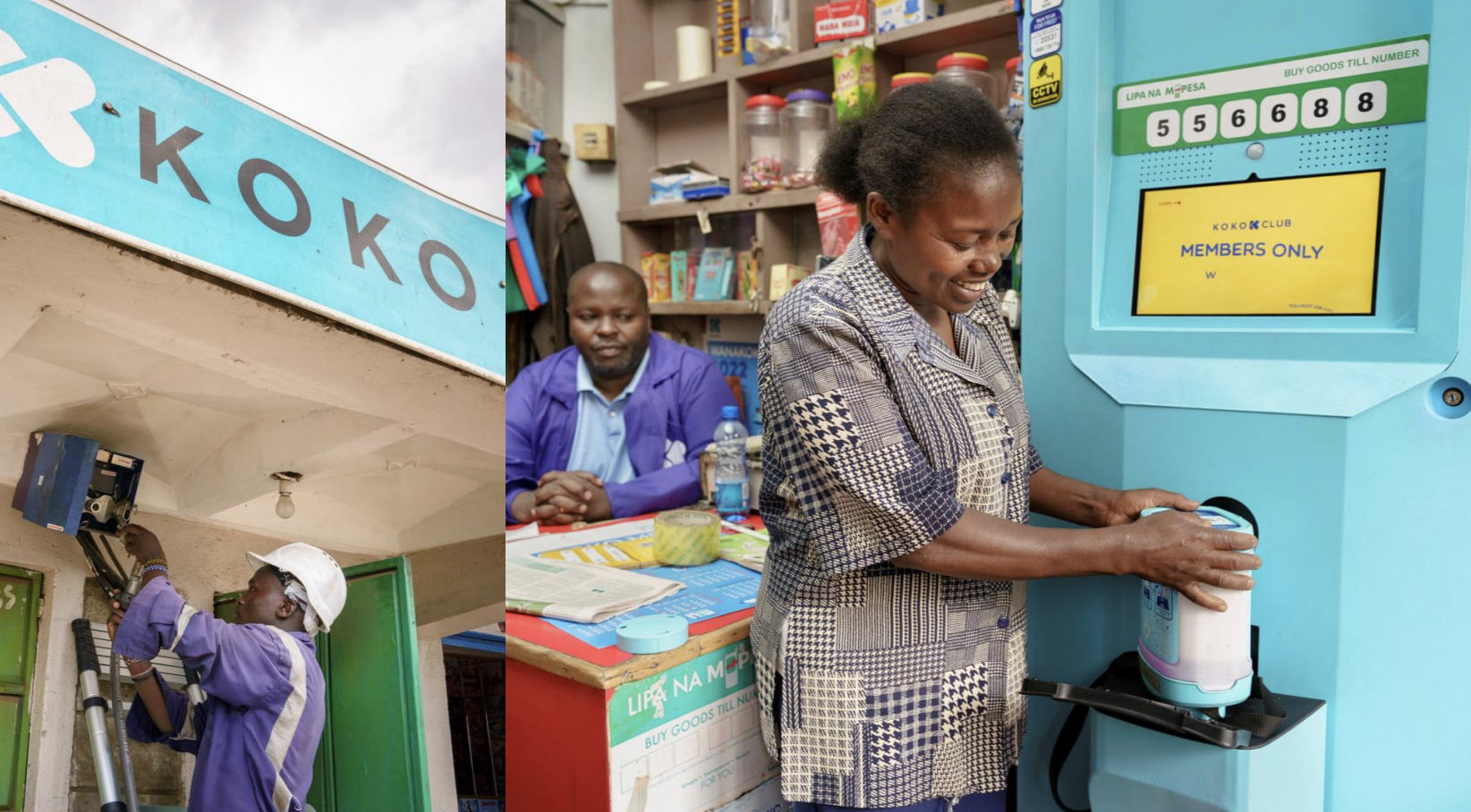
Image: KOKO
If you’re a climate tech startup in 2026, your core business essentially revolves around two key offerings: a tangible product that helps protect the planet—and a financial mechanism designed to fund that very product. The challenge? While the physical product is undeniably valuable, the financial model behind it often feels fragile, like a house of cards.
The KOKO shutdown
Take KOKO Networks in Kenya. For over a decade, KOKO was widely regarded as a shining example of Africa’s green transition. Their high-tech bioethanol stoves replaced smoky charcoal in 1.5 million households—bringing clean, efficient cooking to communities across the continent. It was a remarkable success story, celebrated for its promise of cleaner air and reduced carbon emissions. But then, everything changed.
In January 2026, KOKO abruptly ceased operations and laid off all 700 of its employees—leaving behind a trail of unanswered questions. The company had been operating at a loss because the economics simply no longer added up. KOKO sold its bioethanol stoves at steep discounts—roughly KES 2,000 ($16) per stove, despite the actual manufacturing cost being closer to KES 8,000 ($62). To make matters worse, they offered fuel at half the market price.
The logic behind KOKO’s pricing strategy was straightforward: every time a Kenyan household switched from charcoal to bioethanol, they avoided emitting significant amounts of carbon dioxide and methane. KOKO would then convert these avoided emissions into carbon credits—selling them to international airlines or banks at roughly $20 per ton. For KOKO, this revenue stream wasn’t just an extra—it formed the backbone of their entire business model.
However, to sell these carbon credits in high-value compliance markets like the Carbon Offsetting and Reduction Scheme for International Aviation (CORSIA), KOKO needed a Letter of Authorisation (LoA) from the Kenyan government. Essentially, the government had to sign a document stating: “We waive our right to count these emission reductions toward our national climate goals—so KOKO can sell them to an airline.” Yet, according to some insiders close to KOKO’s operations, the government hesitated. They realized that by allowing KOKO to monetize their climate progress, they were effectively handing over their own environmental achievements to a private company seeking profit. In the end, the government chose not to sign the LoA—and without that crucial authorization, KOKO ran out of cash and was forced into administration.
Next Wave continues after this ad.

Following another successful edition in 2025, the Africa Tech Summit Nairobi is set to return for its eighth installment in 2026—bringing together tech leaders from across the African ecosystem and global industry players under one roof at the Sarit Expo Centre in Nairobi, Kenya. Join us to connect with innovators shaping Africa’s tech landscape and explore how technology can drive sustainable growth. Register now!
The integrity crisis
The KOKO story is a microcosm of a much larger issue: the credibility of carbon credits is increasingly under scrutiny. Without government authorization, those credits simply don’t exist—but even when authorized, many of these credits may not actually represent real, measurable reductions in carbon emissions.
“According to Romm’s team, less than 10% of offsets currently on the market deliver genuine, verifiable, and lasting emission reductions,” says Joseph Romm, a leading climate scientist. “In fact, most carbon credits fail the additionality test—meaning the projects would have proceeded regardless, or the carbon ‘saved’ was never truly at risk.” In other words, paying someone not to cut down a forest that they weren’t planning to fell in the first place doesn’t reduce atmospheric carbon—it merely shifts the burden of responsibility onto others.
The absolution fallacy
As an oil company, you might purchase carbon credits to claim that your liquefied natural gas—or even your flights—are carbon neutral. But experts who set corporate climate targets are increasingly warning that such claims are misleading at best.
According to Doreen Stabinsky, a member of the SBTi Technical Council, “The evidence we’ve gathered on the effectiveness of carbon credits reinforces what many academics have been saying for decades: carbon credits—of any kind—should not be used to offset fossil fuel emissions.”
The problem lies in the concept of fungibility: the market treats a ton of carbon stored in a tree—which could burn down tomorrow—as equivalent to a ton of carbon extracted from the earth as oil and released into the atmosphere, where it lingers for millennia. These aren’t the same. One represents a permanent change to the Earth’s crust, while the other is a temporary biological storage solution.
Gilles Dufrasne of Carbon Market Watch adds, “While some carbon certificates can play a positive role in corporate decarbonization efforts, carbon offsetting isn’t one of them.” Dufrasne advocates shifting away from offsetting—where companies pretend their emissions don’t count—and toward contributions—where businesses simply invest in initiatives that genuinely benefit the environment. However, this approach doesn’t allow companies to slap a “carbon neutral” sticker on their fuel pumps, making it a harder sell to marketing executives eager to tout sustainability credentials.
Junk-for-junk swaps
When these systems break down, they do so in ways that only a financial engineer could appreciate. Take the Shell rice paddy scandal in China. Verra—the world’s largest carbon registry—discovered that the carbon credits Shell had purchased to offset methane emissions from rice paddies were nothing more than hot air; the underlying activities never took place.
In the physical world, admitting failure would mean acknowledging that the atmosphere has suffered. But in the carbon market, Verra “compensated” for the shortfall by replacing the fraudulent credits with new credits from other rice projects—projects that were themselves canceled due to similar issues. It’s a junk-for-junk swap that balances the books but does little to improve the planet’s health.
The blockchain frontier
Naturally, banks are proposing technology as the solution. JPMorgan is developing Kinexys—a platform designed to tokenize carbon credits and settle transactions on the blockchain. The idea? Atomic settlement: when you buy a credit, the token and the payment are exchanged instantly, ensuring transparency and efficiency.
They’re also creating composite assets—essentially, a single token that bundles fractionalized credits from hundreds of different projects. While this approach boosts liquidity, it also makes it harder to verify whether the trees are still standing. If 90% of those underlying credits are what Joseph Romm calls “junk,” you’ve just built a highly efficient trading mechanism for… well, garbage.
We’re not solving the climate crisis through carbon math—because today, climate action often feels more like compliance work than meaningful progress.
Next Wave ends after this ad.
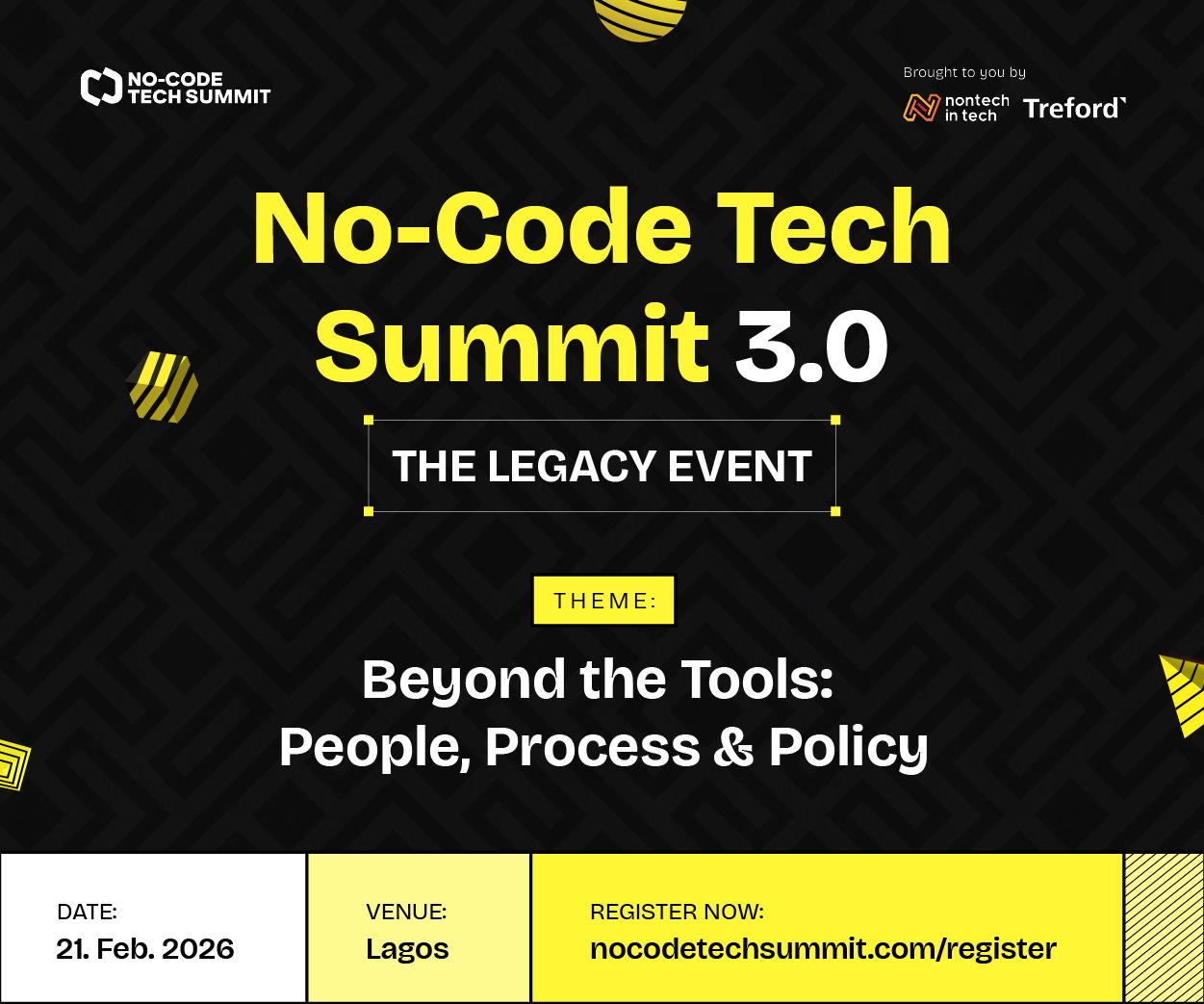
No Code Tech Summit 3.0: The Legacy Event.
When: February 21, 2026
Where: Lagos.
Theme: Beyond the Tools: People, Process, and Policy.
Africa’s premier no-code and non-technical tech gathering is back—with a focus on the true drivers of sustainable tech growth: people, operations, and policy. Founders, professionals, executives, ecosystem builders, and career changers will gather to discuss the future of tech innovation. The agenda includes keynote speeches, panel discussions, masterclasses, and focused conversations about where the tech ecosystem is headed.
Kenn Abuya
Senior Reporter, TechCabal
Thank you for reading this far. Feel free to email kenn[at]bigcabal.com with your thoughts on this edition of NextWave—or simply click “reply” to share your feedback and insights.
We’d love to hear from you
Psst! Down here!
Thanks for reading today’s Next Wave. Please share—or subscribe if someone shared it with you.
As always, feel free to reply with your thoughts or responses to this essay—I enjoy reading those emails very much.
The TC Daily newsletter delivers a concise roundup of all the tech and business stories you need to know—every weekday at 7 AM (WAT).
Follow TechCabal on Twitter, Instagram, Facebook, and LinkedIn to stay engaged in our real-time conversations about tech and innovation in Africa.
 |
|
    |
|
|
18, Nnobi Street, Surulere, Lagos, Nigeria |
View in Map |
| You received this email because you signed up on our website or made a purchase from us. If you no longer wish to receive these emails, please unsubscribe. |


Teile võib meeldida ka

Binance silmitsi koosnevad vastavusnõuded, kui kõrgem ametnik kaalub lahkumist

Iraani sõja ohustab Euroopa ja Jaapani majanduskasvu – 50% tõenäosus majanduslanguseks, väidab BCA Research – Majandus Bitcoin News




