

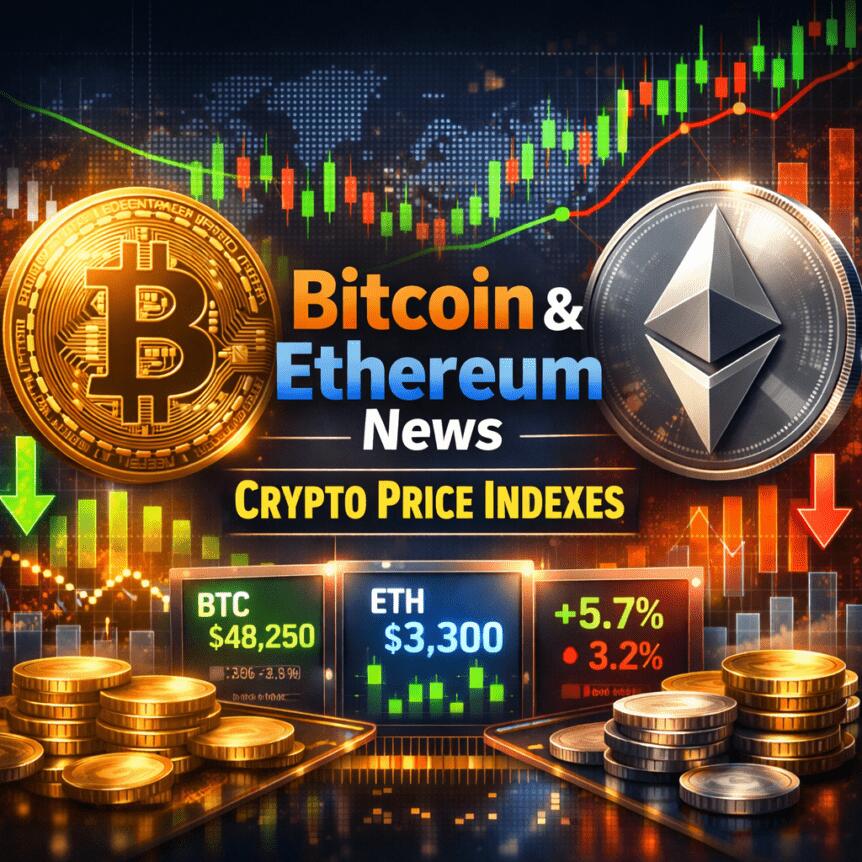
Bitcoin ja Ethereum uudised, krüptovaluutade hinnaindeksid
Bitcoin ja Ethereum on maailma kõige populaarsemad krüptovaluutad, mis on pälvinud suurt tähelepanu nii investorite kui ka tehnoloogiaentusiastide seas. Nende väärtus on pidevalt muutunud, mõjutades mitmeid finantsturgude segmente ja ülemaailmset majandust.
Bitcoin: digitaalse kullakarja tulevik
Bitcoin on esimene ja kõige tuntum krüptovaluuta, mis loodi 2009. aastal Satoshi Nakamotopoolt. Selle eesmärk oli luua desentraliseeritud rahasüsteem, mis ei sõltu riiklikest institutsioonidest või keskpankadest. Bitcoin on tuntud oma piiratud pakkumise poolest – maksimaalselt saab olla 21 miljonit bitcoini. See on muutnud bitcoinist atraktiivse investeeringu jaoks, eriti kui turud on ebastabiilsed.
Key Points:
- Bitcoin on maailma esimene ja kõige populaarsem krüptovaluuta.
- Piiratud pakkumine (21 miljonit bitcoini) muudab selle haruldaseks ja atraktiivseks investeeringuks.
- Bitcoin on oluline osa desentraliseeritud finantssüsteemide arengust.
Ethereum: platvormi tulevik
Ethereum on teine kõige populaarsem krüptovaluuta, mis on tuntud oma nutikate lepingute ja dApp-de (decentralized applications) toetamise poolest. Ethereum on mitmekülgsuse ja innovatsiooni poolest unikaalne, pakkudes platvormi, kus arendajad saavad luua ja käivitada decenterdat rakendusi. Ethereumi tokenid, nagu Ether (ETH), on samuti populaarsed ja kasutatakse peamiselt platvormi operatsioonide jaoks.
Key Points:
- Ethereum pakub nutikaid lepinguid ja dApps-i, mis muudavad krüptovaluutade kasutamist laiemalt.
- Ether (ETH) on Ethereumi põhiline token, mis toetab platvormi tööd.
- Ethereum on oluline tegija blockchain-tehnoloogia arengus.
Krüptovaluutade hinnaindeksid: turu jälgimine
Krüptovaluutade hinnaindeksid, nagu Bitcoin Price Index (BPI) ja Ethereum Price Index (ETHI), annavad investoritele olulist infot turu trendide kohta. Need indeksid kuvavad reaalajas hindu ja aitavad investoritel paremini oma strateegiaid planeerida. Hinnaindeksid on eriti olulised riskijuhtimise ja portfelli diversifitseerimise kontekstis.
Key Points:
- Krüptovaluutade hinnaindeksid aitavad investoritel turu trende jälgida.
- BPI ja ETHI on olulised instrumentidena riskijuhtimiseks ja portfelli juhtimiseks.
- Hinnaindeksid tagavad transparrantsuse ja usaldusväärsuse krüptovaluutade turul.
Tulevik: krüptovaluutad ja finantstehnoloogia
Krüptovaluutad on muutumas üha enam mainstreamiks, eriti pärast seda, kui paljud finantsteenuste pakkujad on krüptovaluutade integreerimist alustanud. Blockchain-tehnoloogia on avanud uued võimalused finantstehnoloogias, muutes makseprotsesse kiiremaks ja odavamaks. Krüptovaluutad on kaasa aidanud ka finantsinclusiooni edendamisele, pakkudes ligipääsu finantsteenustele inimestele, kes traditsioonilistes finantssüsteemides on vähe teenindatud.
Key Points:
- Krüptovaluutad on muutumas mainstreamiks ja finantsteenuste pakkujate poolt aktiivselt kasutatud.
- Blockchain-tehnoloogia on muutnud makseprotsesse kiiremaks ja odavamaks.
- Krüptovaluutad aitavad kaasa finantsinclusiooni edendamisele.
Disclaimer: Käesolev sisu on informatiivne ja ei tohi tõlgendada kui finantsnõustamine. Krüptovaluutadega seotud tehingud võivad olla riskantsed ja nõuda professionaalset nõustamist.
Allikas: Kripto-uudised
Israelis on the cusp of a new era in their digital-asset sector, striving for clearer regulations and a more supportive environment that fosters innovation. At an event held in Tel Aviv in early February, the Israeli Crypto Blockchain & Web 3.0 Companies Forum unveiled a comprehensive lobbying initiative aimed at reshaping the regulatory framework for stablecoins, tokenization, and the tax treatment of tokenized assets. This push is backed by groundbreaking research from KPMG, which suggests that if implemented, these reforms could inject approximately 120 billion shekels (about $38.36 billion) into Israel’s economy by 2035—and create roughly 70,000 new jobs.
With policymakers signaling that 2026 could mark a pivotal year for Israel’s crypto scene, following the US-brokered ceasefire in Gaza, advocates argue that a more flexible regulatory landscape would not only unlock significant investment and innovation but also provide businesses with clearer compliance pathways. As global attention turns to the Middle East, Israel’s efforts to establish a robust and forward-thinking regulatory framework are gaining momentum—positioning the country as a key player in the region’s evolving digital-asset ecosystem.
Key Takeaways
- The Forum’s agenda focuses on simplifying rules around stablecoins and asset tokenization, while also streamlining tax compliance for digital assets.
- KPMG’s research, cited by the organizers, projects a potential economic boost of 120 billion shekels by 2035—and the creation of about 70,000 jobs—if the proposed reforms take effect.
- Public engagement with crypto in Israel is already strong: estimates indicate that over 25% of the population has engaged with crypto markets in the past five years, while more than 20% currently hold digital assets.
- Banking frictions persist, with local financial institutions remaining cautious toward crypto clients—and due diligence processes that can slow even legitimate funding flows.
- A national strategy framework, endorsed by lawmakers and government agencies, envisions a unified regulator, clear rules for token issuance, and closer integration with traditional banking systems as its core pillars.
- The broader market context reveals steady growth in Israel’s crypto economy, driven by regional dynamics and post-crisis policy shifts across the wider Middle East.
Sentiment: Neutral
Market Context: The ongoing push aligns with a growing regional trend toward regulatory clarity for digital assets, as policymakers balance innovation with consumer protection. This discussion comes on the heels of heightened activity in the global crypto space, where regulatory developments and institutional engagement are shaping investment flows and product innovation.
Why It Matters
The Israeli Forum’s lobbying effort highlights a long-term journey toward policy maturity for digital assets—a journey often celebrated for Israel’s deep fintech ecosystem. If the proposed reforms—from tax treatment to token issuance and stablecoin regulation—are enacted, the immediate impact could be a more predictable operating environment for startups and fintech companies already rooted in Tel Aviv and surrounding hubs. Fireblocks and Starkware, two prominent players in Israel’s crypto ecosystem, are among the Forum’s sponsors, underscoring the substantial institutional interest in Israel’s ability to turn regulatory clarity into a competitive advantage.
At the heart of this push lies a data-driven argument about public sentiment and ownership. A significant portion of Israelis have engaged with crypto: more than a quarter of the population has interacted with crypto markets in the last five years, and a notable share remains actively invested in digital assets. Proponents believe that a clearer regulatory framework would reduce compliance costs, ease friction with banks, and attract both domestic and international capital. This isn’t just about niche technology—it’s about transforming Israel’s fintech strengths into a robust, globally integrated digital-asset sector capable of attracting venture capital and top talent, while offering tax and regulatory certainty to all participants.
On the policy front, the conversation fits within a broader national strategy. In mid-year, Israel’s National Crypto Strategy Committee presented an interim report to the Knesset, outlining a five-pillar framework designed to establish a unified regulator, define concrete rules for token issuance, and integrate banking services with digital-asset activities. The Government’s stance on crypto taxation also evolved in August, when the Tax Authority introduced a voluntary disclosure procedure—offering taxpayers a way to come forward with previously undisclosed digital-asset income and assets in exchange for immunity from criminal prosecution. While officials acknowledged that participation fell short of expectations, they remained committed to pushing the program through to the end of August 2026. The Tax Authority’s leadership emphasized that the banking sector—still wary of cryptocurrency—continues to pose challenges in converting voluntary disclosures into practical liquidity for participants.
Beyond national borders, Israel’s efforts intersect with global peers pursuing tokenization and DLT pilots. Recent studies highlight how European pilots and U.S. initiatives are shaping the international landscape for token-based finance and on-chain markets. While Israel charts its own course, the regional and global context provides valuable context for what the country is trying to achieve: a stable, scalable environment where digital assets can grow responsibly—while delivering tangible economic benefits.
The broader narrative also reflects a dual reality: innovation and risk management must advance hand in hand. On one side, the sector seeks predictable tax rules, a clear regulatory sandbox, and simpler compliance regimes. On the other, regulators are tasked with safeguarding consumers and preserving financial stability amid rapid technological advancement. The delicate balance Israel strives to strike will not only influence domestic growth but also shape its reputation as a hub for crypto engineering, tokenized financial services, and cross-border collaboration in a global market increasingly sensitive to regulatory signals.
What to Watch Next
- Parliamentary review and potential amendments to the National Crypto Strategy Committee’s interim framework—including expected legislative steps in 2026.
- Formalization of token issuance rules and the development of a roadmap for integrating banking services into Israel’s financial system.
- Updates to the Voluntary Disclosure Procedure, including participation metrics and plans for broader outreach beyond August 2026.
- Regulatory guidance on stablecoins and tokenized assets—clarifying standards for custody, settlement, and consumer protection.
Sources & Verification
- Materials from the Israeli Forum event and statements from Nir Hirshman-Rub, delivered at the February Tel Aviv gathering.
- KPMG research cited by the Forum, detailing the potential economic impact of regulatory reforms.
- Chainalysis reports on crypto adoption in the Middle East and North Africa, along with insights into Israel’s crypto economy trajectory.
- Startup Nation Central data on Israel’s fintech and digital-asset startups, funding trends, and employment figures.
- The Israel Tax Authority’s Voluntary Disclosure Procedure page, alongside related coverage in Globes regarding participation levels.
- The National Crypto Strategy Committee’s interim report to the Knesset, along with related policy discussions.
- Post-conflict policy references and industry commentary on the Gaza ceasefire and its regulatory implications.
Israel’s Regulatory Push Could Redefine the Digital Asset Landscape
Israel’s digital-asset sector stands at a critical juncture—where policy decisions could either accelerate growth or dampen the momentum built within a vibrant fintech ecosystem. The Forum’s campaign to ease stablecoin and tokenization rules, coupled with streamlined tax treatment, offers a pragmatic path toward scaling innovation while maintaining appropriate safeguards. The numbers behind this push—120 billion shekels in potential economic impact by 2035 and roughly 70,000 new jobs—are a testament to the immense opportunity that could accompany a well-calibrated regulatory regime. These projections rest on solid ground, supported by KPMG’s research, which the Forum cites as the foundation for a policy package designed to reduce ambiguity, lower compliance costs, and attract capital.
However, the journey from advocacy to enacted policy is shaped by a complex web of stakeholders. Banks, prosecutors, and tax authorities all play crucial roles in determining how crypto businesses operate in practice. The banking sector, in particular, has historically been cautious toward crypto-related clients—due diligence processes that can feel daunting for emerging firms. Executives note that without clear regulatory language and robust consumer protections, these frictions could hinder the flow of funds needed to scale projects and attract international partners. While ongoing dialogue between policymakers and industry participants suggests a willingness to align incentives, implementation ultimately depends on legislative debate and regulatory clarity.
In this context, Israel’s broader strategy—especially the five-pillar framework proposed by the National Crypto Strategy Committee—offers a blueprint for sustainable growth. A unified regulator, explicit guidelines for token issuance, and a plan to integrate banking services with digital-asset activities could reduce fragmentation and build confidence among entrepreneurs and investors alike. Meanwhile, the voluntary disclosure program underscores the government’s commitment to creating a safe and structured channel for asset reporting—though participation metrics and enforcement timelines indicate that outreach and uptake will remain critical in the months ahead. The interplay between domestic policy, corporate innovation, and international perception will determine whether Israel becomes a regional hub for tokenization and crypto engineering—or a cautionary tale of regulatory uncertainty.
In the near term, observers will closely watch for concrete policy moves and parliamentary momentum. The post-2026 regulatory environment will likely hinge on how quickly Israel can translate its strategic vision into risk-managed products and services. The evolving stance on stablecoins, the mechanics of token issuance, and the practical cross-border implications of a unified regulator will all influence investor appetite and the pace of product development. As regional players and global incumbents refine their own regulatory frameworks, Israel’s path could serve as a valuable case study in balancing innovation with oversight—and in turning theoretical economic gains into tangible benefits for citizens and businesses alike.
This article was originally published as Bitcoin & Ethereum News, Crypto Price Indexes on Crypto Breaking News—your trusted source for crypto news, Bitcoin news, and blockchain updates.


Teile võib meeldida ka

Unikaalne esinemise tõus põhjustab globaalset hädaolukorda

Riot Platforms teeb 500 BTC ülekanne NYDIG’ile, mis võib olla 35 miljoni dollari väärtuses Bitcoinimüük




