USD/INR: 95.23 Retest Risk Looms as Societe Generale Flags Intensifying INR Pressure
BitcoinWorld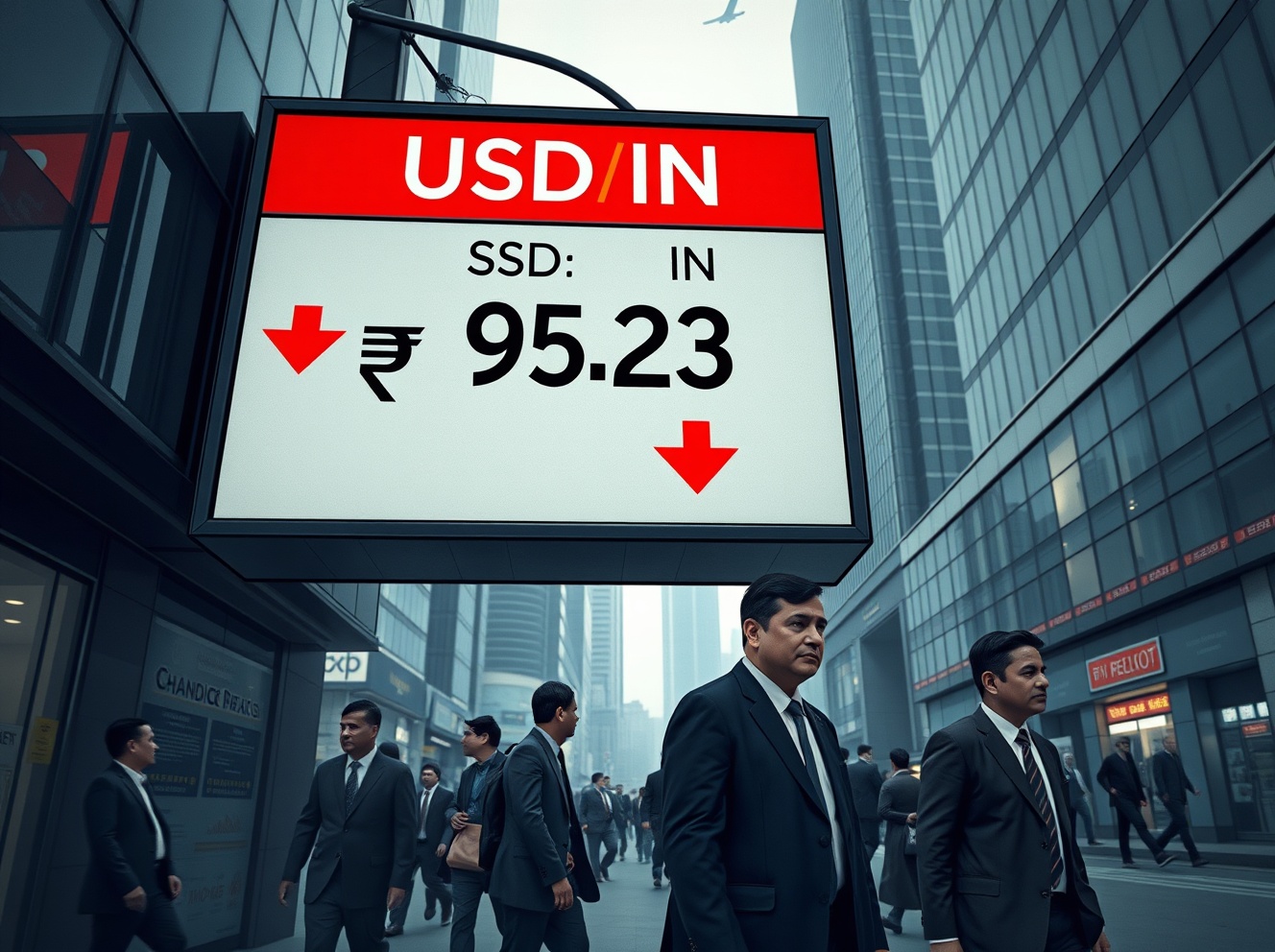
USD/INR: 95.23 Retest Risk Looms as Societe Generale Flags Intensifying INR Pressure
The USD/INR pair faces a significant 95.23 retest risk as Societe Generale warns of mounting INR pressure from global and domestic factors. This analysis dives deep into the underlying causes, expert projections, and potential market impacts.
Societe Generale Flags USD/INR 95.23 Retest Risk
Societe Generale’s latest currency note sends a clear signal: the Indian rupee remains under severe strain. The French investment bank identifies the 95.23 level as a critical retest point. This forecast stems from persistent INR pressure driven by a strong US dollar and widening trade deficits. The bank’s analysis highlights that the Reserve Bank of India (RBI) faces a tough balancing act. It must manage inflation while preventing excessive rupee depreciation. Consequently, the USD/INR pair could revisit the 95.23 mark in the coming weeks. This projection aligns with broader emerging market currency trends.
Why 95.23 Matters for the Indian Rupee
The 95.23 level represents a psychological and technical resistance zone. Traders watch this point closely. A breach above it could trigger further selling pressure on the rupee. Societe Generale’s research notes that the rupee’s vulnerability stems from external imbalances. India’s current account deficit widens as import costs rise. Simultaneously, capital outflows from foreign portfolio investors (FPIs) add to the INR pressure. The bank’s strategists argue that without significant RBI intervention, the USD/INR pair may test this level. This scenario creates a 95.23 retest risk that investors cannot ignore.
Global Headwinds Intensify INR Pressure
Several global factors compound the rupee’s woes. First, the US Federal Reserve maintains a hawkish stance. Higher US interest rates attract capital away from emerging markets. This dynamic strengthens the dollar and weakens the rupee. Second, geopolitical tensions disrupt supply chains. Energy price volatility directly impacts India’s import bill. Third, global risk aversion reduces appetite for emerging market assets. Each factor contributes to the INR pressure Societe Generale highlights. The bank’s analysis shows that these external forces show no signs of easing. Therefore, the USD/INR pair remains skewed towards further depreciation.
Trade Deficit and Current Account Concerns
India’s trade deficit widened to a record high in recent months. Import bills for crude oil, electronics, and gold surge. Export growth, while positive, cannot keep pace. This imbalance creates structural demand for US dollars. Consequently, the INR pressure becomes self-reinforcing. Societe Generale’s economists estimate that the current account deficit could exceed 3% of GDP. Such a deficit level historically correlates with rupee weakness. The 95.23 retest risk therefore reflects a fundamental economic reality. India must attract more capital inflows to stabilize its currency.
RBI Policy Response and Its Limits
The Reserve Bank of India actively manages the rupee. It intervenes through spot market dollar sales and forward contracts. However, its ability to defend specific levels has limits. Foreign exchange reserves, while substantial, are not infinite. The RBI spent billions in recent months to curb volatility. Yet the USD/INR pair continues to inch higher. Societe Generale notes that the RBI’s intervention strategy may shift. Instead of targeting a specific level, it may allow gradual depreciation. This approach conserves reserves but validates the 95.23 retest risk. The bank’s report suggests that the RBI’s tolerance for rupee weakness has increased.
Impact on Importers and Exporters
A weaker rupee creates winners and losers. Exporters benefit from improved competitiveness. IT services, textiles, and pharmaceuticals gain an edge. However, importers face higher costs. Oil marketing companies, electronics manufacturers, and gold traders suffer. The INR pressure directly impacts corporate earnings. Companies with unhedged foreign currency debt face repayment challenges. Societe Generale advises clients to hedge aggressively. The 95.23 retest risk means that volatility will persist. Businesses must prepare for a range-bound but elevated USD/INR environment.
Technical Analysis of USD/INR Trends
Chart patterns support Societe Generale’s bearish view. The USD/INR pair trades above its 50-day and 200-day moving averages. This alignment signals strong upward momentum. The Relative Strength Index (RSI) remains above 60, indicating bullish sentiment. Key support levels sit at 94.50 and 94.00. A break below these levels would delay the 95.23 retest risk. However, current momentum favors the upside. The pair’s Bollinger Bands widen, suggesting increased volatility. Societe Generale’s technical team identifies 95.23 as the next major resistance. A close above this level opens the door to 95.50 and beyond.
Historical Precedents for Rupee Weakness
The rupee has faced similar pressure in the past. During the 2013 taper tantrum, it fell sharply. In 2020, pandemic-related outflows caused a spike. Each episode saw the RBI intervene heavily. However, the current environment differs. Global liquidity conditions are tighter. The US dollar’s strength is broad-based. Societe Generale draws parallels to the 2018-2019 period. Then, the USD/INR pair rose from 65 to 74. The current move from 82 to 95+ represents a similar trajectory. The 95.23 retest risk therefore fits a historical pattern of gradual depreciation.
Market Expectations and Forward Guidance
Currency markets price in further rupee weakness. Forward premiums for the dollar rise. Importers rush to cover future payments. Speculative positions show net short rupee bets. Societe Generale’s survey of institutional investors reveals bearish consensus. Most expect the USD/INR pair to trade between 95 and 96 by year-end. This outlook reinforces the 95.23 retest risk. The bank’s strategists caution against aggressive short-covering. They argue that the trend remains firmly dollar-positive. Investors should watch for any shift in RBI rhetoric. A more hawkish stance could temporarily support the rupee.
Comparison with Other Emerging Market Currencies
The rupee is not alone in its weakness. The Turkish lira, Brazilian real, and Indonesian rupiah also decline. However, the INR pressure stands out for its persistence. Societe Generale’s cross-currency analysis shows that the rupee underperforms its peers. This underperformance stems from India’s specific vulnerabilities. High oil import dependence and low foreign exchange reserve coverage ratios weigh heavily. The 95.23 retest risk is therefore a symptom of broader emerging market stress. A coordinated dollar rally could push all these currencies lower.
Policy Implications for the Indian Government
The government can take steps to reduce INR pressure. Encouraging foreign direct investment (FDI) helps. Promoting exports through trade agreements supports the balance of payments. Reducing import dependence on energy through renewable investments also matters. However, these measures take time. In the short term, the USD/INR pair will remain driven by global factors. Societe Generale’s report urges policymakers to maintain fiscal discipline. A widening fiscal deficit would add to currency woes. The 95.23 retest risk underscores the need for structural reforms.
Investment Strategies for Currency Traders
Traders should adopt a cautious approach. Long dollar positions remain attractive. However, volatility creates opportunities for range trading. Societe Generale recommends buying dips in the USD/INR pair. Selling rallies carries risk given the upward trend. Options strategies like strangles can profit from volatility. The 95.23 retest risk makes stop-losses essential. Traders must monitor RBI intervention announcements closely. A surprise intervention could trigger sharp reversals. The bank’s analysts suggest maintaining a core long dollar position while hedging tail risks.
Long-Term Outlook for the Indian Rupee
Beyond the immediate 95.23 retest risk, the rupee faces structural challenges. India’s rapid economic growth requires large capital imports. This demand for foreign currency naturally weakens the rupee. However, rising productivity and export diversification could reverse this trend. Societe Generale’s long-term model shows the rupee stabilizing around 90-95 by 2027. The current INR pressure may therefore be cyclical rather than permanent. Investors should view the USD/INR pair through a multi-year lens. Short-term volatility should not obscure India’s strong growth story.
Conclusion
The USD/INR pair faces a clear 95.23 retest risk as Societe Generale warns of sustained INR pressure. Global headwinds, trade deficits, and RBI policy constraints all contribute to this outlook. Traders and businesses must prepare for continued volatility. The rupee’s trajectory depends on external factors beyond India’s control. However, prudent policy and structural reforms can mitigate long-term risks. Investors should monitor the 95.23 level closely as a key inflection point for the Indian currency.
FAQs
Q1: What does Societe Generale’s 95.23 retest risk mean for the Indian rupee?
A1: It means the USD/INR pair could rise to 95.23, reflecting continued weakness in the Indian rupee due to global and domestic pressures.
Q2: Why is the INR under pressure according to Societe Generale?
A2: The INR faces pressure from a strong US dollar, widening trade deficits, capital outflows, and geopolitical tensions that increase import costs.
Q3: How might the RBI respond to the 95.23 retest risk?
A3: The RBI may intervene through dollar sales but could also allow gradual depreciation to conserve foreign exchange reserves.
Q4: Who benefits from a weaker rupee?
A4: Exporters in IT, textiles, and pharmaceuticals benefit from improved competitiveness. Importers of oil, electronics, and gold face higher costs.
Q5: Is the 95.23 level a technical or fundamental target?
A5: It is both. Technically, it is a resistance level. Fundamentally, it reflects India’s current account deficit and global dollar strength.
This post USD/INR: 95.23 Retest Risk Looms as Societe Generale Flags Intensifying INR Pressure first appeared on BitcoinWorld.


Potrebbe anche piacerti

Pi Network Reaches 526 Million KYC Tasks, Strengthening Human AI Infrastructure

Riyadh Development Company (ARDCO) Achieves Its First GIPS® Standards Verification, Conducted by TSG