Short Funding Rate Hit 19% – A Shocking Surge Signals Extreme Bearish Sentiment in Crypto Markets
BitcoinWorld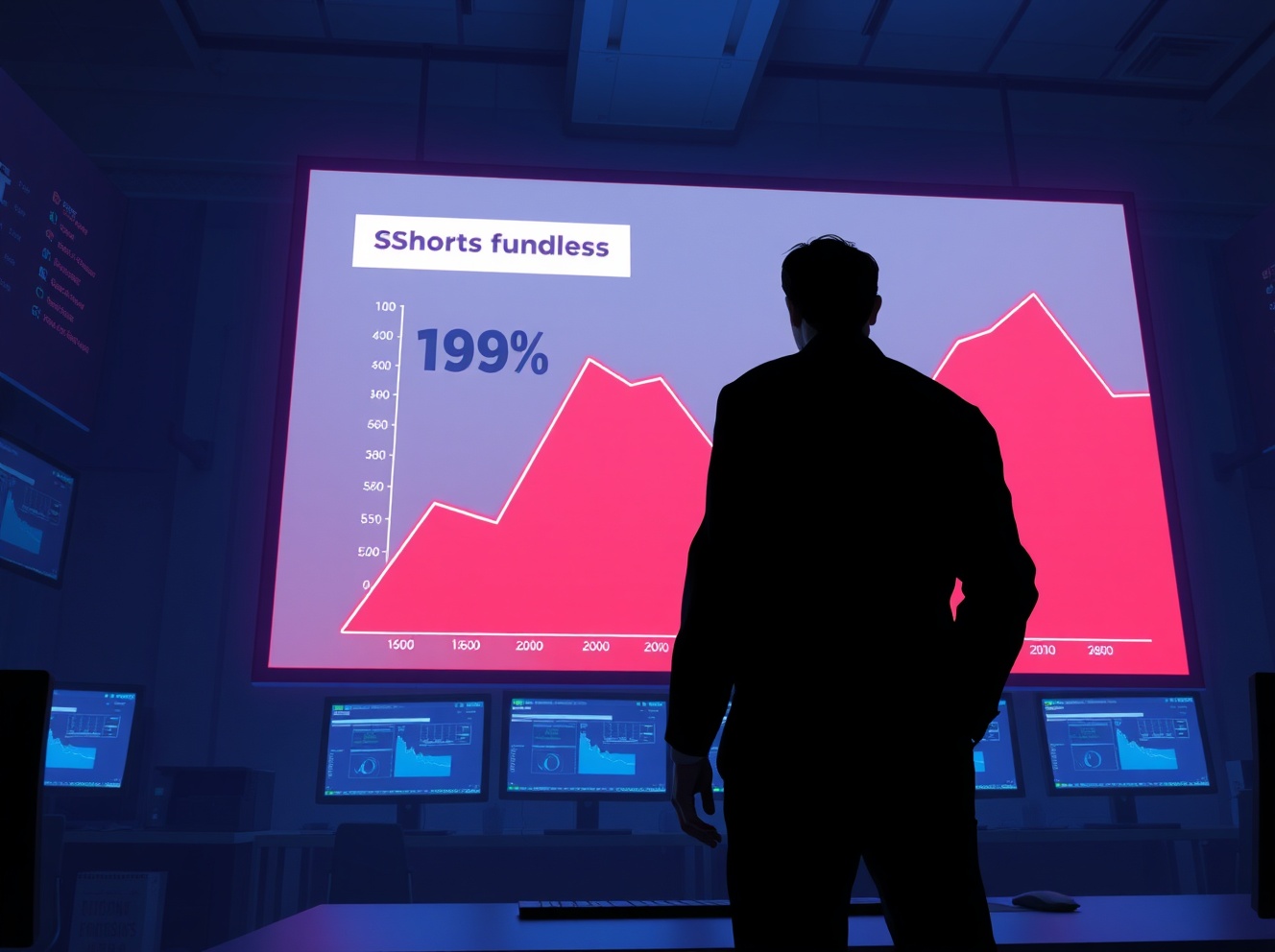
Short Funding Rate Hit 19% – A Shocking Surge Signals Extreme Bearish Sentiment in Crypto Markets
The short funding rate on cryptocurrency exchange CEX.IO has surged to an annualized 19%, the highest level since early 2023. This spike reveals an extreme concentration of bearish bets against digital assets. Traders now pay a record premium to maintain short positions. The data highlights growing pessimism in the market.
What Does the Short Funding Rate Surge Mean?
The short funding rate represents the cost for traders who borrow assets to sell them short. In April, this rate reached an annualized 11% before peaking at 19%. This marks a dramatic increase from the 1-3% range seen in late 2023. Such a high rate signals that many traders expect prices to fall further.
Funding rates work like a periodic payment between long and short positions. When shorts dominate, they pay longs to maintain their positions. This mechanism ensures perpetual futures contracts stay close to the spot price. The current level suggests a severe imbalance in market sentiment.
Historical Context: Comparing to Early 2023
The last time funding rates reached 19% was in early 2023. Back then, the crypto market was recovering from the FTX collapse. Bitcoin traded around $16,000. Today, Bitcoin hovers near $65,000. The comparison shows that extreme bearishness can occur at any price level.
In early 2023, the high funding rate preceded a significant rally. Bitcoin gained over 100% in the following months. This pattern suggests that excessive shorting can create a short squeeze. A short squeeze happens when rising prices force short sellers to buy back assets, fueling further gains.
Key Differences Between 2023 and Now
- Market maturity: The crypto ecosystem now has more institutional participation.
- Regulatory clarity: Spot Bitcoin ETFs launched in early 2024, changing the landscape.
- Liquidity conditions: Order book depth has improved significantly.
- Macro environment: Interest rates remain high, but inflation is cooling.
Why Are Traders Betting Against Crypto?
Several factors drive this bearish sentiment. First, the Federal Reserve maintains a hawkish stance on monetary policy. Higher interest rates reduce appetite for risk assets. Second, regulatory uncertainty persists in the United States. The SEC continues to scrutinize crypto exchanges and tokens.
Third, on-chain data shows reduced network activity. Transaction volumes on major blockchains have declined. Fourth, geopolitical tensions add to market uncertainty. Traders often short assets during periods of global instability. Fifth, the lack of a clear catalyst for upward movement leaves bears in control.
Impact on Retail and Institutional Traders
The high short funding rate affects different trader groups differently. Retail traders often use high leverage, making them vulnerable to funding costs. A 19% annualized rate can erode profits quickly. Many retail short sellers may exit positions prematurely.
Institutional traders, however, can absorb these costs more easily. They use sophisticated hedging strategies to offset funding expenses. Some institutions even use the high funding rate as a signal to go long. They anticipate a potential short squeeze.
Short Squeeze Potential
History shows that extreme funding rates often precede sharp reversals. When funding costs become too high, short sellers close positions. This buying pressure pushes prices up. The upward move forces more shorts to cover, creating a feedback loop. The CEX.IO data suggests this scenario is possible.
How Does the Funding Rate Compare Across Exchanges?
CEX.IO reported the highest rate, but other exchanges show similar trends. Binance and Bybit have funding rates around 8-12%. Deribit, which focuses on options, shows elevated implied volatility. The table below summarizes the current landscape:
| Exchange | Funding Rate (Annualized) | Trend |
|---|---|---|
| CEX.IO | 19% | Spiking |
| Binance | 11% | Rising |
| Bybit | 9% | Stable |
| Deribit | N/A (Options) | Elevated volatility |
Expert Perspectives on the Data
Market analysts view the short funding rate as a contrarian indicator. When bearish sentiment peaks, markets often bottom. However, timing these reversals is difficult. The funding rate alone does not guarantee a rally.
Dr. Elena Torres, a derivatives strategist, notes: ‘Extreme funding rates signal crowded trades. When everyone bets against the market, there are few sellers left. This creates a setup for explosive moves.’ She adds that traders should monitor open interest alongside funding rates.
Risk Management for Traders
High funding rates demand careful risk management. Traders should reduce leverage when funding costs rise. Using stop-loss orders becomes critical. Additionally, diversifying across assets can mitigate single-asset risk.
For those holding short positions, monitoring funding payment schedules is essential. Some exchanges charge funding every 8 hours. A 19% annualized rate translates to approximately 0.052% per 8-hour period. Over a week, this compounds to 0.36%.
Conclusion
The short funding rate hitting 19% on CEX.IO marks a significant milestone. It reflects extreme bearish sentiment not seen since early 2023. While this data points to potential market stress, it also creates opportunities. Traders should approach with caution, understanding that high funding rates can precede sharp reversals. Monitoring funding rates across exchanges provides valuable insight into market psychology. The current environment demands disciplined risk management and a clear strategy.
FAQs
Q1: What is a short funding rate?
A: The short funding rate is the cost paid by traders who hold short positions in perpetual futures contracts. It is an annualized percentage that reflects the premium for betting against an asset.
Q2: Why did the short funding rate reach 19%?
A: The rate surged due to a concentration of bearish bets, driven by factors like hawkish Fed policy, regulatory uncertainty, and low market activity. The imbalance between shorts and longs pushed funding costs higher.
Q3: Is a high short funding rate bullish or bearish?
A: It is often seen as a contrarian bullish signal. High funding rates indicate excessive bearishness, which can lead to short squeezes. However, it does not guarantee an immediate price increase.
Q4: How does the funding rate affect retail traders?
A: Retail traders using high leverage face significant costs from elevated funding rates. These costs can erode profits or amplify losses, making it harder to hold short positions for long periods.
Q5: Can the funding rate predict market tops or bottoms?
A: While not a perfect predictor, extreme funding rates often coincide with market turning points. Historically, very high rates have preceded rallies, while very low or negative rates have preceded declines.
This post Short Funding Rate Hit 19% – A Shocking Surge Signals Extreme Bearish Sentiment in Crypto Markets first appeared on BitcoinWorld.


추천 콘텐츠
Trump squandered his second chance —and now he's more dangerous than ever: analysis

Your Bank is Becoming a Casino: River CEO Frames Bitcoin as the Alternative