

Solarious Launches Blockchain Powered by Renewable Energy
Solarious has unveiled a new blockchain consensus mechanism called Proof-of-Energy, a system designed to connect token issuance and network security directly to verified renewable energy production. The launch marks an effort to create a blockchain infrastructure model tied to measurable physical energy output rather than computational activity or capital staking.
Solarious operates as a Layer-1 blockchain network focused on integrating renewable energy generation with decentralized finance and digital settlement systems. The ecosystem includes proprietary Solar Miner hardware, the Verdex Wallet, a native decentralized exchange, mining pool infrastructure, and the CryptoCat community platform.
The company stated that Proof-of-Energy represents a significant departure from traditional blockchain consensus mechanisms that have dominated the industry since the emergence of cryptocurrencies. According to the project, Proof-of-Work systems reward miners for consuming electricity to solve cryptographic equations, while Proof-of-Stake networks compensate participants for locking digital assets into staking contracts. Solarious argued that neither approach creates direct physical economic output, whereas Proof-of-Energy links blockchain activity to verified renewable electricity generation.
How the System Operates
Under the new model, solar energy producers connect certified Solar Miner devices directly to their renewable energy installations. The hardware records electricity production data in kilowatt-hours and cryptographically signs the information through a tamper-resistant secure enclave integrated into the chip.
The signed energy proofs are then submitted to a validator network consisting of 200 nodes. Validators verify the submitted data using zero-knowledge cryptography before any token rewards are issued. Producer rewards are mathematically distributed according to each participant’s proportional contribution to the network’s verified renewable energy output during a given block period.
Solarious’ Proof-of-Energy mechanism directly links blockchain rewards and network security to verified renewable energy generation, creating incentives for large-scale solar infrastructure deployment.
The company explained that this structure creates a verifiable connection between physical infrastructure investment and token acquisition. Unlike traditional blockchain models, token rewards cannot be obtained solely through computational power or capital accumulation. Solarious indicated that the network’s settlement capacity and overall security are designed to expand alongside increases in connected renewable energy production.
Validator Structure and Network Design
The Solarious blockchain operates through a fixed network of 200 validator nodes with four-second block finality and Byzantine Fault Tolerance capabilities. The validator system is divided into two operational tiers.
The first tier consists of 150 Normal Nodes responsible for handling network consensus and transaction finalization. The second tier includes 50 Alpha Nodes tasked with more advanced computational functions, including zero-knowledge proof verification, decentralized exchange trade matching, and real-world asset settlement finalization.
The network combines zero-knowledge cryptography, fixed validator architecture, and renewable energy verification to create a blockchain infrastructure tied to real-world economic activity.
Jack Samatov, Founder and Chief Executive Officer of Solarious, explained that major shifts in financial technology historically required new systems for establishing trust and verification. He stated that while the internet established trust through information transfer and Bitcoin introduced computational verification, Solarious was attempting to create a model based on verifiable energy production tied to physical economic infrastructure.
The project’s Token Generation Event is scheduled for May 2026. Solarious also confirmed that its first Solar Miner device became operational earlier this month, producing the network’s first on-chain energy proofs.
Tokenomics and Future Expansion
The protocol’s native token, SOLAR, will have a fixed maximum supply of one billion tokens. Approximately 85 percent of the supply is planned for distribution through validator incentives, energy producer rewards, and ecosystem grants tied to active network participation.
Additionally, half of all transaction fees generated on the network will be permanently burned, introducing a deflationary mechanism as blockchain activity increases over time.
Solarious is positioning Proof-of-Energy as foundational infrastructure for renewable energy certificate tokenization, real-world asset settlement, and decentralized energy economy applications.
The post Solarious Launches Blockchain Powered by Renewable Energy appeared first on CoinTrust.


추천 콘텐츠
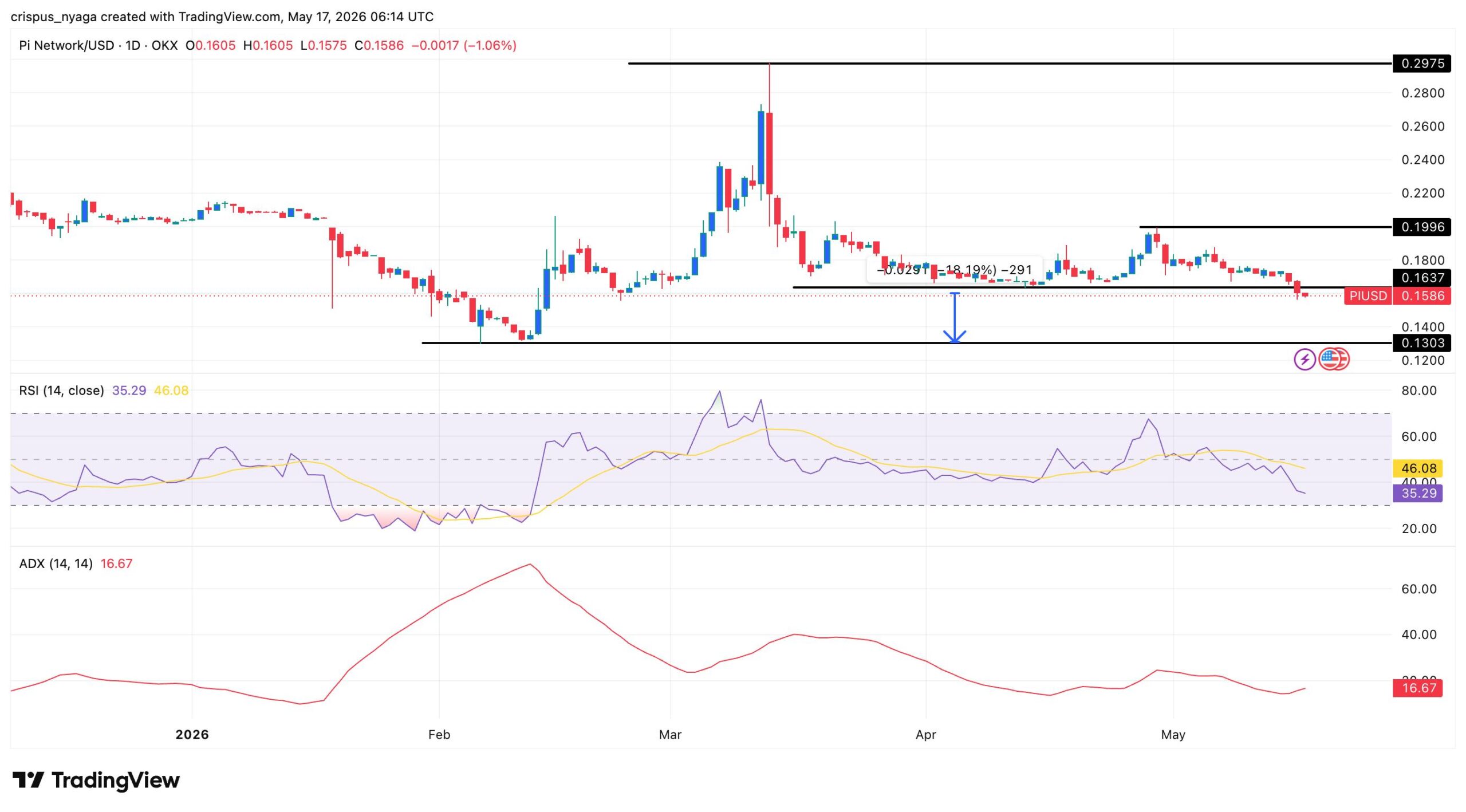
Pi Coin Price Crashes Another 7.5% Before Pi Network Protocol 23 Mainnet Activation

Evercore ISI S&P 500 Forecast 2026: Base Case 7,750, Bull Case 9,000




