

David Hoffman, ETH Bull, Explains Why He Sold ETH
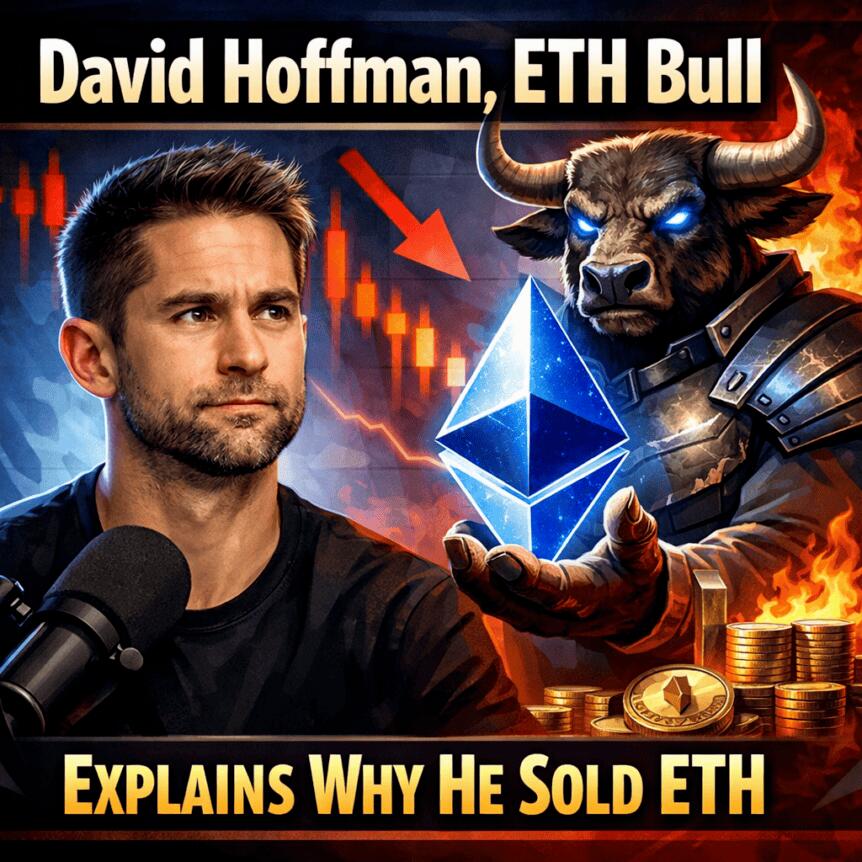
David Hoffman, the Ethereum advocate and Bankless co-founder, disclosed last week that he sold the remaining Ether in his personal holdings. In his own words on X, Hoffman argued that the widely discussed “ETH is Money” thesis has largely run its course, and he doesn’t expect the asset to be re-rated meaningfully higher or lower by the market from here. The sale occurred on May 21, and Hoffman did not disclose the value of the tranche.
Hoffman has long been one of Ethereum’s most vocal supporters, arguing that Ethereum has earned its place in the crypto ecosystem and deserves the market capitalization it currently holds. Yet he cautioned that the window for a dramatic revaluation—either up or down—appears to be narrowing. “ETH is, to some degree, money. But not the maximally successful version that we collectively sought out to achieve,” Hoffman wrote in the post, signaling a nuanced shift in his investment stance while maintaining a bullish outlook on Ethereum’s technology and ecosystem.
The “ETH is Money” narrative holds that Ethereum, as a decentralized blockchain with monetary properties and a built-in mechanism to resist inflation, could function as a superior store of value relative to fiat. Proponents hoped ETH would eventually command a much higher valuation, especially as the network expanded through Layer 2 solutions and tokenization use cases. In practice, however, the asset’s price history has been more ambiguous than the thesis’s sterner forecasts might have suggested.
All-time price records put Ethereum near $5,000 in August of a previous cycle, with the asset trading around the $2,000 region in recent times. This trajectory—an ascent to new highs followed by a protracted, multi-year rangebound phase—has been a source of debate among investors and builders about ETH’s role as a store of value, a currency for on-chain activity, or a utility token whose value is closely tied to network demand and use cases rather than speculative macro bets.
In his public note, Hoffman described Ethereum as “a giver, not a taker,” emphasizing that the network provides secure blockspace and supports tokenization at cost, while most fees accrue to Layer 2 networks that sit atop Ethereum. “Ethereum takes no markup for anything it does. This is the nature of open source software, and this is the power of Ethereum. Ethereum supplies its full set of incredibly important values to the world… at cost,” Hoffman stated.
Even as he pivots out of a large ETH position, Hoffman remains “massively bullish” on Ethereum’s long-term trajectory, predicting that the network will “do exceptionally well from here on out.” He contends that only a marginal portion of that success will be reflected in the token’s price, underscoring a broader dissonance between network fundamentals and market pricing in the current cycle.
The reaction among Ethereum enthusiasts and observers was mixed. Bankless co-founder Ryan Sean Adams described Hoffman’s move as the “end of an era,” highlighting the emotional and strategic shift for a community that has long treated ETH as a core political and financial asset. Former Ethereum core developer Eric Connor offered a pragmatic take, suggesting Hoffman’s sale isn’t a wholesale indictment of ETH but rather a reflection of its performance relative to broader crypto markets over recent years.
Connor argued that ETH’s lag is less about the protocol’s fundamentals and more about macro dynamics and distribution effects: a large portion of price pressure has come from the rapid creation of new wealth early in Ethereum’s bull run. “Maximalism to a single coin when it comes to portfolio management is pretty silly,” he added, hinting at a broader conversation about diversification within crypto portfolios.
Key takeaways
- Prominent Ethereum advocate David Hoffman disclosed the sale of the remaining ETH in his personal holdings, signaling a strategic repositioning rather than a wholesale rejection of Ethereum’s long-term value.
- Hoffman retains a bullish view on Ethereum’s fundamentals and network development, but says the opportunity for a significant market rerating of ETH appears to have diminished.
- The “ETH is Money” thesis remains contested: ETH’s price peaked near $5,000 in 2021, has since retreated, and currently trades in a multi-year range around $2,000, raising questions about ETH’s ability to function as a monetary store of value.
- Hoffman emphasizes Ethereum’s model of “no markup” and cost-based tokenization, with Layer 2 ecosystems absorbing most on-chain fees, a dynamic shaping perceptions of ETH’s value accrual vs. the fee capture on L2s.
- Community voices welcomed the act as a real-time reminder of portfolio diversification, with some noting that a single-asset thesis may not align with evolved market dynamics or individual risk tolerance.
Contextualizing the move amid ETH’s price narrative
Ethereum’s price journey has framed many debates about the asset’s role in crypto markets. After reaching an all-time high just below $5,000, ETH’s price retraced substantially from that peak. A prolonged period of consolidation, coupled with a burst of activity on Layer 2 networks and increasing interest in tokenization primitives, has kept ETH at the center of a wide range-bound price narrative for years. While some investors had banked on a renewed cycle of appreciation driven by macro funds and institutional demand, others argued that ETH’s on-chain activity, security guarantees, and robust development roadmap would eventually translate into outsized price gains.
Hoffman’s public liquidation and his framing of the “ETH is Money” thesis as largely realized add another data point to the ongoing discussion about what truly drives ETH value. If the market’s re-rating opportunity is indeed limited, observers will look more closely at fundamental drivers—such as Layer 2 throughput, adoption of decentralized finance and tokenized assets, and the ongoing development of Ethereum’s upgrade path—to assess whether ETH can sustain price resilience while continuing to fulfill a broad set of on-chain use cases.
Market outlook: what investors should monitor next
With Hoffman’s move, investors may watch for how ETH’s price responds to a shifting narrative about store of value versus utility. The open-source, at-cost model that Hoffman highlighted could become a focal point for discussions around value accrual in decentralized ecosystems, particularly as Layer 2 networks mature and tokenization use cases expand. As always in crypto, price behavior will reflect a blend of macro liquidity, on-chain activity, and evolving risk appetite among institutions and retail participants.
Looking ahead, readers should keep an eye on several developments: the pace of Layer 2 adoption and fee dynamics, any shifts in institutional interest in Ethereum-based products, and regulatory signals that could influence on-chain activity and tokenization initiatives. If Ethereum can demonstrate sustained growth in throughput and real-world application, it may still realize long-run value that aligns with the network’s vast developer base and user base—even if the market’s immediate re-rating potential feels constrained in the near term.
For now, Hoffman’s stance illustrates a broader theme in crypto markets: conviction can coexist with strategic adjustment. As the ecosystem evolves, investors will be watching not only price action but the health and direction of Ethereum’s driving use cases and the resilience of its decentralized governance and development model.
This article was originally published as David Hoffman, ETH Bull, Explains Why He Sold ETH on Crypto Breaking News – your trusted source for crypto news, Bitcoin news, and blockchain updates.


추천 콘텐츠

5 Features Every AI Trading Agent Will Expect From DeFi

Iran threatens retaliation as Trump vows to “hit hard,” crypto market under stress
Terra Luna Classic Bulls Refuse to Give Up: Another LUNC Rally Seems Close


인기 뉴스
더보기
