Highlights: Standard Chartered analysts say up to $1 trillion could shift from emerging market banks to stablecoins. They note stablecoins act as digital USD accounts, offering 24/7 access and lower risk than local bank deposits.  They highlight that countries like Egypt, Pakistan, and Bangladesh are most exposed to these deposit outflows. Multinational bank Standard Chartered predicted that up to $1 trillion could move from banks in emerging markets to stablecoins in three years. In a Monday report, the bank’s Global Research team said stablecoin use will grow as payments and other banking services move outside traditional banks. Stablecoins are digital coins tied to the U.S. dollar. Cash or short-term U.S. Treasury notes usually back them, and people can exchange them at any time without restrictions. Stablecoins Transforming Emerging Market Savings Geoffrey Kendrick and Madhur Jha from Standard Chartered say stablecoins act like “USD-based bank accounts” for many people in emerging markets. Emerging markets have seen strong stablecoin use, mainly because many people don’t have regular bank accounts. The bank notes this trend may continue, even with the U.S. GENIUS Act’s zero-yield rule, because protecting money matters more than earning interest. “While the recently passed U.S. GENIUS Act aims to mitigate deposit flight by prohibiting US-compliant stablecoin issuers from paying direct yields, stablecoins are still likely to be adopted even in the absence of yield,” analysts wrote. They predict that stablecoin savings in emerging markets could rise from around $173 billion today to $1.22 trillion by 2028. This suggests that more than $1 trillion may flow out of local banks in these regions. Kendrick and Jha explained that future growth will likely shift from a small number of wallets with large balances to a large number of wallets with smaller amounts. They said that when this happens at scale, even small holdings will add up.  Emerging Markets Most at Risk Standard Chartered warned that stablecoins could shake up emerging markets, where access to U.S. dollars remains limited. Stablecoins give people digital, 24/7 access to a USD account, with lower credit risk than local bank deposits. This trend raises the risk that money could move from banks in emerging markets to crypto alternatives. Standard Chartered said Egypt, Bangladesh, Pakistan, Colombia, and Sri Lanka are most at risk of bank deposits leaving for stablecoins. Other countries likely to see a shift include Turkey, India, China, Brazil, South Africa, and Kenya. Experts noted that this risk map is a starting point, not a final one. Factors like open capital accounts, remittances, inflation, and strong monetary policies could change each country’s position on the “opportunity-risk continuum.” The bank said stablecoin demand in emerging markets is already significant. A shift of about $1 trillion from bank deposits into tokenized dollars is now seen as likely, not unlikely. The report also noted risks for correspondent banking, payments, and foreign exchange revenues. Analysts said banks could ease these risks by holding reserves for issuers or integrating stablecoins into treasury, settlement, and cross-border systems. eToro Platform Best Crypto Exchange Over 90 top cryptos to trade Regulated by top-tier entities User-friendly trading app 30+ million users 9.9 Visit eToro eToro is a multi-asset investment platform. The value of your investments may go up or down. Your capital is at risk. Don’t invest unless you’re prepared to lose all the money you invest. This is a high-risk investment, and you should not expect to be protected if something goes wrong. Highlights: Standard Chartered analysts say up to $1 trillion could shift from emerging market banks to stablecoins. They note stablecoins act as digital USD accounts, offering 24/7 access and lower risk than local bank deposits.  They highlight that countries like Egypt, Pakistan, and Bangladesh are most exposed to these deposit outflows. Multinational bank Standard Chartered predicted that up to $1 trillion could move from banks in emerging markets to stablecoins in three years. In a Monday report, the bank’s Global Research team said stablecoin use will grow as payments and other banking services move outside traditional banks. Stablecoins are digital coins tied to the U.S. dollar. Cash or short-term U.S. Treasury notes usually back them, and people can exchange them at any time without restrictions. Stablecoins Transforming Emerging Market Savings Geoffrey Kendrick and Madhur Jha from Standard Chartered say stablecoins act like “USD-based bank accounts” for many people in emerging markets. Emerging markets have seen strong stablecoin use, mainly because many people don’t have regular bank accounts. The bank notes this trend may continue, even with the U.S. GENIUS Act’s zero-yield rule, because protecting money matters more than earning interest. “While the recently passed U.S. GENIUS Act aims to mitigate deposit flight by prohibiting US-compliant stablecoin issuers from paying direct yields, stablecoins are still likely to be adopted even in the absence of yield,” analysts wrote. They predict that stablecoin savings in emerging markets could rise from around $173 billion today to $1.22 trillion by 2028. This suggests that more than $1 trillion may flow out of local banks in these regions. Kendrick and Jha explained that future growth will likely shift from a small number of wallets with large balances to a large number of wallets with smaller amounts. They said that when this happens at scale, even small holdings will add up.  Emerging Markets Most at Risk Standard Chartered warned that stablecoins could shake up emerging markets, where access to U.S. dollars remains limited. Stablecoins give people digital, 24/7 access to a USD account, with lower credit risk than local bank deposits. This trend raises the risk that money could move from banks in emerging markets to crypto alternatives. Standard Chartered said Egypt, Bangladesh, Pakistan, Colombia, and Sri Lanka are most at risk of bank deposits leaving for stablecoins. Other countries likely to see a shift include Turkey, India, China, Brazil, South Africa, and Kenya. Experts noted that this risk map is a starting point, not a final one. Factors like open capital accounts, remittances, inflation, and strong monetary policies could change each country’s position on the “opportunity-risk continuum.” The bank said stablecoin demand in emerging markets is already significant. A shift of about $1 trillion from bank deposits into tokenized dollars is now seen as likely, not unlikely. The report also noted risks for correspondent banking, payments, and foreign exchange revenues. Analysts said banks could ease these risks by holding reserves for issuers or integrating stablecoins into treasury, settlement, and cross-border systems. eToro Platform Best Crypto Exchange Over 90 top cryptos to trade Regulated by top-tier entities User-friendly trading app 30+ million users 9.9 Visit eToro eToro is a multi-asset investment platform. The value of your investments may go up or down. Your capital is at risk. Don’t invest unless you’re prepared to lose all the money you invest. This is a high-risk investment, and you should not expect to be protected if something goes wrong.

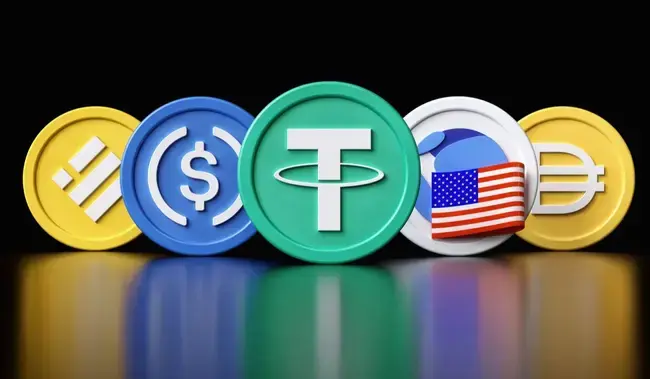
Standard Chartered Predicts $1 Trillion Could Move from Emerging Market Banks to Stablecoins

2025/10/06 22:48
3분 읽기
이 콘텐츠에 대한 의견이나 우려 사항이 있으시면 crypto.news@mexc.com으로 연락주시기 바랍니다

Highlights:

  • Standard Chartered analysts say up to $1 trillion could shift from emerging market banks to stablecoins.
  • They note stablecoins act as digital USD accounts, offering 24/7 access and lower risk than local bank deposits. 
  • They highlight that countries like Egypt, Pakistan, and Bangladesh are most exposed to these deposit outflows.

Multinational bank Standard Chartered predicted that up to $1 trillion could move from banks in emerging markets to stablecoins in three years. In a Monday report, the bank’s Global Research team said stablecoin use will grow as payments and other banking services move outside traditional banks. Stablecoins are digital coins tied to the U.S. dollar. Cash or short-term U.S. Treasury notes usually back them, and people can exchange them at any time without restrictions.

Stablecoins Transforming Emerging Market Savings

Geoffrey Kendrick and Madhur Jha from Standard Chartered say stablecoins act like “USD-based bank accounts” for many people in emerging markets. Emerging markets have seen strong stablecoin use, mainly because many people don’t have regular bank accounts. The bank notes this trend may continue, even with the U.S. GENIUS Act’s zero-yield rule, because protecting money matters more than earning interest.

“While the recently passed U.S. GENIUS Act aims to mitigate deposit flight by prohibiting US-compliant stablecoin issuers from paying direct yields, stablecoins are still likely to be adopted even in the absence of yield,” analysts wrote. They predict that stablecoin savings in emerging markets could rise from around $173 billion today to $1.22 trillion by 2028. This suggests that more than $1 trillion may flow out of local banks in these regions.

Kendrick and Jha explained that future growth will likely shift from a small number of wallets with large balances to a large number of wallets with smaller amounts. They said that when this happens at scale, even small holdings will add up. 

Emerging Markets Most at Risk

Standard Chartered warned that stablecoins could shake up emerging markets, where access to U.S. dollars remains limited. Stablecoins give people digital, 24/7 access to a USD account, with lower credit risk than local bank deposits. This trend raises the risk that money could move from banks in emerging markets to crypto alternatives.

Standard Chartered said Egypt, Bangladesh, Pakistan, Colombia, and Sri Lanka are most at risk of bank deposits leaving for stablecoins. Other countries likely to see a shift include Turkey, India, China, Brazil, South Africa, and Kenya. Experts noted that this risk map is a starting point, not a final one. Factors like open capital accounts, remittances, inflation, and strong monetary policies could change each country’s position on the “opportunity-risk continuum.”

The bank said stablecoin demand in emerging markets is already significant. A shift of about $1 trillion from bank deposits into tokenized dollars is now seen as likely, not unlikely. The report also noted risks for correspondent banking, payments, and foreign exchange revenues. Analysts said banks could ease these risks by holding reserves for issuers or integrating stablecoins into treasury, settlement, and cross-border systems.

eToro Platform

Best Crypto Exchange

  • Over 90 top cryptos to trade
  • Regulated by top-tier entities
  • User-friendly trading app
  • 30+ million users
9.9

5 Stars

Visit eToro

eToro is a multi-asset investment platform. The value of your investments may go up or down. Your capital is at risk. Don’t invest unless you’re prepared to lose all the money you invest. This is a high-risk investment, and you should not expect to be protected if something goes wrong.


시장 기회
Movement 로고
Movement 가격(MOVE)
$0,01878
$0,01878$0,01878
-0,94%
USD
Movement (MOVE) 실시간 가격 차트
면책 조항: 본 사이트에 재게시된 글들은 공개 플랫폼에서 가져온 것으로 정보 제공 목적으로만 제공됩니다. 이는 반드시 MEXC의 견해를 반영하는 것은 아닙니다. 모든 권리는 원저자에게 있습니다. 제3자의 권리를 침해하는 콘텐츠가 있다고 판단될 경우, crypto.news@mexc.com으로 연락하여 삭제 요청을 해주시기 바랍니다. MEXC는 콘텐츠의 정확성, 완전성 또는 시의적절성에 대해 어떠한 보증도 하지 않으며, 제공된 정보에 기반하여 취해진 어떠한 조치에 대해서도 책임을 지지 않습니다. 본 콘텐츠는 금융, 법률 또는 기타 전문적인 조언을 구성하지 않으며, MEXC의 추천이나 보증으로 간주되어서는 안 됩니다.

USD1 Genesis: 0 Fees + 12% APR

USD1 Genesis: 0 Fees + 12% APRUSD1 Genesis: 0 Fees + 12% APR

New users: stake for up to 600% APR. Limited time!



