The Ethereum ETF landscape just shifted in a way few saw coming. Grayscale Investments has officially introduced staking to its Ethereum Exchange-Traded Funds, a first in the U.S. market. This move, announced on October 6, signals a new era where traditional investors can finally earn staking rewards directly through regulated ETF structures. In simple terms, Grayscale is blending Wall Street’s favorite vehicle, ETFs, with one of blockchain’s core reward mechanisms. That combination could redefine how institutional capital interacts with Ethereum. Ethereum ETFs Just Got an Upgrade Grayscale confirmed that both its Ethereum Mini Trust (ETH) and Ethereum Trust (ETHE) now include staking features. Investors can either have rewards automatically reinvested to compound gains or receive them as cash payouts. The firm also extended staking to its Solana Trust (GSOL), pending regulatory clearance to list it as a spot product. Once approved, it will be among the first Solana-based ETFs in the United States to support staking. According to Grayscale, this dual-option model was crafted to give investors flexibility, from those seeking long-term growth to others prioritizing short-term liquidity. The move comes as Ethereum’s staking yield averages around 3.2%, giving ETF issuers an avenue to offset management fees and pass on savings to investors. Regulatory Shift Opens the Door For years, U.S. regulators treated staking as a gray zone. Under the previous SEC chair, some staking programs were classified as unregistered securities. That stance led to enforcement actions and forced several exchanges to shut down or restructure their staking services. But tides are changing. Over the past year, regulators have softened their tone. Liquid staking, when properly structured, is no longer automatically considered a securities offering. The shift, coupled with friendlier crypto rhetoric under the Trump administration, gave firms like Grayscale the green light to innovate. Ethereum’s proof-of-stake design rewards validators who help secure the network. By integrating that directly into ETFs, Grayscale is essentially bridging DeFi yields with the comfort of traditional finance. Institutional Stakes Rise Market analysts believe this could reshape competition in the Ethereum ETF sector. Lower fees, coupled with yield potential, make ETH-based funds more attractive than ever. As of early October, about 36 million ETH, roughly 30% of the total supply, is staked, with liquid staking protocols like Lido leading the pack. Institutional involvement through ETFs could push that number even higher. “Ethereum staking through ETFs introduces a new standard for yield exposure in regulated markets,” wrote market analyst Ryan Selkis on X, calling it “a long-awaited bridge between crypto utility and traditional asset management.” If major players like BlackRock or Fidelity follow Grayscale’s lead, the competition could compress fees industry-wide, a win for investors and a potential catalyst for fresh inflows into ETH. Risks and Realities Despite optimism, experts warn that staking isn’t risk-free. Validator concentration could create centralization risks, and yield fluctuations may impact fund performance. Redemption management is another challenge; ETFs must maintain enough liquid ETH to process withdrawals while staking a meaningful portion to earn rewards. Still, Grayscale’s institutional staking setup, using vetted validator networks and custodians, is designed to balance compliance with yield generation. It marks a careful but confident step into a more mature era of crypto finance. Conclusion Grayscale’s integration of staking into Ethereum ETFs is more than a corporate tweak; it’s a statement. It suggests that crypto yield products can exist inside the rules, not around them. For Ethereum, it could mean new layers of liquidity, demand, and long-term network stability. For investors, it’s a taste of passive income without leaving the comfort zone of regulated markets. As the race for ETF innovation heats up, Grayscale may have just given Ethereum a new growth narrative, one where staking isn’t just for crypto natives anymore. Frequently Asked Questions 1. What does staking in an ETF mean?It allows investors to earn yield from blockchain validation directly within an ETF structure, without managing tokens themselves. 2. Is staking in ETFs safe?While it adds yield potential, risks like validator performance, network slashing, and liquidity constraints remain. 3. How does this affect Ethereum’s price?More staking can reduce circulating supply, which may support long-term price stability if demand grows. 4. Will other asset managers follow?Yes, many analysts expect competitors like BlackRock or Fidelity to explore similar staking integrations. Glossary of Key Terms ETF (Exchange-Traded Fund):A pooled investment vehicle traded on stock exchanges, offering exposure to assets like crypto. Staking:The process of locking up crypto to validate transactions on proof-of-stake networks and earn rewards. ETH:The native cryptocurrency of the Ethereum network, used for transactions and staking. Validator:A network participant who helps confirm transactions and maintain blockchain security in exchange for rewards. Read More: Why Grayscale’s Ethereum ETF Staking Could Spark the Next Institutional Wave">Why Grayscale’s Ethereum ETF Staking Could Spark the Next Institutional WaveThe Ethereum ETF landscape just shifted in a way few saw coming. Grayscale Investments has officially introduced staking to its Ethereum Exchange-Traded Funds, a first in the U.S. market. This move, announced on October 6, signals a new era where traditional investors can finally earn staking rewards directly through regulated ETF structures. In simple terms, Grayscale is blending Wall Street’s favorite vehicle, ETFs, with one of blockchain’s core reward mechanisms. That combination could redefine how institutional capital interacts with Ethereum. Ethereum ETFs Just Got an Upgrade Grayscale confirmed that both its Ethereum Mini Trust (ETH) and Ethereum Trust (ETHE) now include staking features. Investors can either have rewards automatically reinvested to compound gains or receive them as cash payouts. The firm also extended staking to its Solana Trust (GSOL), pending regulatory clearance to list it as a spot product. Once approved, it will be among the first Solana-based ETFs in the United States to support staking. According to Grayscale, this dual-option model was crafted to give investors flexibility, from those seeking long-term growth to others prioritizing short-term liquidity. The move comes as Ethereum’s staking yield averages around 3.2%, giving ETF issuers an avenue to offset management fees and pass on savings to investors. Regulatory Shift Opens the Door For years, U.S. regulators treated staking as a gray zone. Under the previous SEC chair, some staking programs were classified as unregistered securities. That stance led to enforcement actions and forced several exchanges to shut down or restructure their staking services. But tides are changing. Over the past year, regulators have softened their tone. Liquid staking, when properly structured, is no longer automatically considered a securities offering. The shift, coupled with friendlier crypto rhetoric under the Trump administration, gave firms like Grayscale the green light to innovate. Ethereum’s proof-of-stake design rewards validators who help secure the network. By integrating that directly into ETFs, Grayscale is essentially bridging DeFi yields with the comfort of traditional finance. Institutional Stakes Rise Market analysts believe this could reshape competition in the Ethereum ETF sector. Lower fees, coupled with yield potential, make ETH-based funds more attractive than ever. As of early October, about 36 million ETH, roughly 30% of the total supply, is staked, with liquid staking protocols like Lido leading the pack. Institutional involvement through ETFs could push that number even higher. “Ethereum staking through ETFs introduces a new standard for yield exposure in regulated markets,” wrote market analyst Ryan Selkis on X, calling it “a long-awaited bridge between crypto utility and traditional asset management.” If major players like BlackRock or Fidelity follow Grayscale’s lead, the competition could compress fees industry-wide, a win for investors and a potential catalyst for fresh inflows into ETH. Risks and Realities Despite optimism, experts warn that staking isn’t risk-free. Validator concentration could create centralization risks, and yield fluctuations may impact fund performance. Redemption management is another challenge; ETFs must maintain enough liquid ETH to process withdrawals while staking a meaningful portion to earn rewards. Still, Grayscale’s institutional staking setup, using vetted validator networks and custodians, is designed to balance compliance with yield generation. It marks a careful but confident step into a more mature era of crypto finance. Conclusion Grayscale’s integration of staking into Ethereum ETFs is more than a corporate tweak; it’s a statement. It suggests that crypto yield products can exist inside the rules, not around them. For Ethereum, it could mean new layers of liquidity, demand, and long-term network stability. For investors, it’s a taste of passive income without leaving the comfort zone of regulated markets. As the race for ETF innovation heats up, Grayscale may have just given Ethereum a new growth narrative, one where staking isn’t just for crypto natives anymore. Frequently Asked Questions 1. What does staking in an ETF mean?It allows investors to earn yield from blockchain validation directly within an ETF structure, without managing tokens themselves. 2. Is staking in ETFs safe?While it adds yield potential, risks like validator performance, network slashing, and liquidity constraints remain. 3. How does this affect Ethereum’s price?More staking can reduce circulating supply, which may support long-term price stability if demand grows. 4. Will other asset managers follow?Yes, many analysts expect competitors like BlackRock or Fidelity to explore similar staking integrations. Glossary of Key Terms ETF (Exchange-Traded Fund):A pooled investment vehicle traded on stock exchanges, offering exposure to assets like crypto. Staking:The process of locking up crypto to validate transactions on proof-of-stake networks and earn rewards. ETH:The native cryptocurrency of the Ethereum network, used for transactions and staking. Validator:A network participant who helps confirm transactions and maintain blockchain security in exchange for rewards. Read More: Why Grayscale’s Ethereum ETF Staking Could Spark the Next Institutional Wave">Why Grayscale’s Ethereum ETF Staking Could Spark the Next Institutional Wave

Why Grayscale’s Ethereum ETF Staking Could Spark the Next Institutional Wave

2025/10/07 21:00
4분 읽기
이 콘텐츠에 대한 의견이나 우려 사항이 있으시면 crypto.news@mexc.com으로 연락주시기 바랍니다

The Ethereum ETF landscape just shifted in a way few saw coming. Grayscale Investments has officially introduced staking to its Ethereum Exchange-Traded Funds, a first in the U.S. market. This move, announced on October 6, signals a new era where traditional investors can finally earn staking rewards directly through regulated ETF structures.

In simple terms, Grayscale is blending Wall Street’s favorite vehicle, ETFs, with one of blockchain’s core reward mechanisms. That combination could redefine how institutional capital interacts with Ethereum.

Ethereum ETFs Just Got an Upgrade

Grayscale confirmed that both its Ethereum Mini Trust (ETH) and Ethereum Trust (ETHE) now include staking features. Investors can either have rewards automatically reinvested to compound gains or receive them as cash payouts.

The firm also extended staking to its Solana Trust (GSOL), pending regulatory clearance to list it as a spot product. Once approved, it will be among the first Solana-based ETFs in the United States to support staking.

According to Grayscale, this dual-option model was crafted to give investors flexibility, from those seeking long-term growth to others prioritizing short-term liquidity. The move comes as Ethereum’s staking yield averages around 3.2%, giving ETF issuers an avenue to offset management fees and pass on savings to investors.
Grayscale Ethereum ETF

Regulatory Shift Opens the Door

For years, U.S. regulators treated staking as a gray zone. Under the previous SEC chair, some staking programs were classified as unregistered securities. That stance led to enforcement actions and forced several exchanges to shut down or restructure their staking services.

But tides are changing. Over the past year, regulators have softened their tone. Liquid staking, when properly structured, is no longer automatically considered a securities offering. The shift, coupled with friendlier crypto rhetoric under the Trump administration, gave firms like Grayscale the green light to innovate.

Ethereum’s proof-of-stake design rewards validators who help secure the network. By integrating that directly into ETFs, Grayscale is essentially bridging DeFi yields with the comfort of traditional finance.

Institutional Stakes Rise

Market analysts believe this could reshape competition in the Ethereum ETF sector. Lower fees, coupled with yield potential, make ETH-based funds more attractive than ever.

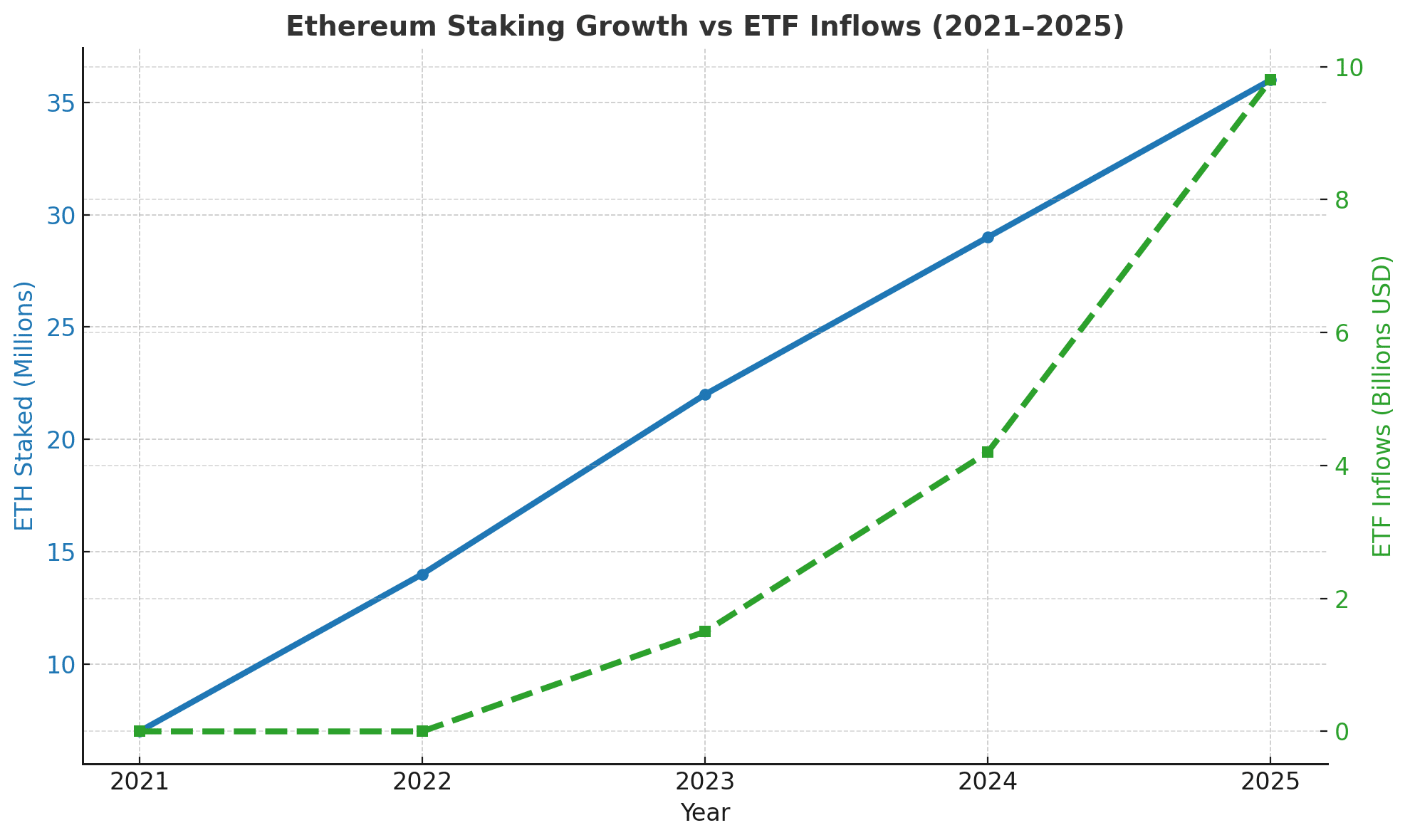
As of early October, about 36 million ETH, roughly 30% of the total supply, is staked, with liquid staking protocols like Lido leading the pack. Institutional involvement through ETFs could push that number even higher.

“Ethereum staking through ETFs introduces a new standard for yield exposure in regulated markets,” wrote market analyst Ryan Selkis on X, calling it “a long-awaited bridge between crypto utility and traditional asset management.”

If major players like BlackRock or Fidelity follow Grayscale’s lead, the competition could compress fees industry-wide, a win for investors and a potential catalyst for fresh inflows into ETH.

Risks and Realities

Despite optimism, experts warn that staking isn’t risk-free. Validator concentration could create centralization risks, and yield fluctuations may impact fund performance. Redemption management is another challenge; ETFs must maintain enough liquid ETH to process withdrawals while staking a meaningful portion to earn rewards.

Still, Grayscale’s institutional staking setup, using vetted validator networks and custodians, is designed to balance compliance with yield generation. It marks a careful but confident step into a more mature era of crypto finance.

Conclusion

Grayscale’s integration of staking into Ethereum ETFs is more than a corporate tweak; it’s a statement. It suggests that crypto yield products can exist inside the rules, not around them. For Ethereum, it could mean new layers of liquidity, demand, and long-term network stability. For investors, it’s a taste of passive income without leaving the comfort zone of regulated markets.

As the race for ETF innovation heats up, Grayscale may have just given Ethereum a new growth narrative, one where staking isn’t just for crypto natives anymore.

Frequently Asked Questions

1. What does staking in an ETF mean?
It allows investors to earn yield from blockchain validation directly within an ETF structure, without managing tokens themselves.

2. Is staking in ETFs safe?
While it adds yield potential, risks like validator performance, network slashing, and liquidity constraints remain.

3. How does this affect Ethereum’s price?
More staking can reduce circulating supply, which may support long-term price stability if demand grows.

4. Will other asset managers follow?
Yes, many analysts expect competitors like BlackRock or Fidelity to explore similar staking integrations.

Glossary of Key Terms

ETF (Exchange-Traded Fund):
A pooled investment vehicle traded on stock exchanges, offering exposure to assets like crypto.

Staking:
The process of locking up crypto to validate transactions on proof-of-stake networks and earn rewards.

ETH:
The native cryptocurrency of the Ethereum network, used for transactions and staking.

Validator:
A network participant who helps confirm transactions and maintain blockchain security in exchange for rewards.

Read More: Why Grayscale’s Ethereum ETF Staking Could Spark the Next Institutional Wave">Why Grayscale’s Ethereum ETF Staking Could Spark the Next Institutional Wave


시장 기회
Union 로고
Union 가격(UNION)
$0.0006185
$0.0006185$0.0006185
+0.04%
USD
Union (UNION) 실시간 가격 차트
면책 조항: 본 사이트에 재게시된 글들은 공개 플랫폼에서 가져온 것으로 정보 제공 목적으로만 제공됩니다. 이는 반드시 MEXC의 견해를 반영하는 것은 아닙니다. 모든 권리는 원저자에게 있습니다. 제3자의 권리를 침해하는 콘텐츠가 있다고 판단될 경우, crypto.news@mexc.com으로 연락하여 삭제 요청을 해주시기 바랍니다. MEXC는 콘텐츠의 정확성, 완전성 또는 시의적절성에 대해 어떠한 보증도 하지 않으며, 제공된 정보에 기반하여 취해진 어떠한 조치에 대해서도 책임을 지지 않습니다. 본 콘텐츠는 금융, 법률 또는 기타 전문적인 조언을 구성하지 않으며, MEXC의 추천이나 보증으로 간주되어서는 안 됩니다.

$30,000 in PRL + 15,000 USDT

$30,000 in PRL + 15,000 USDT$30,000 in PRL + 15,000 USDT

Deposit & trade PRL to boost your rewards!