

We May Need Data Centers in Space to Build Better AI
AI continues to improve as we add data, parameters, and, especially, compute resources. GPT-5 may have felt incremental to users, but its cheaper inference quietly reset the economics of deployment. More capability per dollar at run-time has poured fuel on a data center boom already underway. Leopold Aschenbrenner, who sketched the “compute is the binding constraint” thesis in a widely read memo, now runs a hedge fund that has ridden transformers (plus the power, cooling and concrete that feeds them) to outsized profits.
Donald Trump’s U.S. AI Action Plan acknowledges the importance of data centers and is supported by steps to streamline permitting.
New infrastructure may ease capacity, but growing environmental and political challenges such as water usage conflicts, diesel permit hurdles, community resistance, and grid delays are slowing large-campus expansion. If AI scaling laws continue to compound, we may need to look beyond Earth.
Why Space?
-
Perpetual power: Above clouds, there is no night. Orbital arrays enjoy continuous solar input, which means steady, predictable renewable power. If we combine space-based generation and large radiators, we get a power-and-cooling envelope tailored to computation, not weather. In the ideal situation, we would get sunlight in and heat out, 24/7.
\
-
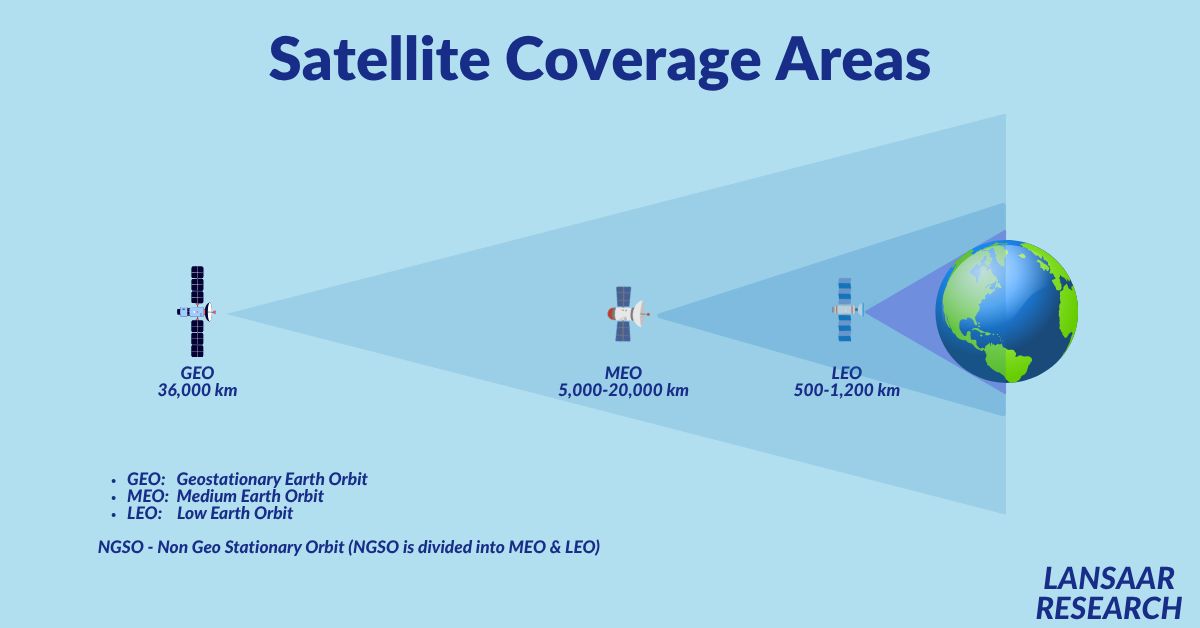
Zero local externalities (and fewer veto points): A one-gigawatt campus on Earth competes with farms, homes, and aquifers. In orbit, there are debris and spectrum rules, but no water rights, diesel-permit hearings, or zoning boards. “Compute freeports” in LEO (Low Earth Orbit), GEO (Geo Stationary Orbit), or cislunar space (the space between Earth and the Moon) can be governed by clear norms (perhaps adopted by treaties).
\
-
Thermal management: Data centers fail when cooling fails. On Earth, heat rejection depends on air and water. In space, heat leaves by radiation. That requires surface area (lightweight, deployable radiators) but gives designers a fully specified environment. There is no need to worry about smoke from wildfires, heat domes, or drought orders.
\ 
Why Not Space?
At the same time, there are three constraints:
-
Mass and logistics to orbit: Launching (and then assembling) thousands of tons of panels, radiators, racks, and propellant is the first bottleneck. This will push designs toward modular hardware and on-orbit assembly and servicing.
\
-
Challenges related to performance and reliability at scale: Space has its own environmental challenges, like radiation and solar storms. Maintenance is much harder, since it needs to be robotic. Hardened electronics, aggressive error correction, and autonomous ops are mandatory, and we must architect around bandwidth and latency.
\
-
Traffic, governance, and safety: More big objects in space means stricter rules, such as for debris mitigation, end-of-life planning, spectrum/orbital slot management, space traffic coordination, deorbit bonds/ADR (Active Debris Removal) contribution,s and security (since this will be critical infrastructure).
The Path Forward
A sensible path forward is to begin where the data already lives: satellites for Earth observation, weather, communications, and deep-space probes. We can run models beside the sensors to cut downlink and time-to-insight, then scale to LEO (low earth orbit) based “AI caches” that elastically absorb inference bursts and content delivery in lockstep with ground clouds, avoiding fresh land-and-water fights.
As launch costs fall and on-orbit manufacturing matures, we can graduate to high-orbit training campuses with large solar and radiator farms.
To make this arc viable, we will need to set portability standards, enforce space traffic rules rigorously and bake in high security from day one. These are governance challenges that require government planning, international cooperation and high-quality procurement efforts.
Though space will not replace Earth for data centers any time soon, this incremental path forward can relieve some of the pressure from the data center buildout and pave the way toward a future in which most AI training occurs outside of Earth.
\


추천 콘텐츠

Japan’s Bond Shock Could Trigger the Next Global Crypto Sell-Off

ZETA up +10.55%, BTC +0.00%, Zebec Network is The Coin of The Day – Daily Market Update for Apr 05, 2026 | CoinCodex




