Author: seedly.eth The anticipation for "Uptober"'s carnival was met with a severe blow in the second week of October. The market's collective anticipation for "Uptober" was put on hold by Trump's new round of tariff threats. On Friday local time, Trump announced that he would impose an additional 100% tariff on Chinese goods, on top of the 30% tariff already in effect, and that the tariff would take effect on November 1 or earlier. The U.S. stock market suffered its biggest single-day plunge in months, and the cryptocurrency market instantly turned into a bloody slaughterhouse. Bitcoin plummeted from a high of over $122,000 on Friday morning to approximately $104,582.41, a 7% drop in a single day. This drop nearly wiped out all gains since October, returning the price to the level of October 1st. Ethereum saw an even more dramatic drop, with its price plummeting nearly 8% to approximately $3,975, hitting a new low since October. Solana (SOL) followed closely behind, dropping over 7% in a single day to $205. Like Ethereum, Solana also hit its lowest point since October. WLFI (World Liberty Financial), the native token of the Trump family platform, was not spared either. Immediately after Trump announced the tariffs on China, WLFI plummeted by over 17%. According to CoinGlass data, the amount of liquidation in the past 24 hours was nearly 10 billion US dollars, and more than 1.52 million people were liquidated. U.S. stocks had their worst single-day performance since April: The Nasdaq Composite suffered the biggest drop, closing down 3.56%. The S&P 500 closed down 2.71%, its biggest single-day percentage drop since April 10. The Dow Jones Industrial Average closed down 1.90%. After Wall Street closed, market panic did not subside. Technology stocks such as Nvidia, Tesla, Amazon.com and Advanced Micro Devices (AMD) all fell by more than 2% in after-hours trading. Macro risks hit market fragility Analysts generally believe that the market's concerns that the tit-for-tat trade frictions between the two major economies of China and the United States may evolve into a full-scale trade war, thereby stifling global economic growth, are the key to the simultaneous plunge in stocks and cryptocurrencies. "It was a brutal day," said Ram Ahluwalia, founder of the investment firm Lumida Wealth. Trump's tariffs triggered widespread de-risking, with investors seeking safety from volatile assets closely tied to economic growth prospects, such as stocks, tech stocks, and cryptocurrencies. "Trump's news, combined with overbought conditions, led to a sharp market decline," he said. Zaheer Ebtikar, founder and chief investment officer of crypto hedge fund Split Capital, said: "The altcoin market has completely collapsed. The altcoin market has reached its highest level in more than a year. Leverage ratios have been fully reset and the market is in chaos." The sell-off, particularly the biggest drop in months for U.S. stocks, has reignited concerns about whether the market is due for a major downside correction. JPMorgan Chase CEO Jamie Dimon has previously warned that the risk of a major correction on Wall Street has increased within the next six months to two years. Prior to the recent plunge, the US stock market was in the midst of a record-breaking rally, with the S&P 500 and Nasdaq hitting all-time highs on Thursday. So far this year, the Nasdaq has risen approximately 15%, while the S&P 500 has risen approximately 11%. This rally has been driven primarily by enthusiasm surrounding the artificial intelligence (AI) industry. However, some investors believe the current trade tensions are unlikely to drastically alter the market's trajectory. For example, James St. Aubin, chief investment officer at Ocean Park Asset Management, believes that while it is a "significant issue" and could trigger a pullback, he "doesn't necessarily think it will derail the AI theme that has been driving the market." For the cryptocurrency market, the failure of "Uptober" signifies that market sentiment has rapidly shifted from the early-month enthusiasm and expectations of record highs to a more sensitive and cautious outlook regarding macroeconomic risks. Unless the trade tensions quickly de-escalate or strong new positive news emerges, the crypto market will face challenges and may need some time to process this sudden "Red October shock."Author: seedly.eth The anticipation for "Uptober"'s carnival was met with a severe blow in the second week of October. The market's collective anticipation for "Uptober" was put on hold by Trump's new round of tariff threats. On Friday local time, Trump announced that he would impose an additional 100% tariff on Chinese goods, on top of the 30% tariff already in effect, and that the tariff would take effect on November 1 or earlier. The U.S. stock market suffered its biggest single-day plunge in months, and the cryptocurrency market instantly turned into a bloody slaughterhouse. Bitcoin plummeted from a high of over $122,000 on Friday morning to approximately $104,582.41, a 7% drop in a single day. This drop nearly wiped out all gains since October, returning the price to the level of October 1st. Ethereum saw an even more dramatic drop, with its price plummeting nearly 8% to approximately $3,975, hitting a new low since October. Solana (SOL) followed closely behind, dropping over 7% in a single day to $205. Like Ethereum, Solana also hit its lowest point since October. WLFI (World Liberty Financial), the native token of the Trump family platform, was not spared either. Immediately after Trump announced the tariffs on China, WLFI plummeted by over 17%. According to CoinGlass data, the amount of liquidation in the past 24 hours was nearly 10 billion US dollars, and more than 1.52 million people were liquidated. U.S. stocks had their worst single-day performance since April: The Nasdaq Composite suffered the biggest drop, closing down 3.56%. The S&P 500 closed down 2.71%, its biggest single-day percentage drop since April 10. The Dow Jones Industrial Average closed down 1.90%. After Wall Street closed, market panic did not subside. Technology stocks such as Nvidia, Tesla, Amazon.com and Advanced Micro Devices (AMD) all fell by more than 2% in after-hours trading. Macro risks hit market fragility Analysts generally believe that the market's concerns that the tit-for-tat trade frictions between the two major economies of China and the United States may evolve into a full-scale trade war, thereby stifling global economic growth, are the key to the simultaneous plunge in stocks and cryptocurrencies. "It was a brutal day," said Ram Ahluwalia, founder of the investment firm Lumida Wealth. Trump's tariffs triggered widespread de-risking, with investors seeking safety from volatile assets closely tied to economic growth prospects, such as stocks, tech stocks, and cryptocurrencies. "Trump's news, combined with overbought conditions, led to a sharp market decline," he said. Zaheer Ebtikar, founder and chief investment officer of crypto hedge fund Split Capital, said: "The altcoin market has completely collapsed. The altcoin market has reached its highest level in more than a year. Leverage ratios have been fully reset and the market is in chaos." The sell-off, particularly the biggest drop in months for U.S. stocks, has reignited concerns about whether the market is due for a major downside correction. JPMorgan Chase CEO Jamie Dimon has previously warned that the risk of a major correction on Wall Street has increased within the next six months to two years. Prior to the recent plunge, the US stock market was in the midst of a record-breaking rally, with the S&P 500 and Nasdaq hitting all-time highs on Thursday. So far this year, the Nasdaq has risen approximately 15%, while the S&P 500 has risen approximately 11%. This rally has been driven primarily by enthusiasm surrounding the artificial intelligence (AI) industry. However, some investors believe the current trade tensions are unlikely to drastically alter the market's trajectory. For example, James St. Aubin, chief investment officer at Ocean Park Asset Management, believes that while it is a "significant issue" and could trigger a pullback, he "doesn't necessarily think it will derail the AI theme that has been driving the market." For the cryptocurrency market, the failure of "Uptober" signifies that market sentiment has rapidly shifted from the early-month enthusiasm and expectations of record highs to a more sensitive and cautious outlook regarding macroeconomic risks. Unless the trade tensions quickly de-escalate or strong new positive news emerges, the crypto market will face challenges and may need some time to process this sudden "Red October shock."

"Uptober" turns into a "slaughterhouse": Bitcoin flash crashes to $7,000, killing millions of retail investors

2025/10/11 10:00
4분 읽기
이 콘텐츠에 대한 의견이나 우려 사항이 있으시면 crypto.news@mexc.com으로 연락주시기 바랍니다

Author: seedly.eth

The anticipation for "Uptober"'s carnival was met with a severe blow in the second week of October.

The market's collective anticipation for "Uptober" was put on hold by Trump's new round of tariff threats. On Friday local time, Trump announced that he would impose an additional 100% tariff on Chinese goods, on top of the 30% tariff already in effect, and that the tariff would take effect on November 1 or earlier.
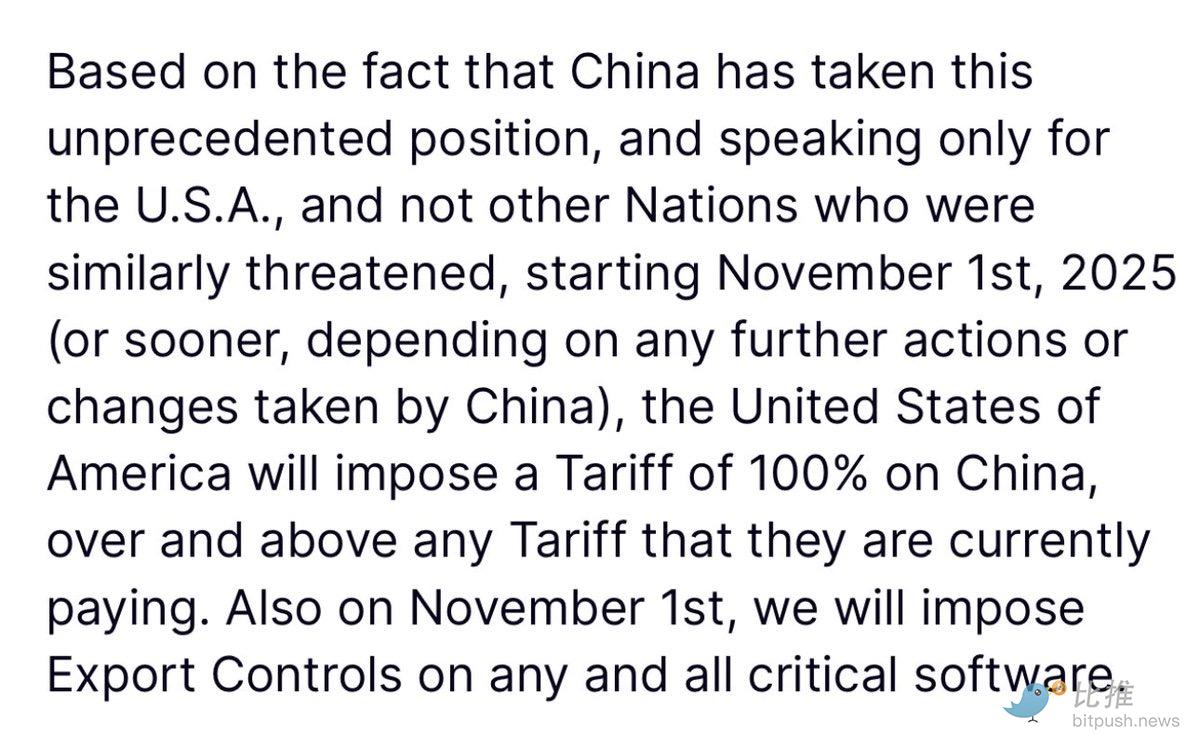
The U.S. stock market suffered its biggest single-day plunge in months, and the cryptocurrency market instantly turned into a bloody slaughterhouse.

Bitcoin plummeted from a high of over $122,000 on Friday morning to approximately $104,582.41, a 7% drop in a single day. This drop nearly wiped out all gains since October, returning the price to the level of October 1st.

Ethereum saw an even more dramatic drop, with its price plummeting nearly 8% to approximately $3,975, hitting a new low since October. Solana (SOL) followed closely behind, dropping over 7% in a single day to $205. Like Ethereum, Solana also hit its lowest point since October.

WLFI (World Liberty Financial), the native token of the Trump family platform, was not spared either. Immediately after Trump announced the tariffs on China, WLFI plummeted by over 17%.
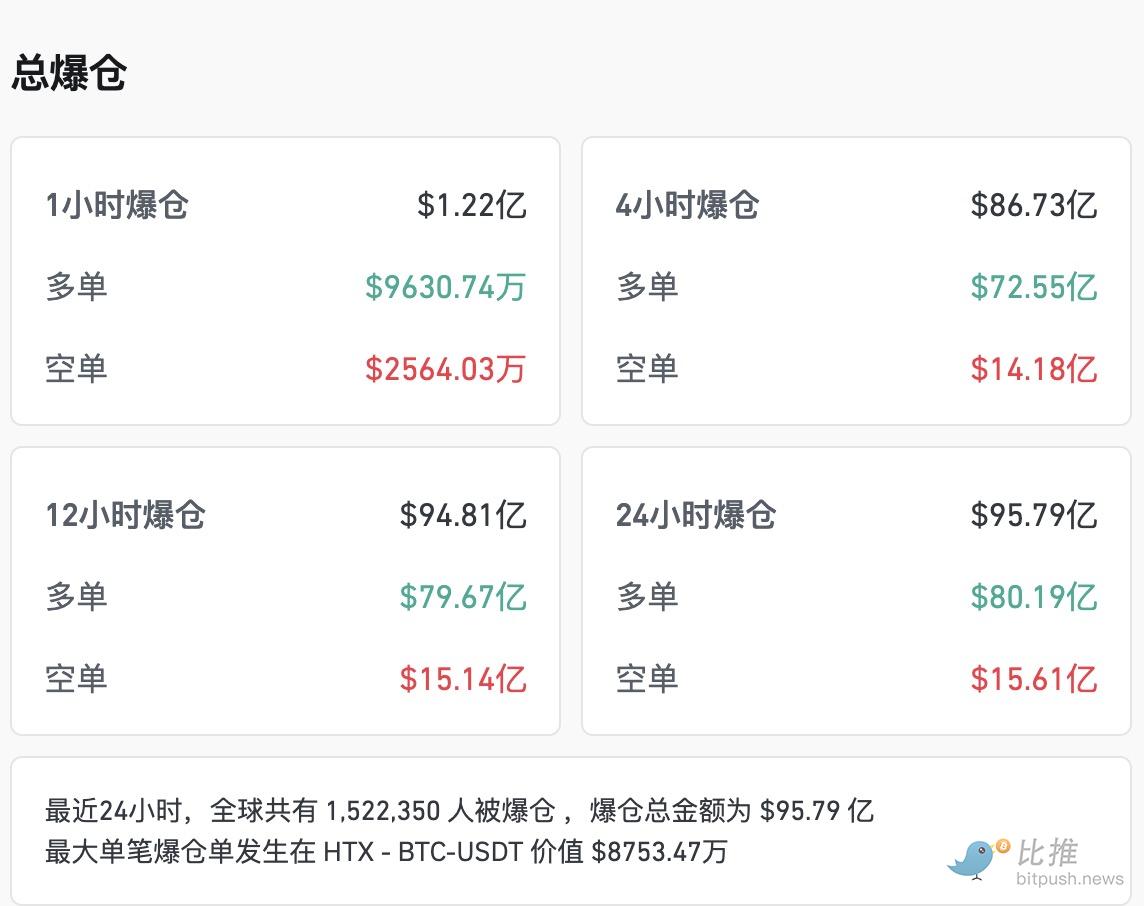
According to CoinGlass data, the amount of liquidation in the past 24 hours was nearly 10 billion US dollars, and more than 1.52 million people were liquidated.

U.S. stocks had their worst single-day performance since April: The Nasdaq Composite suffered the biggest drop, closing down 3.56%. The S&P 500 closed down 2.71%, its biggest single-day percentage drop since April 10. The Dow Jones Industrial Average closed down 1.90%.

After Wall Street closed, market panic did not subside. Technology stocks such as Nvidia, Tesla, Amazon.com and Advanced Micro Devices (AMD) all fell by more than 2% in after-hours trading.

Macro risks hit market fragility

Analysts generally believe that the market's concerns that the tit-for-tat trade frictions between the two major economies of China and the United States may evolve into a full-scale trade war, thereby stifling global economic growth, are the key to the simultaneous plunge in stocks and cryptocurrencies.

"It was a brutal day," said Ram Ahluwalia, founder of the investment firm Lumida Wealth. Trump's tariffs triggered widespread de-risking, with investors seeking safety from volatile assets closely tied to economic growth prospects, such as stocks, tech stocks, and cryptocurrencies. "Trump's news, combined with overbought conditions, led to a sharp market decline," he said.

Zaheer Ebtikar, founder and chief investment officer of crypto hedge fund Split Capital, said: "The altcoin market has completely collapsed. The altcoin market has reached its highest level in more than a year. Leverage ratios have been fully reset and the market is in chaos."

The sell-off, particularly the biggest drop in months for U.S. stocks, has reignited concerns about whether the market is due for a major downside correction. JPMorgan Chase CEO Jamie Dimon has previously warned that the risk of a major correction on Wall Street has increased within the next six months to two years.

Prior to the recent plunge, the US stock market was in the midst of a record-breaking rally, with the S&P 500 and Nasdaq hitting all-time highs on Thursday. So far this year, the Nasdaq has risen approximately 15%, while the S&P 500 has risen approximately 11%. This rally has been driven primarily by enthusiasm surrounding the artificial intelligence (AI) industry.

However, some investors believe the current trade tensions are unlikely to drastically alter the market's trajectory. For example, James St. Aubin, chief investment officer at Ocean Park Asset Management, believes that while it is a "significant issue" and could trigger a pullback, he "doesn't necessarily think it will derail the AI theme that has been driving the market."

For the cryptocurrency market, the failure of "Uptober" signifies that market sentiment has rapidly shifted from the early-month enthusiasm and expectations of record highs to a more sensitive and cautious outlook regarding macroeconomic risks. Unless the trade tensions quickly de-escalate or strong new positive news emerges, the crypto market will face challenges and may need some time to process this sudden "Red October shock."


시장 기회
이더리움 로고
이더리움 가격(ETH)
$2,123.8
$2,123.8$2,123.8
-1.87%
USD
이더리움 (ETH) 실시간 가격 차트
면책 조항: 본 사이트에 재게시된 글들은 공개 플랫폼에서 가져온 것으로 정보 제공 목적으로만 제공됩니다. 이는 반드시 MEXC의 견해를 반영하는 것은 아닙니다. 모든 권리는 원저자에게 있습니다. 제3자의 권리를 침해하는 콘텐츠가 있다고 판단될 경우, crypto.news@mexc.com으로 연락하여 삭제 요청을 해주시기 바랍니다. MEXC는 콘텐츠의 정확성, 완전성 또는 시의적절성에 대해 어떠한 보증도 하지 않으며, 제공된 정보에 기반하여 취해진 어떠한 조치에 대해서도 책임을 지지 않습니다. 본 콘텐츠는 금융, 법률 또는 기타 전문적인 조언을 구성하지 않으며, MEXC의 추천이나 보증으로 간주되어서는 안 됩니다.

$30,000 in PRL + 15,000 USDT

$30,000 in PRL + 15,000 USDT$30,000 in PRL + 15,000 USDT

Deposit & trade PRL to boost your rewards!