Global banking regulators are preparing to overhaul rules on how banks handle crypto assets, particularly stablecoins, as pressure mounts from major economies and industry groups to revise stringent capital requirements set to take effect next year. The Basel Committee on Banking Supervision (BCBS), the world’s top banking standard-setter, is in discussions over possible amendments to its 2022 framework, which imposed some of the toughest capital rules ever proposed for crypto holdings. The standards, designed after years of volatility in digital markets, required banks to assign a 1,250% risk weight to unbacked crypto assets such as Bitcoin, meaning they must hold capital equal to the entire value of their crypto exposure. Those measures, meant to protect banks from potential losses, effectively discouraged most institutions from offering crypto-related services. But the rapid rise of stablecoins and a broader shift in how regulators and governments view digital assets have triggered renewed debate. Is Basel’s Rules about to Evolve With the Crypto Market? According to the Bloomberg report, the United States is leading calls for revisions, arguing that the original standards are now outdated and inconsistent with the current structure of the crypto market. Stablecoins, digital tokens pegged to assets like the U.S. dollar, have grown rapidly, with new regulatory frameworks such as the U.S. GENIUS Act encouraging their use for payments. Yet under the current Basel rules, permissionless stablecoins like Tether (USDT) and Circle’s USDC, which operate on open blockchain networks, face the same heavy capital charges as highly volatile cryptocurrencies such as Bitcoin. Senior finance executives said this approach has left banks on the sidelines, unable to serve growing institutional demand for digital asset services. A recent report by The Banker revealed that the high-risk classification has made it “economically unviable” for banks to hold crypto on their balance sheets, forcing trading activity toward unregulated platforms.Source: ECB The BCBS framework, first finalized in late 2022 and updated in 2024, divides crypto assets into two main groups: Group 1, which includes tokenized traditional assets and stablecoins with reliable backing mechanisms, and Group 2, which covers all other crypto assets subject to punitive capital treatment. The global implementation of these standards was delayed by one year to January 2026. Global Regulators Diverge on Basel Crypto Standards as Implementation Nears While the Basel Committee’s guidelines are non-binding, its 45 members, including regulators from 28 jurisdictions, typically adopt them domestically. However, not all major regions are on the same timeline. The European Central Bank supports implementing the existing rules first, while the U.S., U.K., and several Asian jurisdictions are seeking revisions before the standards come into force. Singapore recently postponed its rollout by a year to ensure global alignment, and Hong Kong plans to follow in 2026 with lighter requirements for licensed stablecoins. In the European Union, the Basel standards are being incorporated through the Capital Requirements Regulation (CRR 3) and the Markets in Crypto-Assets (MiCA) framework. Draft rules from the European Banking Authority (EBA) published in August outline detailed methods for calculating crypto exposure across credit, market, and liquidity risks. Unbacked crypto assets will retain a 1,250% risk weight, while stablecoins backed by traditional assets may receive a lower 250% charge. The EBA’s approach aligns with Basel principles but introduces transitional rules, allowing banks limited engagement with digital assets while more permanent frameworks develop. The EU is also preparing for the launch of a euro-backed stablecoin in 2026, led by a consortium of nine European banks, including ING and UniCredit, under MiCA supervision. The United Kingdom is taking a similarly cautious path. The Bank of England has confirmed that upcoming rules will likely fall on the “restrictive end,” encouraging banks to keep low crypto exposure. The Prudential Regulation Authority is developing a new prudential regime, CRYPTOPRU, expected to be finalized in 2026. GENIUS Act Sparks Policy Clash Over Stablecoin Treatment in Banking Sector Meanwhile, U.S. regulators are reevaluating their prudential treatment of stablecoins following the passage of the GENIUS Act earlier this year. The law provides a framework for stablecoin issuance and payments but leaves open questions about how banking rules will adapt. The Federal Reserve, OCC, and FDIC are coordinating on how to implement Basel standards while addressing domestic regulatory overlaps. Industry groups have intensified pressure on the Basel Committee to ease the capital burden. In August, associations including the Global Financial Markets Association and the Institute of International Finance urged regulators to drop what they called “cliff-effect” penalties. Their joint letter argued that treating tokenized U.S. Treasury securities as high-risk simply because they exist on public blockchains contradicts technology-neutral policy principles. The debate comes amid broader concerns about how stablecoins could reshape global finance. A recent report by Standard Chartered warned that over $1 trillion could flow out of emerging-market banks and into stablecoins by 2028, as users in developing economies turn to dollar-pegged digital assets as a safer store of valueGlobal banking regulators are preparing to overhaul rules on how banks handle crypto assets, particularly stablecoins, as pressure mounts from major economies and industry groups to revise stringent capital requirements set to take effect next year. The Basel Committee on Banking Supervision (BCBS), the world’s top banking standard-setter, is in discussions over possible amendments to its 2022 framework, which imposed some of the toughest capital rules ever proposed for crypto holdings. The standards, designed after years of volatility in digital markets, required banks to assign a 1,250% risk weight to unbacked crypto assets such as Bitcoin, meaning they must hold capital equal to the entire value of their crypto exposure. Those measures, meant to protect banks from potential losses, effectively discouraged most institutions from offering crypto-related services. But the rapid rise of stablecoins and a broader shift in how regulators and governments view digital assets have triggered renewed debate. Is Basel’s Rules about to Evolve With the Crypto Market? According to the Bloomberg report, the United States is leading calls for revisions, arguing that the original standards are now outdated and inconsistent with the current structure of the crypto market. Stablecoins, digital tokens pegged to assets like the U.S. dollar, have grown rapidly, with new regulatory frameworks such as the U.S. GENIUS Act encouraging their use for payments. Yet under the current Basel rules, permissionless stablecoins like Tether (USDT) and Circle’s USDC, which operate on open blockchain networks, face the same heavy capital charges as highly volatile cryptocurrencies such as Bitcoin. Senior finance executives said this approach has left banks on the sidelines, unable to serve growing institutional demand for digital asset services. A recent report by The Banker revealed that the high-risk classification has made it “economically unviable” for banks to hold crypto on their balance sheets, forcing trading activity toward unregulated platforms.Source: ECB The BCBS framework, first finalized in late 2022 and updated in 2024, divides crypto assets into two main groups: Group 1, which includes tokenized traditional assets and stablecoins with reliable backing mechanisms, and Group 2, which covers all other crypto assets subject to punitive capital treatment. The global implementation of these standards was delayed by one year to January 2026. Global Regulators Diverge on Basel Crypto Standards as Implementation Nears While the Basel Committee’s guidelines are non-binding, its 45 members, including regulators from 28 jurisdictions, typically adopt them domestically. However, not all major regions are on the same timeline. The European Central Bank supports implementing the existing rules first, while the U.S., U.K., and several Asian jurisdictions are seeking revisions before the standards come into force. Singapore recently postponed its rollout by a year to ensure global alignment, and Hong Kong plans to follow in 2026 with lighter requirements for licensed stablecoins. In the European Union, the Basel standards are being incorporated through the Capital Requirements Regulation (CRR 3) and the Markets in Crypto-Assets (MiCA) framework. Draft rules from the European Banking Authority (EBA) published in August outline detailed methods for calculating crypto exposure across credit, market, and liquidity risks. Unbacked crypto assets will retain a 1,250% risk weight, while stablecoins backed by traditional assets may receive a lower 250% charge. The EBA’s approach aligns with Basel principles but introduces transitional rules, allowing banks limited engagement with digital assets while more permanent frameworks develop. The EU is also preparing for the launch of a euro-backed stablecoin in 2026, led by a consortium of nine European banks, including ING and UniCredit, under MiCA supervision. The United Kingdom is taking a similarly cautious path. The Bank of England has confirmed that upcoming rules will likely fall on the “restrictive end,” encouraging banks to keep low crypto exposure. The Prudential Regulation Authority is developing a new prudential regime, CRYPTOPRU, expected to be finalized in 2026. GENIUS Act Sparks Policy Clash Over Stablecoin Treatment in Banking Sector Meanwhile, U.S. regulators are reevaluating their prudential treatment of stablecoins following the passage of the GENIUS Act earlier this year. The law provides a framework for stablecoin issuance and payments but leaves open questions about how banking rules will adapt. The Federal Reserve, OCC, and FDIC are coordinating on how to implement Basel standards while addressing domestic regulatory overlaps. Industry groups have intensified pressure on the Basel Committee to ease the capital burden. In August, associations including the Global Financial Markets Association and the Institute of International Finance urged regulators to drop what they called “cliff-effect” penalties. Their joint letter argued that treating tokenized U.S. Treasury securities as high-risk simply because they exist on public blockchains contradicts technology-neutral policy principles. The debate comes amid broader concerns about how stablecoins could reshape global finance. A recent report by Standard Chartered warned that over $1 trillion could flow out of emerging-market banks and into stablecoins by 2028, as users in developing economies turn to dollar-pegged digital assets as a safer store of value

Crypto Banking Rules Face Overhaul as Global Regulators Sound the Alarm on Stablecoins

2025/11/01 04:15
5분 읽기
이 콘텐츠에 대한 의견이나 우려 사항이 있으시면 crypto.news@mexc.com으로 연락주시기 바랍니다

Global banking regulators are preparing to overhaul rules on how banks handle crypto assets, particularly stablecoins, as pressure mounts from major economies and industry groups to revise stringent capital requirements set to take effect next year.

The Basel Committee on Banking Supervision (BCBS), the world’s top banking standard-setter, is in discussions over possible amendments to its 2022 framework, which imposed some of the toughest capital rules ever proposed for crypto holdings.

The standards, designed after years of volatility in digital markets, required banks to assign a 1,250% risk weight to unbacked crypto assets such as Bitcoin, meaning they must hold capital equal to the entire value of their crypto exposure.

Those measures, meant to protect banks from potential losses, effectively discouraged most institutions from offering crypto-related services.

But the rapid rise of stablecoins and a broader shift in how regulators and governments view digital assets have triggered renewed debate.

Is Basel’s Rules about to Evolve With the Crypto Market?

According to the Bloomberg report, the United States is leading calls for revisions, arguing that the original standards are now outdated and inconsistent with the current structure of the crypto market.

Stablecoins, digital tokens pegged to assets like the U.S. dollar, have grown rapidly, with new regulatory frameworks such as the U.S. GENIUS Act encouraging their use for payments.

Yet under the current Basel rules, permissionless stablecoins like Tether (USDT) and Circle’s USDC, which operate on open blockchain networks, face the same heavy capital charges as highly volatile cryptocurrencies such as Bitcoin.

Senior finance executives said this approach has left banks on the sidelines, unable to serve growing institutional demand for digital asset services.

A recent report by The Banker revealed that the high-risk classification has made it “economically unviable” for banks to hold crypto on their balance sheets, forcing trading activity toward unregulated platforms.
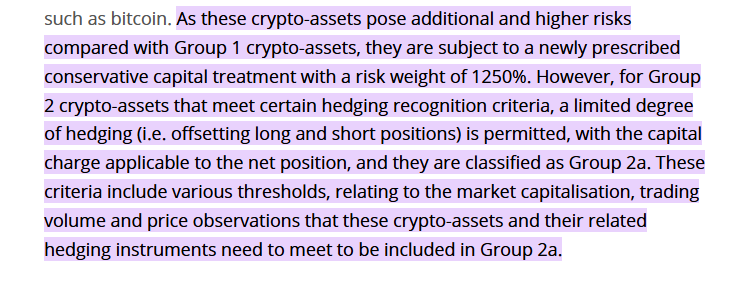
Source: ECB

The BCBS framework, first finalized in late 2022 and updated in 2024, divides crypto assets into two main groups: Group 1, which includes tokenized traditional assets and stablecoins with reliable backing mechanisms, and Group 2, which covers all other crypto assets subject to punitive capital treatment.

The global implementation of these standards was delayed by one year to January 2026.

Global Regulators Diverge on Basel Crypto Standards as Implementation Nears

While the Basel Committee’s guidelines are non-binding, its 45 members, including regulators from 28 jurisdictions, typically adopt them domestically.

However, not all major regions are on the same timeline. The European Central Bank supports implementing the existing rules first, while the U.S., U.K., and several Asian jurisdictions are seeking revisions before the standards come into force.

Singapore recently postponed its rollout by a year to ensure global alignment, and Hong Kong plans to follow in 2026 with lighter requirements for licensed stablecoins.

In the European Union, the Basel standards are being incorporated through the Capital Requirements Regulation (CRR 3) and the Markets in Crypto-Assets (MiCA) framework.

Draft rules from the European Banking Authority (EBA) published in August outline detailed methods for calculating crypto exposure across credit, market, and liquidity risks.

Unbacked crypto assets will retain a 1,250% risk weight, while stablecoins backed by traditional assets may receive a lower 250% charge.

The EBA’s approach aligns with Basel principles but introduces transitional rules, allowing banks limited engagement with digital assets while more permanent frameworks develop.

The EU is also preparing for the launch of a euro-backed stablecoin in 2026, led by a consortium of nine European banks, including ING and UniCredit, under MiCA supervision.

The United Kingdom is taking a similarly cautious path. The Bank of England has confirmed that upcoming rules will likely fall on the “restrictive end,” encouraging banks to keep low crypto exposure.

The Prudential Regulation Authority is developing a new prudential regime, CRYPTOPRU, expected to be finalized in 2026.

GENIUS Act Sparks Policy Clash Over Stablecoin Treatment in Banking Sector

Meanwhile, U.S. regulators are reevaluating their prudential treatment of stablecoins following the passage of the GENIUS Act earlier this year.

The law provides a framework for stablecoin issuance and payments but leaves open questions about how banking rules will adapt.

The Federal Reserve, OCC, and FDIC are coordinating on how to implement Basel standards while addressing domestic regulatory overlaps.

Industry groups have intensified pressure on the Basel Committee to ease the capital burden. In August, associations including the Global Financial Markets Association and the Institute of International Finance urged regulators to drop what they called “cliff-effect” penalties.

Their joint letter argued that treating tokenized U.S. Treasury securities as high-risk simply because they exist on public blockchains contradicts technology-neutral policy principles.

The debate comes amid broader concerns about how stablecoins could reshape global finance.
A recent report by Standard Chartered warned that over $1 trillion could flow out of emerging-market banks and into stablecoins by 2028, as users in developing economies turn to dollar-pegged digital assets as a safer store of value.


면책 조항: 본 사이트에 재게시된 글들은 공개 플랫폼에서 가져온 것으로 정보 제공 목적으로만 제공됩니다. 이는 반드시 MEXC의 견해를 반영하는 것은 아닙니다. 모든 권리는 원저자에게 있습니다. 제3자의 권리를 침해하는 콘텐츠가 있다고 판단될 경우, crypto.news@mexc.com으로 연락하여 삭제 요청을 해주시기 바랍니다. MEXC는 콘텐츠의 정확성, 완전성 또는 시의적절성에 대해 어떠한 보증도 하지 않으며, 제공된 정보에 기반하여 취해진 어떠한 조치에 대해서도 책임을 지지 않습니다. 본 콘텐츠는 금융, 법률 또는 기타 전문적인 조언을 구성하지 않으며, MEXC의 추천이나 보증으로 간주되어서는 안 됩니다.

Roll the Dice & Win Up to 1 BTC

Roll the Dice & Win Up to 1 BTCRoll the Dice & Win Up to 1 BTC

Invite friends & share 500,000 USDT!



