Seven leading blockchain infrastructure providers—Fireblocks, Polygon Labs, Mysten Labs, the Monad Foundation, the Solana Foundation, the Stellar Development Foundation, and the TON Foundation—have announced the launch of the Blockchain Payments Consortium (BPC), an industry-wide initiative to standardize digital asset transactions across networks. The founding members represent over $10 trillion in annual stablecoin transaction volume. According to the statement, the group will develop a unified framework to make cross-chain stablecoin transactions as seamless and data-compliant as traditional payments. Building a Common Framework for Cross-Chain Payments In 2024, on-chain payment volume reached nearly $20 trillion, surpassing Visa and Mastercard combined. Yet despite this explosive growth, blockchain payments remain fragmented by differing technical standards, compliance protocols, and settlement mechanisms. The Blockchain Payments Consortium will establish a common framework for interoperability, designed to bring the ease, reliability, and regulatory consistency of traditional payment networks to blockchain-based systems. By coordinating between blockchains, regulators, and financial institutions, the group seeks to lay the groundwork for a unified, borderless payments infrastructure. “Over the last 18 months, our industry has achieved mainstream adoption, with payments at the forefront,” said Ran Goldi, SVP of Payments and Network at Fireblocks. “As more established players enter the space, improving how we collaborate, coordinate, and operate together is essential. The Blockchain Payments Consortium offers a vital platform to achieve this,” added Goldi. Industry Leaders Align Around Interoperability Executives from across the founding members emphasized that interoperability and compliance are the final hurdles for blockchain payments to achieve global scale. “At Polygon Labs, we see payments as the most powerful real-world use case for blockchain,” said Jamal Raees, head of payments at Polygon Labs. “The future of payments is about connection and simplicity—making it as easy and reliable as sending a text.” Lola Oyelayo-Pearson, director of commerce and consumer product at Mysten Labs, notes that high-friction interactions between fiat and blockchain systems have deterred mainstream adoption. “The future of hybrid payments will not exist without standards for interoperability,” she said. Raj Parekh, head of stablecoins and payments at the Monad Foundation, added that aligning innovation with financial regulation is key to scaling blockchain payments globally. “BPC’s framework will help bridge that gap and enable faster, safer, and more consistent payment experiences.” Toward a Global, Trusted Blockchain Payments Network From Solana to Stellar and TON, members share a vision of blockchain payments that combine speed, scalability, and trust. “Solana enables capital to move at the speed of the internet,” said Sheraz Shere, GM of payments at the Solana Foundation. “BPC will help define shared standards that make blockchain payments as seamless and trusted as any traditional network.” Raja Chakravorti, chief business officer at the Stellar Development Foundation, emphasized that “true global adoption requires more than just speed—it demands trust, interoperability, and clear standards.” Nikola Plecas, VP of payments at the TON Foundation, concluded: “Through the Blockchain Payments Consortium, we’re uniting networks, institutions, and enterprises to make blockchain payments fast, trusted, scalable, and global.” The BPC will begin operations immediately, with working groups focused on technical standards, compliance frameworks, and institutional integration set to launch in Q1 2025Seven leading blockchain infrastructure providers—Fireblocks, Polygon Labs, Mysten Labs, the Monad Foundation, the Solana Foundation, the Stellar Development Foundation, and the TON Foundation—have announced the launch of the Blockchain Payments Consortium (BPC), an industry-wide initiative to standardize digital asset transactions across networks. The founding members represent over $10 trillion in annual stablecoin transaction volume. According to the statement, the group will develop a unified framework to make cross-chain stablecoin transactions as seamless and data-compliant as traditional payments. Building a Common Framework for Cross-Chain Payments In 2024, on-chain payment volume reached nearly $20 trillion, surpassing Visa and Mastercard combined. Yet despite this explosive growth, blockchain payments remain fragmented by differing technical standards, compliance protocols, and settlement mechanisms. The Blockchain Payments Consortium will establish a common framework for interoperability, designed to bring the ease, reliability, and regulatory consistency of traditional payment networks to blockchain-based systems. By coordinating between blockchains, regulators, and financial institutions, the group seeks to lay the groundwork for a unified, borderless payments infrastructure. “Over the last 18 months, our industry has achieved mainstream adoption, with payments at the forefront,” said Ran Goldi, SVP of Payments and Network at Fireblocks. “As more established players enter the space, improving how we collaborate, coordinate, and operate together is essential. The Blockchain Payments Consortium offers a vital platform to achieve this,” added Goldi. Industry Leaders Align Around Interoperability Executives from across the founding members emphasized that interoperability and compliance are the final hurdles for blockchain payments to achieve global scale. “At Polygon Labs, we see payments as the most powerful real-world use case for blockchain,” said Jamal Raees, head of payments at Polygon Labs. “The future of payments is about connection and simplicity—making it as easy and reliable as sending a text.” Lola Oyelayo-Pearson, director of commerce and consumer product at Mysten Labs, notes that high-friction interactions between fiat and blockchain systems have deterred mainstream adoption. “The future of hybrid payments will not exist without standards for interoperability,” she said. Raj Parekh, head of stablecoins and payments at the Monad Foundation, added that aligning innovation with financial regulation is key to scaling blockchain payments globally. “BPC’s framework will help bridge that gap and enable faster, safer, and more consistent payment experiences.” Toward a Global, Trusted Blockchain Payments Network From Solana to Stellar and TON, members share a vision of blockchain payments that combine speed, scalability, and trust. “Solana enables capital to move at the speed of the internet,” said Sheraz Shere, GM of payments at the Solana Foundation. “BPC will help define shared standards that make blockchain payments as seamless and trusted as any traditional network.” Raja Chakravorti, chief business officer at the Stellar Development Foundation, emphasized that “true global adoption requires more than just speed—it demands trust, interoperability, and clear standards.” Nikola Plecas, VP of payments at the TON Foundation, concluded: “Through the Blockchain Payments Consortium, we’re uniting networks, institutions, and enterprises to make blockchain payments fast, trusted, scalable, and global.” The BPC will begin operations immediately, with working groups focused on technical standards, compliance frameworks, and institutional integration set to launch in Q1 2025

Fireblocks, Polygon, Solana, Stellar & TON Form $10T Consortium to Standardize Stablecoin Payments

2025/11/07 01:44
3분 읽기
이 콘텐츠에 대한 의견이나 우려 사항이 있으시면 crypto.news@mexc.com으로 연락주시기 바랍니다

Seven leading blockchain infrastructure providers—Fireblocks, Polygon Labs, Mysten Labs, the Monad Foundation, the Solana Foundation, the Stellar Development Foundation, and the TON Foundation—have announced the launch of the Blockchain Payments Consortium (BPC), an industry-wide initiative to standardize digital asset transactions across networks.

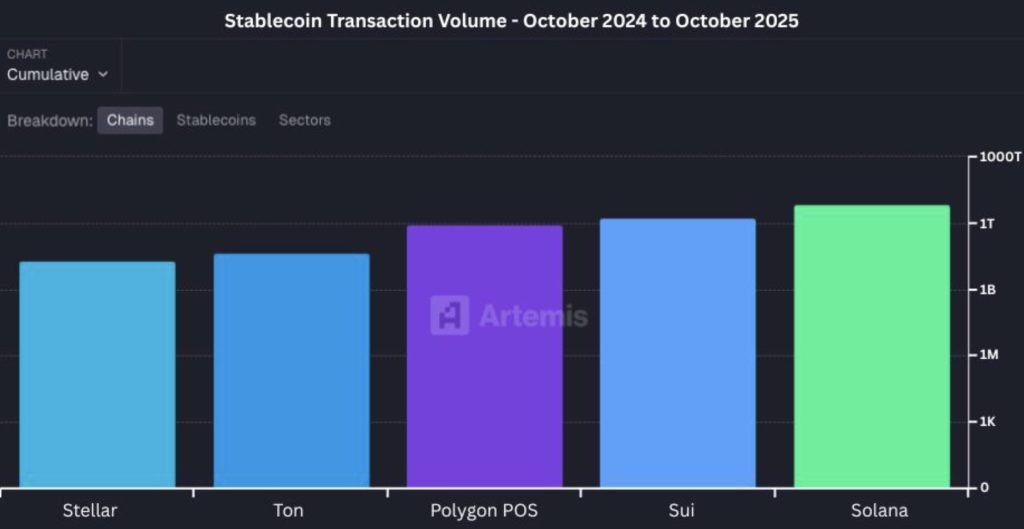
The founding members represent over $10 trillion in annual stablecoin transaction volume. According to the statement, the group will develop a unified framework to make cross-chain stablecoin transactions as seamless and data-compliant as traditional payments.

Building a Common Framework for Cross-Chain Payments

In 2024, on-chain payment volume reached nearly $20 trillion, surpassing Visa and Mastercard combined. Yet despite this explosive growth, blockchain payments remain fragmented by differing technical standards, compliance protocols, and settlement mechanisms.
The Blockchain Payments Consortium will establish a common framework for interoperability, designed to bring the ease, reliability, and regulatory consistency of traditional payment networks to blockchain-based systems.

By coordinating between blockchains, regulators, and financial institutions, the group seeks to lay the groundwork for a unified, borderless payments infrastructure.

“Over the last 18 months, our industry has achieved mainstream adoption, with payments at the forefront,” said Ran Goldi, SVP of Payments and Network at Fireblocks.

“As more established players enter the space, improving how we collaborate, coordinate, and operate together is essential. The Blockchain Payments Consortium offers a vital platform to achieve this,” added Goldi.

Industry Leaders Align Around Interoperability

Executives from across the founding members emphasized that interoperability and compliance are the final hurdles for blockchain payments to achieve global scale.

“At Polygon Labs, we see payments as the most powerful real-world use case for blockchain,” said Jamal Raees, head of payments at Polygon Labs. “The future of payments is about connection and simplicity—making it as easy and reliable as sending a text.”

Lola Oyelayo-Pearson, director of commerce and consumer product at Mysten Labs, notes that high-friction interactions between fiat and blockchain systems have deterred mainstream adoption. “The future of hybrid payments will not exist without standards for interoperability,” she said.

Raj Parekh, head of stablecoins and payments at the Monad Foundation, added that aligning innovation with financial regulation is key to scaling blockchain payments globally. “BPC’s framework will help bridge that gap and enable faster, safer, and more consistent payment experiences.”

Toward a Global, Trusted Blockchain Payments Network

From Solana to Stellar and TON, members share a vision of blockchain payments that combine speed, scalability, and trust. “Solana enables capital to move at the speed of the internet,” said Sheraz Shere, GM of payments at the Solana Foundation. “BPC will help define shared standards that make blockchain payments as seamless and trusted as any traditional network.”

Raja Chakravorti, chief business officer at the Stellar Development Foundation, emphasized that “true global adoption requires more than just speed—it demands trust, interoperability, and clear standards.”

Nikola Plecas, VP of payments at the TON Foundation, concluded: “Through the Blockchain Payments Consortium, we’re uniting networks, institutions, and enterprises to make blockchain payments fast, trusted, scalable, and global.”

The BPC will begin operations immediately, with working groups focused on technical standards, compliance frameworks, and institutional integration set to launch in Q1 2025.


시장 기회
톤코인 로고
톤코인 가격(TON)
$1.313
$1.313$1.313
+1.00%
USD
톤코인 (TON) 실시간 가격 차트
면책 조항: 본 사이트에 재게시된 글들은 공개 플랫폼에서 가져온 것으로 정보 제공 목적으로만 제공됩니다. 이는 반드시 MEXC의 견해를 반영하는 것은 아닙니다. 모든 권리는 원저자에게 있습니다. 제3자의 권리를 침해하는 콘텐츠가 있다고 판단될 경우, crypto.news@mexc.com으로 연락하여 삭제 요청을 해주시기 바랍니다. MEXC는 콘텐츠의 정확성, 완전성 또는 시의적절성에 대해 어떠한 보증도 하지 않으며, 제공된 정보에 기반하여 취해진 어떠한 조치에 대해서도 책임을 지지 않습니다. 본 콘텐츠는 금융, 법률 또는 기타 전문적인 조언을 구성하지 않으며, MEXC의 추천이나 보증으로 간주되어서는 안 됩니다.

Roll the Dice & Win Up to 1 BTC

Roll the Dice & Win Up to 1 BTCRoll the Dice & Win Up to 1 BTC

Invite friends & share 500,000 USDT!