From "de-banking" to "banks on the blockchain" Over the past decade, the narrative of digital currencies has been dominated by "decentralization." Bitcoin has challenged the sovereign currency system, stablecoins have reshaped payment logic, and decentralized finance (DeFi) has made banks seem sluggish and cumbersome. But starting in 2024, the balance seems to be shifting – banks are making a comeback. They are no longer arrogantly observing from the sidelines, but are using "tokenized deposits" as a weapon to try to regain control of the digitalization of money. Tokenized deposits are not a new currency, but rather an on-chain mapping of bank deposits. Each token represents a real account balance, possessing both the on-chain liquidity of stablecoins and the legal force of bank liabilities. It marks the beginning of the "second phase" of financial digitalization: from the "decentralized rebellion" of the crypto world to the "institutionalized on-chaining" of the banking system. Singapore: A Pioneer in the Institutionalization of Cross-Chain Interoperability DBS Bank of Singapore and Kinexys, a subsidiary of JP Morgan, are developing a cross-chain tokenized deposit interoperability framework that aims to enable real-time interoperability between JP Morgan's Deposit Tokens (based on Ethereum L2 Base) and DBS's permissioned blockchain. In the future, corporate funds may be able to settle freely between different banks and blockchains 24/7, without needing to go through SWIFT or clearing banks. This reflects Singapore's consistent regulatory logic: not to resist new technologies, but to institutionalize and absorb them. In their view, tokenized deposits are not a replacement for stablecoins, but a compliant evolution of stablecoins. Hong Kong: Regulatory Ambitions to Build a "Multi-Tier Currency" Framework In late October, Eddie Yue, Chief Executive of the Hong Kong Monetary Authority, wrote an article in The Hong Kong Economic Journal entitled “Paving the Way for Hong Kong’s Digital Economy”, announcing that Hong Kong will establish a multi-tiered digital currency system encompassing the Central Bank Digital Hong Kong Dollar (CBDC), tokenized deposits, and regulated stablecoins. This framework reflects Hong Kong's institutional thinking: At the central bank level: strengthen sovereign currency control through the digital Hong Kong dollar; At the commercial bank level: using tokenized deposits to handle enterprise-level payments and clearing; Market level: Allow stablecoins to circulate within the Web3 ecosystem. Hong Kong is not betting on any particular form of digital currency, but rather building a multi-layered, coexisting, and complementary monetary ecosystem that allows innovation and regulation, efficiency and security to coexist harmoniously. Britain: A Realist Approach to Institutionalized Experimentation In September of this year, six major banks, including HSBC, Barclays, and Lloyds, jointly launched a pilot program for tokenizing the British pound, which is expected to last until mid-2026. The pilot program covers not only cross-border payments but also mortgage processes and digital asset settlements. Bank of England Governor Bailey once pointed out: "The significance of tokenization lies not in creating new risks, but in making the old system more efficient." This statement reveals the core of the UK's strategy—establishment first, then approval. Before stablecoin regulation is finalized, the UK has chosen to conduct a controlled experiment with "tokenized deposits," trading regulatory tolerance for innovative foresight. Japan: A Pragmatic Shift Beneath a Conservative Exterior Japan has always been cautious, but it is quietly making progress. SBI's Shinsei Bank is testing cross-border settlements using tokenized deposits to reduce the cost and delays of foreign exchange clearing within the Asian region. Compared to the slow progress of central bank digital currencies (CBDCs), tokenized deposits offer Japan a more realistic middle ground: remaining within the regulatory framework while simultaneously improving efficiency. This aligns with the consistent logic of Japanese monetary policy—to achieve a structural shift while maintaining a "prudent" approach. Sovereignty, efficiency, and overall situation From a global perspective, tokenized deposits are not merely a technological experiment, but a race for monetary sovereignty and institutional modernization. Stablecoins have enabled the US dollar to achieve de facto global expansion on the blockchain, but at the same time, they have weakened central banks' control over the digital form of their currencies. Tokenized deposits offer another possibility: reshaping settlement efficiency and liquidity order, with institutions as boundaries and blockchain as the underlying technology, without relinquishing sovereignty. The future monetary system may present a three-tiered structure: Central Bank Digital Currency (CBDC): Sovereignty and Settlement; Banking layer (tokenized deposits): Payments and credit; Market Layer (Stablecoins and RWA): Global Liquidity and Asset Digitization. These are not replacements for each other, but rather together they constitute the underlying architecture of the new finance. Real-world assets are truly being put on the blockchain. A recent report from Bank of New York Mellon (BNY) indicates that by 2030, the total size of stablecoins and tokenized cash will reach $3.6 trillion, with tokenized deposits and money market funds accounting for half of that. This means that blockchain is moving from the external laboratory of the financial system into its underlying infrastructure. "Going on-chain" is no longer a technological choice, but an evolution of the system. The curtain is slowly rising on this grand "institutionalization on the blockchain" within the global banking system.From "de-banking" to "banks on the blockchain" Over the past decade, the narrative of digital currencies has been dominated by "decentralization." Bitcoin has challenged the sovereign currency system, stablecoins have reshaped payment logic, and decentralized finance (DeFi) has made banks seem sluggish and cumbersome. But starting in 2024, the balance seems to be shifting – banks are making a comeback. They are no longer arrogantly observing from the sidelines, but are using "tokenized deposits" as a weapon to try to regain control of the digitalization of money. Tokenized deposits are not a new currency, but rather an on-chain mapping of bank deposits. Each token represents a real account balance, possessing both the on-chain liquidity of stablecoins and the legal force of bank liabilities. It marks the beginning of the "second phase" of financial digitalization: from the "decentralized rebellion" of the crypto world to the "institutionalized on-chaining" of the banking system. Singapore: A Pioneer in the Institutionalization of Cross-Chain Interoperability DBS Bank of Singapore and Kinexys, a subsidiary of JP Morgan, are developing a cross-chain tokenized deposit interoperability framework that aims to enable real-time interoperability between JP Morgan's Deposit Tokens (based on Ethereum L2 Base) and DBS's permissioned blockchain. In the future, corporate funds may be able to settle freely between different banks and blockchains 24/7, without needing to go through SWIFT or clearing banks. This reflects Singapore's consistent regulatory logic: not to resist new technologies, but to institutionalize and absorb them. In their view, tokenized deposits are not a replacement for stablecoins, but a compliant evolution of stablecoins. Hong Kong: Regulatory Ambitions to Build a "Multi-Tier Currency" Framework In late October, Eddie Yue, Chief Executive of the Hong Kong Monetary Authority, wrote an article in The Hong Kong Economic Journal entitled “Paving the Way for Hong Kong’s Digital Economy”, announcing that Hong Kong will establish a multi-tiered digital currency system encompassing the Central Bank Digital Hong Kong Dollar (CBDC), tokenized deposits, and regulated stablecoins. This framework reflects Hong Kong's institutional thinking: At the central bank level: strengthen sovereign currency control through the digital Hong Kong dollar; At the commercial bank level: using tokenized deposits to handle enterprise-level payments and clearing; Market level: Allow stablecoins to circulate within the Web3 ecosystem. Hong Kong is not betting on any particular form of digital currency, but rather building a multi-layered, coexisting, and complementary monetary ecosystem that allows innovation and regulation, efficiency and security to coexist harmoniously. Britain: A Realist Approach to Institutionalized Experimentation In September of this year, six major banks, including HSBC, Barclays, and Lloyds, jointly launched a pilot program for tokenizing the British pound, which is expected to last until mid-2026. The pilot program covers not only cross-border payments but also mortgage processes and digital asset settlements. Bank of England Governor Bailey once pointed out: "The significance of tokenization lies not in creating new risks, but in making the old system more efficient." This statement reveals the core of the UK's strategy—establishment first, then approval. Before stablecoin regulation is finalized, the UK has chosen to conduct a controlled experiment with "tokenized deposits," trading regulatory tolerance for innovative foresight. Japan: A Pragmatic Shift Beneath a Conservative Exterior Japan has always been cautious, but it is quietly making progress. SBI's Shinsei Bank is testing cross-border settlements using tokenized deposits to reduce the cost and delays of foreign exchange clearing within the Asian region. Compared to the slow progress of central bank digital currencies (CBDCs), tokenized deposits offer Japan a more realistic middle ground: remaining within the regulatory framework while simultaneously improving efficiency. This aligns with the consistent logic of Japanese monetary policy—to achieve a structural shift while maintaining a "prudent" approach. Sovereignty, efficiency, and overall situation From a global perspective, tokenized deposits are not merely a technological experiment, but a race for monetary sovereignty and institutional modernization. Stablecoins have enabled the US dollar to achieve de facto global expansion on the blockchain, but at the same time, they have weakened central banks' control over the digital form of their currencies. Tokenized deposits offer another possibility: reshaping settlement efficiency and liquidity order, with institutions as boundaries and blockchain as the underlying technology, without relinquishing sovereignty. The future monetary system may present a three-tiered structure: Central Bank Digital Currency (CBDC): Sovereignty and Settlement; Banking layer (tokenized deposits): Payments and credit; Market Layer (Stablecoins and RWA): Global Liquidity and Asset Digitization. These are not replacements for each other, but rather together they constitute the underlying architecture of the new finance. Real-world assets are truly being put on the blockchain. A recent report from Bank of New York Mellon (BNY) indicates that by 2030, the total size of stablecoins and tokenized cash will reach $3.6 trillion, with tokenized deposits and money market funds accounting for half of that. This means that blockchain is moving from the external laboratory of the financial system into its underlying infrastructure. "Going on-chain" is no longer a technological choice, but an evolution of the system. The curtain is slowly rising on this grand "institutionalization on the blockchain" within the global banking system.


The "blockchain revolution" in banking: Tokenized deposits become a new battleground in global finance.

2025/11/13 14:00
5분 읽기
이 콘텐츠에 대한 의견이나 우려 사항이 있으시면 crypto.news@mexc.com으로 연락주시기 바랍니다

From "de-banking" to "banks on the blockchain"

Over the past decade, the narrative of digital currencies has been dominated by "decentralization." Bitcoin has challenged the sovereign currency system, stablecoins have reshaped payment logic, and decentralized finance (DeFi) has made banks seem sluggish and cumbersome.

But starting in 2024, the balance seems to be shifting – banks are making a comeback. They are no longer arrogantly observing from the sidelines, but are using "tokenized deposits" as a weapon to try to regain control of the digitalization of money.

Tokenized deposits are not a new currency, but rather an on-chain mapping of bank deposits. Each token represents a real account balance, possessing both the on-chain liquidity of stablecoins and the legal force of bank liabilities. It marks the beginning of the "second phase" of financial digitalization: from the "decentralized rebellion" of the crypto world to the "institutionalized on-chaining" of the banking system.

Singapore: A Pioneer in the Institutionalization of Cross-Chain Interoperability

DBS Bank of Singapore and Kinexys, a subsidiary of JP Morgan, are developing a cross-chain tokenized deposit interoperability framework that aims to enable real-time interoperability between JP Morgan's Deposit Tokens (based on Ethereum L2 Base) and DBS's permissioned blockchain.

In the future, corporate funds may be able to settle freely between different banks and blockchains 24/7, without needing to go through SWIFT or clearing banks. This reflects Singapore's consistent regulatory logic: not to resist new technologies, but to institutionalize and absorb them. In their view, tokenized deposits are not a replacement for stablecoins, but a compliant evolution of stablecoins.

Hong Kong: Regulatory Ambitions to Build a "Multi-Tier Currency" Framework

In late October, Eddie Yue, Chief Executive of the Hong Kong Monetary Authority, wrote an article in The Hong Kong Economic Journal entitled “Paving the Way for Hong Kong’s Digital Economy”, announcing that Hong Kong will establish a multi-tiered digital currency system encompassing the Central Bank Digital Hong Kong Dollar (CBDC), tokenized deposits, and regulated stablecoins.

This framework reflects Hong Kong's institutional thinking:

  • At the central bank level: strengthen sovereign currency control through the digital Hong Kong dollar;
  • At the commercial bank level: using tokenized deposits to handle enterprise-level payments and clearing;
  • Market level: Allow stablecoins to circulate within the Web3 ecosystem.

Hong Kong is not betting on any particular form of digital currency, but rather building a multi-layered, coexisting, and complementary monetary ecosystem that allows innovation and regulation, efficiency and security to coexist harmoniously.

Britain: A Realist Approach to Institutionalized Experimentation

In September of this year, six major banks, including HSBC, Barclays, and Lloyds, jointly launched a pilot program for tokenizing the British pound, which is expected to last until mid-2026. The pilot program covers not only cross-border payments but also mortgage processes and digital asset settlements.

Bank of England Governor Bailey once pointed out: "The significance of tokenization lies not in creating new risks, but in making the old system more efficient." This statement reveals the core of the UK's strategy—establishment first, then approval. Before stablecoin regulation is finalized, the UK has chosen to conduct a controlled experiment with "tokenized deposits," trading regulatory tolerance for innovative foresight.

Japan: A Pragmatic Shift Beneath a Conservative Exterior

Japan has always been cautious, but it is quietly making progress. SBI's Shinsei Bank is testing cross-border settlements using tokenized deposits to reduce the cost and delays of foreign exchange clearing within the Asian region.

Compared to the slow progress of central bank digital currencies (CBDCs), tokenized deposits offer Japan a more realistic middle ground: remaining within the regulatory framework while simultaneously improving efficiency. This aligns with the consistent logic of Japanese monetary policy—to achieve a structural shift while maintaining a "prudent" approach.

Sovereignty, efficiency, and overall situation

From a global perspective, tokenized deposits are not merely a technological experiment, but a race for monetary sovereignty and institutional modernization. Stablecoins have enabled the US dollar to achieve de facto global expansion on the blockchain, but at the same time, they have weakened central banks' control over the digital form of their currencies. Tokenized deposits offer another possibility: reshaping settlement efficiency and liquidity order, with institutions as boundaries and blockchain as the underlying technology, without relinquishing sovereignty.

The future monetary system may present a three-tiered structure:

  • Central Bank Digital Currency (CBDC): Sovereignty and Settlement;
  • Banking layer (tokenized deposits): Payments and credit;
  • Market Layer (Stablecoins and RWA): Global Liquidity and Asset Digitization.

These are not replacements for each other, but rather together they constitute the underlying architecture of the new finance.

Real-world assets are truly being put on the blockchain.

A recent report from Bank of New York Mellon (BNY) indicates that by 2030, the total size of stablecoins and tokenized cash will reach $3.6 trillion, with tokenized deposits and money market funds accounting for half of that. This means that blockchain is moving from the external laboratory of the financial system into its underlying infrastructure. "Going on-chain" is no longer a technological choice, but an evolution of the system.

The curtain is slowly rising on this grand "institutionalization on the blockchain" within the global banking system.

시장 기회
DeFi 로고
DeFi 가격(DEFI)
$0.000298
$0.000298$0.000298
-6.87%
USD
DeFi (DEFI) 실시간 가격 차트
면책 조항: 본 사이트에 재게시된 글들은 공개 플랫폼에서 가져온 것으로 정보 제공 목적으로만 제공됩니다. 이는 반드시 MEXC의 견해를 반영하는 것은 아닙니다. 모든 권리는 원저자에게 있습니다. 제3자의 권리를 침해하는 콘텐츠가 있다고 판단될 경우, crypto.news@mexc.com으로 연락하여 삭제 요청을 해주시기 바랍니다. MEXC는 콘텐츠의 정확성, 완전성 또는 시의적절성에 대해 어떠한 보증도 하지 않으며, 제공된 정보에 기반하여 취해진 어떠한 조치에 대해서도 책임을 지지 않습니다. 본 콘텐츠는 금융, 법률 또는 기타 전문적인 조언을 구성하지 않으며, MEXC의 추천이나 보증으로 간주되어서는 안 됩니다.

추천 콘텐츠

[Vantage Point] What Robinsons Retail’s delisting signals about the Philippine market

[Vantage Point] What Robinsons Retail’s delisting signals about the Philippine market

Companies are increasingly turning away from the Philippine Stock Exchange as a source of capital
공유하기
Rappler2026/04/07 12:00
The growth of crypto betting in the digital economy
The growth of crypto betting in the digital economy

The post The growth of crypto betting in the digital economy appeared on BitcoinEthereumNews.com. The rapid evolution of digital finance has created new opportunities

공유하기
BitcoinEthereumNews2026/04/07 13:40
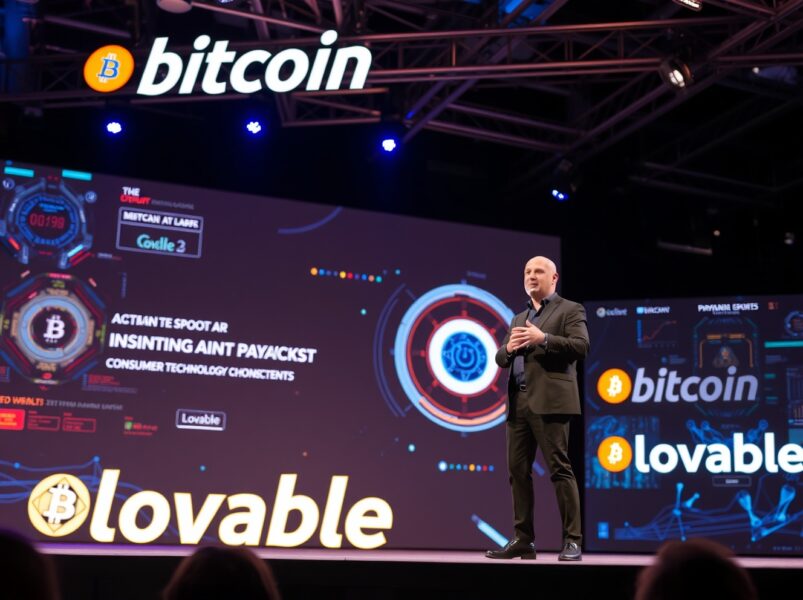
Lovable AI’s Astonishing Rise: Anton Osika Reveals Startup Secrets at Bitcoin World Disrupt 2025

Lovable AI’s Astonishing Rise: Anton Osika Reveals Startup Secrets at Bitcoin World Disrupt 2025

BitcoinWorld Lovable AI’s Astonishing Rise: Anton Osika Reveals Startup Secrets at Bitcoin World Disrupt 2025 Are you ready to witness a phenomenon? The world of technology is abuzz with the incredible rise of Lovable AI, a startup that’s not just breaking records but rewriting the rulebook for rapid growth. Imagine creating powerful apps and websites just by speaking to an AI – that’s the magic Lovable brings to the masses. This groundbreaking approach has propelled the company into the spotlight, making it one of the fastest-growing software firms in history. And now, the visionary behind this sensation, co-founder and CEO Anton Osika, is set to share his invaluable insights on the Disrupt Stage at the highly anticipated Bitcoin World Disrupt 2025. If you’re a founder, investor, or tech enthusiast eager to understand the future of innovation, this is an event you cannot afford to miss. Lovable AI’s Meteoric Ascent: Redefining Software Creation In an era where digital transformation is paramount, Lovable AI has emerged as a true game-changer. Its core premise is deceptively simple yet profoundly impactful: democratize software creation. By enabling anyone to build applications and websites through intuitive AI conversations, Lovable is empowering the vast majority of individuals who lack coding skills to transform their ideas into tangible digital products. This mission has resonated globally, leading to unprecedented momentum. The numbers speak for themselves: Achieved an astonishing $100 million Annual Recurring Revenue (ARR) in less than a year. Successfully raised a $200 million Series A funding round, valuing the company at $1.8 billion, led by industry giant Accel. Is currently fielding unsolicited investor offers, pushing its valuation towards an incredible $4 billion. As industry reports suggest, investors are unequivocally “loving Lovable,” and it’s clear why. This isn’t just about impressive financial metrics; it’s about a company that has tapped into a fundamental need, offering a solution that is both innovative and accessible. The rapid scaling of Lovable AI provides a compelling case study for any entrepreneur aiming for similar exponential growth. The Visionary Behind the Hype: Anton Osika’s Journey to Innovation Every groundbreaking company has a driving force, and for Lovable, that force is co-founder and CEO Anton Osika. His journey is as fascinating as his company’s success. A physicist by training, Osika previously contributed to the cutting-edge research at CERN, the European Organization for Nuclear Research. This deep technical background, combined with his entrepreneurial spirit, has been instrumental in Lovable’s rapid ascent. Before Lovable, he honed his skills as a co-founder of Depict.ai and a Founding Engineer at Sana. Based in Stockholm, Osika has masterfully steered Lovable from a nascent idea to a global phenomenon in record time. His leadership embodies a unique blend of profound technical understanding and a keen, consumer-first vision. At Bitcoin World Disrupt 2025, attendees will have the rare opportunity to hear directly from Osika about what it truly takes to build a brand that not only scales at an incredible pace in a fiercely competitive market but also adeptly manages the intense cultural conversations that inevitably accompany such swift and significant success. His insights will be crucial for anyone looking to understand the dynamics of high-growth tech leadership. Unpacking Consumer Tech Innovation at Bitcoin World Disrupt 2025 The 20th anniversary of Bitcoin World is set to be marked by a truly special event: Bitcoin World Disrupt 2025. From October 27–29, Moscone West in San Francisco will transform into the epicenter of innovation, gathering over 10,000 founders, investors, and tech leaders. It’s the ideal platform to explore the future of consumer tech innovation, and Anton Osika’s presence on the Disrupt Stage is a highlight. His session will delve into how Lovable is not just participating in but actively shaping the next wave of consumer-facing technologies. Why is this session particularly relevant for those interested in the future of consumer experiences? Osika’s discussion will go beyond the superficial, offering a deep dive into the strategies that have allowed Lovable to carve out a unique category in a market long thought to be saturated. Attendees will gain a front-row seat to understanding how to identify unmet consumer needs, leverage advanced AI to meet those needs, and build a product that captivates users globally. The event itself promises a rich tapestry of ideas and networking opportunities: For Founders: Sharpen your pitch and connect with potential investors. For Investors: Discover the next breakout startup poised for massive growth. For Innovators: Claim your spot at the forefront of technological advancements. The insights shared regarding consumer tech innovation at this event will be invaluable for anyone looking to navigate the complexities and capitalize on the opportunities within this dynamic sector. Mastering Startup Growth Strategies: A Blueprint for the Future Lovable’s journey isn’t just another startup success story; it’s a meticulously crafted blueprint for effective startup growth strategies in the modern era. Anton Osika’s experience offers a rare glimpse into the practicalities of scaling a business at breakneck speed while maintaining product integrity and managing external pressures. For entrepreneurs and aspiring tech leaders, his talk will serve as a masterclass in several critical areas: Strategy Focus Key Takeaways from Lovable’s Journey Rapid Scaling How to build infrastructure and teams that support exponential user and revenue growth without compromising quality. Product-Market Fit Identifying a significant, underserved market (the 99% who can’t code) and developing a truly innovative solution (AI-powered app creation). Investor Relations Balancing intense investor interest and pressure with a steadfast focus on product development and long-term vision. Category Creation Carving out an entirely new niche by democratizing complex technologies, rather than competing in existing crowded markets. Understanding these startup growth strategies is essential for anyone aiming to build a resilient and impactful consumer experience. Osika’s session will provide actionable insights into how to replicate elements of Lovable’s success, offering guidance on navigating challenges from product development to market penetration and investor management. Conclusion: Seize the Future of Tech The story of Lovable, under the astute leadership of Anton Osika, is a testament to the power of innovative ideas meeting flawless execution. Their remarkable journey from concept to a multi-billion-dollar valuation in record time is a compelling narrative for anyone interested in the future of technology. By democratizing software creation through Lovable AI, they are not just building a company; they are fostering a new generation of creators. His appearance at Bitcoin World Disrupt 2025 is an unmissable opportunity to gain direct insights from a leader who is truly shaping the landscape of consumer tech innovation. Don’t miss this chance to learn about cutting-edge startup growth strategies and secure your front-row seat to the future. Register now and save up to $668 before Regular Bird rates end on September 26. To learn more about the latest AI market trends, explore our article on key developments shaping AI features. This post Lovable AI’s Astonishing Rise: Anton Osika Reveals Startup Secrets at Bitcoin World Disrupt 2025 first appeared on BitcoinWorld.
공유하기
Coinstats2025/09/17 23:40

$30,000 in PRL + 15,000 USDT

$30,000 in PRL + 15,000 USDT$30,000 in PRL + 15,000 USDT

Deposit & trade PRL to boost your rewards!

