Leading stablecoin issuer Tether is positioning itself to compete with banks in commodity trade lending after deploying approximately $1.5 billion in credit to the market, according to a Bloomberg report. Tether CEO Paolo Ardoino revealed on November 14 that the firm intends to scale up its lending activities across multiple commodity markets, ranging from oil and cotton to wheat and various agricultural goods. The company has provided loans in both US dollars and its USDT stablecoin, which is backed by U.S. Treasury bills and precious metals like gold. While Tether remains a minority player compared to the most active banks in commodities lending, the income it generates from its nearly $200 billion in reserves gives the company significant firepower to compete. Last October, Cryptonews covered Tether’s preliminary conversations with multiple companies regarding dollar-denominated lending ventures. At that time, Ardoino noted: “We’re unlikely to publicly share specific investment figures for commodity trading. Our strategy is still taking shape.” He emphasized that future prospects are “enormous,” with Tether keen to pursue diverse opportunities within commodity markets. The Current Commodity Lending Model Commodity trade lending is essentially short-term credit that helps commodity producers, traders, and buyers manage the timing and costs associated with purchasing, transporting, and selling physical goods. Banks have historically filled this role by helping merchants manage cash flow gaps between upstream payments to suppliers and downstream collections from customers. However, the process tends to be documentation-heavy and time-consuming, though banks bring decades of operational know-how, regulatory frameworks, and a longstanding partnership with major commodity firms. How Tether’s Approach Differs Tether’s commodity lending model operates in a simpler, faster manner; instead of relying solely on bank wires or letters of credit, it lends either U.S. dollars or USDT directly to commodity traders. Because USDT transfers settle near instantly across borders, it is already widely used in emerging markets, particularly in commodity-exporting regions. Tether can offer quicker access to working capital when traders need liquidity most. Where Tether could also rival banks is in speed of settlement and access to liquidity in markets where traditional financing is slow or expensive. A trader who might wait days for a bank to process a loan or verify documents could receive funds in minutes via USDT, enabling them to move cargo or secure a shipment before prices shift. Tether’s commodities finance push arrives several years after traditional banks reduced their exposure to this sector following multiple high-profile failures and fraud allegations that damaged lender confidence.Source: X/APM Research This has led to a growing market for private credit, especially for financing deals in riskier locations where banks are less willing to lend. For Tether and other private lenders, commodities finance is also attractive because credit facilities typically cycle through multiple uses within compressed timeframes, generating frequent and consistent interest payments. Tether’s Financial Position Tether appears unstoppable right now, with the world’s largest stablecoin issuer on track to generate approximately $15 billion this year. Bitwise’s chief investment officer, Matt Houga, recently predicted that Tether could become the world’s most profitable company, potentially overtaking Saudi Aramco. It’s the world’s third-largest digital asset with a market capitalization of $183.8 billion, up 50% compared to this time last year. Although Tether maintains strong cash reserves, recent reports suggest that the company may seek $20 billion in new capital for a 3% ownership stake. Such a transaction would establish a valuation near $500 billion, eclipsing Netflix and Samsung while approaching iconic financial services brands like Mastercard. The firm has simultaneously expanded its precious metals holdings, with its gold reserves now exceeding $12 billion. To support this expansion, Tether recently brought on board leadership from HSBC’s metals division to strengthen its bullion infrastructureLeading stablecoin issuer Tether is positioning itself to compete with banks in commodity trade lending after deploying approximately $1.5 billion in credit to the market, according to a Bloomberg report. Tether CEO Paolo Ardoino revealed on November 14 that the firm intends to scale up its lending activities across multiple commodity markets, ranging from oil and cotton to wheat and various agricultural goods. The company has provided loans in both US dollars and its USDT stablecoin, which is backed by U.S. Treasury bills and precious metals like gold. While Tether remains a minority player compared to the most active banks in commodities lending, the income it generates from its nearly $200 billion in reserves gives the company significant firepower to compete. Last October, Cryptonews covered Tether’s preliminary conversations with multiple companies regarding dollar-denominated lending ventures. At that time, Ardoino noted: “We’re unlikely to publicly share specific investment figures for commodity trading. Our strategy is still taking shape.” He emphasized that future prospects are “enormous,” with Tether keen to pursue diverse opportunities within commodity markets. The Current Commodity Lending Model Commodity trade lending is essentially short-term credit that helps commodity producers, traders, and buyers manage the timing and costs associated with purchasing, transporting, and selling physical goods. Banks have historically filled this role by helping merchants manage cash flow gaps between upstream payments to suppliers and downstream collections from customers. However, the process tends to be documentation-heavy and time-consuming, though banks bring decades of operational know-how, regulatory frameworks, and a longstanding partnership with major commodity firms. How Tether’s Approach Differs Tether’s commodity lending model operates in a simpler, faster manner; instead of relying solely on bank wires or letters of credit, it lends either U.S. dollars or USDT directly to commodity traders. Because USDT transfers settle near instantly across borders, it is already widely used in emerging markets, particularly in commodity-exporting regions. Tether can offer quicker access to working capital when traders need liquidity most. Where Tether could also rival banks is in speed of settlement and access to liquidity in markets where traditional financing is slow or expensive. A trader who might wait days for a bank to process a loan or verify documents could receive funds in minutes via USDT, enabling them to move cargo or secure a shipment before prices shift. Tether’s commodities finance push arrives several years after traditional banks reduced their exposure to this sector following multiple high-profile failures and fraud allegations that damaged lender confidence.Source: X/APM Research This has led to a growing market for private credit, especially for financing deals in riskier locations where banks are less willing to lend. For Tether and other private lenders, commodities finance is also attractive because credit facilities typically cycle through multiple uses within compressed timeframes, generating frequent and consistent interest payments. Tether’s Financial Position Tether appears unstoppable right now, with the world’s largest stablecoin issuer on track to generate approximately $15 billion this year. Bitwise’s chief investment officer, Matt Houga, recently predicted that Tether could become the world’s most profitable company, potentially overtaking Saudi Aramco. It’s the world’s third-largest digital asset with a market capitalization of $183.8 billion, up 50% compared to this time last year. Although Tether maintains strong cash reserves, recent reports suggest that the company may seek $20 billion in new capital for a 3% ownership stake. Such a transaction would establish a valuation near $500 billion, eclipsing Netflix and Samsung while approaching iconic financial services brands like Mastercard. The firm has simultaneously expanded its precious metals holdings, with its gold reserves now exceeding $12 billion. To support this expansion, Tether recently brought on board leadership from HSBC’s metals division to strengthen its bullion infrastructure

Stablecoin Issuer Tether Set to Rival Banks in Commodity Trade Lending

2025/11/14 22:44
4분 읽기
이 콘텐츠에 대한 의견이나 우려 사항이 있으시면 crypto.news@mexc.com으로 연락주시기 바랍니다

Leading stablecoin issuer Tether is positioning itself to compete with banks in commodity trade lending after deploying approximately $1.5 billion in credit to the market, according to a Bloomberg report.

Tether CEO Paolo Ardoino revealed on November 14 that the firm intends to scale up its lending activities across multiple commodity markets, ranging from oil and cotton to wheat and various agricultural goods.

The company has provided loans in both US dollars and its USDT stablecoin, which is backed by U.S. Treasury bills and precious metals like gold.

While Tether remains a minority player compared to the most active banks in commodities lending, the income it generates from its nearly $200 billion in reserves gives the company significant firepower to compete.

Last October, Cryptonews covered Tether’s preliminary conversations with multiple companies regarding dollar-denominated lending ventures.

At that time, Ardoino noted: “We’re unlikely to publicly share specific investment figures for commodity trading. Our strategy is still taking shape.”

He emphasized that future prospects are “enormous,” with Tether keen to pursue diverse opportunities within commodity markets.

The Current Commodity Lending Model

Commodity trade lending is essentially short-term credit that helps commodity producers, traders, and buyers manage the timing and costs associated with purchasing, transporting, and selling physical goods.

Banks have historically filled this role by helping merchants manage cash flow gaps between upstream payments to suppliers and downstream collections from customers.

However, the process tends to be documentation-heavy and time-consuming, though banks bring decades of operational know-how, regulatory frameworks, and a longstanding partnership with major commodity firms.

How Tether’s Approach Differs

Tether’s commodity lending model operates in a simpler, faster manner; instead of relying solely on bank wires or letters of credit, it lends either U.S. dollars or USDT directly to commodity traders.

Because USDT transfers settle near instantly across borders, it is already widely used in emerging markets, particularly in commodity-exporting regions.

Tether can offer quicker access to working capital when traders need liquidity most.

Where Tether could also rival banks is in speed of settlement and access to liquidity in markets where traditional financing is slow or expensive.

A trader who might wait days for a bank to process a loan or verify documents could receive funds in minutes via USDT, enabling them to move cargo or secure a shipment before prices shift.

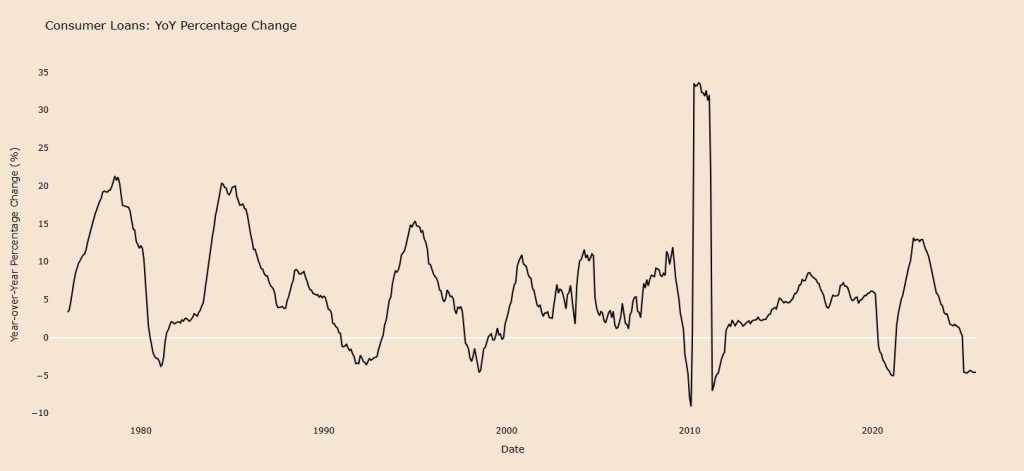
Tether’s commodities finance push arrives several years after traditional banks reduced their exposure to this sector following multiple high-profile failures and fraud allegations that damaged lender confidence.
Stablecoin Issuer Tether Set to Rival Banks in Commodity Trade LendingSource: X/APM Research

This has led to a growing market for private credit, especially for financing deals in riskier locations where banks are less willing to lend.

For Tether and other private lenders, commodities finance is also attractive because credit facilities typically cycle through multiple uses within compressed timeframes, generating frequent and consistent interest payments.

Tether’s Financial Position

Tether appears unstoppable right now, with the world’s largest stablecoin issuer on track to generate approximately $15 billion this year.

Bitwise’s chief investment officer, Matt Houga, recently predicted that Tether could become the world’s most profitable company, potentially overtaking Saudi Aramco.

It’s the world’s third-largest digital asset with a market capitalization of $183.8 billion, up 50% compared to this time last year.

Although Tether maintains strong cash reserves, recent reports suggest that the company may seek $20 billion in new capital for a 3% ownership stake.

Such a transaction would establish a valuation near $500 billion, eclipsing Netflix and Samsung while approaching iconic financial services brands like Mastercard.

The firm has simultaneously expanded its precious metals holdings, with its gold reserves now exceeding $12 billion.

To support this expansion, Tether recently brought on board leadership from HSBC’s metals division to strengthen its bullion infrastructure.


시장 기회
폴리트레이드 로고
폴리트레이드 가격(TRADE)
$0.03421
$0.03421$0.03421
-1.41%
USD
폴리트레이드 (TRADE) 실시간 가격 차트
면책 조항: 본 사이트에 재게시된 글들은 공개 플랫폼에서 가져온 것으로 정보 제공 목적으로만 제공됩니다. 이는 반드시 MEXC의 견해를 반영하는 것은 아닙니다. 모든 권리는 원저자에게 있습니다. 제3자의 권리를 침해하는 콘텐츠가 있다고 판단될 경우, crypto.news@mexc.com으로 연락하여 삭제 요청을 해주시기 바랍니다. MEXC는 콘텐츠의 정확성, 완전성 또는 시의적절성에 대해 어떠한 보증도 하지 않으며, 제공된 정보에 기반하여 취해진 어떠한 조치에 대해서도 책임을 지지 않습니다. 본 콘텐츠는 금융, 법률 또는 기타 전문적인 조언을 구성하지 않으며, MEXC의 추천이나 보증으로 간주되어서는 안 됩니다.

Roll the Dice & Win Up to 1 BTC

Roll the Dice & Win Up to 1 BTCRoll the Dice & Win Up to 1 BTC

Invite friends & share 500,000 USDT!