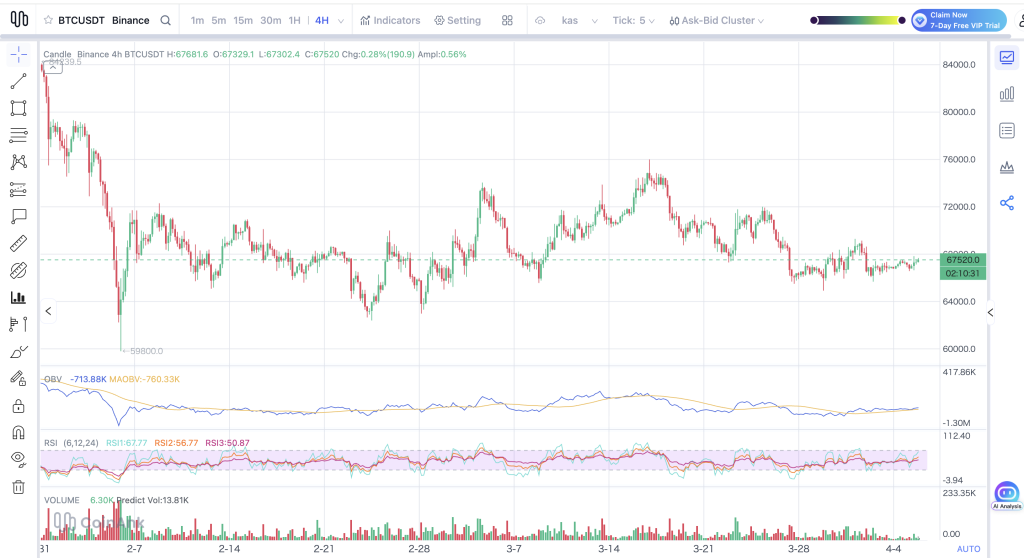
The post Bitcoin Falls, Liquidity Rises – Economist Warns Traders Are Missing the Big Picture appeared on BitcoinEthereumNews.com. Bitcoin Bitcoin’s latest decline has led to intense debate among traders, yet economist James E. Thorne believes the market has misdiagnosed the real story. Key Takeaways: Bitcoin’s price drop is masking a wider shift toward renewed liquidity in the U.S. financial system. Analysts see signs of a possible altcoin rotation as Bitcoin dominance faces rejection at a key moving average. James Thorne argues Bitcoin’s long-term fundamentals strengthen during volatility due to fixed scarcity and rising fiat supply. To him, the recent price slump isn’t a verdict on crypto — it’s simply a side effect of a liquidity transition in the United States that is already underway. He argues that Bitcoin’s pullback arrived precisely as the financial system began entering a more accommodative phase after months of tightening. End of the QT Era — And the Liquidity Turn Thorne points to two catalysts that, in his view, are injecting liquidity back into markets: the reopening of the U.S. government and the Treasury’s ongoing management of the Treasury General Account. This process, he says, effectively ends the Federal Reserve’s quantitative tightening cycle, which had already been slowing. According to him, markets are at the beginning of a liquidity expansion rather than the end of one — and asset prices overreacted before recognizing it. Thorne expects interest rate cuts to continue, ultimately bringing the federal funds rate toward roughly 2.75%. He also believes the next two years will reshape the Federal Open Market Committee. In his forecast, Jerome Powell’s departure in 2026 will close what he calls a long chapter of Keynesian-leaning policy dominance inside the central bank, opening the door for a different ideological balance. Policy Mistakes and the Housing Market Freeze For Thorne, the sector that best reveals the consequences of prolonged monetary tightening is housing. He argues that policymakers were… The post Bitcoin Falls, Liquidity Rises – Economist Warns Traders Are Missing the Big Picture appeared on BitcoinEthereumNews.com. Bitcoin Bitcoin’s latest decline has led to intense debate among traders, yet economist James E. Thorne believes the market has misdiagnosed the real story. Key Takeaways: Bitcoin’s price drop is masking a wider shift toward renewed liquidity in the U.S. financial system. Analysts see signs of a possible altcoin rotation as Bitcoin dominance faces rejection at a key moving average. James Thorne argues Bitcoin’s long-term fundamentals strengthen during volatility due to fixed scarcity and rising fiat supply. To him, the recent price slump isn’t a verdict on crypto — it’s simply a side effect of a liquidity transition in the United States that is already underway. He argues that Bitcoin’s pullback arrived precisely as the financial system began entering a more accommodative phase after months of tightening. End of the QT Era — And the Liquidity Turn Thorne points to two catalysts that, in his view, are injecting liquidity back into markets: the reopening of the U.S. government and the Treasury’s ongoing management of the Treasury General Account. This process, he says, effectively ends the Federal Reserve’s quantitative tightening cycle, which had already been slowing. According to him, markets are at the beginning of a liquidity expansion rather than the end of one — and asset prices overreacted before recognizing it. Thorne expects interest rate cuts to continue, ultimately bringing the federal funds rate toward roughly 2.75%. He also believes the next two years will reshape the Federal Open Market Committee. In his forecast, Jerome Powell’s departure in 2026 will close what he calls a long chapter of Keynesian-leaning policy dominance inside the central bank, opening the door for a different ideological balance. Policy Mistakes and the Housing Market Freeze For Thorne, the sector that best reveals the consequences of prolonged monetary tightening is housing. He argues that policymakers were…

Bitcoin Falls, Liquidity Rises – Economist Warns Traders Are Missing the Big Picture

2025/11/16 01:05
4분 읽기
이 콘텐츠에 대한 의견이나 우려 사항이 있으시면 crypto.news@mexc.com으로 연락주시기 바랍니다
Bitcoin

Bitcoin’s latest decline has led to intense debate among traders, yet economist James E. Thorne believes the market has misdiagnosed the real story.

Key Takeaways:
  • Bitcoin’s price drop is masking a wider shift toward renewed liquidity in the U.S. financial system.
  • Analysts see signs of a possible altcoin rotation as Bitcoin dominance faces rejection at a key moving average.
  • James Thorne argues Bitcoin’s long-term fundamentals strengthen during volatility due to fixed scarcity and rising fiat supply.

To him, the recent price slump isn’t a verdict on crypto — it’s simply a side effect of a liquidity transition in the United States that is already underway. He argues that Bitcoin’s pullback arrived precisely as the financial system began entering a more accommodative phase after months of tightening.

End of the QT Era — And the Liquidity Turn

Thorne points to two catalysts that, in his view, are injecting liquidity back into markets: the reopening of the U.S. government and the Treasury’s ongoing management of the Treasury General Account. This process, he says, effectively ends the Federal Reserve’s quantitative tightening cycle, which had already been slowing. According to him, markets are at the beginning of a liquidity expansion rather than the end of one — and asset prices overreacted before recognizing it.

Thorne expects interest rate cuts to continue, ultimately bringing the federal funds rate toward roughly 2.75%. He also believes the next two years will reshape the Federal Open Market Committee. In his forecast, Jerome Powell’s departure in 2026 will close what he calls a long chapter of Keynesian-leaning policy dominance inside the central bank, opening the door for a different ideological balance.

Policy Mistakes and the Housing Market Freeze

For Thorne, the sector that best reveals the consequences of prolonged monetary tightening is housing. He argues that policymakers were slow to recognize cooling demand because they relied too heavily on backward-looking indicators, allowing credit channels to deteriorate before easing.

The result, he says, is stagnation in a sector that traditionally acts as one of the strongest engines of economic growth.

Bitcoin Dominance Flashes a Familiar Pattern

Meanwhile, another market structure signal has caught analysts’ attention. Michaël van de Poppe noted that Bitcoin dominance is mirroring the pattern that preceded a major rotation in 2019 and has just been rejected at the weekly 20-day moving average.

He interprets that rejection as a potential setup for a downward move in dominance, a scenario in which capital gradually flows from Bitcoin into altcoins once investors regain their appetite for risk. If that cycle repeats, the market could be entering a phase where liquidity supports broader crypto participation rather than concentrating solely in BTC.

Bitcoin at the Crossroads of Two Monetary Systems

Thorne says Bitcoin stands directly between the era that is ending and the one forming. He expects adoption to continue deepening, especially as regulatory frameworks become clearer and institutional constraints weaken. In his view, the global expansion of fiat money supply and Bitcoin’s mathematically fixed scarcity are on an inevitable collision course, one that favors the asset designed to resist debasement.

The irony, Thorne says, is that volatility often drives investors away precisely when Bitcoin’s long-term investment case is strengthening. Fear blocks people from recognizing that liquidity shifts often create the best opportunities. He summarizes his stance in a single sentence: a bull run ends when liquidity dries up, not when it begins. The selling, in his view, is noise. The liquidity trend is the signal.


The information provided in this article is for educational purposes only and does not constitute financial, investment, or trading advice. Coindoo.com does not endorse or recommend any specific investment strategy or cryptocurrency. Always conduct your own research and consult with a licensed financial advisor before making any investment decisions.

Author

Alex is an experienced financial journalist and cryptocurrency enthusiast. With over 8 years of experience covering the crypto, blockchain, and fintech industries, he is well-versed in the complex and ever-evolving world of digital assets. His insightful and thought-provoking articles provide readers with a clear picture of the latest developments and trends in the market. His approach allows him to break down complex ideas into accessible and in-depth content. Follow his publications to stay up to date with the most important trends and topics.

Related stories

Next article

Source: https://coindoo.com/bitcoin-falls-liquidity-rises-economist-warns-traders-are-missing-the-big-picture/


시장 기회
RealLink 로고
RealLink 가격(REAL)
$0.06216
$0.06216$0.06216
+4.12%
USD
RealLink (REAL) 실시간 가격 차트
면책 조항: 본 사이트에 재게시된 글들은 공개 플랫폼에서 가져온 것으로 정보 제공 목적으로만 제공됩니다. 이는 반드시 MEXC의 견해를 반영하는 것은 아닙니다. 모든 권리는 원저자에게 있습니다. 제3자의 권리를 침해하는 콘텐츠가 있다고 판단될 경우, crypto.news@mexc.com으로 연락하여 삭제 요청을 해주시기 바랍니다. MEXC는 콘텐츠의 정확성, 완전성 또는 시의적절성에 대해 어떠한 보증도 하지 않으며, 제공된 정보에 기반하여 취해진 어떠한 조치에 대해서도 책임을 지지 않습니다. 본 콘텐츠는 금융, 법률 또는 기타 전문적인 조언을 구성하지 않으며, MEXC의 추천이나 보증으로 간주되어서는 안 됩니다.

$30,000 in PRL + 15,000 USDT

$30,000 in PRL + 15,000 USDT$30,000 in PRL + 15,000 USDT

Deposit & trade PRL to boost your rewards!