Chinese tech giants JD[dot]com and Alibaba affiliate Ant Group are pressuring the People’s Bank of China to authorize yuan-based stablecoins. The companies are proposing to launch an offshore yuan in Hong Kong to counter the U.S. dollar’s dominance in digital payments and accelerate the yuan’s internationalization, according to Reuters . The lobbying effort comes as Hong Kong’s comprehensive stablecoin regulations take effect August 1, 2025 , establishing one of the world’s most rigorous frameworks for digital currency issuance. 🇭🇰 Hong Kong’s new stablecoin regulations will take effect on August 1, introducing a strict licensing regime and reserve requirements for issuers. #HongKong #StablecoinRegulations https://t.co/Dq6UAZsKl1 — Cryptonews.com (@cryptonews) June 6, 2025 Both companies already plan to issue Hong Kong dollar-backed stablecoins, but argue that offshore yuan tokens are urgently needed as strategic tools for cross-border commerce. Yuan Devaluation At Risk If US Dollar Stablecoins Dominate According to Reuters, over 99% of the $247 billion global stablecoin market remains U.S. dollar-denominated. The yuan’s share of global payments dropped to 2.89% in May, its lowest in nearly two years, while the dollar commands 48.46% market share through SWIFT payment systems. “ The global expansion of U.S. dollar stablecoins is posing fresh challenges to yuan internationalisation ,” said Wang Yongli, former vice head of Bank of China and co-chairman of Digital China Information Service Group. “ It would be a strategic risk if cross-border yuan payment is not as efficient as dollar stablecoins. “ The push is a shift from China’s 2021 crypto ban, which is strategic, as it came at a time when Standard Chartered Bank projects the global stablecoin market could reach $2 trillion by 2028, driven by anticipated U.S. regulatory explicit clarity and institutional adoption. Hong Kong Emerges as Digital Currency Testing Ground Hong Kong’s stablecoin framework requires full reserve backing with high-quality liquid assets, segregated from the issuer’s funds and protected from creditor claims. The minimum capital requirements are HKD 25 million or 1% of the total issuance, whichever is greater. Redemption at par within one business day is required under normal conditions. Previously, JD.com’s subsidiary, Jingdong Coinlink Technology, entered the Hong Kong Monetary Authority’s stablecoin sandbox alongside Standard Chartered, Animoca Brands, and Hong Kong Telecommunications. 🪙 @JD_Corporate is testing a fiat-pegged stablecoin in Hong Kong’s regulatory sandbox for cross-border payments and retail use. #stablecoin #hongkong https://t.co/WlxEcenrfl — Cryptonews.com (@cryptonews) May 30, 2025 The company completed second-phase testing for its blockchain-based stablecoin, pegged 1:1 to fiat currencies, including the Hong Kong dollar and the U.S. dollar. Similarly, Ant Group’s Singapore-based international unit also plans to file for Hong Kong stablecoin licenses immediately after August 1 regulations take effect. The company is also pursuing licenses in Singapore and Luxembourg, anchoring its digital currency ambitions in key global financial hubs. This stablecoin regulation clarity is particularly crucial as Hong Kong banks processed HK$17.2 billion ($2.19 billion) in digital asset transactions during 2024 , with HK$5.1 billion ($649.7 million) under custody by year-end. Ten digital asset trading platforms have secured licenses, with eight more applications under review by the Securities and Futures Commission. Source: SFC Hong Kong Additionally, VMS Group, managing nearly $4 billion for Hong Kong’s wealthiest families, allocated $10 million to Re7 Capital’s decentralized finance strategies . These strategic moves are painting a picture of growing institutional adoption of regulated digital asset exposure in Hong Kong and China as a whole. Strategic Push Against Dollar Dominance Intensifies Chinese exporters are increasingly using dollar-pegged stablecoins as overseas merchants send payments in USDT, according to HashKey chairman Xiao Feng. Capital controls, geopolitical tensions, and currency volatility in emerging markets have spurred this shift among Chinese businesses. In fact, Crypto HK, Hong Kong’s largest crypto OTC exchange, reports a five-fold growth in monthly USDT trading volume by Chinese clients for trade settlement since 2021, as Reuters reported. The trend further shows the growing adoption of dollar stablecoins for cross-border commerce, despite China’s domestic crypto restrictions. JD.com proposed that China allow yuan stablecoin issuance in Hong Kong before expanding pilots to offshore markets within China’s free trade zones. The company argued that Hong Kong dollar stablecoins fail to promote yuan usage since they’re pegged to U.S. dollars. Recognizing the challenges that dollar stablecoins pose to Chinese financial regulation, many high officials are considering “a possibility” for a yuan-pegged stablecoin. President Donald Trump’s support for stablecoins following his January inauguration has particularly accelerated the development of the U.S. regulatory framework. The timing adds urgency to China’s considerations as the GENUIS Act is close to legitimizing dollar-pegged cryptocurrencies. As it stands now, Beijing is evaluating strategic responses to maintain monetary sovereignty amid the growing threat of the dollar’s dominance.Chinese tech giants JD[dot]com and Alibaba affiliate Ant Group are pressuring the People’s Bank of China to authorize yuan-based stablecoins. The companies are proposing to launch an offshore yuan in Hong Kong to counter the U.S. dollar’s dominance in digital payments and accelerate the yuan’s internationalization, according to Reuters . The lobbying effort comes as Hong Kong’s comprehensive stablecoin regulations take effect August 1, 2025 , establishing one of the world’s most rigorous frameworks for digital currency issuance. 🇭🇰 Hong Kong’s new stablecoin regulations will take effect on August 1, introducing a strict licensing regime and reserve requirements for issuers. #HongKong #StablecoinRegulations https://t.co/Dq6UAZsKl1 — Cryptonews.com (@cryptonews) June 6, 2025 Both companies already plan to issue Hong Kong dollar-backed stablecoins, but argue that offshore yuan tokens are urgently needed as strategic tools for cross-border commerce. Yuan Devaluation At Risk If US Dollar Stablecoins Dominate According to Reuters, over 99% of the $247 billion global stablecoin market remains U.S. dollar-denominated. The yuan’s share of global payments dropped to 2.89% in May, its lowest in nearly two years, while the dollar commands 48.46% market share through SWIFT payment systems. “ The global expansion of U.S. dollar stablecoins is posing fresh challenges to yuan internationalisation ,” said Wang Yongli, former vice head of Bank of China and co-chairman of Digital China Information Service Group. “ It would be a strategic risk if cross-border yuan payment is not as efficient as dollar stablecoins. “ The push is a shift from China’s 2021 crypto ban, which is strategic, as it came at a time when Standard Chartered Bank projects the global stablecoin market could reach $2 trillion by 2028, driven by anticipated U.S. regulatory explicit clarity and institutional adoption. Hong Kong Emerges as Digital Currency Testing Ground Hong Kong’s stablecoin framework requires full reserve backing with high-quality liquid assets, segregated from the issuer’s funds and protected from creditor claims. The minimum capital requirements are HKD 25 million or 1% of the total issuance, whichever is greater. Redemption at par within one business day is required under normal conditions. Previously, JD.com’s subsidiary, Jingdong Coinlink Technology, entered the Hong Kong Monetary Authority’s stablecoin sandbox alongside Standard Chartered, Animoca Brands, and Hong Kong Telecommunications. 🪙 @JD_Corporate is testing a fiat-pegged stablecoin in Hong Kong’s regulatory sandbox for cross-border payments and retail use. #stablecoin #hongkong https://t.co/WlxEcenrfl — Cryptonews.com (@cryptonews) May 30, 2025 The company completed second-phase testing for its blockchain-based stablecoin, pegged 1:1 to fiat currencies, including the Hong Kong dollar and the U.S. dollar. Similarly, Ant Group’s Singapore-based international unit also plans to file for Hong Kong stablecoin licenses immediately after August 1 regulations take effect. The company is also pursuing licenses in Singapore and Luxembourg, anchoring its digital currency ambitions in key global financial hubs. This stablecoin regulation clarity is particularly crucial as Hong Kong banks processed HK$17.2 billion ($2.19 billion) in digital asset transactions during 2024 , with HK$5.1 billion ($649.7 million) under custody by year-end. Ten digital asset trading platforms have secured licenses, with eight more applications under review by the Securities and Futures Commission. Source: SFC Hong Kong Additionally, VMS Group, managing nearly $4 billion for Hong Kong’s wealthiest families, allocated $10 million to Re7 Capital’s decentralized finance strategies . These strategic moves are painting a picture of growing institutional adoption of regulated digital asset exposure in Hong Kong and China as a whole. Strategic Push Against Dollar Dominance Intensifies Chinese exporters are increasingly using dollar-pegged stablecoins as overseas merchants send payments in USDT, according to HashKey chairman Xiao Feng. Capital controls, geopolitical tensions, and currency volatility in emerging markets have spurred this shift among Chinese businesses. In fact, Crypto HK, Hong Kong’s largest crypto OTC exchange, reports a five-fold growth in monthly USDT trading volume by Chinese clients for trade settlement since 2021, as Reuters reported. The trend further shows the growing adoption of dollar stablecoins for cross-border commerce, despite China’s domestic crypto restrictions. JD.com proposed that China allow yuan stablecoin issuance in Hong Kong before expanding pilots to offshore markets within China’s free trade zones. The company argued that Hong Kong dollar stablecoins fail to promote yuan usage since they’re pegged to U.S. dollars. Recognizing the challenges that dollar stablecoins pose to Chinese financial regulation, many high officials are considering “a possibility” for a yuan-pegged stablecoin. President Donald Trump’s support for stablecoins following his January inauguration has particularly accelerated the development of the U.S. regulatory framework. The timing adds urgency to China’s considerations as the GENUIS Act is close to legitimizing dollar-pegged cryptocurrencies. As it stands now, Beijing is evaluating strategic responses to maintain monetary sovereignty amid the growing threat of the dollar’s dominance.

Chinese Tech Giants Alibaba and JD.com Urge Central Bank Approval for Yuan-Based Stablecoins

2025/07/04 17:35
4분 읽기
이 콘텐츠에 대한 의견이나 우려 사항이 있으시면 crypto.news@mexc.com으로 연락주시기 바랍니다

Chinese tech giants JD[dot]com and Alibaba affiliate Ant Group are pressuring the People’s Bank of China to authorize yuan-based stablecoins.

The companies are proposing to launch an offshore yuan in Hong Kong to counter the U.S. dollar’s dominance in digital payments and accelerate the yuan’s internationalization, according to Reuters.

The lobbying effort comes as Hong Kong’s comprehensive stablecoin regulations take effect August 1, 2025, establishing one of the world’s most rigorous frameworks for digital currency issuance.

Both companies already plan to issue Hong Kong dollar-backed stablecoins, but argue that offshore yuan tokens are urgently needed as strategic tools for cross-border commerce.

Yuan Devaluation At Risk If US Dollar Stablecoins Dominate

According to Reuters, over 99% of the $247 billion global stablecoin market remains U.S. dollar-denominated.

The yuan’s share of global payments dropped to 2.89% in May, its lowest in nearly two years, while the dollar commands 48.46% market share through SWIFT payment systems.

The global expansion of U.S. dollar stablecoins is posing fresh challenges to yuan internationalisation,” said Wang Yongli, former vice head of Bank of China and co-chairman of Digital China Information Service Group.

The push is a shift from China’s 2021 crypto ban, which is strategic, as it came at a time when Standard Chartered Bank projects the global stablecoin market could reach $2 trillion by 2028, driven by anticipated U.S. regulatory explicit clarity and institutional adoption.

Hong Kong Emerges as Digital Currency Testing Ground

Hong Kong’s stablecoin framework requires full reserve backing with high-quality liquid assets, segregated from the issuer’s funds and protected from creditor claims.

The minimum capital requirements are HKD 25 million or 1% of the total issuance, whichever is greater. Redemption at par within one business day is required under normal conditions.

Previously, JD.com’s subsidiary, Jingdong Coinlink Technology, entered the Hong Kong Monetary Authority’s stablecoin sandbox alongside Standard Chartered, Animoca Brands, and Hong Kong Telecommunications.

The company completed second-phase testing for its blockchain-based stablecoin, pegged 1:1 to fiat currencies, including the Hong Kong dollar and the U.S. dollar.

Similarly, Ant Group’s Singapore-based international unit also plans to file for Hong Kong stablecoin licenses immediately after August 1 regulations take effect.

The company is also pursuing licenses in Singapore and Luxembourg, anchoring its digital currency ambitions in key global financial hubs.

This stablecoin regulation clarity is particularly crucial as Hong Kong banks processed HK$17.2 billion ($2.19 billion) in digital asset transactions during 2024, with HK$5.1 billion ($649.7 million) under custody by year-end.

Ten digital asset trading platforms have secured licenses, with eight more applications under review by the Securities and Futures Commission.
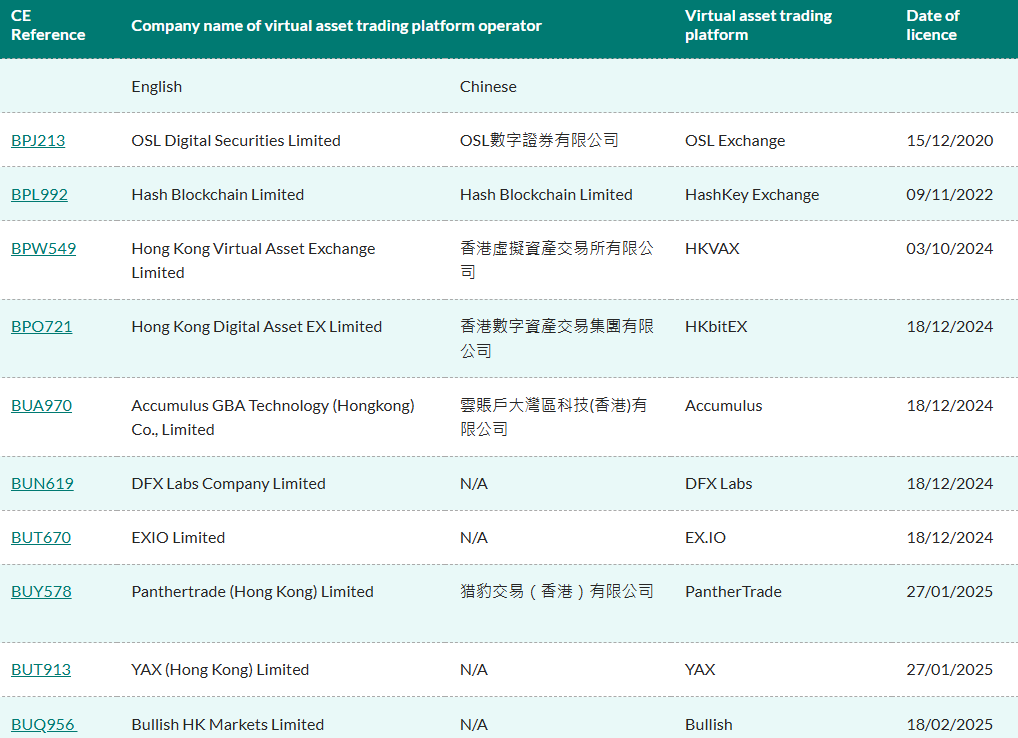
Chinese Tech Giants Alibaba and JD.com Urge Central Bank Approval for Yuan-Based StablecoinsSource: SFC Hong Kong

Additionally, VMS Group, managing nearly $4 billion for Hong Kong’s wealthiest families, allocated $10 million to Re7 Capital’s decentralized finance strategies.

These strategic moves are painting a picture of growing institutional adoption of regulated digital asset exposure in Hong Kong and China as a whole.

Strategic Push Against Dollar Dominance Intensifies

Chinese exporters are increasingly using dollar-pegged stablecoins as overseas merchants send payments in USDT, according to HashKey chairman Xiao Feng.

Capital controls, geopolitical tensions, and currency volatility in emerging markets have spurred this shift among Chinese businesses.

In fact, Crypto HK, Hong Kong’s largest crypto OTC exchange, reports a five-fold growth in monthly USDT trading volume by Chinese clients for trade settlement since 2021, as Reuters reported.

The trend further shows the growing adoption of dollar stablecoins for cross-border commerce, despite China’s domestic crypto restrictions.

JD.com proposed that China allow yuan stablecoin issuance in Hong Kong before expanding pilots to offshore markets within China’s free trade zones.

The company argued that Hong Kong dollar stablecoins fail to promote yuan usage since they’re pegged to U.S. dollars.

Recognizing the challenges that dollar stablecoins pose to Chinese financial regulation, many high officials are considering “a possibility” for a yuan-pegged stablecoin.

President Donald Trump’s support for stablecoins following his January inauguration has particularly accelerated the development of the U.S. regulatory framework.

The timing adds urgency to China’s considerations as the GENUIS Act is close to legitimizing dollar-pegged cryptocurrencies.

As it stands now, Beijing is evaluating strategic responses to maintain monetary sovereignty amid the growing threat of the dollar’s dominance.


시장 기회
스레숄드 로고
스레숄드 가격(T)
$0.006067
$0.006067$0.006067
-2.01%
USD
스레숄드 (T) 실시간 가격 차트
면책 조항: 본 사이트에 재게시된 글들은 공개 플랫폼에서 가져온 것으로 정보 제공 목적으로만 제공됩니다. 이는 반드시 MEXC의 견해를 반영하는 것은 아닙니다. 모든 권리는 원저자에게 있습니다. 제3자의 권리를 침해하는 콘텐츠가 있다고 판단될 경우, crypto.news@mexc.com으로 연락하여 삭제 요청을 해주시기 바랍니다. MEXC는 콘텐츠의 정확성, 완전성 또는 시의적절성에 대해 어떠한 보증도 하지 않으며, 제공된 정보에 기반하여 취해진 어떠한 조치에 대해서도 책임을 지지 않습니다. 본 콘텐츠는 금융, 법률 또는 기타 전문적인 조언을 구성하지 않으며, MEXC의 추천이나 보증으로 간주되어서는 안 됩니다.

$30,000 in PRL + 15,000 USDT

$30,000 in PRL + 15,000 USDT$30,000 in PRL + 15,000 USDT

Deposit & trade PRL to boost your rewards!