This article was first published on The Bit Journal. Hyperliquid has moved to settle long-running supply concerns surrounding its ecosystem. On Tuesday, validatorsThis article was first published on The Bit Journal. Hyperliquid has moved to settle long-running supply concerns surrounding its ecosystem. On Tuesday, validators

HYPE Token Eyes $40 After Hyperliquid Approves Major Token Burn

2025/12/25 23:00

This article was first published on The Bit Journal.

Hyperliquid has moved to settle long-running supply concerns surrounding its ecosystem. On Tuesday, validators and stakers approved a proposal to permanently remove tokens held in the protocol’s Assistance Fund. 

The decision directly affects the HYPE token, which has faced sustained market pressure in recent weeks. The burn is intended to clarify supply metrics and strengthen confidence at a time of heightened volatility across the crypto market.

Governance Vote Removes Assistance Fund Tokens

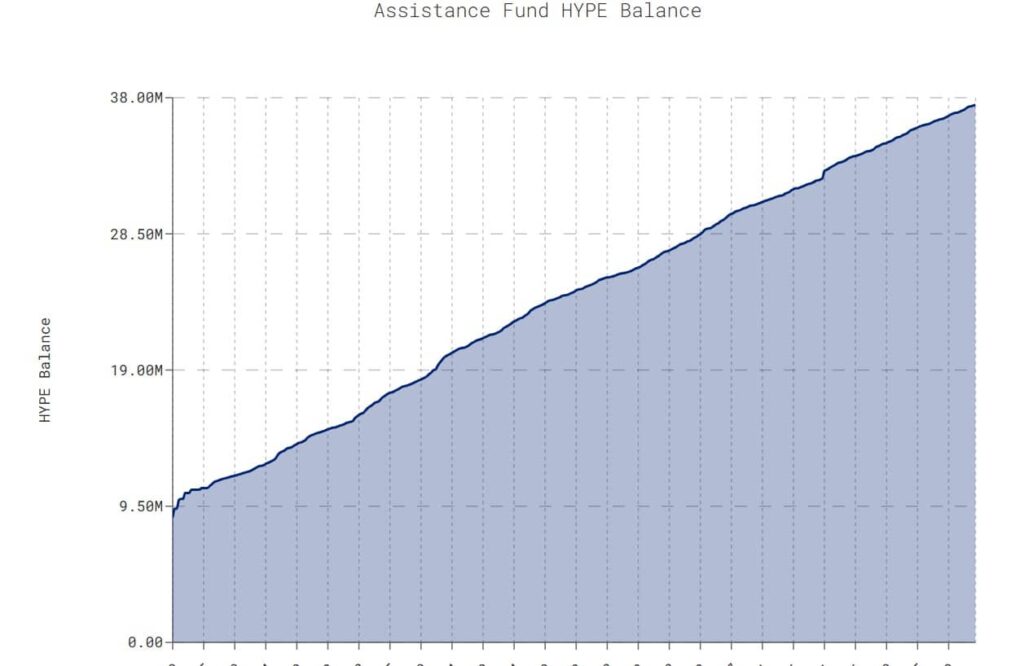
The governance vote passed with about 85% support. It authorized the permanent burn of tokens stored in the Assistance Fund. As a result, 37.5 million tokens, valued near $912 million, were removed from circulation. 

The burned assets were held at a system address without a private key. This made them inaccessible by design. However, they were still included in total supply figures. 
HYPE tokenSource: ASXN

Their removal now resolves debates around valuation and supply transparency. For the HYPE token, the move represents one of the most significant tokenomic adjustments since launch.

Governance Vote Removes Uncertainty

The proposal ensured that no future protocol update could unlock the Assistance Fund tokens. Community approval created binding social consensus. 

Also Read: Hyperliquid Unstakes $316M in HYPE Days Before Major Unlock

This step removed lingering doubts around supply treatment. It also aligned reported figures with economic reality for the HYPE token.

Assistance Fund and Buybacks Explained

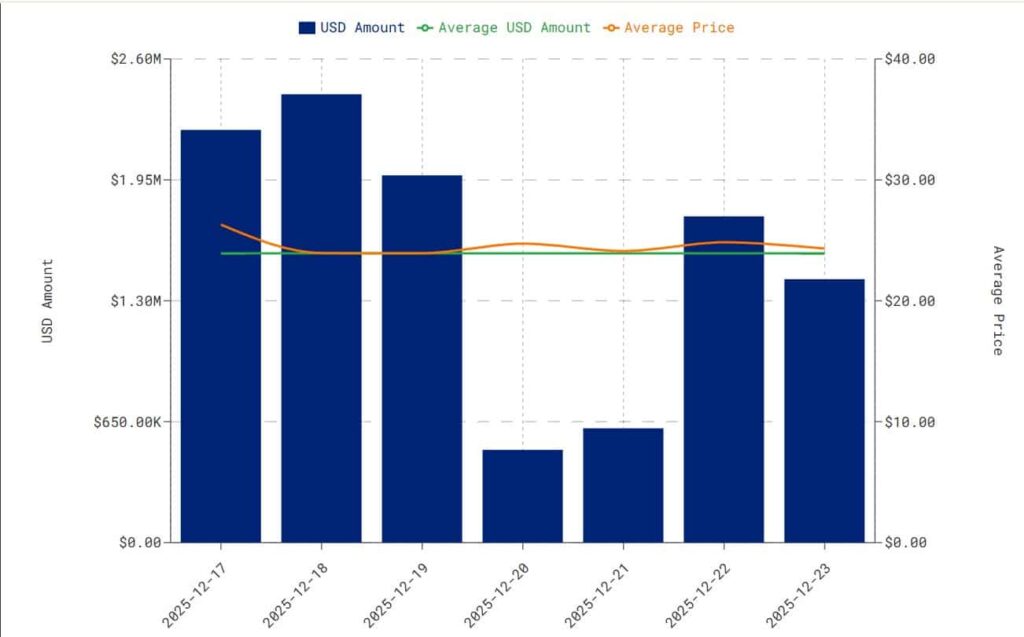
The Assistance Fund accumulates tokens through a share of spot trading fees on Hyperliquid’s layer-1 perpetual futures network. In parallel, the Hyper Foundation has maintained steady buybacks. 

On average, it has spent around $1.5 million per day. Over the past week, $12.4 million was used to acquire nearly 500,000 tokens. These actions reinforced long-term support for the HYPE token.

Supply Reduction and Tokenomics Impact

With the burn completed, an estimated 11 to 13% of circulating supply has been removed. This tightens overall tokenomics. Reduced supply can lower sell pressure during market downturns. 
Hyperliquid news todaySource:ASXN

Historically, such deflationary moves have supported price stability. For the HYPE token, scarcity has now increased in a measurable way.

Spot Market Data Signals Cooling Pressure

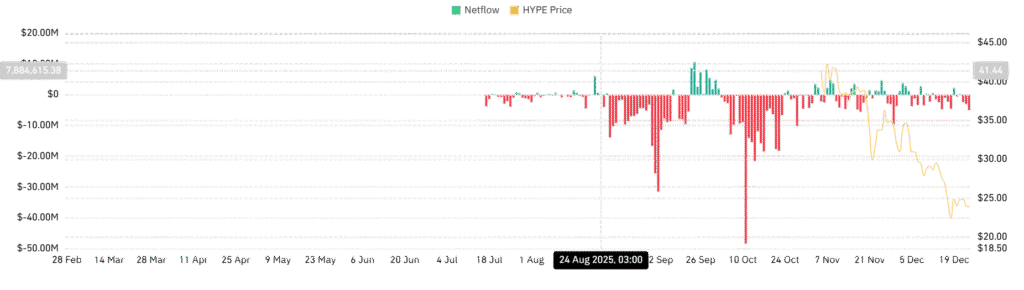
Market data shows signs of easing distribution. Exchange outflows have exceeded inflows for several consecutive days. At the time of reporting, net outflows totaled about $5.1 million. 

Lower exchange balances often suggest reduced immediate selling risk. This trend may benefit the HYPE token if sustained.
HYPE News todaySource: CoinGlass

Buyer Momentum Begins to Improve

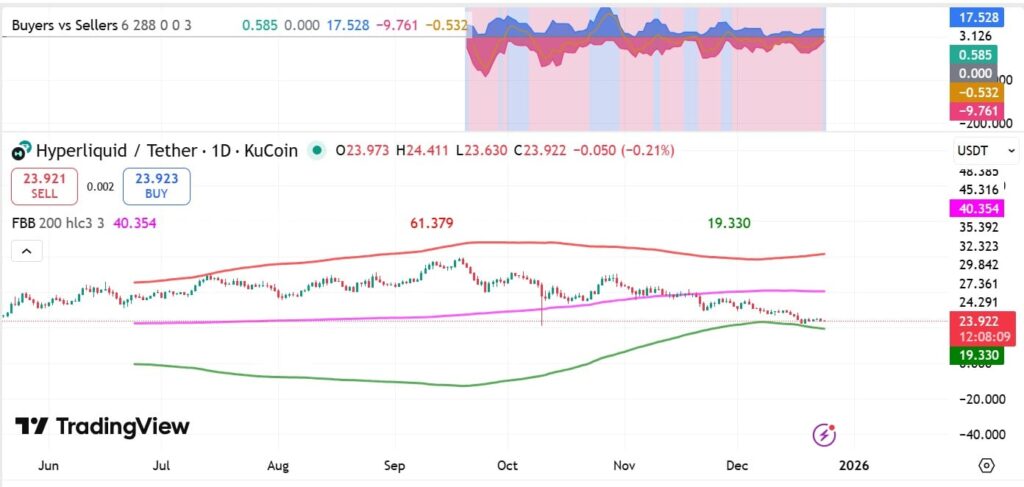
Short-term indicators show a shift in market behavior. Buyers have outpaced sellers for the first time in more than two weeks. Average bullish movement has risen, while bearish pressure has declined. 

Sellers remain active, but momentum appears more balanced. These conditions could support a recovery phase for the HYPE token.

Price Performance and Key Levels

Despite the positive governance outcome, recent price action remains weak. The asset traded near $50 two months ago before entering a steady downtrend. It later touched lows around $22. 

HYPE token is tradnig near $24.62, up by 3.1% over the past day. Analysts note that renewed demand could open a path toward $30 and $40. Failure to hold current levels could expose support near $20.
HYPE price analysisSource: TradingView

Conclusion

The token burn marks a structural shift for Hyperliquid. By permanently removing a large portion of supply, the protocol has improved transparency and reinforced deflationary mechanics. While broader market forces still apply, the HYPE token now operates under clearer supply rules.

Also Read: HYPE Price Analysis: Hyperliquid Nears All-Time High as Inflows and Trading Volume Surge

Appendix: Glossary of Key Terms

Token burn: The permanent removal of tokens from circulation to reduce total supply.

Assistance Fund: A protocol-controlled reserve that accumulates tokens from trading fees and buyback activity.

Governance vote: A stake-weighted decision process that allows validators and stakers to approve protocol changes.

Circulating supply: The number of tokens actively available for trading in the market.

Fully diluted valuation (FDV): The estimated market value of a token if all potential supply were in circulation.

Spot netflow: The net movement of tokens into or out of exchanges over a specific period.

Buyback program: A mechanism where a project repurchases its own tokens to manage supply and market pressure.

Frequently Asked Questions About HYPE Token

1- What is the HYPE token burn approved by governance?

It approved permanently burning tokens held in the Assistance Fund.

2- How many tokens were burned?

About 37.5 million tokens were removed from supply.

3- Why was this necessary?

The tokens were inaccessible but still counted in supply figures.

4- Does this guarantee a price increase?

No. Market demand remains the main driver of price.

Reference

AMB Crypto

Read More: HYPE Token Eyes $40 After Hyperliquid Approves Major Token Burn">HYPE Token Eyes $40 After Hyperliquid Approves Major Token Burn


시장 기회
하이퍼리퀴드 로고
하이퍼리퀴드 가격(HYPE)
$24.48
$24.48$24.48
-1.29%
USD
하이퍼리퀴드 (HYPE) 실시간 가격 차트
면책 조항: 본 사이트에 재게시된 글들은 공개 플랫폼에서 가져온 것으로 정보 제공 목적으로만 제공됩니다. 이는 반드시 MEXC의 견해를 반영하는 것은 아닙니다. 모든 권리는 원저자에게 있습니다. 제3자의 권리를 침해하는 콘텐츠가 있다고 판단될 경우, service@support.mexc.com으로 연락하여 삭제 요청을 해주시기 바랍니다. MEXC는 콘텐츠의 정확성, 완전성 또는 시의적절성에 대해 어떠한 보증도 하지 않으며, 제공된 정보에 기반하여 취해진 어떠한 조치에 대해서도 책임을 지지 않습니다. 본 콘텐츠는 금융, 법률 또는 기타 전문적인 조언을 구성하지 않으며, MEXC의 추천이나 보증으로 간주되어서는 안 됩니다.

추천 콘텐츠

XRP and SOL ETFs Attract Inflows Amid BTC, ETH Outflows

XRP and SOL ETFs Attract Inflows Amid BTC, ETH Outflows

Spot XRP and SOL ETFs gain inflows as BTC and ETH face outflows, signaling a market shift.
공유하기
CoinLive2025/12/26 05:14
SEC Backs Nasdaq, CBOE, NYSE Push to Simplify Crypto ETF Rules

SEC Backs Nasdaq, CBOE, NYSE Push to Simplify Crypto ETF Rules

The US SEC on Wednesday approved new listing rules for major exchanges, paving the way for a surge of crypto spot exchange-traded funds. On Wednesday, the regulator voted to let Nasdaq, Cboe BZX and NYSE Arca adopt generic listing standards for commodity-based trust shares. The decision clears the final hurdle for asset managers seeking to launch spot ETFs tied to cryptocurrencies beyond Bitcoin and Ether. In July, the SEC outlined how exchanges could bring new products to market under the framework. Asset managers and exchanges must now meet specific criteria, but will no longer need to undergo drawn-out case-by-case reviews. Solana And XRP Funds Seen to Be First In Line Under the new system, the time from filing to launch can shrink to as little as 75 days, compared with up to 240 days or more under the old rules. “This is the crypto ETP framework we’ve been waiting for,” Bloomberg research analyst James Seyffart said on X, predicting a wave of new products in the coming months. The first filings likely to benefit are those tracking Solana and XRP, both of which have sat in limbo for more than a year. SEC Chair Paul Atkins said the approval reflects a commitment to reduce barriers and foster innovation while maintaining investor protections. The move comes under the administration of President Donald Trump, which has signaled strong support for digital assets after years of hesitation during the Biden era. New Standards Replace Lengthy Reviews And Repeated Denials Until now, the commission reviewed each application separately, requiring one filing from the exchange and another from the asset manager. This dual process often dragged on for months and led to repeated denials. Even Bitcoin spot ETFs, finally approved in Jan. 2024, arrived only after years of resistance and a legal battle with Grayscale. According to Bloomberg ETF analyst Eric Balchunas, the streamlined rules could apply to any cryptocurrency with at least six months of futures trading on the Coinbase Derivatives Exchange. That means more than a dozen tokens may now qualify for listing, potentially unleashing a new wave of altcoin ETFs. SEC Clears Grayscale Large Cap Fund Tracking CoinDesk 5 Index The SEC also approved the Grayscale Digital Large Cap Fund, which tracks the CoinDesk 5 Index, including Bitcoin, Ether, XRP, Solana and Cardano. Alongside this, it cleared the launch of options linked to the Cboe Bitcoin US ETF Index and its mini contract, broadening the set of crypto-linked derivatives on regulated US markets. Analysts say the shift shows how far US policy has moved. Where once regulators resisted digital assets, the latest changes show a growing willingness to bring them into the mainstream financial system under established safeguards
공유하기
CryptoNews2025/09/18 12:40
New Trump appointee Miran calls for half-point cut in only dissent as rest of Fed bands together

New Trump appointee Miran calls for half-point cut in only dissent as rest of Fed bands together

The post New Trump appointee Miran calls for half-point cut in only dissent as rest of Fed bands together appeared on BitcoinEthereumNews.com. Stephen Miran, chairman of the Council of Economic Advisers and US Federal Reserve governor nominee for US President Donald Trump, arrives for a Senate Banking, Housing, and Urban Affairs Committee confirmation hearing in Washington, DC, US, on Thursday, Sept. 4, 2025. The Senate Banking Committee’s examination of Stephen Miran’s appointment will provide the first extended look at how prominent Republican senators balance their long-standing support of an independent central bank against loyalty to their party leader. Photographer: Daniel Heuer/Bloomberg via Getty Images Daniel Heuer | Bloomberg | Getty Images Newly-confirmed Federal Reserve Governor Stephen Miran dissented from the central bank’s decision to lower the federal funds rate by a quarter percentage point on Wednesday, choosing instead to call for a half-point cut. Miran, who was confirmed by the Senate to the Fed Board of Governors on Monday, was the sole dissenter in the Federal Open Market Committee’s statement. Governors Michelle Bowman and Christopher Waller, who had dissented at the Fed’s prior meeting in favor of a quarter-point move, were aligned with Fed Chair Jerome Powell and the others besides Miran this time. Miran was selected by Trump back in August to fill the seat that was vacated by former Governor Adriana Kugler after she suddenly announced her resignation without stating a reason for doing so. He has said that he will take an unpaid leave of absence as chair of the White House’s Council of Economic Advisors rather than fully resign from the position. Miran’s place on the board, which will last until Jan. 31, 2026 when Kugler’s term was due to end, has been viewed by critics as a threat from Trump to the Fed’s independence, as the president has nominated three of the seven members. Trump also said in August that he had fired Federal Reserve Board Governor…
공유하기
BitcoinEthereumNews2025/09/18 02:26