A cybersecurity veteran turned quantum infrastructure CEO warns that the cryptocurrency industry is dangerously unprepared for the imminent threat of quantum computing to blockchain security. David Carvalho, CEO of post-quantum infrastructure firm Naoris Protocol and a former ethical hacker since age 13, claims that quantum computers could silently dismantle Bitcoin’s cryptographic foundations within years, not decades. His warning comes as governments and tech giants already implement “harvest now, decrypt later” strategies, collecting encrypted blockchain data today for future decryption by quantum computers. Today, approximately 30% of Bitcoin’s circulating supply, roughly 6-7 million BTC , sits vulnerable in older address formats that expose public keys directly to potential quantum attacks. Understanding the Quantum Threat to Bitcoin’s Core Security Unlike traditional computers, which process information in binary bits of 0s and 1s, quantum computers utilize quantum bits, or “qubits,” that can exist in multiple states simultaneously through a property called superposition. This quantum advantage allows these machines to perform calculations exponentially faster than classical computers for specific mathematical problems, particularly those involving large number factorization. Bitcoin’s security relies on elliptic curve cryptography (ECC), specifically the Elliptic Curve Digital Signature Algorithm (ECDSA), which creates a mathematical relationship between public and private keys. Elliptic Curve Digital Signature Algorithm used by Bitcoin (Source: Learn Me A Bitcoin ) Current computers would require billions of years to reverse-engineer a private key from its corresponding public key due to the computational complexity of solving the discrete logarithm problem underlying ECC. However, mathematician Peter Shor demonstrated in 1999 that quantum computers could solve these factorization problems exponentially faster using Shor’s algorithm . This breakthrough would render obsolete the one-way mathematical function that protects Bitcoin wallets, enabling quantum computers to derive private keys from exposed public keys. Carvalho believes this countdown has already begun because adversaries are systematically collecting encrypted blockchain data under the “harvest now, decrypt later” model. “The adversaries collecting encrypted blockchain data right now aren’t waiting to attack today,” Carvalho explained , “They’re building data sets for tomorrow.” ⁉️ Up to 30% of all Bitcoin in circulation could be at risk of theft when Q-Day arrives in three years, according to Naoris CEO David Carvalho. #BTC #QuantumComputing #Crypto https://t.co/nuaDec03hz — Cryptonews.com (@cryptonews) July 21, 2025 Bitcoin addresses fall into different vulnerability categories, with Pay-to-Public-Key (P2PK) formats directly exposing public keys and making them immediate targets for quantum attacks. Reused Pay-to-Pubkey-Hash (P2PKH) addresses also become vulnerable once their owners move funds, as the transaction reveals the previously hidden public key. Due to the accelerating development in quantum computing, federal agencies, such as NIST, have warned since 2022 about the urgent need to adopt quantum-resistant algorithms. Bitcoin users holding funds in older address formats face the highest immediate risk, while node operators and mining infrastructure could become targets for broader network compromise attempts. Crypto’s Collision Course With Advanced Computing The quantum threat to Bitcoin reflects a broader technological inflection point where traditional cryptographic assumptions may no longer hold across digital infrastructure. Major technology companies, including IBM, Google, and Microsoft, are advancing quantum processors with ambitious timelines, with some targeting millions of qubits within this decade. The joint weapon of quantum computing with artificial intelligence creates, as Carvalho describes, an even more perilous scenario, where AI systems could automatically scan blockchain networks for vulnerabilities while quantum processors compromise cryptographic protections. Financial institutions are beginning to acknowledge these risks, with companies like BlackRock noting quantum threats in Bitcoin ETF filings and Tether CEO Paolo Ardoino warning about the impact of quantum computing on inactive wallets . 🚀 @Tether_to CEO @paoloardoino has warned that quantum computing could eventually pose a threat to inactive Bitcoin wallets. #Bitcoin #Quantum https://t.co/u8DCYrTjYw — Cryptonews.com (@cryptonews) February 9, 2025 The threat timeline varies among experts, with estimates ranging from 2027 to the mid-2030s for quantum computers capable of breaking Bitcoin’s cryptographic security. “When the tech catches up, they’ll unlock a decade of secrets in minutes,” Carvalho warned, emphasizing that quantum attacks won’t announce themselves with dramatic computational displays. The key question remains whether legacy cryptocurrencies can adapt fast enough, or if quantum-resistant blockchains will take the lead in the race to secure digital value.A cybersecurity veteran turned quantum infrastructure CEO warns that the cryptocurrency industry is dangerously unprepared for the imminent threat of quantum computing to blockchain security. David Carvalho, CEO of post-quantum infrastructure firm Naoris Protocol and a former ethical hacker since age 13, claims that quantum computers could silently dismantle Bitcoin’s cryptographic foundations within years, not decades. His warning comes as governments and tech giants already implement “harvest now, decrypt later” strategies, collecting encrypted blockchain data today for future decryption by quantum computers. Today, approximately 30% of Bitcoin’s circulating supply, roughly 6-7 million BTC , sits vulnerable in older address formats that expose public keys directly to potential quantum attacks. Understanding the Quantum Threat to Bitcoin’s Core Security Unlike traditional computers, which process information in binary bits of 0s and 1s, quantum computers utilize quantum bits, or “qubits,” that can exist in multiple states simultaneously through a property called superposition. This quantum advantage allows these machines to perform calculations exponentially faster than classical computers for specific mathematical problems, particularly those involving large number factorization. Bitcoin’s security relies on elliptic curve cryptography (ECC), specifically the Elliptic Curve Digital Signature Algorithm (ECDSA), which creates a mathematical relationship between public and private keys. Elliptic Curve Digital Signature Algorithm used by Bitcoin (Source: Learn Me A Bitcoin ) Current computers would require billions of years to reverse-engineer a private key from its corresponding public key due to the computational complexity of solving the discrete logarithm problem underlying ECC. However, mathematician Peter Shor demonstrated in 1999 that quantum computers could solve these factorization problems exponentially faster using Shor’s algorithm . This breakthrough would render obsolete the one-way mathematical function that protects Bitcoin wallets, enabling quantum computers to derive private keys from exposed public keys. Carvalho believes this countdown has already begun because adversaries are systematically collecting encrypted blockchain data under the “harvest now, decrypt later” model. “The adversaries collecting encrypted blockchain data right now aren’t waiting to attack today,” Carvalho explained , “They’re building data sets for tomorrow.” ⁉️ Up to 30% of all Bitcoin in circulation could be at risk of theft when Q-Day arrives in three years, according to Naoris CEO David Carvalho. #BTC #QuantumComputing #Crypto https://t.co/nuaDec03hz — Cryptonews.com (@cryptonews) July 21, 2025 Bitcoin addresses fall into different vulnerability categories, with Pay-to-Public-Key (P2PK) formats directly exposing public keys and making them immediate targets for quantum attacks. Reused Pay-to-Pubkey-Hash (P2PKH) addresses also become vulnerable once their owners move funds, as the transaction reveals the previously hidden public key. Due to the accelerating development in quantum computing, federal agencies, such as NIST, have warned since 2022 about the urgent need to adopt quantum-resistant algorithms. Bitcoin users holding funds in older address formats face the highest immediate risk, while node operators and mining infrastructure could become targets for broader network compromise attempts. Crypto’s Collision Course With Advanced Computing The quantum threat to Bitcoin reflects a broader technological inflection point where traditional cryptographic assumptions may no longer hold across digital infrastructure. Major technology companies, including IBM, Google, and Microsoft, are advancing quantum processors with ambitious timelines, with some targeting millions of qubits within this decade. The joint weapon of quantum computing with artificial intelligence creates, as Carvalho describes, an even more perilous scenario, where AI systems could automatically scan blockchain networks for vulnerabilities while quantum processors compromise cryptographic protections. Financial institutions are beginning to acknowledge these risks, with companies like BlackRock noting quantum threats in Bitcoin ETF filings and Tether CEO Paolo Ardoino warning about the impact of quantum computing on inactive wallets . 🚀 @Tether_to CEO @paoloardoino has warned that quantum computing could eventually pose a threat to inactive Bitcoin wallets. #Bitcoin #Quantum https://t.co/u8DCYrTjYw — Cryptonews.com (@cryptonews) February 9, 2025 The threat timeline varies among experts, with estimates ranging from 2027 to the mid-2030s for quantum computers capable of breaking Bitcoin’s cryptographic security. “When the tech catches up, they’ll unlock a decade of secrets in minutes,” Carvalho warned, emphasizing that quantum attacks won’t announce themselves with dramatic computational displays. The key question remains whether legacy cryptocurrencies can adapt fast enough, or if quantum-resistant blockchains will take the lead in the race to secure digital value.

Bitcoin’s Quantum Countdown Has Already Begun, Warns Veteran Hacker

2025/07/22 00:03
4분 읽기
이 콘텐츠에 대한 의견이나 우려 사항이 있으시면 crypto.news@mexc.com으로 연락주시기 바랍니다

A cybersecurity veteran turned quantum infrastructure CEO warns that the cryptocurrency industry is dangerously unprepared for the imminent threat of quantum computing to blockchain security.

David Carvalho, CEO of post-quantum infrastructure firm Naoris Protocol and a former ethical hacker since age 13, claims that quantum computers could silently dismantle Bitcoin’s cryptographic foundations within years, not decades.

His warning comes as governments and tech giants already implement “harvest now, decrypt later” strategies, collecting encrypted blockchain data today for future decryption by quantum computers.

Today, approximately 30% of Bitcoin’s circulating supply, roughly 6-7 million BTC, sits vulnerable in older address formats that expose public keys directly to potential quantum attacks.

Understanding the Quantum Threat to Bitcoin’s Core Security

Unlike traditional computers, which process information in binary bits of 0s and 1s, quantum computers utilize quantum bits, or “qubits,” that can exist in multiple states simultaneously through a property called superposition.

This quantum advantage allows these machines to perform calculations exponentially faster than classical computers for specific mathematical problems, particularly those involving large number factorization.

Bitcoin’s security relies on elliptic curve cryptography (ECC), specifically the Elliptic Curve Digital Signature Algorithm (ECDSA), which creates a mathematical relationship between public and private keys.
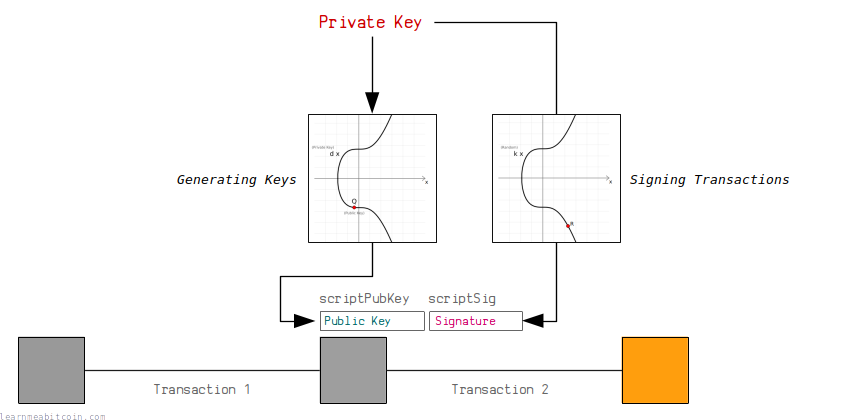
Bitcoin's Quantum Countdown Has Already Begun, Warns Veteran HackerElliptic Curve Digital Signature Algorithm used by Bitcoin (Source: Learn Me A Bitcoin)

Current computers would require billions of years to reverse-engineer a private key from its corresponding public key due to the computational complexity of solving the discrete logarithm problem underlying ECC.

However, mathematician Peter Shor demonstrated in 1999 that quantum computers could solve these factorization problems exponentially faster using Shor’s algorithm.

This breakthrough would render obsolete the one-way mathematical function that protects Bitcoin wallets, enabling quantum computers to derive private keys from exposed public keys.

Carvalho believes this countdown has already begun because adversaries are systematically collecting encrypted blockchain data under the “harvest now, decrypt later” model.

“The adversaries collecting encrypted blockchain data right now aren’t waiting to attack today,” Carvalho explained, “They’re building data sets for tomorrow.”

Bitcoin addresses fall into different vulnerability categories, with Pay-to-Public-Key (P2PK) formats directly exposing public keys and making them immediate targets for quantum attacks.

Reused Pay-to-Pubkey-Hash (P2PKH) addresses also become vulnerable once their owners move funds, as the transaction reveals the previously hidden public key.

Due to the accelerating development in quantum computing, federal agencies, such as NIST, have warned since 2022 about the urgent need to adopt quantum-resistant algorithms.

Bitcoin users holding funds in older address formats face the highest immediate risk, while node operators and mining infrastructure could become targets for broader network compromise attempts.

Crypto’s Collision Course With Advanced Computing

The quantum threat to Bitcoin reflects a broader technological inflection point where traditional cryptographic assumptions may no longer hold across digital infrastructure.

Major technology companies, including IBM, Google, and Microsoft, are advancing quantum processors with ambitious timelines, with some targeting millions of qubits within this decade.

The joint weapon of quantum computing with artificial intelligence creates, as Carvalho describes, an even more perilous scenario, where AI systems could automatically scan blockchain networks for vulnerabilities while quantum processors compromise cryptographic protections.

Financial institutions are beginning to acknowledge these risks, with companies like BlackRock noting quantum threats in Bitcoin ETF filings and Tether CEO Paolo Ardoino warning about the impact of quantum computing on inactive wallets.

The threat timeline varies among experts, with estimates ranging from 2027 to the mid-2030s for quantum computers capable of breaking Bitcoin’s cryptographic security.

“When the tech catches up, they’ll unlock a decade of secrets in minutes,” Carvalho warned, emphasizing that quantum attacks won’t announce themselves with dramatic computational displays.

The key question remains whether legacy cryptocurrencies can adapt fast enough, or if quantum-resistant blockchains will take the lead in the race to secure digital value.


시장 기회
QUANTUM 로고
QUANTUM 가격(QUANTUM)
$0.002856
$0.002856$0.002856
-0.52%
USD
QUANTUM (QUANTUM) 실시간 가격 차트
면책 조항: 본 사이트에 재게시된 글들은 공개 플랫폼에서 가져온 것으로 정보 제공 목적으로만 제공됩니다. 이는 반드시 MEXC의 견해를 반영하는 것은 아닙니다. 모든 권리는 원저자에게 있습니다. 제3자의 권리를 침해하는 콘텐츠가 있다고 판단될 경우, crypto.news@mexc.com으로 연락하여 삭제 요청을 해주시기 바랍니다. MEXC는 콘텐츠의 정확성, 완전성 또는 시의적절성에 대해 어떠한 보증도 하지 않으며, 제공된 정보에 기반하여 취해진 어떠한 조치에 대해서도 책임을 지지 않습니다. 본 콘텐츠는 금융, 법률 또는 기타 전문적인 조언을 구성하지 않으며, MEXC의 추천이나 보증으로 간주되어서는 안 됩니다.

$30,000 in PRL + 15,000 USDT

$30,000 in PRL + 15,000 USDT$30,000 in PRL + 15,000 USDT

Deposit & trade PRL to boost your rewards!



