Bitcoin’s price is often framed as the result of one dominant factor, whether it’s the halving cycle, macro liquidity, or speculative demand, and this view missesBitcoin’s price is often framed as the result of one dominant factor, whether it’s the halving cycle, macro liquidity, or speculative demand, and this view misses

Why Bitcoin Can’t Be Explained By A Single Economic Cycle

2026/02/12 05:30
3분 읽기

Bitcoin’s price is often framed as the result of one dominant factor, whether it’s the halving cycle, macro liquidity, or speculative demand, and this view misses the deeper reality of how the asset actually trades. BTC exists within a complex economic environment where multiple forces act simultaneously, each influencing price in different ways.

When Bitcoin Cycles And Macro Cycles Overlap

Multiple interacting processes shape Bitcoin and the broader business cycle, and the dynamics are more complex than a single narrative. Crypto analyst Giovanni has highlighted on X that the FOMO halving narrative had heavily driven the early BTC cycle, and the social feedback loop matters. At the same time, the Purchasing Managers Index (PMI) also exhibited a 4-year periodicity, and this does not mean the BTC halving cycle was irrelevant.

These two cycles are interacting, and that interaction is precisely what needs to be quantified and understood, rather than dismissed with hand-waving explanations. Giovanni emphasized that the halving cycle is still real for miners and never disappeared. Block rewards are reduced on a fixed schedule, and that mechanical change directly impacts miner economics.

By extension, these effects propagate into the broader BTC economy in one form or another. The explanation is not credible if the pendulum swings from “the 4-year cycle is an illusion” to “the 4-year cycle halving cycle explains everything.” Replacing one oversimplified story with another doesn’t improve understanding; it just shifts the blind spot.

There are solid mathematical tools designed to study cycle coupling, phase alignment, and interaction effects. Giovanni argues that applying these tools is the right path, and doing so is unlikely to produce a new simple narrative. What will likely emerge is a richer structure, where internal and external cycles interact in nontrivial ways.

How The Model Estimates Up And Down Outcomes

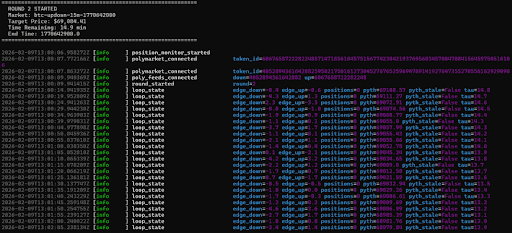
An analyst known as The Smart Ape pointed out on X about developing a theoretical probability model to estimate Bitcoin’s up and down price outcomes in the 15-minute markets on Polymarket. The model is intentionally simple, calculating probabilities by using the target price, the current BTC price, and the remaining before the market round closes.
Bitcoin

What stood out most was how closely the theoretical outputs matched real market probabilities. The difference between the market prices and model probabilities was consistently within a narrow 1-5% range,  suggesting that the model tracks actual market behaviour with remarkable accuracy.

Related Reading: Top Analyst Says ‘Paper Bitcoin’ Is Driving The Market, Not The 21 Million Supply Cap

In this market, probabilities are directly set by traders, which clearly shows how bot-dominated these markets are and are driven by logical rules and algorithms. The Smart Ape argues that if the market were primarily driven by human traders, real probabilities wouldn’t align this tightly with a theoretical model.

Bitcoin
면책 조항: 본 사이트에 재게시된 글들은 공개 플랫폼에서 가져온 것으로 정보 제공 목적으로만 제공됩니다. 이는 반드시 MEXC의 견해를 반영하는 것은 아닙니다. 모든 권리는 원저자에게 있습니다. 제3자의 권리를 침해하는 콘텐츠가 있다고 판단될 경우, service@support.mexc.com으로 연락하여 삭제 요청을 해주시기 바랍니다. MEXC는 콘텐츠의 정확성, 완전성 또는 시의적절성에 대해 어떠한 보증도 하지 않으며, 제공된 정보에 기반하여 취해진 어떠한 조치에 대해서도 책임을 지지 않습니다. 본 콘텐츠는 금융, 법률 또는 기타 전문적인 조언을 구성하지 않으며, MEXC의 추천이나 보증으로 간주되어서는 안 됩니다.

추천 콘텐츠

UK and US Seal $42 Billion Tech Pact Driving AI and Energy Future
UK and US Seal $42 Billion Tech Pact Driving AI and Energy Future

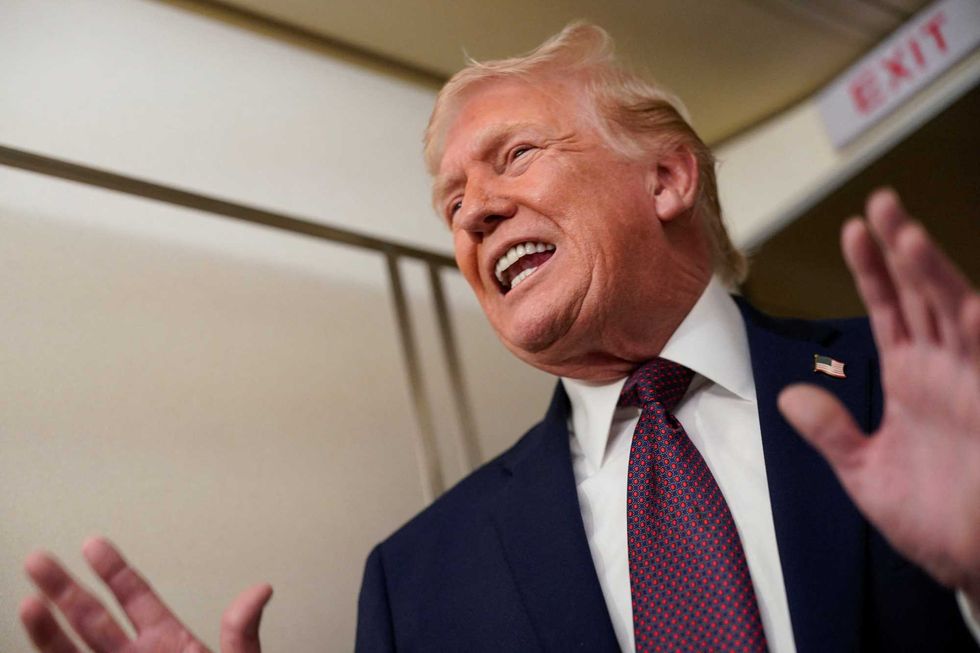
The post UK and US Seal $42 Billion Tech Pact Driving AI and Energy Future appeared on BitcoinEthereumNews.com. Key Highlights Microsoft and Google pledge billions as part of UK US tech partnership Nvidia to deploy 120,000 GPUs with British firm Nscale in Project Stargate Deal positions UK as an innovation hub rivaling global tech powers UK and US Seal $42 Billion Tech Pact Driving AI and Energy Future The UK and the US have signed a “Technological Prosperity Agreement” that paves the way for joint projects in artificial intelligence, quantum computing, and nuclear energy, according to Reuters. Donald Trump and King Charles review the guard of honour at Windsor Castle, 17 September 2025. Image: Kirsty Wigglesworth/Reuters The agreement was unveiled ahead of U.S. President Donald Trump’s second state visit to the UK, marking a historic moment in transatlantic technology cooperation. Billions Flow Into the UK Tech Sector As part of the deal, major American corporations pledged to invest $42 billion in the UK. Microsoft leads with a $30 billion investment to expand cloud and AI infrastructure, including the construction of a new supercomputer in Loughton. Nvidia will deploy 120,000 GPUs, including up to 60,000 Grace Blackwell Ultra chips—in partnership with the British company Nscale as part of Project Stargate. Google is contributing $6.8 billion to build a data center in Waltham Cross and expand DeepMind research. Other companies are joining as well. CoreWeave announced a $3.4 billion investment in data centers, while Salesforce, Scale AI, BlackRock, Oracle, and AWS confirmed additional investments ranging from hundreds of millions to several billion dollars. UK Positions Itself as a Global Innovation Hub British Prime Minister Keir Starmer said the deal could impact millions of lives across the Atlantic. He stressed that the UK aims to position itself as an investment hub with lighter regulations than the European Union. Nvidia spokesman David Hogan noted the significance of the agreement, saying it would…
공유하기
BitcoinEthereumNews2025/09/18 02:22
Trump caves on his own snubs as retaliation ploy against Dem governors backfires

Trump caves on his own snubs as retaliation ploy against Dem governors backfires

President Donald Trump on Wednesday walked back a snub he gave to two Democratic Governors. Last week, Trump notably did not invite Democratic governors Wes Moore
공유하기
Rawstory2026/02/12 10:29
Bitcoin devs cheer block reconstruction stats, ignore security budget concerns

Bitcoin devs cheer block reconstruction stats, ignore security budget concerns

The post Bitcoin devs cheer block reconstruction stats, ignore security budget concerns appeared on BitcoinEthereumNews.com. This morning, Bitcoin Core developers celebrated improved block reconstruction statistics for node operators while conveniently ignoring the reason for these statistics — the downward trend in fees for Bitcoin’s security budget. Reacting with heart emojis and thumbs up to a green chart showing over 80% “successful compact block reconstructions without any requested transactions,” they conveniently omitted red trend lines of the fees that Bitcoin users pay for mining security which powered those green statistics. Block reconstructions occur when a node requests additional information about transactions within a compact block. Although compact blocks allow nodes to quickly relay valid bundles of transactions across the internet, the more frequently that nodes can reconstruct without extra, cumbersome transaction requests from their peers is a positive trend. Because so many nodes switched over in August to relay transactions bidding 0.1 sat/vB across their mempools, nodes now have to request less transaction data to reconstruct blocks containing sub-1 sat/vB transactions. After nodes switched over in August to accept and relay pending transactions bidding less than 1 sat/vB, disparate mempools became harmonized as most nodes had a better view of which transactions would likely join upcoming blocks. As a result, block reconstruction times improved, as nodes needed less information about these sub-1 sat/vB transactions. In July, several miners admitted that user demand for Bitcoin blockspace had persisted at such a low that they were willing to accept transaction fees of just 0.1 satoshi per virtual byte — 90% lower than their prior 1 sat/vB minimum. With so many blocks partially empty, they succumbed to the temptation to accept at least something — even 1 billionth of one bitcoin (BTC) — rather than $0 to fill up some of the excess blockspace. Read more: Bitcoin’s transaction fees have fallen to a multi-year low Green stats for block reconstruction after transaction fees crash After…
공유하기
BitcoinEthereumNews2025/09/18 04:07