Future Research in XP Modeling: A Call for Self-Learning Models
Table of Links
Abstract and 1. Introduction
-
Background and 2.1. Related Work
2.2. The Impact of XP Practices on Software Productivity and Quality
2.3. Bayesian Network Modelling
-
Model Design
3.1. Model Overview
3.2. Team Velocity Model
3.3. Defected Story Points Model
-
Model Validation
4.1. Experiments Setup
4.2. Results and Discussion
-
Conclusions and References
5. CONCLUSIONS
In this paper, a Bayesian Network based mathematical model for XP process is presented. The model can be used to predict the success/ failure of any XP project by estimating the expected finish time and the expected defect rate for each XP release. The proposed model comprises two internal models: Team velocity and Defected Story Points models. The model takes into account the impact of XP practices.
\ Two case studies were used for the validation of our model, namely: Repo Margining System and Abrahamsson Case Study. The results show that the model can be used successfully to predict the project finish time with a reasonable accuracy in the project planning phase using very simple input data. In addition, the results show that the accuracy of the Team Velocity Model is acceptable, while the Defected Story Points model was not that accurate.
\ Adopting the model to have a self-learning capability is a good extension of this work and can solve the imprecision in some of the results, especially in the Defected Story Points model, by which the model can learn from the first iterations and adjust different parameters and variables. This increases the confidence of the prediction and can correct the model’s prior assumptions. This learning capability is a good extension for the proposed model.
REFERENCES
[1] AgenaRisk User Manual, Agena, www.agenarisk.com, 2008.
\ [2] S. Kuppuswami, K. Vivekanandan, Prakash Ramaswamy, and Paul Rodrigues. “The effects of individual xp practices on software development effort”. SIGSOFT Softw. Eng. Notes, 28(6):6–6, 2003.
\ [3] P. Hearty, N. Fenton, D. Marquez, and M. Neil. “Predicting Project Velocity in XP Using a Learning Dynamic Bayesian Network Model”. Ieee Transactions On Software Engineering, Vol. 35, No. 1, January/February 2009.
\ [4] M. Melis “A Software Process Simulation Model of Extreme Programming” PhD thesis. February 7, 2006.
\ [5] N. E. Fenton and S. Pfleeger. “Software Metrics: a rigorous and pratical approach”. PWS Publishing Company, 1996.
\ [6] V. B. Misic, H. Gevaert, and M. Rennie. “Extreme dynamics: Modeling the extreme programming software development process.” In Proceedings of ProSim04 workshop on Software Process Simulation and Modeling, pages 237–242, 2004.
\ [7] A. Cockburn and L. Williams. “The costs and benefits of pair programming.” In Proceedings of the First International Conference onExtreme Programming and Flexible Processes in Software Engineering (XP2000), Cagliari, Sardinia, Italy, June 2000.
\ [8] Jerzy Nawrocki and Adam Wojciechowski. “Experimental evaluation of pair programming.” In 12th European Software Control and Metrics Conference (ESCOM 2001), 2001.
\ [9] K. Vivekanandan. “The Effects of Extreme Programming on Productivity, Cost of Change and Learning Efficiency.” PhD thesis, Department of Computer Science, Ramanaujam School of Mathematics and Computer Sciences, Pondicherry University, India., 2004.
\ [10] Hanna Hulkko and Pekka Abrahamsson.”A multiple case study on the impact of pair programming on product quality.” In ICSE ’05: Proceedings of the 27th international conference on Software engineering, pages 495–504, New York, NY, USA, 2005. ACM Press.
\ [11] Randy A. Ynchausti. “Integrating unit testing into a software development teams process.” Published on: http://www.agilealliance.org/articles/ynchaustirandyaintegr/file, 2001.
\ [12] Boby George and Laurie Williams. “An initial investigation of test driven development in industry.” In Proceedings of the 2003 ACM symposium on Applied computing, pages 1135–1139. ACM Press, 2003.
\ [13] S. Kuppuswami , K. Vivekanandan , Prakash Ramaswamy , Paul Rodrigues, “The effects of individual XP practices on software development effort”, ACM SIGSOFT Software Engineering Notes, v.28 n.6, November 2003.
\ [14] M. Korkala, P. Abrahamsson, and P. Kyllo¨nen, “A Case Study on the Impact of Customer Communication on Defects in Agile Software Development,” Proc. AGILE Conf., 2006.
\ [15] Ben-Gal I., Ruggeri F., Faltin F. & Kenett R., Bayesian Networks, in Encyclopedia of Statistics in Quality & Reliability, Wiley & Sons, 2007
\ [16] Norman Fenton and Martin Neil, “Managing Risk in the Modern World: Applications of Bayesian Networks” Knowledge transfer report, London Mathematical Society, 2007.
\ [17] P. Abrahamsson, "Extreme Programming: First Results from a Controlled Case Study," presented at 29th. IEEE EUROMICRO Conference, Belek, Turkey, 2003.
Authors
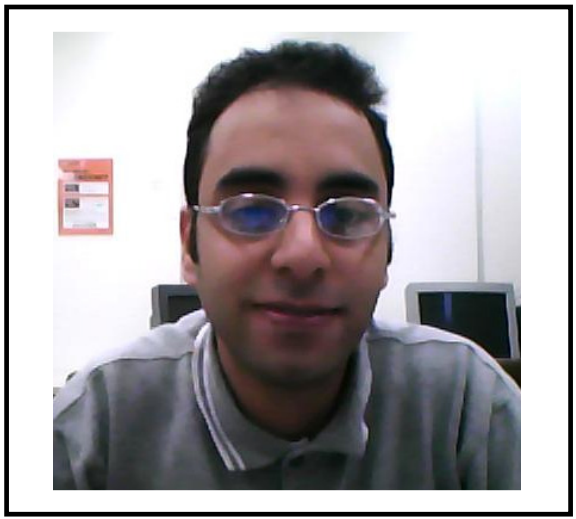
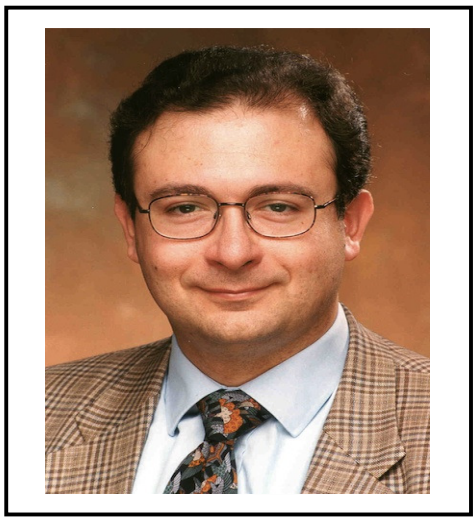
\ 
\
:::info Authors:
(1) Mohamed Abouelelam, Software System Engineering, University of Regina, Regina, Canada;
(2) Luigi Benedicenti, Software System Engineering, University of Regina, Regina, Canada.
:::
:::info This paper is available on arxiv under CC BY-NC-ND 4.0 DEED license.
:::
\


추천 콘텐츠

Will XRP price fall below $1.30 support

Republican Clay Fuller wins runoff to succeed Marjorie Taylor Greene in Congress