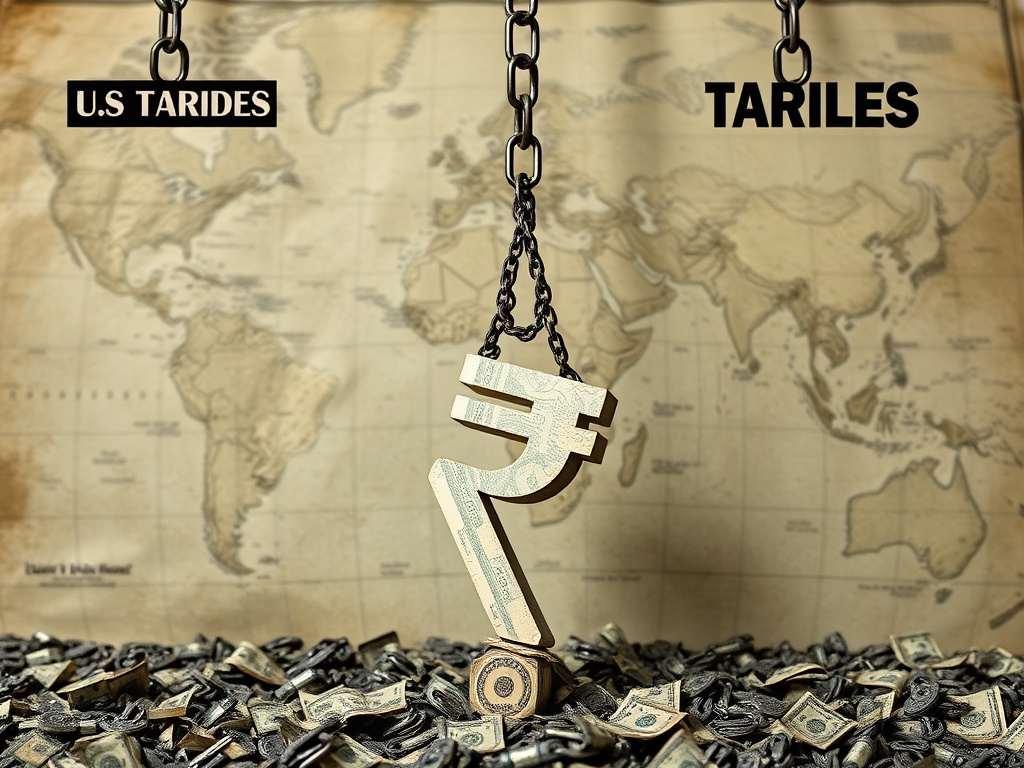
BitcoinWorld Indian Rupee Crisis: Unveiling the Devastating Impact of US Tariffs In the dynamic world of global finance, where digital assets like cryptocurrencies often grab headlines for their volatility, it is crucial to remember the foundational role of traditional fiat currencies. Lately, the Indian Rupee has found itself in a precarious position, teetering on the edge of a record low against the mighty US Dollar. This isn’t just a number on a screen; it’s a stark indicator of underlying economic pressures, particularly the bite of steep US tariffs, which can have ripple effects even on the broader financial landscape, influencing investor sentiment across all asset classes, including crypto. Understanding these macroeconomic shifts is vital for any investor navigating today’s interconnected markets. Indian Rupee Crisis: A Deep Dive into Record Lows The Indian Rupee’s recent performance has been a cause for significant concern among policymakers, businesses, and citizens alike. The currency has been steadily losing ground, inching closer to an all-time low against the US Dollar. This trend is not isolated but a symptom of various domestic and international pressures converging. A weaker rupee means that more rupees are required to buy one US Dollar, making imports more expensive and potentially fueling inflation. For a developing economy like India, heavily reliant on imported goods such as crude oil, this can have a cascading effect across all sectors. Historically, the Indian Rupee has faced periods of volatility, often influenced by global economic slowdowns, capital outflows, and geopolitical tensions. However, the current situation is compounded by specific trade-related issues that directly impact India’s economic stability. The proximity to a record low is a clear warning sign, signaling a need for careful economic management and strategic policy interventions to stabilize the currency and protect the economy from further shocks. Unpacking the Force: How US Tariffs Bite India’s Economy At the heart of the Indian Rupee’s woes are the steep US Tariffs imposed on various Indian products. These tariffs, essentially taxes on imported goods, are designed to make foreign products more expensive in the US market, thereby encouraging domestic production. However, for exporting nations like India, they translate into reduced competitiveness and lower demand for their goods. The impact is multi-faceted: Reduced Export Earnings: Indian exporters find it harder to sell their products in the US, leading to a decline in export revenues. This directly impacts India’s trade balance and foreign exchange reserves. Supply Chain Disruptions: Tariffs can force companies to rethink their global supply chains, potentially diverting orders away from Indian manufacturers. Investment Uncertainty: Businesses planning to invest in export-oriented sectors in India might reconsider due to the unpredictable nature of trade policies and the risk of future tariffs. Sector-Specific Pain: Industries such as steel, aluminum, and certain agricultural products, which have been targets of US tariffs, face significant challenges, including reduced production and job losses. The cumulative effect of these tariffs creates a challenging environment for India’s economy, putting downward pressure on the rupee as foreign currency inflows diminish and the trade deficit potentially widens. It’s a classic example of how protectionist measures in one major economy can create significant economic headwinds for others. The Ripple Effect: Understanding Rupee Depreciation When the Rupee Depreciation occurs, its effects are felt far and wide, impacting everything from daily household budgets to the balance sheets of multinational corporations. It’s not just an abstract economic concept; it has tangible consequences for every Indian citizen and business. What Does a Weaker Rupee Mean for Your Wallet? A depreciating rupee has several direct implications for consumers: Higher Import Costs: Goods imported into India, such as electronics, luxury items, and most critically, crude oil, become more expensive. Since India imports a significant portion of its energy needs, a weaker rupee directly translates to higher fuel prices, which in turn drives up transportation costs for all goods. Inflationary Pressure: Increased import costs often lead to higher prices for a wide range of products, contributing to inflation. This erodes the purchasing power of consumers, making daily necessities more expensive. Impact on Foreign Travel and Education: For those planning to travel abroad or send their children for overseas education, a weaker rupee means spending more Indian currency to acquire the necessary foreign exchange. Foreign Debt Burden: Indian companies or the government that have borrowed in foreign currencies find their repayment obligations increasing in rupee terms, adding stress to their financial health. While exporters might see a marginal benefit as their products become cheaper for foreign buyers, the overall negative impact of uncontrolled rupee depreciation often outweighs these advantages, especially in an economy heavily reliant on imports. Navigating the Storm: Global Trade Dynamics and India’s Position The current challenges faced by the Indian Rupee are not entirely isolated but are part of a larger narrative of shifting Global Trade dynamics. The world has witnessed an increase in protectionist tendencies, with major economies engaging in trade disputes and imposing tariffs on each other’s goods. This environment of uncertainty and trade friction creates a challenging backdrop for all trading nations, including India. Is India Caught in a Wider Global Trade War? India, as a significant player in global commerce, finds itself navigating complex trade relationships. While not directly involved in a full-blown trade war like some other nations, it is certainly impacted by the fallout. The US tariffs, for instance, are part of a broader strategy that has affected many countries, creating a domino effect where trade flows are redirected and global supply chains are re-evaluated. India’s response to these global trade dynamics involves a mix of diplomatic efforts and strategic policy adjustments. The government might explore new trade agreements with other nations, diversify its export markets, and focus on boosting domestic manufacturing to reduce reliance on imports. However, these are long-term strategies, and the immediate challenge remains managing the currency’s stability amidst external pressures. Beyond the Headlines: The Wider Economic Impact on India The immediate concerns about the Indian Rupee and US Tariffs quickly translate into a broader Economic Impact on India’s growth trajectory and future prospects. This impact goes beyond just trade figures and currency valuations, touching various facets of the economy. What Are the Long-Term Economic Impacts for India? The long-term economic consequences of persistent currency weakness and trade tensions can be significant: Economic Area Impact of Rupee Depreciation & Tariffs Foreign Direct Investment (FDI) Uncertainty can deter foreign investors, slowing down capital inflows essential for growth. Inflation Sustained import cost increases can lead to higher consumer prices, eroding purchasing power. Government Finances Higher import bills for essential goods (like oil) can strain government budgets, affecting public spending. Job Market Export-oriented industries facing reduced demand might scale back operations, leading to job losses or slower job creation. Consumer Sentiment Rising prices and economic uncertainty can dampen consumer confidence, leading to reduced spending. Addressing these challenges requires a multi-pronged approach, including fiscal prudence, monetary policy adjustments, and proactive trade diplomacy. While the immediate outlook might seem challenging, India’s inherent economic strengths and potential for growth offer resilience. The focus will be on converting these challenges into opportunities for domestic innovation and self-reliance. Actionable Insights and The Road Ahead For businesses and individuals alike, understanding the implications of a weakening Indian Rupee and the ongoing trade dynamics is crucial. While governments work on macroeconomic solutions, there are practical steps that can be considered: For Businesses: Explore hedging strategies to mitigate currency risks, diversify export markets beyond traditionally tariff-prone regions, and focus on value-added exports to improve competitiveness. Investing in domestic supply chains can also reduce reliance on potentially expensive imports. For Individuals: Review personal budgets, especially for discretionary spending on imported goods. Consider diversifying investment portfolios, potentially including assets that offer a hedge against inflation or currency depreciation, while always exercising caution and consulting financial advisors. For Policymakers: The Reserve Bank of India (RBI) plays a critical role in managing currency stability through monetary policy tools, such as interest rate adjustments and foreign exchange market interventions. The government must also focus on fiscal consolidation, boosting domestic manufacturing, and engaging in constructive trade negotiations to alleviate external pressures. The current scenario serves as a powerful reminder of the interconnectedness of the global economy. A tariff imposed by one nation can create a ripple effect that destabilizes currencies and impacts economies thousands of miles away. India’s ability to navigate this complex landscape will depend on robust policy responses, resilient domestic markets, and strategic engagement on the global stage. Conclusion: A Critical Juncture for India’s Economy The Indian Rupee teetering near a record low, largely influenced by the biting impact of US Tariffs, signals a critical juncture for India’s economy. This situation highlights the profound consequences of protectionist trade policies on global financial stability and the domestic well-being of nations. The ensuing Rupee Depreciation reverberates through every aspect of life, from increased inflation to a higher cost of living and doing business. Navigating the complexities of current Global Trade dynamics requires strategic foresight and adaptability from both the government and the private sector. The broader Economic Impact underscores the urgent need for comprehensive policies that bolster domestic resilience, diversify trade relationships, and stabilize the currency. While challenges are significant, they also present an opportunity for India to strengthen its economic foundations and foster greater self-reliance in a rapidly changing global environment. The path ahead demands vigilance, innovation, and a collaborative approach to ensure sustained growth and stability. To learn more about the latest Forex market trends, explore our article on key developments shaping the Indian Rupee and global currency movements. This post Indian Rupee Crisis: Unveiling the Devastating Impact of US Tariffs first appeared on BitcoinWorld and is written by Editorial TeamBitcoinWorld Indian Rupee Crisis: Unveiling the Devastating Impact of US Tariffs In the dynamic world of global finance, where digital assets like cryptocurrencies often grab headlines for their volatility, it is crucial to remember the foundational role of traditional fiat currencies. Lately, the Indian Rupee has found itself in a precarious position, teetering on the edge of a record low against the mighty US Dollar. This isn’t just a number on a screen; it’s a stark indicator of underlying economic pressures, particularly the bite of steep US tariffs, which can have ripple effects even on the broader financial landscape, influencing investor sentiment across all asset classes, including crypto. Understanding these macroeconomic shifts is vital for any investor navigating today’s interconnected markets. Indian Rupee Crisis: A Deep Dive into Record Lows The Indian Rupee’s recent performance has been a cause for significant concern among policymakers, businesses, and citizens alike. The currency has been steadily losing ground, inching closer to an all-time low against the US Dollar. This trend is not isolated but a symptom of various domestic and international pressures converging. A weaker rupee means that more rupees are required to buy one US Dollar, making imports more expensive and potentially fueling inflation. For a developing economy like India, heavily reliant on imported goods such as crude oil, this can have a cascading effect across all sectors. Historically, the Indian Rupee has faced periods of volatility, often influenced by global economic slowdowns, capital outflows, and geopolitical tensions. However, the current situation is compounded by specific trade-related issues that directly impact India’s economic stability. The proximity to a record low is a clear warning sign, signaling a need for careful economic management and strategic policy interventions to stabilize the currency and protect the economy from further shocks. Unpacking the Force: How US Tariffs Bite India’s Economy At the heart of the Indian Rupee’s woes are the steep US Tariffs imposed on various Indian products. These tariffs, essentially taxes on imported goods, are designed to make foreign products more expensive in the US market, thereby encouraging domestic production. However, for exporting nations like India, they translate into reduced competitiveness and lower demand for their goods. The impact is multi-faceted: Reduced Export Earnings: Indian exporters find it harder to sell their products in the US, leading to a decline in export revenues. This directly impacts India’s trade balance and foreign exchange reserves. Supply Chain Disruptions: Tariffs can force companies to rethink their global supply chains, potentially diverting orders away from Indian manufacturers. Investment Uncertainty: Businesses planning to invest in export-oriented sectors in India might reconsider due to the unpredictable nature of trade policies and the risk of future tariffs. Sector-Specific Pain: Industries such as steel, aluminum, and certain agricultural products, which have been targets of US tariffs, face significant challenges, including reduced production and job losses. The cumulative effect of these tariffs creates a challenging environment for India’s economy, putting downward pressure on the rupee as foreign currency inflows diminish and the trade deficit potentially widens. It’s a classic example of how protectionist measures in one major economy can create significant economic headwinds for others. The Ripple Effect: Understanding Rupee Depreciation When the Rupee Depreciation occurs, its effects are felt far and wide, impacting everything from daily household budgets to the balance sheets of multinational corporations. It’s not just an abstract economic concept; it has tangible consequences for every Indian citizen and business. What Does a Weaker Rupee Mean for Your Wallet? A depreciating rupee has several direct implications for consumers: Higher Import Costs: Goods imported into India, such as electronics, luxury items, and most critically, crude oil, become more expensive. Since India imports a significant portion of its energy needs, a weaker rupee directly translates to higher fuel prices, which in turn drives up transportation costs for all goods. Inflationary Pressure: Increased import costs often lead to higher prices for a wide range of products, contributing to inflation. This erodes the purchasing power of consumers, making daily necessities more expensive. Impact on Foreign Travel and Education: For those planning to travel abroad or send their children for overseas education, a weaker rupee means spending more Indian currency to acquire the necessary foreign exchange. Foreign Debt Burden: Indian companies or the government that have borrowed in foreign currencies find their repayment obligations increasing in rupee terms, adding stress to their financial health. While exporters might see a marginal benefit as their products become cheaper for foreign buyers, the overall negative impact of uncontrolled rupee depreciation often outweighs these advantages, especially in an economy heavily reliant on imports. Navigating the Storm: Global Trade Dynamics and India’s Position The current challenges faced by the Indian Rupee are not entirely isolated but are part of a larger narrative of shifting Global Trade dynamics. The world has witnessed an increase in protectionist tendencies, with major economies engaging in trade disputes and imposing tariffs on each other’s goods. This environment of uncertainty and trade friction creates a challenging backdrop for all trading nations, including India. Is India Caught in a Wider Global Trade War? India, as a significant player in global commerce, finds itself navigating complex trade relationships. While not directly involved in a full-blown trade war like some other nations, it is certainly impacted by the fallout. The US tariffs, for instance, are part of a broader strategy that has affected many countries, creating a domino effect where trade flows are redirected and global supply chains are re-evaluated. India’s response to these global trade dynamics involves a mix of diplomatic efforts and strategic policy adjustments. The government might explore new trade agreements with other nations, diversify its export markets, and focus on boosting domestic manufacturing to reduce reliance on imports. However, these are long-term strategies, and the immediate challenge remains managing the currency’s stability amidst external pressures. Beyond the Headlines: The Wider Economic Impact on India The immediate concerns about the Indian Rupee and US Tariffs quickly translate into a broader Economic Impact on India’s growth trajectory and future prospects. This impact goes beyond just trade figures and currency valuations, touching various facets of the economy. What Are the Long-Term Economic Impacts for India? The long-term economic consequences of persistent currency weakness and trade tensions can be significant: Economic Area Impact of Rupee Depreciation & Tariffs Foreign Direct Investment (FDI) Uncertainty can deter foreign investors, slowing down capital inflows essential for growth. Inflation Sustained import cost increases can lead to higher consumer prices, eroding purchasing power. Government Finances Higher import bills for essential goods (like oil) can strain government budgets, affecting public spending. Job Market Export-oriented industries facing reduced demand might scale back operations, leading to job losses or slower job creation. Consumer Sentiment Rising prices and economic uncertainty can dampen consumer confidence, leading to reduced spending. Addressing these challenges requires a multi-pronged approach, including fiscal prudence, monetary policy adjustments, and proactive trade diplomacy. While the immediate outlook might seem challenging, India’s inherent economic strengths and potential for growth offer resilience. The focus will be on converting these challenges into opportunities for domestic innovation and self-reliance. Actionable Insights and The Road Ahead For businesses and individuals alike, understanding the implications of a weakening Indian Rupee and the ongoing trade dynamics is crucial. While governments work on macroeconomic solutions, there are practical steps that can be considered: For Businesses: Explore hedging strategies to mitigate currency risks, diversify export markets beyond traditionally tariff-prone regions, and focus on value-added exports to improve competitiveness. Investing in domestic supply chains can also reduce reliance on potentially expensive imports. For Individuals: Review personal budgets, especially for discretionary spending on imported goods. Consider diversifying investment portfolios, potentially including assets that offer a hedge against inflation or currency depreciation, while always exercising caution and consulting financial advisors. For Policymakers: The Reserve Bank of India (RBI) plays a critical role in managing currency stability through monetary policy tools, such as interest rate adjustments and foreign exchange market interventions. The government must also focus on fiscal consolidation, boosting domestic manufacturing, and engaging in constructive trade negotiations to alleviate external pressures. The current scenario serves as a powerful reminder of the interconnectedness of the global economy. A tariff imposed by one nation can create a ripple effect that destabilizes currencies and impacts economies thousands of miles away. India’s ability to navigate this complex landscape will depend on robust policy responses, resilient domestic markets, and strategic engagement on the global stage. Conclusion: A Critical Juncture for India’s Economy The Indian Rupee teetering near a record low, largely influenced by the biting impact of US Tariffs, signals a critical juncture for India’s economy. This situation highlights the profound consequences of protectionist trade policies on global financial stability and the domestic well-being of nations. The ensuing Rupee Depreciation reverberates through every aspect of life, from increased inflation to a higher cost of living and doing business. Navigating the complexities of current Global Trade dynamics requires strategic foresight and adaptability from both the government and the private sector. The broader Economic Impact underscores the urgent need for comprehensive policies that bolster domestic resilience, diversify trade relationships, and stabilize the currency. While challenges are significant, they also present an opportunity for India to strengthen its economic foundations and foster greater self-reliance in a rapidly changing global environment. The path ahead demands vigilance, innovation, and a collaborative approach to ensure sustained growth and stability. To learn more about the latest Forex market trends, explore our article on key developments shaping the Indian Rupee and global currency movements. This post Indian Rupee Crisis: Unveiling the Devastating Impact of US Tariffs first appeared on BitcoinWorld and is written by Editorial Team


Indian Rupee Crisis: Unveiling the Devastating Impact of US Tariffs

2025/09/02 13:35
9분 읽기
이 콘텐츠에 대한 의견이나 우려 사항이 있으시면 crypto.news@mexc.com으로 연락주시기 바랍니다

BitcoinWorld

Indian Rupee Crisis: Unveiling the Devastating Impact of US Tariffs

In the dynamic world of global finance, where digital assets like cryptocurrencies often grab headlines for their volatility, it is crucial to remember the foundational role of traditional fiat currencies. Lately, the Indian Rupee has found itself in a precarious position, teetering on the edge of a record low against the mighty US Dollar. This isn’t just a number on a screen; it’s a stark indicator of underlying economic pressures, particularly the bite of steep US tariffs, which can have ripple effects even on the broader financial landscape, influencing investor sentiment across all asset classes, including crypto. Understanding these macroeconomic shifts is vital for any investor navigating today’s interconnected markets.

Indian Rupee Crisis: A Deep Dive into Record Lows

The Indian Rupee’s recent performance has been a cause for significant concern among policymakers, businesses, and citizens alike. The currency has been steadily losing ground, inching closer to an all-time low against the US Dollar. This trend is not isolated but a symptom of various domestic and international pressures converging. A weaker rupee means that more rupees are required to buy one US Dollar, making imports more expensive and potentially fueling inflation. For a developing economy like India, heavily reliant on imported goods such as crude oil, this can have a cascading effect across all sectors.

Historically, the Indian Rupee has faced periods of volatility, often influenced by global economic slowdowns, capital outflows, and geopolitical tensions. However, the current situation is compounded by specific trade-related issues that directly impact India’s economic stability. The proximity to a record low is a clear warning sign, signaling a need for careful economic management and strategic policy interventions to stabilize the currency and protect the economy from further shocks.

Unpacking the Force: How US Tariffs Bite India’s Economy

At the heart of the Indian Rupee’s woes are the steep US Tariffs imposed on various Indian products. These tariffs, essentially taxes on imported goods, are designed to make foreign products more expensive in the US market, thereby encouraging domestic production. However, for exporting nations like India, they translate into reduced competitiveness and lower demand for their goods. The impact is multi-faceted:

  • Reduced Export Earnings: Indian exporters find it harder to sell their products in the US, leading to a decline in export revenues. This directly impacts India’s trade balance and foreign exchange reserves.
  • Supply Chain Disruptions: Tariffs can force companies to rethink their global supply chains, potentially diverting orders away from Indian manufacturers.
  • Investment Uncertainty: Businesses planning to invest in export-oriented sectors in India might reconsider due to the unpredictable nature of trade policies and the risk of future tariffs.
  • Sector-Specific Pain: Industries such as steel, aluminum, and certain agricultural products, which have been targets of US tariffs, face significant challenges, including reduced production and job losses.

The cumulative effect of these tariffs creates a challenging environment for India’s economy, putting downward pressure on the rupee as foreign currency inflows diminish and the trade deficit potentially widens. It’s a classic example of how protectionist measures in one major economy can create significant economic headwinds for others.

The Ripple Effect: Understanding Rupee Depreciation

When the Rupee Depreciation occurs, its effects are felt far and wide, impacting everything from daily household budgets to the balance sheets of multinational corporations. It’s not just an abstract economic concept; it has tangible consequences for every Indian citizen and business.

What Does a Weaker Rupee Mean for Your Wallet?

A depreciating rupee has several direct implications for consumers:

  • Higher Import Costs: Goods imported into India, such as electronics, luxury items, and most critically, crude oil, become more expensive. Since India imports a significant portion of its energy needs, a weaker rupee directly translates to higher fuel prices, which in turn drives up transportation costs for all goods.
  • Inflationary Pressure: Increased import costs often lead to higher prices for a wide range of products, contributing to inflation. This erodes the purchasing power of consumers, making daily necessities more expensive.
  • Impact on Foreign Travel and Education: For those planning to travel abroad or send their children for overseas education, a weaker rupee means spending more Indian currency to acquire the necessary foreign exchange.
  • Foreign Debt Burden: Indian companies or the government that have borrowed in foreign currencies find their repayment obligations increasing in rupee terms, adding stress to their financial health.

While exporters might see a marginal benefit as their products become cheaper for foreign buyers, the overall negative impact of uncontrolled rupee depreciation often outweighs these advantages, especially in an economy heavily reliant on imports.

Navigating the Storm: Global Trade Dynamics and India’s Position

The current challenges faced by the Indian Rupee are not entirely isolated but are part of a larger narrative of shifting Global Trade dynamics. The world has witnessed an increase in protectionist tendencies, with major economies engaging in trade disputes and imposing tariffs on each other’s goods. This environment of uncertainty and trade friction creates a challenging backdrop for all trading nations, including India.

Is India Caught in a Wider Global Trade War?

India, as a significant player in global commerce, finds itself navigating complex trade relationships. While not directly involved in a full-blown trade war like some other nations, it is certainly impacted by the fallout. The US tariffs, for instance, are part of a broader strategy that has affected many countries, creating a domino effect where trade flows are redirected and global supply chains are re-evaluated.

India’s response to these global trade dynamics involves a mix of diplomatic efforts and strategic policy adjustments. The government might explore new trade agreements with other nations, diversify its export markets, and focus on boosting domestic manufacturing to reduce reliance on imports. However, these are long-term strategies, and the immediate challenge remains managing the currency’s stability amidst external pressures.

Beyond the Headlines: The Wider Economic Impact on India

The immediate concerns about the Indian Rupee and US Tariffs quickly translate into a broader Economic Impact on India’s growth trajectory and future prospects. This impact goes beyond just trade figures and currency valuations, touching various facets of the economy.

What Are the Long-Term Economic Impacts for India?

The long-term economic consequences of persistent currency weakness and trade tensions can be significant:

Economic Area Impact of Rupee Depreciation & Tariffs
Foreign Direct Investment (FDI) Uncertainty can deter foreign investors, slowing down capital inflows essential for growth.
Inflation Sustained import cost increases can lead to higher consumer prices, eroding purchasing power.
Government Finances Higher import bills for essential goods (like oil) can strain government budgets, affecting public spending.
Job Market Export-oriented industries facing reduced demand might scale back operations, leading to job losses or slower job creation.
Consumer Sentiment Rising prices and economic uncertainty can dampen consumer confidence, leading to reduced spending.

Addressing these challenges requires a multi-pronged approach, including fiscal prudence, monetary policy adjustments, and proactive trade diplomacy. While the immediate outlook might seem challenging, India’s inherent economic strengths and potential for growth offer resilience. The focus will be on converting these challenges into opportunities for domestic innovation and self-reliance.

Actionable Insights and The Road Ahead

For businesses and individuals alike, understanding the implications of a weakening Indian Rupee and the ongoing trade dynamics is crucial. While governments work on macroeconomic solutions, there are practical steps that can be considered:

  • For Businesses: Explore hedging strategies to mitigate currency risks, diversify export markets beyond traditionally tariff-prone regions, and focus on value-added exports to improve competitiveness. Investing in domestic supply chains can also reduce reliance on potentially expensive imports.
  • For Individuals: Review personal budgets, especially for discretionary spending on imported goods. Consider diversifying investment portfolios, potentially including assets that offer a hedge against inflation or currency depreciation, while always exercising caution and consulting financial advisors.
  • For Policymakers: The Reserve Bank of India (RBI) plays a critical role in managing currency stability through monetary policy tools, such as interest rate adjustments and foreign exchange market interventions. The government must also focus on fiscal consolidation, boosting domestic manufacturing, and engaging in constructive trade negotiations to alleviate external pressures.

The current scenario serves as a powerful reminder of the interconnectedness of the global economy. A tariff imposed by one nation can create a ripple effect that destabilizes currencies and impacts economies thousands of miles away. India’s ability to navigate this complex landscape will depend on robust policy responses, resilient domestic markets, and strategic engagement on the global stage.

Conclusion: A Critical Juncture for India’s Economy

The Indian Rupee teetering near a record low, largely influenced by the biting impact of US Tariffs, signals a critical juncture for India’s economy. This situation highlights the profound consequences of protectionist trade policies on global financial stability and the domestic well-being of nations. The ensuing Rupee Depreciation reverberates through every aspect of life, from increased inflation to a higher cost of living and doing business. Navigating the complexities of current Global Trade dynamics requires strategic foresight and adaptability from both the government and the private sector. The broader Economic Impact underscores the urgent need for comprehensive policies that bolster domestic resilience, diversify trade relationships, and stabilize the currency. While challenges are significant, they also present an opportunity for India to strengthen its economic foundations and foster greater self-reliance in a rapidly changing global environment. The path ahead demands vigilance, innovation, and a collaborative approach to ensure sustained growth and stability.

To learn more about the latest Forex market trends, explore our article on key developments shaping the Indian Rupee and global currency movements.

This post Indian Rupee Crisis: Unveiling the Devastating Impact of US Tariffs first appeared on BitcoinWorld and is written by Editorial Team

시장 기회
니어 로고
니어 가격(NEAR)
$1.3293
$1.3293$1.3293
-1.54%
USD
니어 (NEAR) 실시간 가격 차트
면책 조항: 본 사이트에 재게시된 글들은 공개 플랫폼에서 가져온 것으로 정보 제공 목적으로만 제공됩니다. 이는 반드시 MEXC의 견해를 반영하는 것은 아닙니다. 모든 권리는 원저자에게 있습니다. 제3자의 권리를 침해하는 콘텐츠가 있다고 판단될 경우, crypto.news@mexc.com으로 연락하여 삭제 요청을 해주시기 바랍니다. MEXC는 콘텐츠의 정확성, 완전성 또는 시의적절성에 대해 어떠한 보증도 하지 않으며, 제공된 정보에 기반하여 취해진 어떠한 조치에 대해서도 책임을 지지 않습니다. 본 콘텐츠는 금융, 법률 또는 기타 전문적인 조언을 구성하지 않으며, MEXC의 추천이나 보증으로 간주되어서는 안 됩니다.

추천 콘텐츠

Senate moves on coinbase CLARITY Act as stablecoin

Senate moves on coinbase CLARITY Act as stablecoin

The post Senate moves on coinbase CLARITY Act as stablecoin appeared on BitcoinEthereumNews.com. US lawmakers are edging closer to a comprehensive crypto market
공유하기
BitcoinEthereumNews2026/04/02 22:00
Lovable AI’s Astonishing Rise: Anton Osika Reveals Startup Secrets at Bitcoin World Disrupt 2025

Lovable AI’s Astonishing Rise: Anton Osika Reveals Startup Secrets at Bitcoin World Disrupt 2025


BitcoinWorld Lovable AI’s Astonishing Rise: Anton Osika Reveals Startup Secrets at Bitcoin World Disrupt 2025 Are you ready to witness a phenomenon? The world of technology is abuzz with the incredible rise of Lovable AI, a startup that’s not just breaking records but rewriting the rulebook for rapid growth. Imagine creating powerful apps and websites just by speaking to an AI – that’s the magic Lovable brings to the masses. This groundbreaking approach has propelled the company into the spotlight, making it one of the fastest-growing software firms in history. And now, the visionary behind this sensation, co-founder and CEO Anton Osika, is set to share his invaluable insights on the Disrupt Stage at the highly anticipated Bitcoin World Disrupt 2025. If you’re a founder, investor, or tech enthusiast eager to understand the future of innovation, this is an event you cannot afford to miss. Lovable AI’s Meteoric Ascent: Redefining Software Creation In an era where digital transformation is paramount, Lovable AI has emerged as a true game-changer. Its core premise is deceptively simple yet profoundly impactful: democratize software creation. By enabling anyone to build applications and websites through intuitive AI conversations, Lovable is empowering the vast majority of individuals who lack coding skills to transform their ideas into tangible digital products. This mission has resonated globally, leading to unprecedented momentum. The numbers speak for themselves: Achieved an astonishing $100 million Annual Recurring Revenue (ARR) in less than a year. Successfully raised a $200 million Series A funding round, valuing the company at $1.8 billion, led by industry giant Accel. Is currently fielding unsolicited investor offers, pushing its valuation towards an incredible $4 billion. As industry reports suggest, investors are unequivocally “loving Lovable,” and it’s clear why. This isn’t just about impressive financial metrics; it’s about a company that has tapped into a fundamental need, offering a solution that is both innovative and accessible. The rapid scaling of Lovable AI provides a compelling case study for any entrepreneur aiming for similar exponential growth. The Visionary Behind the Hype: Anton Osika’s Journey to Innovation Every groundbreaking company has a driving force, and for Lovable, that force is co-founder and CEO Anton Osika. His journey is as fascinating as his company’s success. A physicist by training, Osika previously contributed to the cutting-edge research at CERN, the European Organization for Nuclear Research. This deep technical background, combined with his entrepreneurial spirit, has been instrumental in Lovable’s rapid ascent. Before Lovable, he honed his skills as a co-founder of Depict.ai and a Founding Engineer at Sana. Based in Stockholm, Osika has masterfully steered Lovable from a nascent idea to a global phenomenon in record time. His leadership embodies a unique blend of profound technical understanding and a keen, consumer-first vision. At Bitcoin World Disrupt 2025, attendees will have the rare opportunity to hear directly from Osika about what it truly takes to build a brand that not only scales at an incredible pace in a fiercely competitive market but also adeptly manages the intense cultural conversations that inevitably accompany such swift and significant success. His insights will be crucial for anyone looking to understand the dynamics of high-growth tech leadership. Unpacking Consumer Tech Innovation at Bitcoin World Disrupt 2025 The 20th anniversary of Bitcoin World is set to be marked by a truly special event: Bitcoin World Disrupt 2025. From October 27–29, Moscone West in San Francisco will transform into the epicenter of innovation, gathering over 10,000 founders, investors, and tech leaders. It’s the ideal platform to explore the future of consumer tech innovation, and Anton Osika’s presence on the Disrupt Stage is a highlight. His session will delve into how Lovable is not just participating in but actively shaping the next wave of consumer-facing technologies. Why is this session particularly relevant for those interested in the future of consumer experiences? Osika’s discussion will go beyond the superficial, offering a deep dive into the strategies that have allowed Lovable to carve out a unique category in a market long thought to be saturated. Attendees will gain a front-row seat to understanding how to identify unmet consumer needs, leverage advanced AI to meet those needs, and build a product that captivates users globally. The event itself promises a rich tapestry of ideas and networking opportunities: For Founders: Sharpen your pitch and connect with potential investors. For Investors: Discover the next breakout startup poised for massive growth. For Innovators: Claim your spot at the forefront of technological advancements. The insights shared regarding consumer tech innovation at this event will be invaluable for anyone looking to navigate the complexities and capitalize on the opportunities within this dynamic sector. Mastering Startup Growth Strategies: A Blueprint for the Future Lovable’s journey isn’t just another startup success story; it’s a meticulously crafted blueprint for effective startup growth strategies in the modern era. Anton Osika’s experience offers a rare glimpse into the practicalities of scaling a business at breakneck speed while maintaining product integrity and managing external pressures. For entrepreneurs and aspiring tech leaders, his talk will serve as a masterclass in several critical areas: Strategy Focus Key Takeaways from Lovable’s Journey Rapid Scaling How to build infrastructure and teams that support exponential user and revenue growth without compromising quality. Product-Market Fit Identifying a significant, underserved market (the 99% who can’t code) and developing a truly innovative solution (AI-powered app creation). Investor Relations Balancing intense investor interest and pressure with a steadfast focus on product development and long-term vision. Category Creation Carving out an entirely new niche by democratizing complex technologies, rather than competing in existing crowded markets. Understanding these startup growth strategies is essential for anyone aiming to build a resilient and impactful consumer experience. Osika’s session will provide actionable insights into how to replicate elements of Lovable’s success, offering guidance on navigating challenges from product development to market penetration and investor management. Conclusion: Seize the Future of Tech The story of Lovable, under the astute leadership of Anton Osika, is a testament to the power of innovative ideas meeting flawless execution. Their remarkable journey from concept to a multi-billion-dollar valuation in record time is a compelling narrative for anyone interested in the future of technology. By democratizing software creation through Lovable AI, they are not just building a company; they are fostering a new generation of creators. His appearance at Bitcoin World Disrupt 2025 is an unmissable opportunity to gain direct insights from a leader who is truly shaping the landscape of consumer tech innovation. Don’t miss this chance to learn about cutting-edge startup growth strategies and secure your front-row seat to the future. Register now and save up to $668 before Regular Bird rates end on September 26. To learn more about the latest AI market trends, explore our article on key developments shaping AI features. This post Lovable AI’s Astonishing Rise: Anton Osika Reveals Startup Secrets at Bitcoin World Disrupt 2025 first appeared on BitcoinWorld.


공유하기
Coinstats2025/09/17 23:40
The Nationwide Tug-of-War over Prediction Markets

The Nationwide Tug-of-War over Prediction Markets

The post The Nationwide Tug-of-War over Prediction Markets appeared on BitcoinEthereumNews.com. A contentious legal battle in the United States over the classification
공유하기
BitcoinEthereumNews2026/04/09 17:42

$30,000 in PRL + 15,000 USDT

$30,000 in PRL + 15,000 USDT$30,000 in PRL + 15,000 USDT

Deposit & trade PRL to boost your rewards!