Twelve Senate Democrats released a unified crypto regulation framework Tuesday, ending months of public silence on digital asset legislation. According to a report by Axios, the group includes Mark Warner (Va.), Kirsten Gillibrand (N.Y.), Cory Booker (N.J.), Adam Schiff (Calif.), and Ruben Gallego (Ariz.), among others, who had previously avoided articulating clear positions on comprehensive crypto market structure bills. This marks the first coordinated Democratic stance on crypto regulation after Republicans dominated legislative conversations throughout 2025, with the party now attempting to influence debates that have largely proceeded without their input. “We owe it to the millions of Americans who participate in this market to create clear rules of the road that protect consumers and safeguard our markets,” the senators wrote in their joint statement.U.S. Senate Majority Leader Charles Schumer (D-NY) meeting with newly elected Democratic Senators in his office. (Source: GettyImage) Democratic Framework Details Key Provisions The framework calls for closing regulatory gaps where no clear rules exist for trading and issuing digital assets, while creating pathways for issuers to provide adequate consumer disclosures. Under their proposal, the Securities and Exchange Commission would be required to swiftly incorporate existing digital asset platforms into its regulatory framework with appropriate oversight mechanisms. The plan also mandates that crypto platforms register with the Financial Crimes Enforcement Network (FinCEN) to prevent illicit finance activities and strengthen anti-money laundering safeguards. Additionally, the framework ensures both the Commodity Futures Trading Commission and the SEC receive adequate staffing and funding to perform their expanded oversight duties in the digital asset space. Eleven of the twelve senators previously voted for stablecoin legislation that passed Congress earlier this year, which means there has been some existing bipartisan cooperation on specific crypto regulations. However, the framework specifically targets President Trump’s growing involvement in the crypto industry by proposing to block elected officials and their families from issuing, endorsing, or profiting from digital assets. The senators also want commissioners from both parties sitting at the SEC and CFTC to create quorums for digital asset rulemaking, responding to Trump’s recent dismissals of Democratic officials at independent agencies. “We also must ensure that digital assets are not used to finance illicit activities or to line the pockets of politicians and their families,” the statement emphasized. Broader Context Shows Democrats Playing Catch-Up This coordinated position emerges after significant internal Democratic divisions that became apparent during heated closed-door meetings in June, where party members clashed over crypto policy approaches. The framework follows substantial Republican momentum on crypto legislation, including July’s major Senate draft by Banking Committee Chair Tim Scott that expanded from 35 to 182 pages in subsequent versions. Senator Cynthia Lummis (R-WY) has earlier pushed for aggressive timelines to deliver market structure legislation to Trump’s desk before Thanksgiving, which at the time put pressure on Democratic engagement. Meanwhile, crypto regulation has become a top congressional priority, with industry groups like Fairshake deploying $195 million in the 2024 elections to influence legislative outcomes. The formation of a bipartisan Congressional Crypto Caucus in March 2025 showed growing institutional momentum for crypto-friendly legislation across party lines. Yet negotiations around Senate crypto trading bills remain challenging, with Republicans uncertain about concessions needed to secure the seven Democratic votes required for passage. The Democratic framework positions the party as seeking more restrictive approaches than Republicans, particularly regarding conflicts of interest and bipartisan oversight requirements. Senator Elizabeth Warren (D-Mass.) continues opposing crypto legislation, arguing Republican proposals would create a “superhighway” for corruption in the Trump administration. The framework now sets up negotiations between crypto-friendly Democrats and Republicans who must bridge policy differences on enforcement priorities, presidential conflicts, and regulatory jurisdiction. With comprehensive crypto market structure legislation facing a more complex path than the bipartisan stablecoin bill that passed with substantial Democratic support, successful negotiations will determine whether major crypto regulation advances before 2025 endsTwelve Senate Democrats released a unified crypto regulation framework Tuesday, ending months of public silence on digital asset legislation. According to a report by Axios, the group includes Mark Warner (Va.), Kirsten Gillibrand (N.Y.), Cory Booker (N.J.), Adam Schiff (Calif.), and Ruben Gallego (Ariz.), among others, who had previously avoided articulating clear positions on comprehensive crypto market structure bills. This marks the first coordinated Democratic stance on crypto regulation after Republicans dominated legislative conversations throughout 2025, with the party now attempting to influence debates that have largely proceeded without their input. “We owe it to the millions of Americans who participate in this market to create clear rules of the road that protect consumers and safeguard our markets,” the senators wrote in their joint statement.U.S. Senate Majority Leader Charles Schumer (D-NY) meeting with newly elected Democratic Senators in his office. (Source: GettyImage) Democratic Framework Details Key Provisions The framework calls for closing regulatory gaps where no clear rules exist for trading and issuing digital assets, while creating pathways for issuers to provide adequate consumer disclosures. Under their proposal, the Securities and Exchange Commission would be required to swiftly incorporate existing digital asset platforms into its regulatory framework with appropriate oversight mechanisms. The plan also mandates that crypto platforms register with the Financial Crimes Enforcement Network (FinCEN) to prevent illicit finance activities and strengthen anti-money laundering safeguards. Additionally, the framework ensures both the Commodity Futures Trading Commission and the SEC receive adequate staffing and funding to perform their expanded oversight duties in the digital asset space. Eleven of the twelve senators previously voted for stablecoin legislation that passed Congress earlier this year, which means there has been some existing bipartisan cooperation on specific crypto regulations. However, the framework specifically targets President Trump’s growing involvement in the crypto industry by proposing to block elected officials and their families from issuing, endorsing, or profiting from digital assets. The senators also want commissioners from both parties sitting at the SEC and CFTC to create quorums for digital asset rulemaking, responding to Trump’s recent dismissals of Democratic officials at independent agencies. “We also must ensure that digital assets are not used to finance illicit activities or to line the pockets of politicians and their families,” the statement emphasized. Broader Context Shows Democrats Playing Catch-Up This coordinated position emerges after significant internal Democratic divisions that became apparent during heated closed-door meetings in June, where party members clashed over crypto policy approaches. The framework follows substantial Republican momentum on crypto legislation, including July’s major Senate draft by Banking Committee Chair Tim Scott that expanded from 35 to 182 pages in subsequent versions. Senator Cynthia Lummis (R-WY) has earlier pushed for aggressive timelines to deliver market structure legislation to Trump’s desk before Thanksgiving, which at the time put pressure on Democratic engagement. Meanwhile, crypto regulation has become a top congressional priority, with industry groups like Fairshake deploying $195 million in the 2024 elections to influence legislative outcomes. The formation of a bipartisan Congressional Crypto Caucus in March 2025 showed growing institutional momentum for crypto-friendly legislation across party lines. Yet negotiations around Senate crypto trading bills remain challenging, with Republicans uncertain about concessions needed to secure the seven Democratic votes required for passage. The Democratic framework positions the party as seeking more restrictive approaches than Republicans, particularly regarding conflicts of interest and bipartisan oversight requirements. Senator Elizabeth Warren (D-Mass.) continues opposing crypto legislation, arguing Republican proposals would create a “superhighway” for corruption in the Trump administration. The framework now sets up negotiations between crypto-friendly Democrats and Republicans who must bridge policy differences on enforcement priorities, presidential conflicts, and regulatory jurisdiction. With comprehensive crypto market structure legislation facing a more complex path than the bipartisan stablecoin bill that passed with substantial Democratic support, successful negotiations will determine whether major crypto regulation advances before 2025 ends

12 Senate Democrats Release Crypto Regulation Framework, End Party’s Public Silence

2025/09/09 22:54
4분 읽기
이 콘텐츠에 대한 의견이나 우려 사항이 있으시면 crypto.news@mexc.com으로 연락주시기 바랍니다

Twelve Senate Democrats released a unified crypto regulation framework Tuesday, ending months of public silence on digital asset legislation.

According to a report by Axios, the group includes Mark Warner (Va.), Kirsten Gillibrand (N.Y.), Cory Booker (N.J.), Adam Schiff (Calif.), and Ruben Gallego (Ariz.), among others, who had previously avoided articulating clear positions on comprehensive crypto market structure bills.

This marks the first coordinated Democratic stance on crypto regulation after Republicans dominated legislative conversations throughout 2025, with the party now attempting to influence debates that have largely proceeded without their input.

“We owe it to the millions of Americans who participate in this market to create clear rules of the road that protect consumers and safeguard our markets,” the senators wrote in their joint statement.
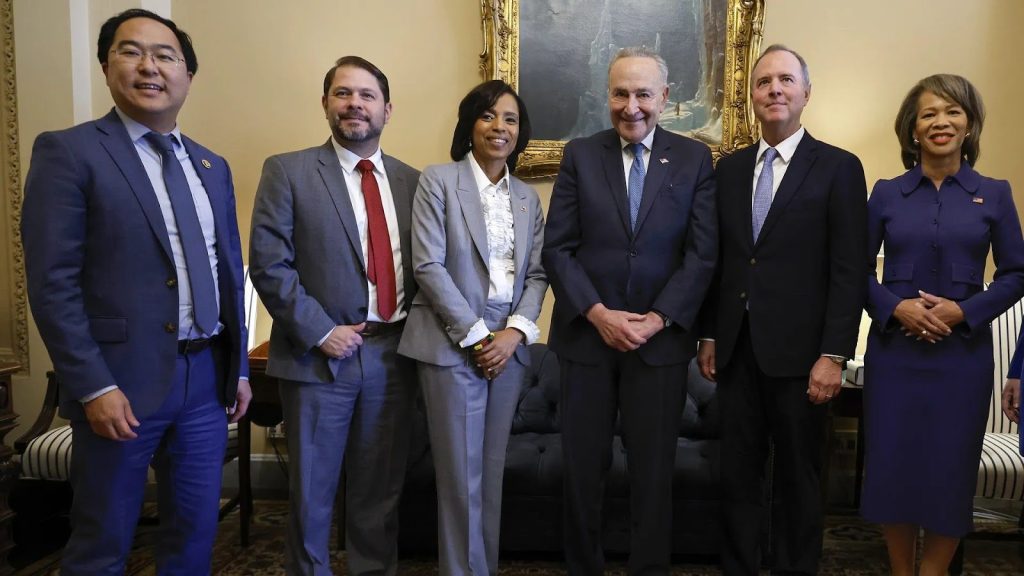
12 Senate Democrats Release Crypto Regulation Framework, End Party's Public SilenceU.S. Senate Majority Leader Charles Schumer (D-NY) meeting with newly elected Democratic Senators in his office. (Source: GettyImage)

Democratic Framework Details Key Provisions

The framework calls for closing regulatory gaps where no clear rules exist for trading and issuing digital assets, while creating pathways for issuers to provide adequate consumer disclosures.

Under their proposal, the Securities and Exchange Commission would be required to swiftly incorporate existing digital asset platforms into its regulatory framework with appropriate oversight mechanisms.

The plan also mandates that crypto platforms register with the Financial Crimes Enforcement Network (FinCEN) to prevent illicit finance activities and strengthen anti-money laundering safeguards.

Additionally, the framework ensures both the Commodity Futures Trading Commission and the SEC receive adequate staffing and funding to perform their expanded oversight duties in the digital asset space.

Eleven of the twelve senators previously voted for stablecoin legislation that passed Congress earlier this year, which means there has been some existing bipartisan cooperation on specific crypto regulations.

However, the framework specifically targets President Trump’s growing involvement in the crypto industry by proposing to block elected officials and their families from issuing, endorsing, or profiting from digital assets.

The senators also want commissioners from both parties sitting at the SEC and CFTC to create quorums for digital asset rulemaking, responding to Trump’s recent dismissals of Democratic officials at independent agencies.

“We also must ensure that digital assets are not used to finance illicit activities or to line the pockets of politicians and their families,” the statement emphasized.

Broader Context Shows Democrats Playing Catch-Up

This coordinated position emerges after significant internal Democratic divisions that became apparent during heated closed-door meetings in June, where party members clashed over crypto policy approaches.

The framework follows substantial Republican momentum on crypto legislation, including July’s major Senate draft by Banking Committee Chair Tim Scott that expanded from 35 to 182 pages in subsequent versions.

Senator Cynthia Lummis (R-WY) has earlier pushed for aggressive timelines to deliver market structure legislation to Trump’s desk before Thanksgiving, which at the time put pressure on Democratic engagement.

Meanwhile, crypto regulation has become a top congressional priority, with industry groups like Fairshake deploying $195 million in the 2024 elections to influence legislative outcomes.

The formation of a bipartisan Congressional Crypto Caucus in March 2025 showed growing institutional momentum for crypto-friendly legislation across party lines.

Yet negotiations around Senate crypto trading bills remain challenging, with Republicans uncertain about concessions needed to secure the seven Democratic votes required for passage.

The Democratic framework positions the party as seeking more restrictive approaches than Republicans, particularly regarding conflicts of interest and bipartisan oversight requirements.

Senator Elizabeth Warren (D-Mass.) continues opposing crypto legislation, arguing Republican proposals would create a “superhighway” for corruption in the Trump administration.

The framework now sets up negotiations between crypto-friendly Democrats and Republicans who must bridge policy differences on enforcement priorities, presidential conflicts, and regulatory jurisdiction.

With comprehensive crypto market structure legislation facing a more complex path than the bipartisan stablecoin bill that passed with substantial Democratic support, successful negotiations will determine whether major crypto regulation advances before 2025 ends.


시장 기회
PUBLIC 로고
PUBLIC 가격(PUBLIC)
$0,01565
$0,01565$0,01565
-0,38%
USD
PUBLIC (PUBLIC) 실시간 가격 차트
면책 조항: 본 사이트에 재게시된 글들은 공개 플랫폼에서 가져온 것으로 정보 제공 목적으로만 제공됩니다. 이는 반드시 MEXC의 견해를 반영하는 것은 아닙니다. 모든 권리는 원저자에게 있습니다. 제3자의 권리를 침해하는 콘텐츠가 있다고 판단될 경우, crypto.news@mexc.com으로 연락하여 삭제 요청을 해주시기 바랍니다. MEXC는 콘텐츠의 정확성, 완전성 또는 시의적절성에 대해 어떠한 보증도 하지 않으며, 제공된 정보에 기반하여 취해진 어떠한 조치에 대해서도 책임을 지지 않습니다. 본 콘텐츠는 금융, 법률 또는 기타 전문적인 조언을 구성하지 않으며, MEXC의 추천이나 보증으로 간주되어서는 안 됩니다.

USD1 Genesis: 0 Fees + 12% APR

USD1 Genesis: 0 Fees + 12% APRUSD1 Genesis: 0 Fees + 12% APR

New users: stake for up to 600% APR. Limited time!



