Nepal recorded 48,781 Bitchat downloads on September 8 as youth-led protests against government corruption and social media bans escalated nationwide. Jack Dorsey’s decentralized messaging app experienced massive adoption during civil unrest that left 22 dead and forced Prime Minister KP Sharma Oli’s resignation. Citizens Run to Offline Peer-to-peer Messaging The peer-to-peer application operates entirely without internet infrastructure using Bluetooth Low Energy mesh networks. Users communicate through encrypted messages that hop between devices within 30-meter ranges, creating censorship-resistant communication channels during network shutdowns. According to Bitcoin open-source developer “callebtc”, global downloads reached 125,486 users, with Nepal accounting for 39% of total adoption. Indonesia previously recorded 12,581 downloads during August protests over parliamentary allowance increases and police brutality that killed delivery driver Affan Kurniawan. Russia contributed 8,749 downloads while the United States registered 8,211 users. Bitchat launched in beta on July 7, 2025, filling TestFlight’s 10,000 capacity within hours. The application requires no phone numbers, email addresses, or account registration while providing end-to-end encryption through X25519 key exchange and AES-256-GCM protocols. When Democracy Burns: Nepal’s Youth Uprising Nepal’s protests began on September 1, targeting a ban on 26 social media platforms, including Facebook, Instagram, and YouTube. The restrictions aimed to enforce new regulations but triggered widespread outrage among Gen-Z activists relying on digital platforms for communication and commerce. The government lifted social media bans after intense pushback, but protests evolved into broader anti-corruption movements targeting political elite nepotism. Demonstrators attacked Parliament, the Supreme Court, and former Prime Ministers’ residences while forcing PM KP Sharma Oli’s resignation on September 9. Nepal Army deployment restored order in Kathmandu as curfews were imposed citywide. The crisis represents Nepal’s worst political unrest in decades, with 22 deaths and systematic demands for accountability transcending immediate social media concerns. Political instability has plagued Nepal since monarchy abolition in 2008, producing 13 different governments in 17 years. Youth unemployment and corruption fueled generational frustration, and the “Nepo Kids” phenomenon was highlighted as wealth inequality between political families and ordinary citizens. Pro-monarchy protests throughout 2025 had already created tensions as royalist sentiment capitalized on republican system failures. Large crowds advocating monarchy restoration clashed with police in separate demonstrations demanding political stability through constitutional monarchy return. Regional neighbor India heightened border security due to Nepal’s strategic importance and spillover violence concerns. Gen Z protesters rejected traditional political figures while demanding fundamental governmental reforms addressing corruption, nepotism, and economic mismanagement through interim leadership. However, Indonesia’s August protests involved parliamentary allowance controversies amid economic crisis and youth unemployment. President Prabowo Subianto replaced ministers following nationwide demonstrations, arson, and looting incidents that killed at least 10 protesters. Decentralized Messaging Revolution Goes Global Bitchat operates through store-and-forward systems, caching messages for offline users up to 12 hours. Each device functions as both client and server, creating self-organizing mesh networks resilient to single points of failure or centralized attacks. Messages fragment into 500-byte chunks, enabling transmission across multiple device hops with up to seven relay points. Bitchat architecture overview. Source: Github Random peer IDs are generated for each session, protecting user privacy while eliminating persistent identifiers like phone numbers. The application features emergency wipe capabilities through triple-tap commands, instantly clearing local data. IRC-style command interfaces provide familiar chat room experiences for users accessing topic-based channels without internet connectivity. Dorsey developed the weekend project addressing disaster coordination, event overflow communication, checkpoint synchronization, and cross-community bridges. Previous adoption spikes occurred during Hong Kong protests when a similar app, Bridgefy, saw 4,000% usage increases. Mesh networking technology adoption indicates growing demand for censorship-resistant communication tools during political instability.Source: Cointelegraph Major tech companies, including Google and Starlink, have invested in mesh solutions, creating decentralized infrastructure alternatives. Earlier this year, Elon Musk also announced XChat development featuring Bitcoin-style encryption and Rust programming language architecture. The X platform messaging system promises cross-platform audio/video calling without phone number requirements. However, despite a clear need, regulatory challenges persist as completely encrypted mesh networks complicate law enforcement tracing capabilities. Decentralized systems resist shutdown attempts while providing anonymous communication channels during internet blackouts or government censorship campaignsNepal recorded 48,781 Bitchat downloads on September 8 as youth-led protests against government corruption and social media bans escalated nationwide. Jack Dorsey’s decentralized messaging app experienced massive adoption during civil unrest that left 22 dead and forced Prime Minister KP Sharma Oli’s resignation. Citizens Run to Offline Peer-to-peer Messaging The peer-to-peer application operates entirely without internet infrastructure using Bluetooth Low Energy mesh networks. Users communicate through encrypted messages that hop between devices within 30-meter ranges, creating censorship-resistant communication channels during network shutdowns. According to Bitcoin open-source developer “callebtc”, global downloads reached 125,486 users, with Nepal accounting for 39% of total adoption. Indonesia previously recorded 12,581 downloads during August protests over parliamentary allowance increases and police brutality that killed delivery driver Affan Kurniawan. Russia contributed 8,749 downloads while the United States registered 8,211 users. Bitchat launched in beta on July 7, 2025, filling TestFlight’s 10,000 capacity within hours. The application requires no phone numbers, email addresses, or account registration while providing end-to-end encryption through X25519 key exchange and AES-256-GCM protocols. When Democracy Burns: Nepal’s Youth Uprising Nepal’s protests began on September 1, targeting a ban on 26 social media platforms, including Facebook, Instagram, and YouTube. The restrictions aimed to enforce new regulations but triggered widespread outrage among Gen-Z activists relying on digital platforms for communication and commerce. The government lifted social media bans after intense pushback, but protests evolved into broader anti-corruption movements targeting political elite nepotism. Demonstrators attacked Parliament, the Supreme Court, and former Prime Ministers’ residences while forcing PM KP Sharma Oli’s resignation on September 9. Nepal Army deployment restored order in Kathmandu as curfews were imposed citywide. The crisis represents Nepal’s worst political unrest in decades, with 22 deaths and systematic demands for accountability transcending immediate social media concerns. Political instability has plagued Nepal since monarchy abolition in 2008, producing 13 different governments in 17 years. Youth unemployment and corruption fueled generational frustration, and the “Nepo Kids” phenomenon was highlighted as wealth inequality between political families and ordinary citizens. Pro-monarchy protests throughout 2025 had already created tensions as royalist sentiment capitalized on republican system failures. Large crowds advocating monarchy restoration clashed with police in separate demonstrations demanding political stability through constitutional monarchy return. Regional neighbor India heightened border security due to Nepal’s strategic importance and spillover violence concerns. Gen Z protesters rejected traditional political figures while demanding fundamental governmental reforms addressing corruption, nepotism, and economic mismanagement through interim leadership. However, Indonesia’s August protests involved parliamentary allowance controversies amid economic crisis and youth unemployment. President Prabowo Subianto replaced ministers following nationwide demonstrations, arson, and looting incidents that killed at least 10 protesters. Decentralized Messaging Revolution Goes Global Bitchat operates through store-and-forward systems, caching messages for offline users up to 12 hours. Each device functions as both client and server, creating self-organizing mesh networks resilient to single points of failure or centralized attacks. Messages fragment into 500-byte chunks, enabling transmission across multiple device hops with up to seven relay points. Bitchat architecture overview. Source: Github Random peer IDs are generated for each session, protecting user privacy while eliminating persistent identifiers like phone numbers. The application features emergency wipe capabilities through triple-tap commands, instantly clearing local data. IRC-style command interfaces provide familiar chat room experiences for users accessing topic-based channels without internet connectivity. Dorsey developed the weekend project addressing disaster coordination, event overflow communication, checkpoint synchronization, and cross-community bridges. Previous adoption spikes occurred during Hong Kong protests when a similar app, Bridgefy, saw 4,000% usage increases. Mesh networking technology adoption indicates growing demand for censorship-resistant communication tools during political instability.Source: Cointelegraph Major tech companies, including Google and Starlink, have invested in mesh solutions, creating decentralized infrastructure alternatives. Earlier this year, Elon Musk also announced XChat development featuring Bitcoin-style encryption and Rust programming language architecture. The X platform messaging system promises cross-platform audio/video calling without phone number requirements. However, despite a clear need, regulatory challenges persist as completely encrypted mesh networks complicate law enforcement tracing capabilities. Decentralized systems resist shutdown attempts while providing anonymous communication channels during internet blackouts or government censorship campaigns

Nepal Protesters Turn to Jack Dorsey’s Peer-to-Peer Messaging App to Circumvent Social Media Ban

2025/09/11 16:34
4분 읽기
이 콘텐츠에 대한 의견이나 우려 사항이 있으시면 crypto.news@mexc.com으로 연락주시기 바랍니다

Nepal recorded 48,781 Bitchat downloads on September 8 as youth-led protests against government corruption and social media bans escalated nationwide.

Jack Dorsey’s decentralized messaging app experienced massive adoption during civil unrest that left 22 dead and forced Prime Minister KP Sharma Oli’s resignation.

Citizens Run to Offline Peer-to-peer Messaging

The peer-to-peer application operates entirely without internet infrastructure using Bluetooth Low Energy mesh networks.

Users communicate through encrypted messages that hop between devices within 30-meter ranges, creating censorship-resistant communication channels during network shutdowns.

According to Bitcoin open-source developer “callebtc”, global downloads reached 125,486 users, with Nepal accounting for 39% of total adoption.

Indonesia previously recorded 12,581 downloads during August protests over parliamentary allowance increases and police brutality that killed delivery driver Affan Kurniawan.

Russia contributed 8,749 downloads while the United States registered 8,211 users.

Bitchat launched in beta on July 7, 2025, filling TestFlight’s 10,000 capacity within hours.

The application requires no phone numbers, email addresses, or account registration while providing end-to-end encryption through X25519 key exchange and AES-256-GCM protocols.

When Democracy Burns: Nepal’s Youth Uprising

Nepal’s protests began on September 1, targeting a ban on 26 social media platforms, including Facebook, Instagram, and YouTube.

The restrictions aimed to enforce new regulations but triggered widespread outrage among Gen-Z activists relying on digital platforms for communication and commerce.

The government lifted social media bans after intense pushback, but protests evolved into broader anti-corruption movements targeting political elite nepotism.

Demonstrators attacked Parliament, the Supreme Court, and former Prime Ministers’ residences while forcing PM KP Sharma Oli’s resignation on September 9.

Nepal Army deployment restored order in Kathmandu as curfews were imposed citywide.

The crisis represents Nepal’s worst political unrest in decades, with 22 deaths and systematic demands for accountability transcending immediate social media concerns.

Political instability has plagued Nepal since monarchy abolition in 2008, producing 13 different governments in 17 years.

Youth unemployment and corruption fueled generational frustration, and the “Nepo Kids” phenomenon was highlighted as wealth inequality between political families and ordinary citizens.

Pro-monarchy protests throughout 2025 had already created tensions as royalist sentiment capitalized on republican system failures.

Large crowds advocating monarchy restoration clashed with police in separate demonstrations demanding political stability through constitutional monarchy return.

Regional neighbor India heightened border security due to Nepal’s strategic importance and spillover violence concerns.

Gen Z protesters rejected traditional political figures while demanding fundamental governmental reforms addressing corruption, nepotism, and economic mismanagement through interim leadership.

However, Indonesia’s August protests involved parliamentary allowance controversies amid economic crisis and youth unemployment.

President Prabowo Subianto replaced ministers following nationwide demonstrations, arson, and looting incidents that killed at least 10 protesters.

Decentralized Messaging Revolution Goes Global

Bitchat operates through store-and-forward systems, caching messages for offline users up to 12 hours.

Each device functions as both client and server, creating self-organizing mesh networks resilient to single points of failure or centralized attacks.

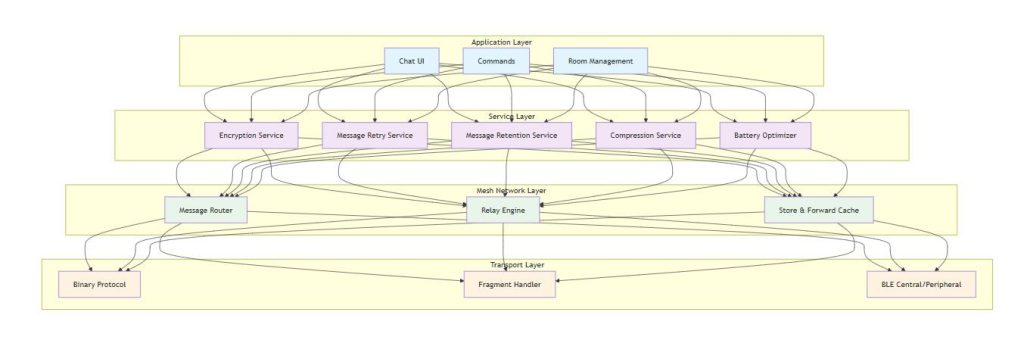
Messages fragment into 500-byte chunks, enabling transmission across multiple device hops with up to seven relay points.
48,000 Nepalis Download Jack Dorsey's Peer-to-Peer Messaging App Amid Protests and Social Media Ban

Bitchat architecture overview. Source: Github

Random peer IDs are generated for each session, protecting user privacy while eliminating persistent identifiers like phone numbers.

The application features emergency wipe capabilities through triple-tap commands, instantly clearing local data.

IRC-style command interfaces provide familiar chat room experiences for users accessing topic-based channels without internet connectivity.

Dorsey developed the weekend project addressing disaster coordination, event overflow communication, checkpoint synchronization, and cross-community bridges.

Previous adoption spikes occurred during Hong Kong protests when a similar app, Bridgefy, saw 4,000% usage increases.

Mesh networking technology adoption indicates growing demand for censorship-resistant communication tools during political instability.

48,000 Nepalis Download Jack Dorsey's Peer-to-Peer Messaging App Amid Protests and Social Media BanSource: Cointelegraph

Major tech companies, including Google and Starlink, have invested in mesh solutions, creating decentralized infrastructure alternatives.

Earlier this year, Elon Musk also announced XChat development featuring Bitcoin-style encryption and Rust programming language architecture.

The X platform messaging system promises cross-platform audio/video calling without phone number requirements.

However, despite a clear need, regulatory challenges persist as completely encrypted mesh networks complicate law enforcement tracing capabilities.

Decentralized systems resist shutdown attempts while providing anonymous communication channels during internet blackouts or government censorship campaigns.


시장 기회
Comedian 로고
Comedian 가격(BAN)
$0.0595
$0.0595$0.0595
-0.05%
USD
Comedian (BAN) 실시간 가격 차트
면책 조항: 본 사이트에 재게시된 글들은 공개 플랫폼에서 가져온 것으로 정보 제공 목적으로만 제공됩니다. 이는 반드시 MEXC의 견해를 반영하는 것은 아닙니다. 모든 권리는 원저자에게 있습니다. 제3자의 권리를 침해하는 콘텐츠가 있다고 판단될 경우, crypto.news@mexc.com으로 연락하여 삭제 요청을 해주시기 바랍니다. MEXC는 콘텐츠의 정확성, 완전성 또는 시의적절성에 대해 어떠한 보증도 하지 않으며, 제공된 정보에 기반하여 취해진 어떠한 조치에 대해서도 책임을 지지 않습니다. 본 콘텐츠는 금융, 법률 또는 기타 전문적인 조언을 구성하지 않으며, MEXC의 추천이나 보증으로 간주되어서는 안 됩니다.

USD1 Genesis: 0 Fees + 12% APR

USD1 Genesis: 0 Fees + 12% APRUSD1 Genesis: 0 Fees + 12% APR

New users: stake for up to 600% APR. Limited time!



