

Vinexpo Paris overtakes ProWein as world’s largest trade show
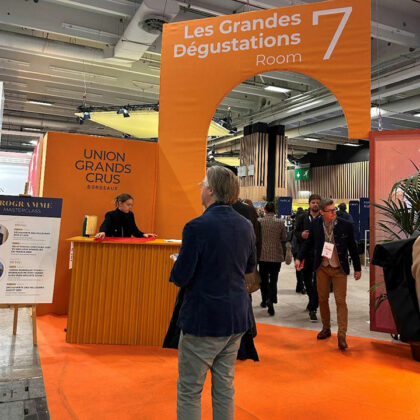
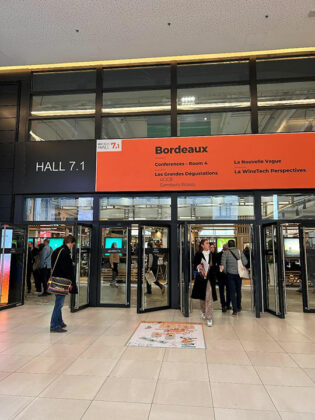
PARIS, France — For decades, ProWein in Düsseldorf held the uncontested title as the world’s most influential international wine trade fair. But in 2025, a decisive shift occurred — one that industry insiders had been whispering about for years and are now openly acknowledging: Vinexpo Paris has overtaken ProWein as the premier global wine business event. And this recently concluded Vinexpo Paris just cemented this fact decisively.
VINEXPO PARIS 2026’S NUMBERS
The official numbers from Vinexpo Paris: 63,541 trade visitors from 169 countries, 51% of whom were international (up 20.75%), and 6,537 exhibitors from 63 countries (up 20%). I was among the record-breaking number of visitors and part of the 51% who were international or non-French.
Meanwhile, at its peak, ProWein received around 61,500 trade visitors, and that was way back in 2019, before the world experience the COVID-19 pandemic. While the ProWein Düsseldorf 2026 numbers are not out because it was still ongoing as I was writing this column (it ran from March 13 to 15), it is quite safe to assume they will not be higher than those recorded by Vinexpo Paris.
Last year, ProWein welcomed only around 42,000 visitors, a 10.6% decline from their 2024 numbers. That same year, Vinexpo Paris saw over 52,600 visitors.
HISTORY AND ASIAN EXPANSION
The first Vinexpo took place in Bordeaux, France on June 22 to 26, 1981. That fair was considered a success at that time, with 11,000 trade visitors and 500 exhibitors. It was also the first international wine and spirits exhibition of its kind, designed to connect producers, distributors, and buyers on a global scale. Bordeaux was chosen as the host city because of its reputation as the wine capital of the world.
On the other hand, the very first ProWein was held in Düsseldorf, Germany, on Feb. 23 to 24, 1994. It was originally called ProVins and featured 321 exhibitors, and it attracted many visitors from parts of Europe and beyond. By 2019, 25 years after it started, attendance peaked at 61,500 visitors with over 6,800 exhibitors. These 6,800 exhibitors still remain the number to beat to-date, as even this year’s Vinexpo Paris did not exceed this number of exhibitors.
I attended my first ProWein in 2008, and it was before the Vinexpo Paris fair, and it was by far the largest wine event I had been part of back then.
Both event organizations have done well in their expansion, with Vinexpo adding Asia via the launching of Vinexpo Asia-Pacific in Hong Kong in 1998. More recently, in 2023, it was made into an annual event alternating between Hong Kong and Singapore. Just last year, they launched Vinexpo America in Miami, Florida, USA.
ProWein, on the other hand, held their first wine fair outside of Düsseldorf in Asia, in Hong Kong in 2013. In 2014, there was ProWein China, held in Shanghai. This was followed in 2018 by ProWein Southeast Asia, held in Singapore; in 2024, ProWein Japan, held in Tokyo; and this year a ProWein in multiple Asian cities is on its way.
The competition is fierce, and Asia offers the biggest opportunities for wine development and consumption in the world.
I have attended several Vinexpo Asia-Pacific, including the ones held in Tokyo, Hong Kong, and, more recently, Singapore, but I have yet to attend a single ProWein outside of Düsseldorf, Germany.
HOW PROWEIN DEVELOPED
ProWein was most successful in the 2000s and 2010s, partly because many wine producing countries felt it was a more neutral ground for international wine exhibitors. First of all, Germany is not as large of a wine-producing country as France. Germany always ranks in the lower end of the Top 10 producers, either in the 8th or 9th position, and produces only 1/5 of what France does. For wine exhibitors, they feel that trade visitors are traveling to Düsseldorf not so much for German wines, but more for other global wine producers.
Also, controversy struck Vinexpo Bordeaux in 2003, when the majority of the Australian wine producers, including several big names, boycotted that year’s Vinexpo due to what the Australians felt were unfair treatment of exhibitors. This included complaints on poor location and dissatisfaction with service.
Then in 2007, Vinexpo Bordeaux organizers had another major crisis when New Zealand totally withdrew from the fair, the Americans substantially reduced their presence, Wines of South Africa withdrew its sponsorship, and the Italian Trade Agency (the government agency that promotes Italian exports) stopped its support of Vinexpo due to space allocation issues.
The 2003 Australian boycott and the bigger 2007 fallout were often cited as a turning point in Vinexpo’s history. This also marked the beginning of a shift in global wine trade show dominance, with ProWein steadily rising and eventually surpassing Vinexpo in scale (until recently).
WINE PARIS, VINEXPO MERGER
Wine Paris began in 2019 as a merger of two French wine fairs — Vinovision Paris, which showcased cool‑climate wines, and Vinisud, which focused on Mediterranean producers. The idea was to consolidate France’s fragmented wine exhibitions into one major international event in Paris, making it more accessible to global buyers and competitive against ProWein Düsseldorf. The initial edition drew about 26,700 visitors and 2,000 exhibitors, immediately positioning Paris as a serious contender in the trade show landscape.
That same year, Vinexpo Bordeaux held its last fair, from June 13-16. The show had a decent showing, but clearly ProWein was still ahead, and, in fact, ProWein had its best performing year that 2019.
So the next year, in 2020, Wine Paris merged with Vinexpo to create Vinexpo Paris, combining Wine Paris’ domestic strength with Vinexpo’s international prestige. In just six years, Wine Paris evolved from a national consolidation project into the world’s leading wine trade show, surpassing ProWein in both visitor and exhibitor numbers. Its rapid rise reflects not only Paris’ strategic advantages as a preferred international location for trade professionals, but also the industry’s shift toward a more globally connected, dynamic hub for wine commerce. Paris has now firmly established itself as the new epicenter of the wine trade.
But like any competition, I expect ProWein to do something in return. We just must wait and see!
Sherwin A. Lao is the first Filipino wine writer member of both the Bordeaux-based Federation Internationale des Journalists et Ecrivains du Vin et des Spiritueux (FIJEV) and the UK-based Circle of Wine Writers (CWW). For comments, inquiries, wine event coverage, wine consultancy and other wine-related concerns, e-mail the author at wineprotege@gmail.com, or check his wine training website https://thewinetrainingcamp.wordpress.com/services/. Also check out his YouTube channel, www.youtube.com/@winecrazy.
추천 콘텐츠

Ethereum spot ETFs had a total net outflow of $1.8898 million yesterday, with Fidelity FETH leading the way with a net outflow of $29.1892 million.

Michael Saylor Pushes Digital Capital Narrative At Bitcoin Treasuries Unconference

