

Humanoid Robots Pivot: 1X’s Shocking 10,000-Unit Deal Sends Home Bots to Factories

BitcoinWorld
Humanoid Robots Pivot: 1X’s Shocking 10,000-Unit Deal Sends Home Bots to Factories
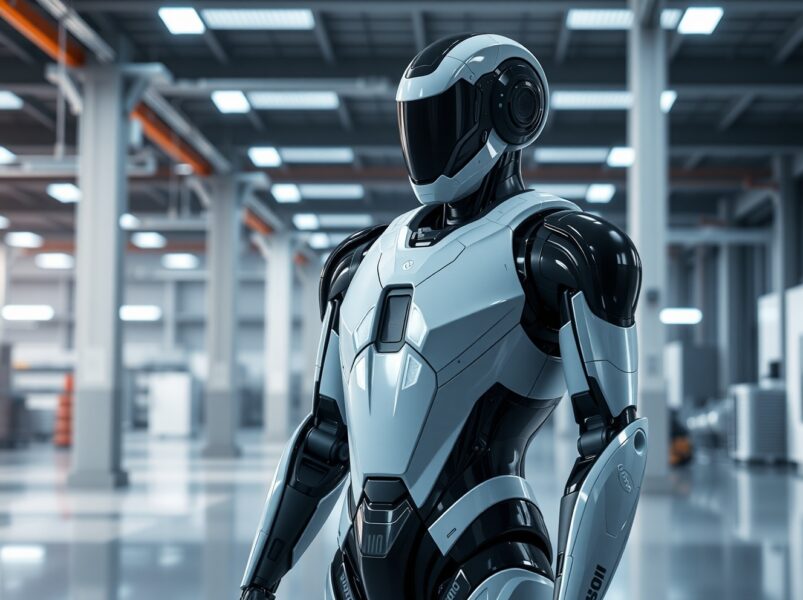
In a stunning strategic shift, robotics company 1X has pivoted its flagship ‘home’ humanoid robot, the Neo, towards industrial use. The company announced a massive deal to supply up to 10,000 of its humanoid robots to the portfolio companies of its investor, EQT, between 2026 and 2030. This move signals a critical moment in the commercialization of humanoid robots, highlighting where the real, near-term demand lies.
Why Are Humanoid Robots Shifting from Homes to Factories?
The partnership between 1X and EQT Ventures represents a fundamental market correction. While 1X’s Neo was explicitly marketed as “the first consumer-ready humanoid robot designed to transform life at home,” the harsh realities of consumer adoption have prompted a strategic redirection. The deal focuses on deploying these robots within EQT’s 300+ portfolio companies, specifically targeting manufacturing, warehousing, and logistics.
This pivot underscores a key industry insight: industrial applications present a clearer, more immediate path to revenue and scale for humanoid robotics companies. The challenges of selling a $20,000 robot for domestic chores—coupled with privacy concerns and safety questions—make the commercial and industrial sector a more viable first market.
Inside the 1X Neo and EQT Ventures Partnership
The scale of this agreement is significant. Let’s break down the key components:
- Volume: Up to 10,000 1X Neo humanoid robots.
- Timeline: Shipments scheduled from 2026 to 2030.
- Buyers: EQT’s vast network of portfolio companies.
- Use Cases: Manufacturing, warehousing, logistics, and other industrial tasks.
- Deal Structure: 1X will sign individual contracts with each interested EQT portfolio company.
It’s notable that this deal involves the Neo, not 1X’s purpose-built Eve Industrial model. This suggests the company believes its consumer-grade platform has sufficient capability for light industrial duties or that adapting it is more efficient than developing a separate line.
The Commercial Reality for Robotics Companies
1X’s shift mirrors a broader industry conversation. While humanoids capture the public imagination, their path to widespread home use is long. Several factors make industrial settings a smarter first bet for a robotics company:
| Challenge for Home Use | Advantage in Industrial Use |
|---|---|
| High unit cost ($20,000) limits consumer market. | Cost can be justified by ROI on labor and efficiency. |
| Major privacy concerns (remote human operators can ‘see’ through the robot’s eyes). | Controlled, monitored environments reduce privacy issues. |
| Safety risks around unpredictable home environments, pets, and children. | Structured, predictable workflows and spaces. |
| Unproven value proposition for complex domestic chores. | Clear value in repetitive, manual tasks like picking, packing, and inspection. |
As multiple VCs and robotics scientists have noted, mass adoption of humanoids in homes may be a decade away, but their utility in controlled industrial settings is being tested now.
1X’s Backing and the Future of Industrial Automation
1X is not a newcomer. Founded in 2014, the company has raised over $130 million from top-tier investors, including EQT Ventures, Tiger Global, and the influential OpenAI Startup Fund. This backing provides not just capital but strategic networks, as evidenced by this EQT portfolio deal.
The company reported that pre-orders for the Neo “far exceeded” its goals, indicating strong market interest. However, this bulk industrial deal likely represents a more stable and scalable business model for its early years of production.
What This Means for the Humanoid Robotics Race
1X’s move is a pragmatic step in a crowded field. Unlike peers like Figure, which has focused on commercial applications from the start, 1X initially targeted consumers. This pivot suggests a convergence on the industrial sector as the primary proving ground and revenue source for humanoid technology. The success of this 10,000-unit deployment will be a critical case study for the entire industry, testing reliability, cost-effectiveness, and real-world utility.
Conclusion: A Pivotal Moment for Practical Robotics
The 1X and EQT deal is more than a large sales contract; it’s a signal. It reveals where sophisticated investors and robotics companies believe the first true market for humanoid robots will emerge. The shift from aspirational home companions to practical industrial assistants marks a maturation in the sector. While robots in every home remains a long-term vision, robots in thousands of factories and warehouses is a near-term reality being built today. This strategic pivot by 1X could define the commercial trajectory for humanoid robotics for the next decade.
To learn more about the latest trends in AI and automation, explore our article on key developments shaping the future of intelligent machines and their real-world applications.
Frequently Asked Questions (FAQs)
What is 1X?
1X (formerly Halodi Robotics) is a robotics company founded in 2014 that develops humanoid robots, including the Neo for consumer settings and Eve for industrial use.
What is the 1X Neo robot?
The 1X Neo is a bipedal humanoid robot marketed for home assistance. It was announced for pre-order in October at a price of $20,000 and is designed to perform chores and interact with people.
Who is EQT Ventures?
EQT Ventures is the venture capital arm of EQT, a large Swedish multi-asset investment group. It is an investor in 1X and has facilitated this deal with its portfolio companies.
How does this deal differ from 1X’s original plan for Neo?
The Neo was originally marketed as a consumer product for the home. This deal repurposes it for bulk industrial and commercial use in factories and warehouses, representing a major shift in target market.
What other companies are developing humanoid robots?
The field includes companies like Figure, Boston Dynamics (owned by Hyundai), Tesla (with its Optimus bot), and Agility Robotics. Each has different focuses, from pure industrial to a mix of commercial and consumer aims.
This post Humanoid Robots Pivot: 1X’s Shocking 10,000-Unit Deal Sends Home Bots to Factories first appeared on BitcoinWorld.
Ayrıca Şunları da Beğenebilirsiniz

Will Bitcoin Soar or Stumble Next?

Oracle (ORCL) Stock: $300 Billion OpenAI Bet Backfires as Shares Plunge
