BNB Drops After Binance Denies Iran Linked USDT Transfers

Binance has strongly denied allegations that it processed more than one billion dollars in transactions tied to Iranian entities, as the exchange faces renewed scrutiny and a market reaction that pushed BNB lower.
Key Takeaways
- Binance rejected claims that it facilitated over $1 billion in Iran linked USDT transfers.
- Richard Teng said no sanctions violations were found and no investigators were dismissed for raising concerns.
- BNB fell around 3 percent following the media report and public response.
- The controversy comes as Binance remains under heightened regulatory monitoring after its 2023 US settlement.
What Happened?
A February 13 report by Fortune alleged that internal compliance investigators at Binance identified more than $1 billion in transactions connected to Iranian businesses between March 2024 and August 2025. The report claimed the transfers involved Tether USDT on the Tron network and suggested that several investigators were dismissed after raising sanctions related concerns.
Binance leadership quickly pushed back. Co Chief Executive Officer Richard Teng publicly denied the allegations, stating that the report contained serious inaccuracies and misleading implications.
Binance Denies Sanctions Breaches
In a public statement, Richard Teng said:
The company said it conducted a full internal review with external legal counsel and found no evidence of sanctions violations tied to the transactions referenced in the report. Binance also rejected claims that employees were punished for flagging compliance concerns.
Teng emphasized that Binance maintains strict internal policies, whistleblower protections, and employment safeguards. He questioned the suggestion that dismissals were linked to sanctions investigations and described those claims as unfounded.
The exchange further highlighted that it operates under regulatory oversight in multiple jurisdictions, including Abu Dhabi, and complies with laws in 21 other regions.
Ongoing Scrutiny After 2023 Settlement
The allegations are particularly sensitive because Binance remains under monitoring following its $4.3 billion settlement with US authorities in 2023 over anti money laundering and sanctions violations. As part of that agreement, founder Changpeng Zhao stepped down as Chief Executive Officer and later served a four month prison sentence.
Since then, Binance has stated that it has significantly strengthened its compliance systems, staffing levels, transaction monitoring tools, and sanctions screening processes.
Teng also criticized what he described as irresponsible reporting based on anonymous sources. He said such coverage undermines the work of more than 1,300 compliance professionals at the company.
Stablecoins and Global Sanctions Focus
The controversy also draws attention to the broader use of stablecoins such as USDT in cross border transactions. Blockchain analytics firms including TRM Labs, Chainalysis, and Elliptic have previously reported that Iranian linked entities have increasingly used stablecoins to bypass traditional financial systems.
Regulatory focus on stablecoins has intensified in recent months. Earlier, the US Treasury Office of Foreign Assets Control sanctioned two United Kingdom based exchanges for processing nearly $1 billion in transactions tied to the Islamic Revolutionary Guard Corps. A significant share of those transfers reportedly involved USDT on the Tron network.
Separately, reports noted that the Central Bank of Iran purchased more than $500 million in USDT to support liquidity amid pressure on the Iranian rial. These developments have added to global concerns about digital assets and sanctions enforcement.
Market Reaction and BNB Price Movement
Following the report and Binance’s denial, BNB dropped roughly 3 percent, trading near $616. Investors appear sensitive to any compliance related headlines involving the world’s largest crypto exchange by trading volume.
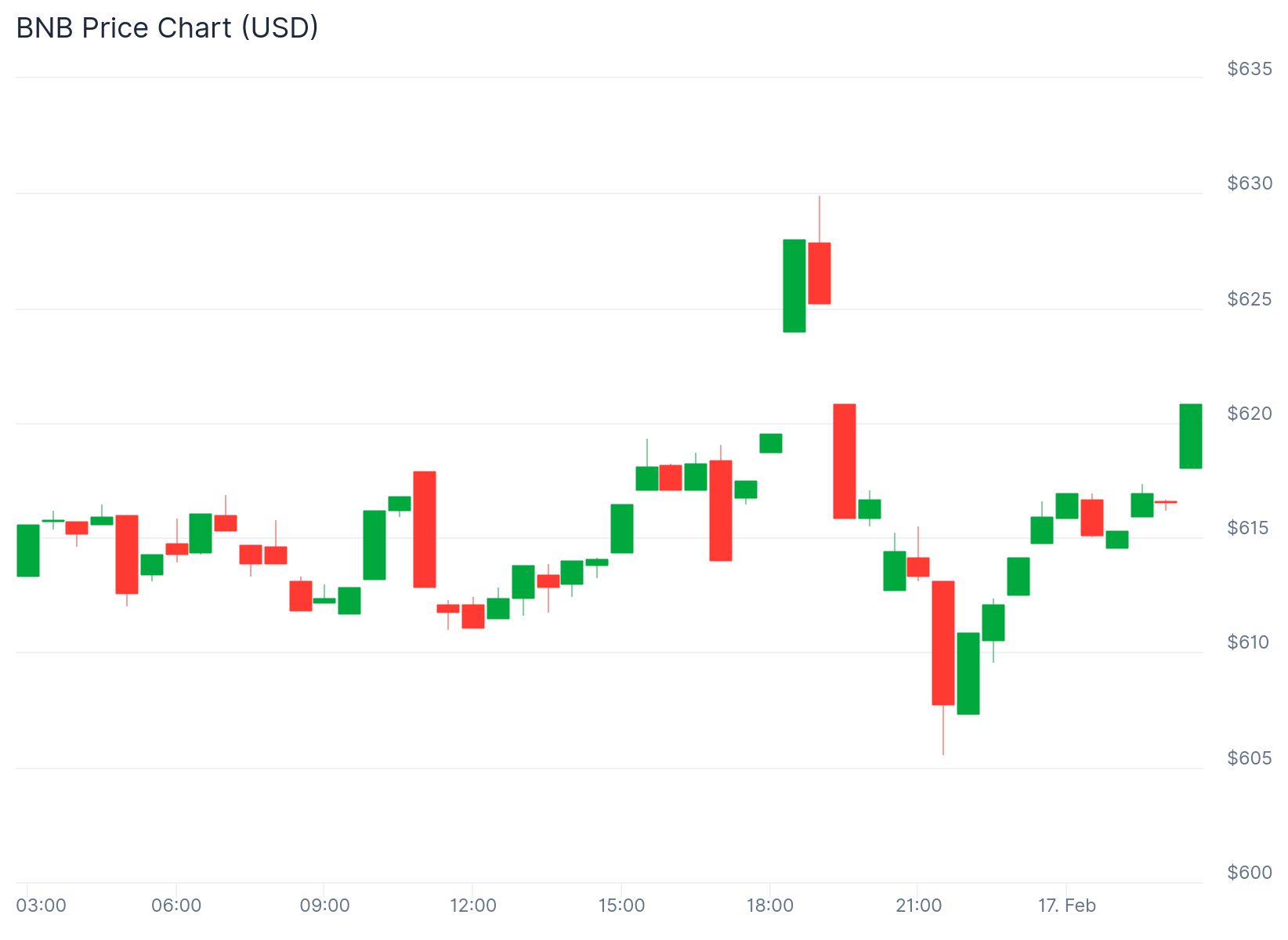 Image Credit – CoinGecko.com
Technical indicators show that BNB remains in a consolidation phase after recent volatility. Analysts note potential resistance around the $630 level, while support remains near $600. Market sentiment could shift quickly depending on regulatory clarity and further disclosures.
CoinLaw’s Takeaway
In my experience, when it comes to major exchanges like Binance, reputation risk moves markets almost instantly. Even unproven allegations can shake investor confidence. I found it telling that Binance responded so quickly and directly, which shows how serious compliance optics are in today’s crypto environment.
At the same time, regulators globally are tightening oversight of stablecoins and cross border flows. Whether or not the allegations hold weight, this episode reminds investors that compliance headlines can impact token prices just as much as fundamentals.
The post BNB Drops After Binance Denies Iran Linked USDT Transfers appeared first on CoinLaw.
Ayrıca Şunları da Beğenebilirsiniz

BNB's market capitalization surpassed BYD, Pfizer, and other companies, rising to 155th in the world.
Nobel-winning economist exposes ugly truth behind age of 'know-nothingism' in US