

Gold Analysis: Why It's the "Ultimate Credit Asset" & How to Trade on MEXC
For decades, modern portfolio theory dismissed Gold as a "zero-yield" relic. Wall Street argued: why hold a heavy metal that pays no dividends when stocks and bonds offer cash flow?
But as Spot Gold (XAU) continues to command premium valuations on MEXC in 2026, that old narrative has collapsed. The market has realized that Gold is not competing with stocks for yield; it is competing with fiat currencies for Trust.
Many investors look at the chart and ask: "Is Gold too expensive?" To answer this, we must look beyond the price tag. The rally we see today is not a random bubble; it is the direct result of a Sovereign Pivot that began in 2022.
Here is the deep-dive analysis on why Gold has reclaimed its title as the "Ultimate Credit Asset" and how to position yourself using MEXC Futures.
1. The Historical Pivot: When the "Whales" Changed the Game
To understand the price floor in 2026, we must look at the foundation built over the last few years. The primary driver of Gold is no longer jewelry demand or retail speculation—it is Geopolitical Necessity.
The Data: According to confirmed data from the World Gold Council, global central banks purchased a historic 1,136 tonnes in 2022 and 1,037 tonnes in 2023.
The Structural Shift: This was the highest level of official sector buying in over 50 years. Before this pivot, Central Banks were net sellers of gold (1990s-2000s).
The "Floor" Theory: This massive withdrawal of physical supply created a permanent "floor" under the Gold price. Sovereign nations are not "weak hands"; they do not panic sell. They buy to hold forever, reducing the available float for everyone else.
2. The Broken Model: Why Real Yields No Longer Matter
For 20 years, Gold prices had a near-perfect inverse correlation with US Real Yields (Interest Rates minus Inflation). The logic was simple: When rates went up, the "opportunity cost" of holding Gold rose, so Gold prices fell.
In the 2024-2026 cycle, that model broke.
The Anomaly: US Real Yields surged from negative territory to over 2%, a level that historically crushed Gold prices. Yet, Gold hit all-time highs.
The Explanation (Fiscal Dominance): Investors realized that with US Debt spiraling, the government cannot afford high real rates forever without printing money. The market began to price in "Fiscal Dominance"—the expectation that the currency will be debased to pay the debt.
The Consequence: In this environment, investors don't care about the 2% yield on bonds; they care about the Return OF Capital, not the Return ON Capital. Gold became the only way to escape the debt spiral.
3. Why Gold is the "Ultimate Credit Asset"
In a digitized financial world, Gold remains unique. It is the only financial asset that is not simultaneously someone else's liability.
No Counterparty Risk:
Stocks rely on corporate earnings and management.
Bonds rely on government solvency and tax revenues.
Bank Deposits rely on the bank's balance sheet health.
Gold relies on nothing. It is final settlement.
Sanction Resistance: After the geopolitical events of 2022, nations realized that FX reserves held in dollars could be frozen. Gold held in domestic vaults cannot be sanctioned. This drove the "Global South" to aggressively swap dollars for gold.
The "Store of Value" Function: In an era where "Quantitative Easing" (money printing) is the primary tool to manage crises, Gold acts as the ultimate reference point for purchasing power.
4. Market Structure: Investment vs. Speculation
Understanding who is buying helps us define the trend.
The "Strong Hands" (Foundation): The rally has been driven by Central Banks and Sovereign Wealth Funds. These are strategic buyers who ignore short-term price fluctuations.
The "Weak Hands" (Volatility): Retail speculation (ETFs and Futures) often chases the price after it moves. This layer creates the volatility we see on the charts.
Analyst View: Current prices reflect a repricing of "Risk-Free Assets." Since US Treasuries are no longer viewed as risk-free by many global entities, Gold has stepped in to fill that void. This is a structural change, not a cyclical one.
5. How to Trade Gold on MEXC
Buying physical gold involves high premiums (often 5-10% over spot), storage fees, and liquidity issues. MEXC Futures offers a more efficient, institutional-grade way to express this view.
Capital Efficiency (USDT Margin): You can use USDT as collateral to trade XAUUSDT. This allows you to maintain your crypto exposure while hedging with Gold, without needing to convert to fiat currency.
Tactical Trading Strategies:
The "Hedge" (Long): Position for the long-term trend of currency debasement. Treat this as insurance for your portfolio.
The "Swing" (Short): Unlike physical gold, MEXC allows you to Short Gold. If the RSI hits extreme overbought levels (>80) due to retail FOMO, you can profit from the short-term correction while the long-term trend remains up.
24/7 Liquidity: Global events happen around the clock. When news breaks on a Sunday, physical markets are closed. MEXC allows you to react instantly.
Conclusion
Gold's strength in 2026 is the echo of the historic 1,136-tonne and 1,037-tonne purchases that occurred in previous years. The market structure has fundamentally changed.
Gold has reclaimed its title as the "Ultimate Credit Asset." It is the only asset that offers true independence from the financial system. It doesn't promise to make you rich overnight, but it promises to be there when everything else falters.
⚠️ Professional Risk Disclosure
Leverage Risk: Trading Futures involves significant risk. While Gold is a defensive asset, using high leverage (e.g., 100x) can lead to rapid liquidation during intraday volatility. Please manage your margin strictly. Market Volatility: Gold prices can be sensitive to US economic data (Non-Farm Payrolls, CPI). Ensure you are aware of the economic calendar when holding open positions. Not Financial Advice: This article is based on historical data from the World Gold Council and market structure analysis. It does not constitute financial advice.
Bài viết phổ biến
Xem thêm
Coin tốt nhất để trade Futures: BTC và ETH thắng, nhưng không vì lý do bạn nghĩ
Với phần lớn trader, coin tốt nhất để trade Futures là BTC hoặc ETH: cả hai đều có thanh khoản perpetual sâu, spread hẹp và tỷ lệ funding ổn định hơn so với các tài sản nhỏ hơn. SOL, XRP và DOGE dẫn đ
Hướng dẫn Copy Trade dành cho Trader dẫn đầu
Copy Trade là một chiến lược đầu tư tiền mã hoá sáng tạo cho phép nhà đầu tư tự động sao chép các giao dịch của những Trader giàu kinh nghiệm. Đối với người mới bắt đầu còn thiếu kiến thức chuyên môn
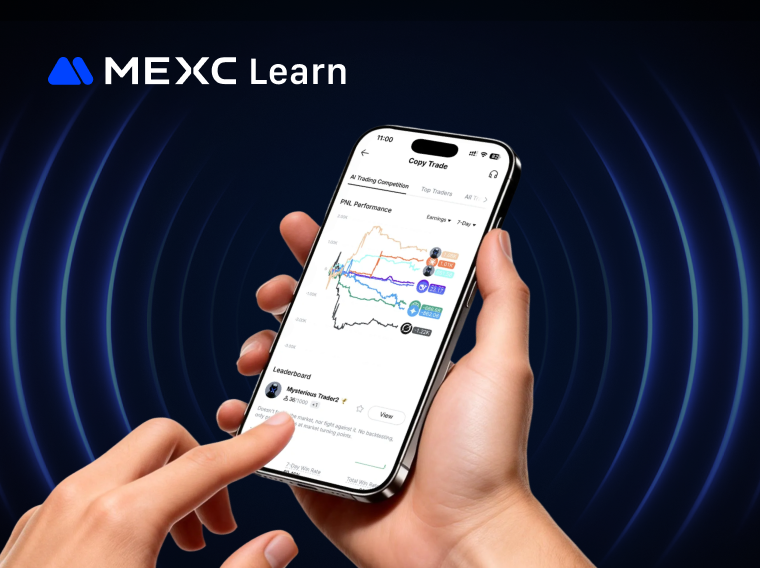
MEXC AI Model Copy Trade Là Gì?
1. Copy Trade Mô Hình AI Là Gì? Copy Trade Mô Hình AI là tính năng Copy Trade thông minh do MEXC ra mắt, cho phép bạn dễ dàng theo dõi các mô hình AI để giao dịch tự động. Nền tảng MEXC giới thiệu 6 m
Cập nhật về tiền mã hoá phổ biến
Xem thêm
Spurs vs. Timberwolves Game 5: Ai đấm tấm vé chung kết Western Conference?
Spurs và Timberwolves đang bế tắc với tỷ số 2-2 sau khi Wembanyama bị loại đã mang lại cho Minnesota một cuộc sống mới. Với Fox có vấn đề và loạt trận trên sân nhà, ai sẽ nắm quyền kiểm soát trong Gam

Lợi suất Trái phiếu Kho bạc Mỹ kỳ hạn 10 năm vượt 5%, chạm mức cao nhất 18 năm【MEXC Alpha Nhà giao dịch – Bản tin Thị trường hằng ngày (16/09/2026)】
I. Vĩ mô & Tâm lý Thị trường Dữ liệu Thị trường: BTC $75,432 (-3.19%) | ETH $2,389 (-5.00%) | SOL $96.37 (-5.76%) Tâm lý Thị trường: Tỷ lệ Funding +0.0042% | Chỉ số Sợ hãi & Tham lam 51 (Trung lập) Tí

CPI tháng 8 của Mỹ vượt kỳ vọng, xác suất tăng lãi suất tăng lên 90%【MEXC Alpha Nhà giao dịch – Bản tin Thị trường hằng ngày (15/09/2026)】
I. Kinh tế vĩ mô & Tâm lý thị trường Dữ liệu thị trường: BTC $77,926 (+1.11%) | ETH $2,515 (+0.94%) | SOL $102 (+2.15%) Tâm lý thị trường: Tỷ lệ Funding +0.0041% | Chỉ số Sợ hãi & Tham lam 69 (Tham la

Khối lượng Solana On-Chain vượt $2.6 tỷ, dẫn đầu tất cả các chain【MEXC Nhà giao dịch Alpha – Bản tin Thị trường hằng ngày (14/09/2026)】
I. Tâm lý vĩ mô & Thị trường Dữ liệu Thị trường: BTC $76,938 (-0.44%) | ETH $2,489 (-1.43%) | SOL $99.80 (-2.44%) Tâm lý Thị trường: Tỷ lệ Funding +0.0095% | Chỉ số Sợ hãi & Tham lam 57 (Tham lam) II.
Tin tức xu hướng
Xem thêm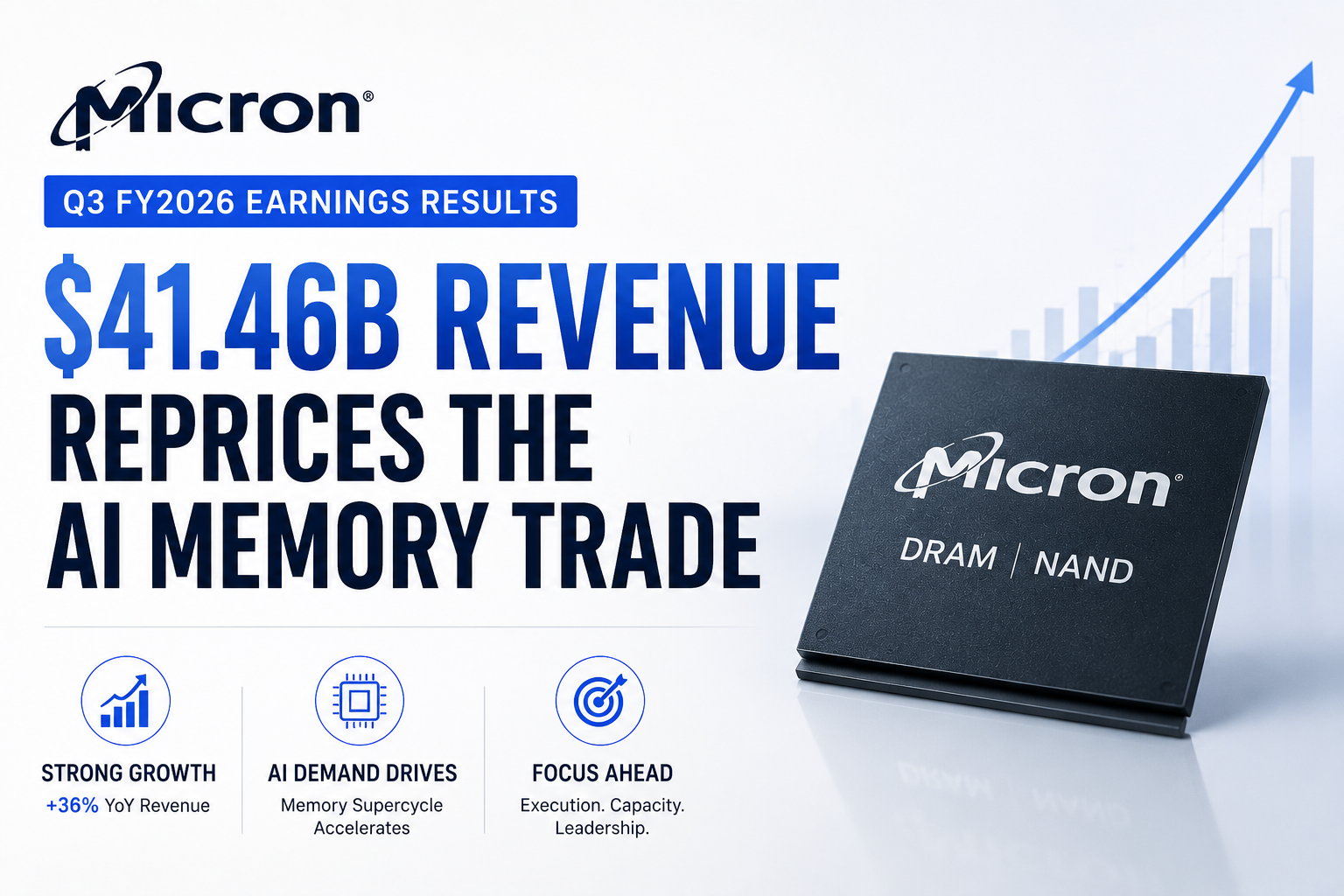
Kết Quả Thu Nhập Q3 2026 Của Micron: Doanh Thu 41,46 Tỷ USD Định Giá Lại Giao Dịch Bộ Nhớ AI
Micron Technology đã báo cáo kết quả tài chính kỷ lục trong Q3 năm tài chính 2026, với doanh thu đạt 41,46 tỷ USD, tăng từ 9,30 tỷ USD một năm trước đó, do nhu cầu về bộ nhớ và lưu trữ liên quan đến A
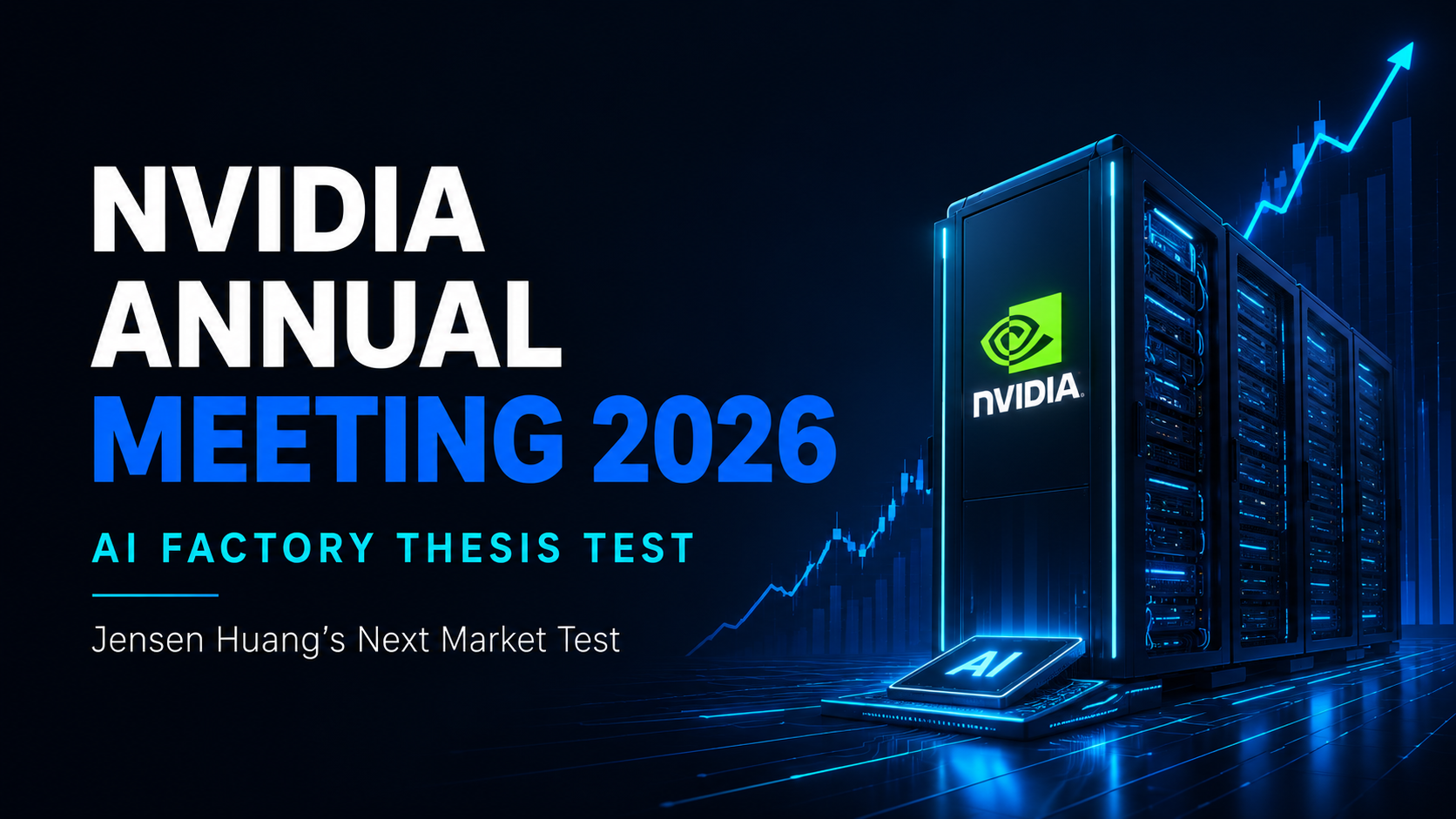
Đại Hội Đồng Cổ Đông Thường Niên NVIDIA 2026: Luận Điểm “Nhà Máy AI” Của Jensen Huang Đối Mặt Với Thử Thách Thị Trường Tiếp Theo
NVIDIA đã tổ chức Đại hội đồng Cổ đông Thường niên 2026 trực tuyến vào ngày 24 tháng 6 năm 2026, lúc 9:00 sáng theo Giờ Thái Bình Dương. Chương trình nghị sự chính thức bao gồm bầu cử hội đồng quản tr

Từ Giao Dịch Khan Hiếm Đến Kỷ Luật Định Giá: Sự Sụt Giảm Của SpaceX Thử Thách Tham Vọng IPO Của OpenAI
OpenAI được cho là đang có xu hướng trì hoãn đợt IPO cho đến năm 2027, nhưng tín hiệu thị trường rõ nét hơn lại đến từ SpaceX. Cổ phiếu SpaceX đã giảm 16,4% xuống còn 154,60 USD vào ngày 22 tháng 6, g
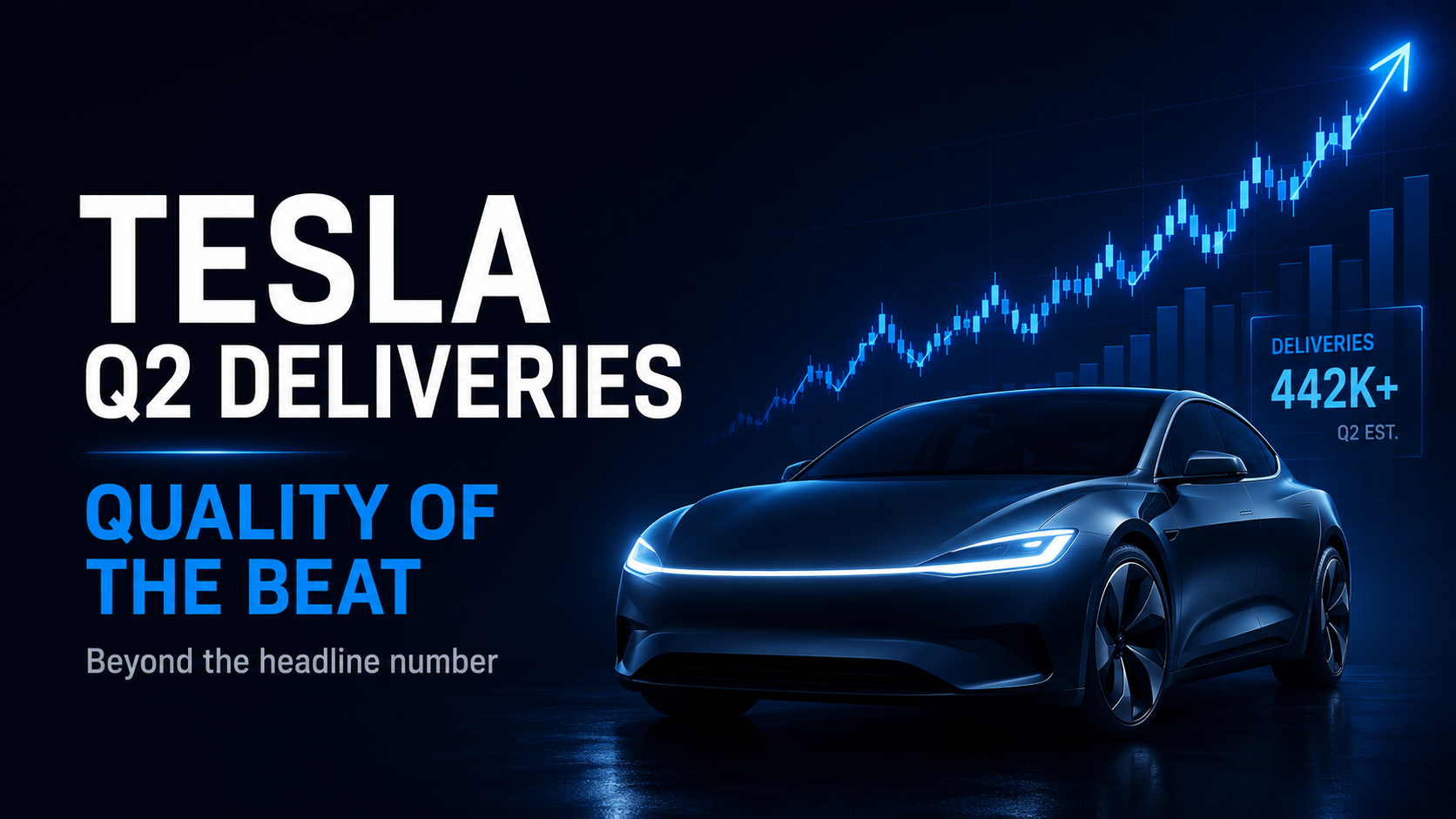
Tesla Tăng Vọt Trước Thềm Bàn Giao Q2: Tại Sao Thử Thách Thực Sự Nằm Ở Chất Lượng, Không Chỉ Là Số Lượng
Cổ phiếu Tesla (TSLA) đã tăng mạnh 8,46% lên mức $411,84 trước khi công bố báo cáo bàn giao xe Quý 2 2026, vượt trội so với các chỉ số thị trường chính trong một động thái mà giới phân tích gọi là 
Bài viết liên quan
Xem thêm
Dự báo USDJPY sau đợt tăng mạnh của Yên vào ngày 30/07/2026: Vì sao USD giảm và những diễn biến tiếp theo
USDJPY đã đảo chiều mạnh bất thường vào tối ngày 30/07/2026, giờ Hồng Kông. USD giảm tới 3% so với JPY, đẩy USDJPY tạm thời xuống quanh mức 158.34 sau khi cặp này giao dịch gần mức cao nhất trong 40 n
Dòng tiền mã hoá thông minh đổ về MEXC: Dòng tiền ròng vào trong 24 giờ và 7 ngày cho thấy điều gì
Tóm tắtTrong thị trường tiền mã hoá, vốn thường chuyển hướng đến các sàn giao dịch cung cấp thanh khoản cạnh tranh, phạm vi tài sản rộng, cơ sở hạ tầng giao dịch hiệu quả và thông tin dự trữ minh bạch
Cổ phiếu AI, Trung tâm Dữ liệu và Crypto: Tại sao Giao dịch AI Đang Trở thành một Chu kỳ Chi tiêu Vốn
AI không còn chỉ là một chủ đề phần mềm hay một xu hướng token ngắn hạn. Nó đang trở thành một chu kỳ chi tiêu vốn (CapEx) xuyên tài sản, liên kết các cổ phiếu công nghệ mega-cap của Mỹ, bán dẫn, trun
Hướng dẫn mùa công bố kết quả kinh doanh Hoa Kỳ 2026: Lịch, các công ty trọng điểm và cách phân tích kết quả kinh doanh
Điểm quan trọng:Đi sâu hơn: Vào năm 2026, việc phân tích báo cáo lợi nhuận tại Hoa Kỳ không chỉ là xem công ty có vượt mức dự báo EPS hay không. Câu hỏi quan trọng hơn là liệu tăng trưởng doanh thu, b


