When it comes to blockchain technology, two projects often discussed in the same breath are Cardano (ADA) and Solana (SOL). Both are third-generation blockchains designed to address the scalabilityWhen it comes to blockchain technology, two projects often discussed in the same breath are Cardano (ADA) and Solana (SOL). Both are third-generation blockchains designed to address the scalability
新手学院/Cryptocurrency Knowledge/Hot Concepts/Cardano vs ... Philosophy

Cardano vs Solana: Key Differences in Architecture & Design Philosophy

初阶
Sep 21, 2026MEXC
0m
AINFT
NFT$0.00000024-1.59%
Decentraland
MANA$0.08341-4.24%
DeFi
DEFI$0.0001176-3.68%
Solana
SOL$114.04-3.01%

When it comes to blockchain technology, two projects often discussed in the same breath are Cardano (ADA) and Solana (SOL). Both are third-generation blockchains designed to address the scalability and security challenges faced by earlier blockchain systems like Bitcoin and Ethereum. However, while Solana prioritizes speed and throughput, Cardano emphasizes security and sustainability through its Proof-of-Stake (PoS) model.


In this article, we will explore the speed vs. security debate by comparing Cardano and Solana based on their blockchain performance, consensus mechanisms, ecosystem development, and more. We’ll break down the key differences and similarities between the two platforms to help you better understand their strengths and weaknesses.

TL;DR

  • Solana vs. Cardano: Solana focuses on high throughput and speed using Proof-of-History (PoH), while Cardano emphasizes security, decentralization, and sustainability through its Proof-of-Stake (PoS) model.
  • Speed vs. Security: Solana achieves faster transaction processing at the cost of centralization, whereas Cardano prioritizes security and decentralization, with slower transaction speeds.
  • Ecosystem Development: Both ecosystems are expanding, with Solana leading in DeFi and NFTs due to its speed, and Cardano growing steadily with a focus on sustainability and governance.
  • Use Case Considerations: While Solana offers low-cost and high-speed transactions, Cardano offers greater security and a scientifically-backed approach to governance and development.

Introduction


The blockchain space is constantly evolving, and two of the most prominent blockchain platforms making waves are Cardano (ADA) and Solana (SOL). Each of these projects has its own unique approach to solving the scalability trilemma: the tradeoff between speed, security, and decentralization. Solana focuses on achieving high-speed transactions at scale, while Cardano takes a more security-focused approach, ensuring long-term sustainability and decentralized governance.
As blockchain technology continues to be adopted for decentralized finance (DeFi), NFTs, and enterprise solutions, Solana and Cardano are positioning themselves as formidable competitors. In this article, we’ll dive into how each blockchain operates, their consensus mechanisms, and which one might be better suited for different use cases.


1. Consensus Mechanisms: Speed vs. Security


1.1Solana: Proof-of-History (PoH) and Proof-of-Stake (PoS)


Solana uses a unique hybrid Proof-of-History (PoH) combined with Proof-of-Stake (PoS) consensus model. Proof-of-History is a cryptographic technique that timestamps transactions before they are included in the blockchain, making it possible to organize transactions chronologically without requiring the extensive computing power needed by Proof-of-Work (PoW) blockchains like Bitcoin.

  • Proof-of-History (PoH): By introducing a historical record of events, Solana is able to create a sequence of events that can be validated more efficiently. This reduces transaction validation times and increases throughput, resulting in one of the fastest blockchains in existence.
  • Proof-of-Stake (PoS): Solana’s PoS mechanism allows token holders to stake SOL tokens to participate in block validation. This ensures decentralization while maintaining speed and efficiency.

1.2Advantages of Solana's Consensus Mechanism:

However, the speed comes with a tradeoff: Solana's network has faced concerns about centralization, as the hardware requirements for validators are high, making it difficult for small participants to join the network.

1.2Cardano: Ouroboros Proof-of-Stake (PoS)


In contrast, Cardano uses Ouroboros, a Proof-of-Stake (PoS) protocol that ensures high security and decentralization by allowing participants to stake ADA tokens and take part in block production. The Ouroboros protocol is built on peer-reviewed research, ensuring that it is secure, scalable, and sustainable for long-term use.

Advantages of Cardano’s Consensus Mechanism:

  • Security: Ouroboros is designed to ensure that Cardano’s blockchain remains secure, with rigorous cryptographic guarantees about the validity of blocks and transactions.
  • Decentralization: Ouroboros promotes greater decentralization than Solana, as anyone holding ADA tokens can stake and participate in governance, helping to secure the network without needing expensive hardware.

While Cardano is more energy-efficient and environmentally friendly than PoW blockchains, it has relatively slower transaction speeds compared to Solana, with Cardano’s network handling about 250 transactions per second (TPS).

2. Speed vs. Security: Which Blockchain Is Faster?

Solana: Speed at Scale


Solana's PoH protocol allows it to achieve remarkable transaction speeds. With the ability to process 50,000 TPS and block times as low as 400 milliseconds, Solana is the clear leader when it comes to transaction throughput. This makes it an ideal blockchain for applications that require high-frequency transactions, such as DeFi protocols, NFTs, and microtransactions.
However, Solana's emphasis on speed comes with a tradeoff in terms of centralization. The hardware requirements for running a Solana validator node are high, meaning fewer participants can afford to run nodes, which could lead to a less decentralized network.

Cardano: Security and Scalability


Cardano, on the other hand, prioritizes security and decentralization over sheer speed. While Cardano’s throughput is lower than Solana’s, it is still capable of supporting large-scale applications and smart contracts. With Ouroboros, Cardano ensures that the blockchain can scale in the long term while maintaining decentralization.

  • Block time on Cardano is around 20 seconds, which is slower than Solana but still competitive.
  • Cardano's scalability is enhanced by upcoming upgrades such as Hydra, which will allow the network to handle even more transactions per second.

A graph illustrating the speed (TPS) and block time differences between Solana and Cardano.

3. Ecosystem Development: DeFi, NFTs, and Adoption

3.1Solana’s Ecosystem: Speed Driving DeFi and NFTs


Solana’s blockchain is primarily known for its speed and has attracted many developers looking for a platform that can handle high-frequency trading and large-volume transactions. Solana’s DeFi ecosystem has seen explosive growth, with projects like Serum (a decentralized exchange), Raydium (an AMM), and Solend (a lending protocol) leading the charge.

  • High-speed DeFi applications: Solana’s speed is well-suited for high-frequency trading and other DeFi applications that require fast transaction confirmation.
  • NFTs on Solana: Due to low gas fees and quick transaction finality, Solana has become a hotbed for NFT projects, especially among creators looking for cost-effective options.

3.2Cardano’s Ecosystem: Security and Governance


While Cardano’s ecosystem is growing more slowly than Solana’s, its emphasis on security, decentralization, and scientifically-backed development makes it a promising platform for long-term projects. Cardano has launched several important initiatives in DeFi and NFTs, with notable platforms like Minswap, SundaeSwap, and JPG Store leading the charge. These projects benefit from Cardano’s low fees and energy-efficient blockchain.
  • Cardano’s approach to governance through Project Catalyst also adds another layer of value to the ecosystem by allowing ADA holders to vote on proposals for future development.
  • Cardano’s NFTs and DeFi projects are built with a focus on sustainability and long-term growth, making it an attractive platform for projects that prioritize security and decentralization.

4. Speed vs. Security: Which One is Better for Your Use Case?

4.1When to Choose Solana:


If your project requires high throughput, low latency, and low transaction costs, then Solana may be the better option. Solana is ideal for DeFi applications, NFTs, and gaming that require a large number of transactions in real-time. Its high-speed transactions are perfect for applications that need to process thousands of transactions per second, such as automated trading bots or instant payments.

4.2When to Choose Cardano:


If your project prioritizes security, decentralization, and sustainability, Cardano is a better choice. Cardano is ideal for long-term enterprise adoption, smart contracts, and decentralized governance. It is especially suited for applications that need a robust governance model, such as financial systems, insurance, or government-related projects.

5. FAQ Section


Q: What is the key difference between Solana and Cardano?
A: Solana focuses on speed and high throughput, whereas Cardano prioritizes security, decentralization, and scientifically-backed governance through its Ouroboros PoS protocol.


Q: Can Solana handle more transactions than Cardano?
A: Yes, Solana can handle significantly more transactions per second (50,000 TPS) compared to Cardano (250 TPS). However, Cardano prioritizes security and decentralization over raw speed.


Q: Which blockchain is better for DeFi?
A: Solana is better suited for DeFi applications that require high-speed transactions and low costs, while Cardano is ideal for secure and long-term projects with a focus on decentralization.

6. Conclusion


The Solana vs. Cardano debate boils down to speed vs. security. Solana excels in providing high-speed transactions and scalability, making it ideal for DeFi, NFTs, and gaming applications. On the other hand, Cardano focuses on security, decentralization, and sustainability, making it an attractive choice for projects that prioritize long-term growth.
Ultimately, the choice between Solana and Cardano depends on the specific needs of your project. If speed and throughput are your primary concerns, Solana is a strong candidate. However, if you value security, decentralization, and scalable governance, Cardano offers a robust solution for the future of blockchain technology.
Disclaimer: This article is for educational purposes only and does not constitute financial advice. Cryptocurrency markets are volatile. Availability of products and services may vary by region.
市场机遇
AINFT 图标
AINFT实时价格 (NFT)
$0.00000024
$0.00000024$0.00000024
-1.55%
USD
AINFT (NFT) 实时价格图表

热门新闻

查看更多
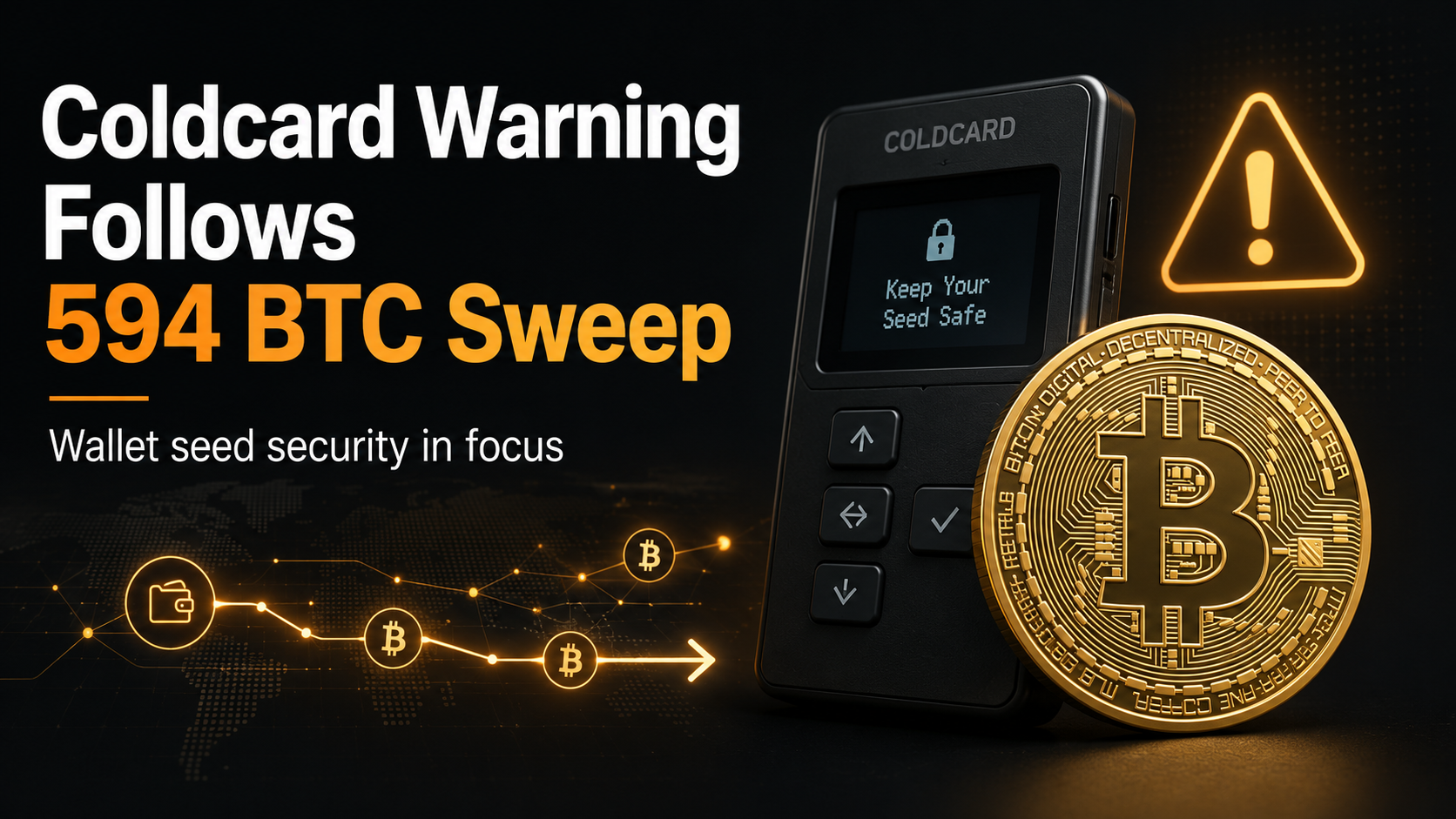
Coldcard Mk3 警告紧随 3800 万美元 Bitcoin 被扫荡事件,但原因仍未确认

Coldcard Mk3 警告紧随 3800 万美元 Bitcoin 被扫荡事件,但原因仍未确认

比特币硬件钱包制造商Coinkite已警告用户,Coldcard设备存在种子生成问题,影响从4.0.1版本起的所有Mk3固件版本。该警告是在安全研究人员调查一起涉及594.48 BTC(约合3,800万美元)的协同转移事件时发出的。然而,目前尚无公开的技术证据证实Coldcard的问题导致了这些转账。


Bitget 将退出日本:面向日本居民的服务将于 2026 年 12 月 31 日终止

Bitget 将退出日本:面向日本居民的服务将于 2026 年 12 月 31 日终止

Bitget 将于 2026 年 12 月 31 日终止对日本用户的服务。受影响的用户必须在截止日期前平仓并提取资产。

万事达完成对BVNK的收购,交易金额高达18亿美元——稳定币进入全球支付核心

万事达完成对BVNK的收购,交易金额高达18亿美元——稳定币进入全球支付核心

万事达于2026年8月3日完成了对稳定币基础设施提供商BVNK的收购,此前已于三月宣布该交易。

DEX对CEX现货交易量比率达24%,中心化交易所活动减弱

DEX对CEX现货交易量比率达24%,中心化交易所活动减弱

根据 The Block 的当前数据系列,2026年7月,去中心化交易所现货交易量与中心化交易所现货交易量之比达到24.14%。该数字并不意味着 DEX 控制了合并现货市场的24.14%:它意味着 DEX 交易量相当于数据集中包含的 CEX 交易量的24.14%。与此同时,DEX 现货交易量环比下降约26%,至约1307.7亿美元,为近两年来最低水平。

相关文章

查看更多
什么是稳定币?初学者的完整指南

什么是稳定币?初学者的完整指南

你是否对稳定币感到好奇,但发现加密货币的概念难以理解?你并不孤单。数字货币的世界可能很复杂,尤其对新手来说。这本全面的指南将以清晰、简单的术语拆解关于稳定币的所有知识。从了解稳定币是什么以及它们是如何运作的,到学习不同类型的稳定币以及如何安全使用它们,我们都为你准备好了。无论你是希望保护资产免受市场波动影响、进行国际汇款,还是单纯想扩展对数字货币的知识,这本指南将向你提供在稳定币领域自信导航所需的
XRP 会销毁代币吗?会,但原因和你想的不一样

XRP 会销毁代币吗?会,但原因和你想的不一样

如果你手上持有 XRP,或正考虑买入,大概都看过网上关于"XRP 销毁"的争论,也好奇这件事到底在吵什么。简短的答案是:没错,XRP 确实会销毁代币——每笔交易都会销毁极少量——但原因和多数人以为的并不一样。 本文将说明 XRP 销毁机制实际上如何运作、什么时候销毁多少、为什么销毁速度会逐年剧烈波动,以及这些数字是否该纳入你对 XRP 的价值判断。没有术语堆砌,也没有炒作——只有机制本身、附上日期
XRP 会涨吗?没有人愿意告诉你的诚实答案

XRP 会涨吗?没有人愿意告诉你的诚实答案

几乎每一位 XRP 持有者,迟早都会在搜索栏里打下同一个问题:XRP 会涨吗? 而这个问题诚实的难处在于——任何人只要用一句肯定的"会"加上一个保证的目标价来回答你,他卖给你的其实是一种并不存在的确定性。 真正存在的,是一份决定 XRP 走向的简短清单,而且这些力量并不会月月改变。 本文将说明这些力量、你该如何自行研判,以及历史上 XRP 在大跌之后的复苏究竟是什么样子。 刚接触 XRP?建议先从

XRP 能涨到 1,000 美元吗?数学说不可能,原因就在这里

XRP 能涨到 1,000 美元吗?数学说不可能,原因就在这里

每一轮加密货币多头行情,都会让同一个问题重新浮出水面:XRP 有可能涨到 1,000 美元吗? 这是整个加密货币领域被搜索次数最多的价格目标之一,而简短的答案是:不可能——至少在 XRP 目前的供应量之下,完全不可能。 这篇指南会带你走完真正的数学运算,让你清楚看到原因。 我们会说明 1,000 美元的 XRP 会把它的市值推到什么水平、为什么即使银行全面采用也达不到那个价位,以及有哪一组极端条件

注册MEXC账号
注册 & 获得高达10,000 USDT奖金
你的华尔街DNA是什么?
你的华尔街DNA是什么?你的华尔街DNA是什么?
6种投资人格测试,100%中奖——$30,000等值NVDAX等你来拿!