The Ethereum network is one of the most important technologies in crypto — and it does far more than move money. Whether you're curious about what powers USDT and USDC, how smart contracts work, orThe Ethereum network is one of the most important technologies in crypto — and it does far more than move money. Whether you're curious about what powers USDT and USDC, how smart contracts work, or
新手学院/Cryptocurrency Knowledge/Hot Concepts/Ethereum Ne... It Matters

Ethereum Network: What It Is, How It Works, and Why It Matters

中阶
Apr 22, 2026James Mitchell
0m
Smart Blockchain
SMART$0.00502-0.39%
USDCoin
USDC$1.00013--%
Movement
MOVE$0.009094-1.33%
The Ethereum network is one of the most important technologies in crypto — and it does far more than move money.
Whether you're curious about what powers USDT and USDC, how smart contracts work, or why gas fees go up and down, this guide covers everything you need to know about the Ethereum blockchain network in plain English.

Key Takeaways
  • The Ethereum network is a decentralized blockchain that runs smart contracts and powers thousands of applications, tokens, and DeFi protocols.
  • Ethereum operates on Proof-of-Stake consensus, where validators lock up ETH to verify transactions and earn rewards — no mining required.
  • ERC-20 is the token standard built on the Ethereum network, and major stablecoins like USDT and USDC both use it for every transfer.
  • The Dencun upgrade (March 2024) introduced blob transactions via EIP-4844, dramatically cutting fees on Layer 2 networks.
  • Pectra, Ethereum's largest upgrade to date, went live on May 7, 2025, improving staking flexibility, blob capacity, and smart wallet functionality.
  • Gas fees on the Ethereum mainnet fluctuate with network congestion — Layer 2 solutions like Base now offer the most cost-effective way to transact.

What Is the Ethereum Network?

The Ethereum network is a decentralized blockchain network launched in July 2015 by Vitalik Buterin and seven co-founders.
At its core, it is made up of thousands of independent computers — called nodes — spread across the world.
These nodes work together to store data, run programs, and record every transaction on a shared public ledger that no single person or company controls.
Unlike Bitcoin, which was designed mainly as digital money, Ethereum was built as a programmable blockchain.
That programmability is what makes the Ethereum main network the foundation for thousands of applications, digital assets, and decentralized services running around the clock.


How the Ethereum Network Works: Nodes, Validators, and the EVM

Every time you send ETH or interact with an app on Ethereum, your transaction gets broadcast to the network and picked up by validators.
Validators are people who lock up their ETH — a process called staking — to earn the right to verify and add new transactions to the blockchain.
Each confirmed batch of transactions is packaged into a block, processed by the Ethereum Virtual Machine (EVM), and permanently recorded across all nodes.
The EVM is the engine of the network — it's what allows Ethereum to run smart contracts consistently, no matter where in the world a node is located.
To use the Ethereum network, you simply connect a wallet like MetaMask, which handles all the technical communication between you and the blockchain.


Smart Contracts and ERC-20 Tokens on the Ethereum Network


What Are Smart Contracts?


Smart contracts are self-executing programs stored directly on the Ethereum network.
Once their conditions are met — say, sending payment when an item is delivered — they execute automatically, with no need for a bank, lawyer, or middleman.
This is what makes Ethereum the backbone of DeFi (decentralized finance) and NFT platforms worldwide.


ERC-20 Tokens — USDT, USDC, and More


Major stablecoins like USDT on the Ethereum network and USDC on the Ethereum network are both ERC-20 tokens, meaning they use Ethereum's infrastructure for every transfer.
When you send USDT or USDC using the ERC-20 option, you are using the Ethereum network — and you will pay an Ethereum network fee to do so.


Coins and Tokens on the Ethereum Network


Beyond stablecoins, thousands of coins on the Ethereum network exist — from DeFi governance tokens to meme coins and wrapped assets like Wrapped BTC (WBTC).
All of them rely on Ethereum's smart contract layer and pay network fees in ETH.
This is why ETH itself has real utility: it's the fuel the entire ecosystem runs on.


Ethereum Network Upgrades: Dencun, Pectra, and What's Next

The Ethereum network has gone through several major upgrades, each one making it faster, cheaper, or more secure.
The most significant shift was The Merge in September 2022, when Ethereum switched from Proof-of-Work to Proof-of-Stake, cutting energy consumption by approximately 99.95%.
In March 2024, the Dencun upgrade introduced blob transactions through EIP-4844, which dramatically reduced fees on Layer 2 networks by giving rollups a cheaper way to post data to the Ethereum mainnet.
Pectra doubled blob capacity from 3 to 6 per block, improved staking flexibility by raising the validator cap from 32 ETH to 2,048 ETH, and introduced smart wallet features that allow regular accounts to temporarily behave like smart contracts.
Looking ahead, the next planned network upgrade — Glamsterdam — targets parallel transaction execution and higher block gas limits, with the goal of further improving Ethereum's throughput and decentralization.


Ethereum Network Fees: What Gas Costs and How to Reduce Them

Every transaction on the Ethereum network requires a gas fee, paid in ETH.
Gas is a unit that measures how much computing work a transaction needs — simple transfers cost less gas, while complex smart contract interactions cost more.
The Ethereum network fee changes based on congestion: when many people are using the network at the same time, validators prioritize higher-paying transactions, and fees spike.
This is what people mean when they ask why the Ethereum network fee is so high — it's supply and demand for block space, not a fixed price set by anyone.
The good news is that Ethereum network congestion on the mainnet has eased significantly since EIP-4844, and Layer 2 networks like Base now process most everyday transactions at a fraction of mainnet cost — fees that were once several dollars are now often just cents.
If you want to reduce your Ethereum network fees, using a Layer 2 solution is the most effective approach available today.
You can also use an Ethereum network fee calculator to estimate costs before sending, which helps you decide whether to transact on the mainnet or switch to a Layer 2 option.


FAQ

What is the Ethereum network?
The Ethereum network is a decentralized blockchain platform that runs smart contracts, supports thousands of tokens, and powers most of the world's DeFi and NFT applications.


Is ERC-20 the Ethereum network?
ERC-20 is a token standard built on the Ethereum network, not the network itself — but all ERC-20 tokens use Ethereum's infrastructure.


Is USDT on the Ethereum network?
Yes — USDT is available as an ERC-20 token, meaning it runs on the Ethereum network when you select the ERC-20 option during transfers.


What is gas in the Ethereum network?
Gas is the unit that measures how much computing power a transaction or smart contract requires, and it determines how much you pay in ETH as a fee.


Why is the Ethereum network fee so high?
Fees rise during periods of high network congestion when more users compete for limited block space, driving up the price validators will accept.


How does the Ethereum network work?
Validators stake ETH to earn the right to verify transactions, which are then packaged into blocks and recorded permanently across thousands of nodes worldwide.


Is USDC on the Ethereum network?
Yes — USDC is an ERC-20 stablecoin issued by Circle that operates natively on the Ethereum network.


Conclusion

The Ethereum network is the engine behind much of what makes crypto useful — from stablecoins and DeFi to NFTs and programmable money.
With major upgrades like Dencun and Pectra already live, and more improvements on the horizon, Ethereum continues to evolve as the world's leading smart contract platform.
Ready to get started? Trade ETH on MEXC and explore the full Ethereum ecosystem today.
  • A network of nodes, contracts, and value — see our full Ethereum guide for the view from above.
市场机遇
Smart Blockchain 图标
Smart Blockchain实时价格 (SMART)
$0.00502
$0.00502$0.00502
+0.05%
USD
Smart Blockchain (SMART) 实时价格图表

热门加密动态

查看更多
CoinEx智能链(CSC)即将关停:CET持币者与用户必读指南

CoinEx智能链(CSC)即将关停:CET持币者与用户必读指南

概述 随着加密货币行业基础设施的快速迭代与竞争加剧,交易所自建独立公链的黄金时代正在加速落幕。作为 CoinEx 旗下兼容以太坊虚拟机的去中心化公链,CoinEx Smart Chain 正式启动网络终止运行程序,相关验证节点、公共 RPC 接口与官方跨链桥接服务均已进入停运倒计时。对于在非托管钱包、去中心化交易协议及流动性池中持有 CET 或 CSC 链上代币的用户而言,这构成了一个极其关键的资

巨鲸悄悄建仓?链上数据揭示 Beeg Blue Whale (BEEG) 背后的聪明钱动向

巨鲸悄悄建仓?链上数据揭示 Beeg Blue Whale (BEEG) 背后的聪明钱动向

链上数据显示,多个巨鲸钱包在2026年Q1持续积累 BEEG 代币,持币超过90天的地址比例大幅攀升。本文深度解读 Smart Money 流向信号,并告诉你为什么 MEXC 是交易 BEEG 的最优平台。 Key Takeaways 链上数据显示 BEEG 持币超过90天的地址比例从2025年底的34%攀升至51%,呈现典型的"钻石手"吸筹信号 多个百万美元级巨鲸钱包在低位持续建仓,平均买入价低

BEEG链上数据深度解析:2026年聪明钱钱包是否正在积累?

BEEG链上数据深度解析:2026年聪明钱钱包是否正在积累?

深度解读BEEG链上数据,分析智能钱包accumulation趋势。探索BEEG on-chain metrics、smart money行为模式,以及为何MEXC是交易BEEG的最佳选择。 Key Takeaways BEEG链上数据显示智能钱包持续accumulation,大户地址数量呈上升趋势 链上交易量与持仓集中度指标揭示机构投资者兴趣增加 Smart money钱包平均持仓周期延长,显示

链上数据揭秘:2026年Q1巨鲸为何疯狂囤积BEEG?Smart Money追踪完全指南

链上数据揭秘:2026年Q1巨鲸为何疯狂囤积BEEG?Smart Money追踪完全指南

深度解析2026年BEEG链上数据:巨鲸地址持续建仓,holder数创新高。手把手教你使用Whale Tracking工具,跟随聪明钱布局。了解为何专业交易者选择MEXC交易BEEG。 Key Takeaways 2026年1月BEEG holder地址数突破历史新高,链上数据显示明显的机构级买入信号 多个千万美元级别巨鲸钱包在Q1持续增持BEEG,平均持仓周期延长至3个月以上 掌握Ethersc

热门新闻

查看更多
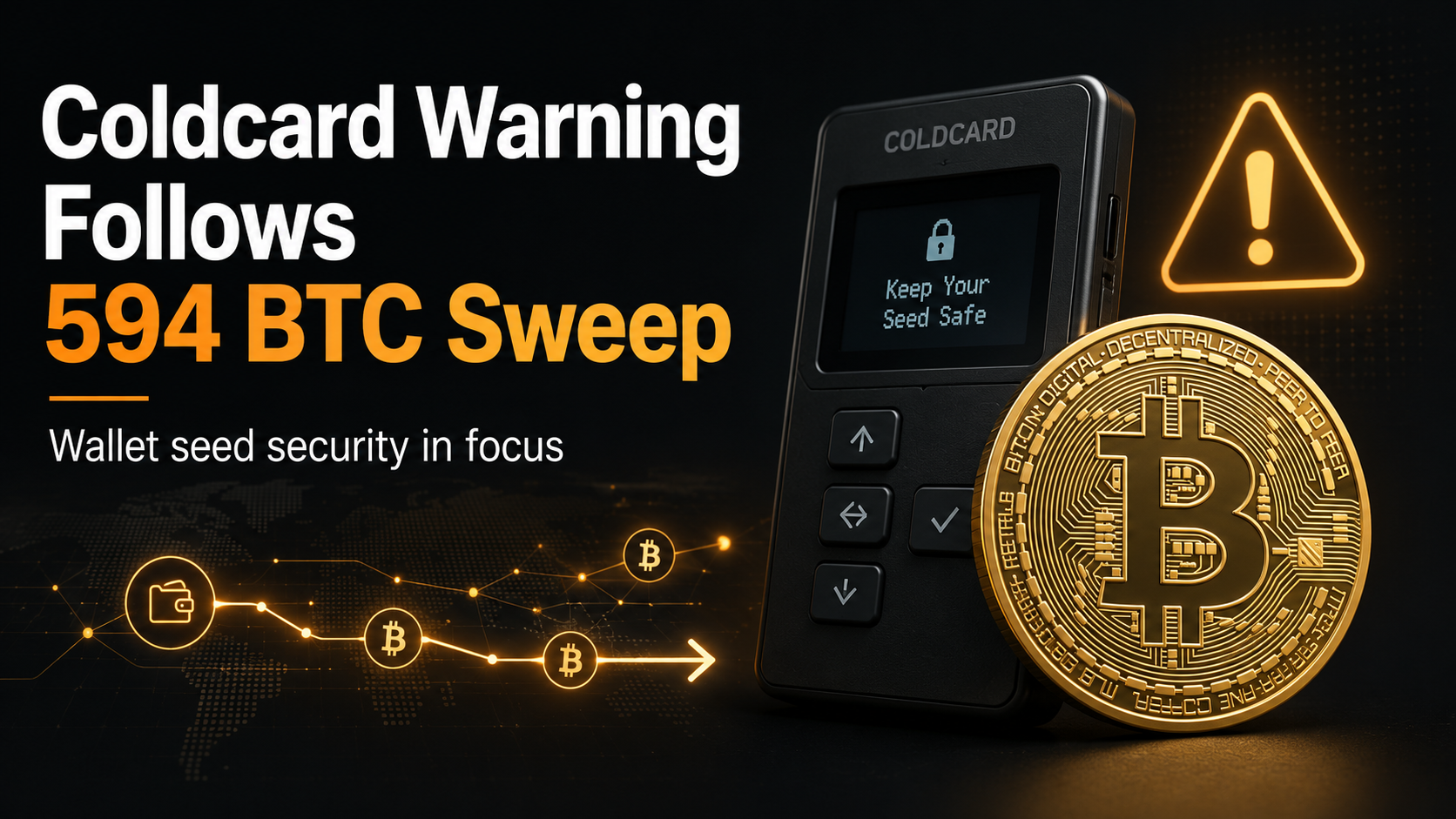
Coldcard Mk3 警告紧随 3800 万美元 Bitcoin 被扫荡事件,但原因仍未确认

Coldcard Mk3 警告紧随 3800 万美元 Bitcoin 被扫荡事件,但原因仍未确认

比特币硬件钱包制造商Coinkite已警告用户,Coldcard设备存在种子生成问题,影响从4.0.1版本起的所有Mk3固件版本。该警告是在安全研究人员调查一起涉及594.48 BTC(约合3,800万美元)的协同转移事件时发出的。然而,目前尚无公开的技术证据证实Coldcard的问题导致了这些转账。

Bitget 将退出日本:面向日本居民的服务将于 2026 年 12 月 31 日终止

Bitget 将退出日本:面向日本居民的服务将于 2026 年 12 月 31 日终止

Bitget 将于 2026 年 12 月 31 日终止对日本用户的服务。受影响的用户必须在截止日期前平仓并提取资产。

万事达完成对BVNK的收购,交易金额高达18亿美元——稳定币进入全球支付核心

万事达完成对BVNK的收购,交易金额高达18亿美元——稳定币进入全球支付核心

万事达于2026年8月3日完成了对稳定币基础设施提供商BVNK的收购,此前已于三月宣布该交易。

DEX对CEX现货交易量比率达24%,中心化交易所活动减弱

DEX对CEX现货交易量比率达24%,中心化交易所活动减弱

根据 The Block 的当前数据系列,2026年7月,去中心化交易所现货交易量与中心化交易所现货交易量之比达到24.14%。该数字并不意味着 DEX 控制了合并现货市场的24.14%:它意味着 DEX 交易量相当于数据集中包含的 CEX 交易量的24.14%。与此同时,DEX 现货交易量环比下降约26%,至约1307.7亿美元,为近两年来最低水平。

相关文章

查看更多
什么是稳定币?初学者的完整指南

什么是稳定币?初学者的完整指南

你是否对稳定币感到好奇,但发现加密货币的概念难以理解?你并不孤单。数字货币的世界可能很复杂,尤其对新手来说。这本全面的指南将以清晰、简单的术语拆解关于稳定币的所有知识。从了解稳定币是什么以及它们是如何运作的,到学习不同类型的稳定币以及如何安全使用它们,我们都为你准备好了。无论你是希望保护资产免受市场波动影响、进行国际汇款,还是单纯想扩展对数字货币的知识,这本指南将向你提供在稳定币领域自信导航所需的
XRP 会销毁代币吗?会,但原因和你想的不一样

XRP 会销毁代币吗?会,但原因和你想的不一样

如果你手上持有 XRP,或正考虑买入,大概都看过网上关于"XRP 销毁"的争论,也好奇这件事到底在吵什么。简短的答案是:没错,XRP 确实会销毁代币——每笔交易都会销毁极少量——但原因和多数人以为的并不一样。 本文将说明 XRP 销毁机制实际上如何运作、什么时候销毁多少、为什么销毁速度会逐年剧烈波动,以及这些数字是否该纳入你对 XRP 的价值判断。没有术语堆砌,也没有炒作——只有机制本身、附上日期
XRP 会涨吗?没有人愿意告诉你的诚实答案

XRP 会涨吗?没有人愿意告诉你的诚实答案

几乎每一位 XRP 持有者,迟早都会在搜索栏里打下同一个问题:XRP 会涨吗? 而这个问题诚实的难处在于——任何人只要用一句肯定的"会"加上一个保证的目标价来回答你,他卖给你的其实是一种并不存在的确定性。 真正存在的,是一份决定 XRP 走向的简短清单,而且这些力量并不会月月改变。 本文将说明这些力量、你该如何自行研判,以及历史上 XRP 在大跌之后的复苏究竟是什么样子。 刚接触 XRP?建议先从

XRP 能涨到 1,000 美元吗?数学说不可能,原因就在这里

XRP 能涨到 1,000 美元吗?数学说不可能,原因就在这里

每一轮加密货币多头行情,都会让同一个问题重新浮出水面:XRP 有可能涨到 1,000 美元吗? 这是整个加密货币领域被搜索次数最多的价格目标之一,而简短的答案是:不可能——至少在 XRP 目前的供应量之下,完全不可能。 这篇指南会带你走完真正的数学运算,让你清楚看到原因。 我们会说明 1,000 美元的 XRP 会把它的市值推到什么水平、为什么即使银行全面采用也达不到那个价位,以及有哪一组极端条件

注册MEXC账号
注册 & 获得高达10,000 USDT奖金
您的稳定币真的安全吗?
您的稳定币真的安全吗?您的稳定币真的安全吗?
了解 USDT、USDC、OpenUSD 及 USD1 的风险