Ethereum has evolved from an experimental blockchain into the backbone of decentralized finance, NFTs, and smart contracts. With ETH trading around $2,350 in May 2026 — well below its August 2025Ethereum has evolved from an experimental blockchain into the backbone of decentralized finance, NFTs, and smart contracts. With ETH trading around $2,350 in May 2026 — well below its August 2025
新手学院/Cryptocurrency Knowledge/Hot Concepts/How High Wi...r 2026-2030

How High Will Ethereum Go? Price Predictions for 2026-2030

中阶
May 11, 2026James Mitchell
0m
4
4$0.021986-5.20%
BULL
BULL$----%
以太坊
ETH$2,661.55+3.37%
Ethereum has evolved from an experimental blockchain into the backbone of decentralized finance, NFTs, and smart contracts. With ETH trading around $2,350 in May 2026 — well below its August 2025 all-time high of $4,946 and still searching for a sustained recovery — the question on every investor's mind is whether the next big move is up, and how far it could go.
This article analyzes Ethereum's current position, examines price drivers, and provides realistic ethereum price prediction targets for 2026 and 2030. You'll discover expert forecasts and fundamental factors shaping ETH's future value.

Understand Ethereum's technology behind these predictions.


Key Takeaways
  • Ethereum trades around $2,350 in May 2026, down from its August 2025 all-time high of $4,946, with the Glamsterdam upgrade targeting mid-2026 as the next major scalability milestone.
  • Approximately 30% of all ETH is now staked across 1.1 million active validators, while spot ETFs have accumulated $11.6 billion in cumulative net inflows — including BlackRock's new staking-enabled ETHB product launched in March 2026.
  • Expert predictions for 2026 range from $3,175 (Citi) to $12,000 (Tom Lee base case), with most serious forecasters clustering between $4,500 and $7,500 under base-case conditions.
  • By 2030, analyst forecasts for Ethereum range from roughly $8,000 on the conservative end to $40,000 at the most bullish, with base cases clustering around $8,000-$12,000.
  • Key growth drivers include DeFi dominance with ETH holding approximately 68% of global DeFi TVL, the upcoming Glamsterdam upgrade, and Ethereum's role as the settlement layer for a record $8 billion in tokenized U.S. Treasuries.
  • Competition from faster blockchains and regulatory uncertainty remain the primary risks that could limit Ethereum's upside potential.

Ethereum's Current Market Position in 2026

As of May 2026, Ethereum trades around $2,350 — down roughly 53% from its all-time high of $4,946 set in August 2025, but recovering from a February low near $1,743.
The second-largest cryptocurrency by market cap holds a valuation of approximately $284 billion, with a circulating supply of around 121 million ETH.
The eight-month price swing — from a record high to a near-bear bottom and back into consolidation — reflects just how much has changed since the article was first published.
Ethereum's two major 2025 upgrades reshaped its infrastructure significantly.
Both upgrades are now live and functioning — and they set the stage for 2026's biggest catalyst: the Glamsterdam hard fork.
On the institutional side, spot Ethereum ETFs have accumulated approximately $11.6 billion in cumulative net inflows as of early April 2026, with BlackRock's iShares Ethereum Trust (ETHA) commanding over $6.5 billion in assets.
Staking participation has also continued to grow.
Approximately 35.86 million ETH — about 29–30% of total supply — is currently staked across roughly 1.1 million active validators, generating annual yields of 2.8–3.5%.
That locked supply, combined with ETH exchange reserves sitting at multi-year lows, creates real structural supply pressure that no simple price chart captures.

What's Driving Ethereum Price Right Now?


1. Network Adoption and DeFi Dominance


Ethereum processes trillions in transaction value annually and supports over 20 million monthly active users across its ecosystem.
The network holds approximately 68% of global DeFi total value locked (TVL), reinforcing its position as the dominant DeFi platform in cryptocurrency — a share that has held even as the raw TVL figure has fluctuated with ETH's price.
As more developers build applications on Ethereum—especially in decentralized finance, NFT marketplaces, and gaming—demand for ETH rises naturally.
The network effect creates a virtuous cycle where increased utility drives higher token value, attracting more builders and users to the ecosystem.


2. Staking Rewards and Supply Dynamics


Approximately 30% of all ETH — roughly 35.86 million tokens — is now staked, removing it from liquid supply and reducing selling pressure.
This staking mechanism currently provides holders with roughly 2.8-3.5% annual yields — and with staking-enabled ETFs now available through BlackRock's ETHB, traditional investors can access that yield without holding ETH directly.
The EIP-1559 fee-burning mechanism introduced in 2021 continues destroying a portion of transaction fees, creating deflationary pressure during periods of high network activity.
While the Pectra and Fusaka upgrades in 2025 reduced base-layer fees and slowed the burn rate, the combination of staking lockup and periodic fee burning still creates favorable supply dynamics for long-term price appreciation.


3. Institutional Investment and ETF Flows


U.S.-listed spot ETH ETFs ended a six-month outflow streak in April 2026, posting $356 million in new inflows — a meaningful reversal that signals institutional appetite for ETH is rebuilding after a difficult first quarter.
BlackRock, Fidelity, and other major asset managers now offer regulated exposure to ethereum — including BlackRock's ETHB, which launched on Nasdaq in March 2026 as the first major U.S. staking-enabled ETH ETF, distributing approximately 1.9-2.2% net annual yield to investors monthly.
This institutional infrastructure legitimizes ETH as an investment-grade asset class and provides seamless access for traditional investors who previously faced barriers to crypto ownership.
Institutional participation in ETH price discovery has deepened significantly, with corporate treasuries including BitMine — the largest Ethereum-focused treasury company — holding over 4% of total ETH supply and on track for a 5% accumulation target.


4. Scaling Solutions and Technical Upgrades


Ethereum's roadmap includes continued scaling improvements through Layer-2 rollups and two major 2026 upgrades: Glamsterdam, targeting mid-2026, and Hegota, scheduled for the second half of 2026.
Fusaka is already live since December 2025 — the 2026 focus now shifts to Glamsterdam and Hegota as the two active upgrades still ahead.
These technical improvements make ethereum more competitive against faster blockchains while maintaining its security and decentralization advantages.
As user experience improves and costs decline, adoption barriers fall away, potentially driving significant growth in network activity and ETH demand.


5. Competition and Market Risks


Ethereum faces pressure from faster Layer-1 blockchains like Solana and Avalanche that offer cheaper transactions and different technical trade-offs.
If these competitors capture developer mindshare or host breakout applications, ethereum's market dominance could weaken — and the L2 fee problem cuts both ways: Standard Chartered estimated that Coinbase's Base network alone had removed roughly $50 billion from ETH's market capitalization by routing fee revenue away from the mainnet.
Additionally, regulatory uncertainty remains a concern as governments worldwide develop frameworks for cryptocurrency oversight.
Harsh rules around staking, DeFi protocols, or token classifications could slow ethereum's growth trajectory or push activity to less-regulated jurisdictions.


How High Will Ethereum Go in 2026?

The 2026 ethereum price prediction picture is more complicated than a simple bullish or bearish call — ETH has already dropped 53% from its August 2025 peak, and analysts are sharply divided on how far and how fast it recovers.
Arthur Hayes has offered aggressive long-term targets for ETH, though most current institutional forecasts for 2026 cluster well below those levels — with the serious bull case sitting closer to Tom Lee's $12,000 base case, which itself depends on Bitcoin reaching $250,000 first.
Based on current analyst consensus, a realistic 2026 range under base-case conditions sits between $4,500 and $7,500, with upside above $10,000 requiring either a Glamsterdam upgrade that outperforms expectations or a macro environment that turns sharply risk-on.
Key factors determining whether ethereum reaches these targets include continued ETF inflows, successful implementation of scaling upgrades, growing DeFi adoption, and favorable macroeconomic conditions.
ETH first needs to reclaim the $2,400-$2,500 zone — its current near-term resistance — before the $3,000 psychological level and, beyond that, the $4,500-$5,000 range where the August 2025 ATH cycle peak created heavy overhead supply.


What Analysts Are Saying About Ethereum's 2026 Price


The spread between analyst forecasts for 2026 is wider than it has ever been — and that gap tells you something important about how uncertain this moment actually is.
Kendrick called out one key upside trigger: passage of the U.S. CLARITY Act, which would create a regulatory framework for digital assets and specifically unlock the next phase of DeFi.
At the same time, the bank raised its long-dated forecast, introducing a new $40,000 price target for end-2030 — a figure based on Ethereum's structural advantages in stablecoins, tokenized real-world assets, and DeFi.
Tom Lee of Fundstrat has a base case of $12,000 for 2026, built on Bitcoin reaching $250,000 and the ETH/BTC ratio returning to its eight-year average.
His bull case reaches $22,000 — but only if the ETH/BTC ratio climbs back toward its 2021 highs, which would require a significant macro and institutional shift.
On the more cautious end, Citi's analyst team places a 2026 target around $3,175, reflecting ongoing concern about Layer-2 networks pulling fee revenue away from the Ethereum mainnet.
Fundstrat's own internal modeling — separate from Lee's bull thesis — projects a base case of around $4,500 for year-end 2026.
Ryan Lee of Bitget Research targets $7,000, pointing to real-world asset adoption as the primary accelerant.
Finder's panel of 45-plus analysts set an average high prediction of $5,891 for the remainder of 2026, with a panel average low of $2,310.
The honest takeaway: most serious forecasters see ETH ending 2026 somewhere between $4,500 and $7,500 under base-case conditions, with upside above $10,000 requiring either the Glamsterdam upgrade to outperform expectations or a macro environment that turns sharply risk-on.


The Glamsterdam Upgrade: Ethereum's Most Important 2026 Catalyst


Ethereum's next major hard fork — called Glamsterdam — is currently targeting mid-2026, with a June deployment date that developers have been working toward since the Fusaka upgrade went live in December 2025.
This is not a minor patch.
For context, Ethereum currently processes roughly 15–30 transactions per second at the base layer.
The upgrade also introduces enshrined Proposer-Builder Separation (ePBS), which decentralizes block building and reduces the concentration of MEV — the practice of miners extracting extra value by reordering transactions.
For everyday users, what this means practically is faster transactions, lower gas fees, and an Ethereum base layer that can actually compete head-to-head with Solana and other faster chains on throughput.
Ethereum historically sees price appreciation in the weeks leading up to major protocol upgrades — The Merge in 2022 and the Shapella upgrade in 2023 both triggered pre-event rallies.
If Glamsterdam ships on schedule and delivers its promised throughput gains, Yahoo Finance's analysis estimates ETH could push back above $3,000 by year-end and target its $4,950 all-time high by 2027.
The risk is execution.
If the upgrade is delayed or encounters testnet issues, the market tends to reprice that uncertainty quickly — and several analysts have noted that technical delay is one of the few things that could push ETH back toward the $2,000–$2,200 range in the near term.


How High Will Ethereum Go in 2030? Bull, Base, and Bear Scenarios

By 2030, Ethereum could look very different from what it is today — and so could its price.
The range of legitimate analyst forecasts for 2030 ETH runs from roughly $8,000 on the conservative end to $40,000 at the most bullish — a gap that reflects just how much uncertainty exists around the next four years of crypto adoption, regulation, and macroeconomics.
Here's how the three scenarios break down.


Bull Case: $30,000 – $40,000


The bank also forecasts both the stablecoin and tokenized RWA markets reaching $2 trillion by 2028, with the majority of that activity settling on Ethereum.
These projections share a common assumption: that Ethereum becomes the primary settlement layer for a multi-trillion-dollar tokenized financial system — essentially replacing much of the back-end infrastructure of global finance.


Base Case: $8,000 – $12,000


Yahoo Finance's 2030 analysis, incorporating multiple analyst models, places the base case between $8,000 and $12,000 — assuming Glamsterdam works as designed, macro conditions stabilize, and Ethereum holds its position as the go-to infrastructure layer for tokenized assets and stablecoins.
This scenario requires Ethereum to successfully defend its DeFi and developer market share against Solana and other Layer-1 competitors while the Glamsterdam upgrade restores enough L1 fee revenue to push ETH back toward deflationary dynamics.


Bear Case: $5,000 – $8,000


If Layer-2 networks continue siphoning fee revenue from the Ethereum mainnet without Glamsterdam fixing the economics, or if regulatory action targets staking ETFs and DeFi protocols, the bull case evaporates.
Conservative estimates from analysts at Changelly and Traders Union cluster around $5,000–$8,000 by 2030 — still significant upside from today's price, but far short of what the headline forecasters are projecting.
The key variable almost every analyst agrees on: Ethereum's staking penetration rate and its role in the tokenized asset economy will be the dominant price driver by 2030, not speculative trading flows.
Ethereum's 189 million non-empty wallet addresses — 320% more than Bitcoin's 59 million — give it a user base that is genuinely hard to replicate from scratch.


Frequently Asked Questions

Will Ethereum recover?
ETH already recovered from its February 2026 low near $1,743 and is trading around $2,350 as of May 2026. Whether it recovers toward its $4,946 all-time high depends primarily on the Glamsterdam upgrade delivering on schedule, sustained ETF inflows, and broader macro conditions turning risk-on. Most analysts see a path to $3,000-$4,500 by end-2026 if those factors align.


Will Ethereum go up in 2026?
ETH hit an all-time high of $4,946 in August 2025 before dropping sharply to near $1,743 in February 2026. Most analysts now expect a recovery through 2026, with price targets ranging from $4,500 to $7,500 under base-case conditions, depending on the Glamsterdam upgrade, ETF inflows, and macroeconomic conditions.


How high will Ethereum go in the next bull run?
Most analysts peg the bull case for the current cycle between $7,500 and $12,000 — with Standard Chartered at $7,500 for end-2026 and Tom Lee's base case at $12,000. The $20,000 range requires the ETH/BTC ratio to return to its 2021 highs, which most forecasters treat as an optimistic scenario rather than a base case.


Can Ethereum reach $10,000?
Yes, ethereum reaching $10,000 is realistic based on institutional investment trends, network fundamentals, and expert forecasts for 2026-2027.


What will Ethereum be worth in 2030?
Analyst forecasts for 2030 range from roughly $8,000 on the conservative end to $40,000 at the most bullish (Standard Chartered). Base-case models, including Finder's panel of 45-plus analysts, center around $11,712.


Is Ethereum a good long-term investment?
Ethereum offers strong fundamentals through DeFi dominance, institutional adoption, and infrastructure utility, though cryptocurrency investments carry significant volatility risks.


How high will Ethereum Classic go?
Ethereum Classic (ETC) is a separate blockchain that split from Ethereum in 2016 and runs on proof-of-work mining rather than Ethereum's proof-of-stake model. It has no staking yield, no ETF products, and a much smaller developer ecosystem. ETC typically trades at a fraction of ETH's price and does not share Ethereum's institutional adoption drivers — making direct price comparisons between the two misleading.


Conclusion

So, how high will ethereum go? From today's price of around $2,350, the path forward depends heavily on the Glamsterdam upgrade, sustained ETF inflows, and macro conditions. Most analysts see base-case targets between $4,500 and $7,500 for 2026, with Standard Chartered's $40,000 representing the most bullish long-term view for 2030 and conservative models clustering around $8,000-$12,000 by the end of the decade.
Ethereum's role as the settlement layer for $8 billion in tokenized U.S. Treasuries, the arrival of staking-enabled ETFs, and two major upgrades still ahead in 2026 give the fundamental case real footing — even as L2 fee cannibalization and macro uncertainty keep the short-term price path genuinely uncertain.
Ready to position yourself for ethereum's next move? Trade ETH with confidence on MEXC, where you can access spot markets, futures trading, and staking opportunities all in one secure platform.


Read More: 


市场机遇
4 图标
4实时价格 (4)
$0.021986
$0.021986$0.021986
+1.73%
USD
4 (4) 实时价格图表

热门加密动态

查看更多
SEC代币化美股豁免落地,Coinbase等或率先受益【MEXC Alpha Trader-行业日报(2026.09.21)】

SEC代币化美股豁免落地,Coinbase等或率先受益【MEXC Alpha Trader-行业日报(2026.09.21)】

一、宏观与市场情绪 行情数据:BTC $81,015(-0.06%)|ETH $2,656(+1.44%)|SOL $111(+0.94%) 市场情绪:资金费率 +0.0070%|恐惧贪婪指数 70(贪婪) 货币供应:美国7月M2同比增5.41%至23.22万亿美元,为2022年年中以来最快增速。延伸阅读 债务发行:华尔街预计美国将发行约1万亿美元短期债务,借贷成本攀升背景下,大规模短债供给或收紧

9月18日美股盘前报告:英特尔超预期7.08个百分点,点阵图4.1%制约AI算力估值

9月18日美股盘前报告:英特尔超预期7.08个百分点,点阵图4.1%制约AI算力估值

上一个交易日是 9 月 17 日(周四)。三大指数集体反弹:纳斯达克综合涨 1.69% 收 26,418.30 点、标普 500 涨 1.13% 收 7,637.05 点、道琼斯工业涨 0.61% 收 51,778.04 点——周三加息当天先跌,周四全数收回还有余。今日焦点是英特尔(INTC),单日涨 7.67% 收 108.80 美元,市值一天多出 391 亿美元;当天纳斯达克半导体行业均涨只有

Generac股价暴涨18%背后的真相:亚马逊24亿美元数据中心订单解析

Generac股价暴涨18%背后的真相:亚马逊24亿美元数据中心订单解析

概述 随着生成式人工智能基础设施的电力瓶颈全面爆发,华尔街的投资视线已从芯片算力快速转向底层电力设备供应。备用电源与微电网制造龙头 Generac Holdings 股票在 纽约证券交易所 单日暴涨超过 18%,盘中交易量放大至日常均值的三倍以上。推动这一轮估值重构的核心催化剂,是云计算巨头 Amazon 旗下云计算部门 Amazon Web Services 与 Generac 达成了总额预计达

美联储三年来首次加息25基点,点阵图显示紧缩周期延长【MEXC Alpha Trader-行业日报(2026.09.18)】

美联储三年来首次加息25基点,点阵图显示紧缩周期延长【MEXC Alpha Trader-行业日报(2026.09.18)】

一、宏观与市场情绪 行情数据:BTC $76,685(+0.47%)|ETH $2,456(+1.26%)|SOL $102(+3.25%) 市场情绪:资金费率 +0.0066%|恐惧贪婪指数 56(贪婪) 货币政策:美联储全票通过加息25基点至3.75%-4%,为2023年7月以来首次加息,点阵图显示18名官员中16人认为今年仍需至少再加息一次,2026年底利率预期中值升至4.1%。解读:全票通

热门新闻

查看更多
特斯拉2026年第二季度财报日期:发布时间、网络直播及关键指标

特斯拉2026年第二季度财报日期:发布时间、网络直播及关键指标

特斯拉2026年第二季度财报定于2026年7月22日(星期三)美国股市收盘后发布,管理层计划于美国中部时间下午4:30 / 东部时间下午5:30主持实时Q&A网络直播。第二季度的更新和网络直播将通过特斯拉的投资者关系网站提供,并在电话会议后提供存档重播。 这不仅仅是另一个普通的特斯拉财报日。特斯拉已经报告了超预期的交付季度:在2026年第二季度,公司生产了451,758辆汽车,交付了480,126
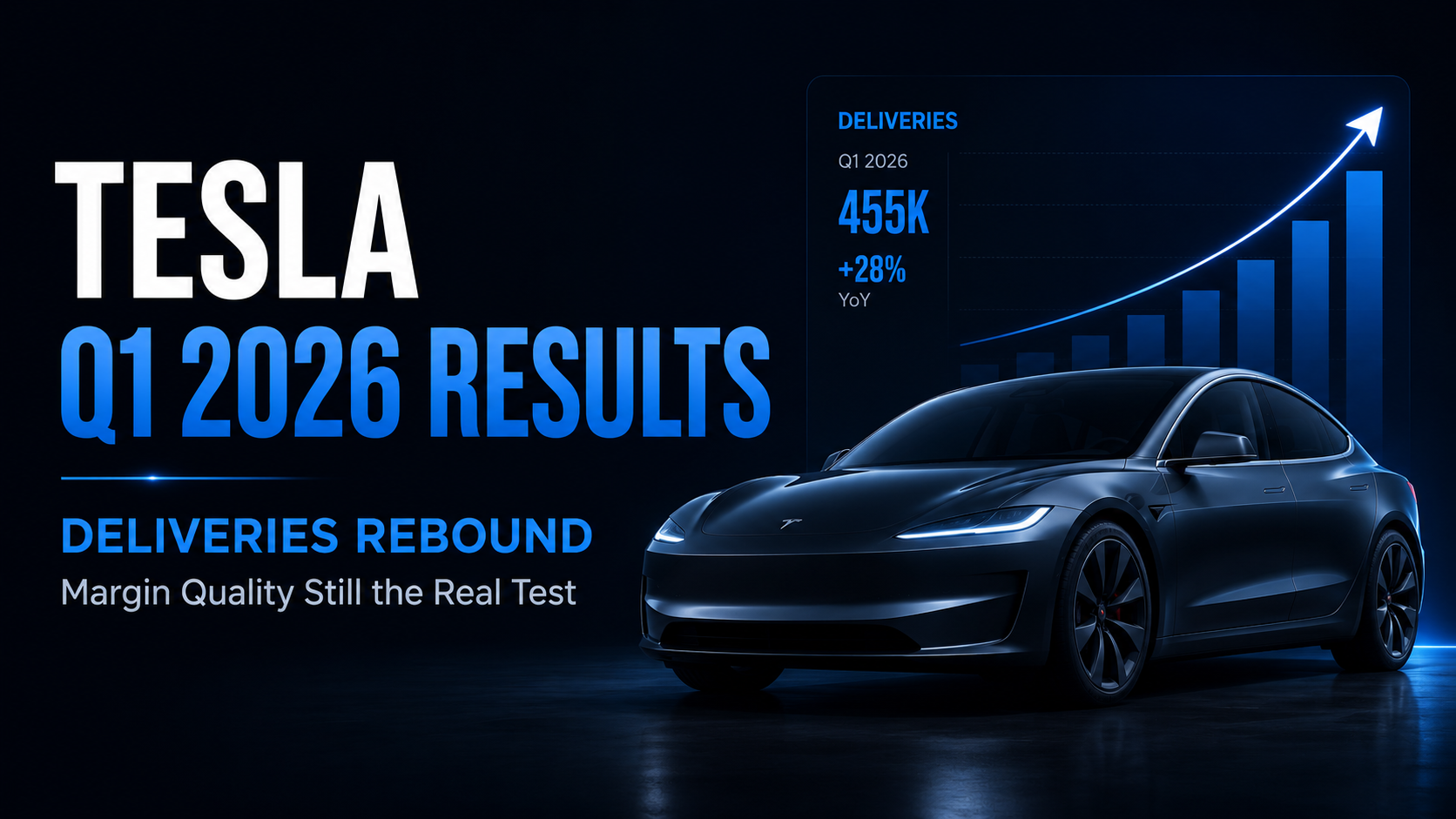
特斯拉2026年第一季度财报回顾:交付量反弹,但利润率质量仍是真正的考验

特斯拉2026年第一季度财报回顾:交付量反弹,但利润率质量仍是真正的考验

特斯拉于2026年4月22日美国股市收盘后公布了其2026年第一季度的财务业绩。该公司本季度交付了358,023辆汽车,创造了224亿美元的总营收,并报告归属于普通股股东的GAAP净利润为4.77亿美元。总GAAP毛利率提升至21.1%,而营业利润率达到4.2%。 核心信号不仅在于特斯拉的交付量从去年同期的疲软基数中恢复。更重要的问题是:更高的交付量、FSD相关营收、更低的单车成本以及改善的汽车毛


苹果 2026 财年第二季度财报回顾:iPhone 营收与服务业务增长维持 EPS 预期

苹果 2026 财年第二季度财报回顾:iPhone 营收与服务业务增长维持 EPS 预期

苹果于 2026 年 4 月 30 日发布了 2026 财年第二季度财报,涵盖截至 2026 年 3 月 28 日的季度。总营收达到 1112 亿美元,同比增长 17%,摊薄后每股收益(EPS)增长 22% 至 2.01 美元。苹果表示,该季度创下了公司 3 月份季度的总营收、iPhone 营收和 EPS 纪录,同时服务业务营收也创下历史新高。 这不仅仅是一份常规的硬件周期财报。苹果第二季度的业绩

Coldcard Mk3 警告紧随 3800 万美元 Bitcoin 被扫荡事件,但原因仍未确认

Coldcard Mk3 警告紧随 3800 万美元 Bitcoin 被扫荡事件,但原因仍未确认

比特币硬件钱包制造商Coinkite已警告用户,Coldcard设备存在种子生成问题,影响从4.0.1版本起的所有Mk3固件版本。该警告是在安全研究人员调查一起涉及594.48 BTC(约合3,800万美元)的协同转移事件时发出的。然而,目前尚无公开的技术证据证实Coldcard的问题导致了这些转账。

相关文章

查看更多
什么是稳定币?初学者的完整指南

什么是稳定币?初学者的完整指南

你是否对稳定币感到好奇,但发现加密货币的概念难以理解?你并不孤单。数字货币的世界可能很复杂,尤其对新手来说。这本全面的指南将以清晰、简单的术语拆解关于稳定币的所有知识。从了解稳定币是什么以及它们是如何运作的,到学习不同类型的稳定币以及如何安全使用它们,我们都为你准备好了。无论你是希望保护资产免受市场波动影响、进行国际汇款,还是单纯想扩展对数字货币的知识,这本指南将向你提供在稳定币领域自信导航所需的

XRP 会销毁代币吗?会,但原因和你想的不一样

XRP 会销毁代币吗?会,但原因和你想的不一样

如果你手上持有 XRP,或正考虑买入,大概都看过网上关于"XRP 销毁"的争论,也好奇这件事到底在吵什么。简短的答案是:没错,XRP 确实会销毁代币——每笔交易都会销毁极少量——但原因和多数人以为的并不一样。 本文将说明 XRP 销毁机制实际上如何运作、什么时候销毁多少、为什么销毁速度会逐年剧烈波动,以及这些数字是否该纳入你对 XRP 的价值判断。没有术语堆砌,也没有炒作——只有机制本身、附上日期

XRP 会涨吗?没有人愿意告诉你的诚实答案

XRP 会涨吗?没有人愿意告诉你的诚实答案

几乎每一位 XRP 持有者,迟早都会在搜索栏里打下同一个问题:XRP 会涨吗? 而这个问题诚实的难处在于——任何人只要用一句肯定的"会"加上一个保证的目标价来回答你,他卖给你的其实是一种并不存在的确定性。 真正存在的,是一份决定 XRP 走向的简短清单,而且这些力量并不会月月改变。 本文将说明这些力量、你该如何自行研判,以及历史上 XRP 在大跌之后的复苏究竟是什么样子。 刚接触 XRP?建议先从


XRP 能涨到 1,000 美元吗?数学说不可能,原因就在这里

XRP 能涨到 1,000 美元吗?数学说不可能,原因就在这里

每一轮加密货币多头行情,都会让同一个问题重新浮出水面:XRP 有可能涨到 1,000 美元吗? 这是整个加密货币领域被搜索次数最多的价格目标之一,而简短的答案是:不可能——至少在 XRP 目前的供应量之下,完全不可能。 这篇指南会带你走完真正的数学运算,让你清楚看到原因。 我们会说明 1,000 美元的 XRP 会把它的市值推到什么水平、为什么即使银行全面采用也达不到那个价位,以及有哪一组极端条件

注册MEXC账号
注册 & 获得高达10,000 USDT奖金
您的稳定币真的安全吗?
您的稳定币真的安全吗?您的稳定币真的安全吗?
了解 USDT、USDC、OpenUSD 及 USD1 的风险