Russia Crypto Tax Guide 2026: Rates, Rules & Deadlines
Key Takeaways
- Progressive PIT Rates: Individuals pay 13% up to 2.4 million RUB and 15% on income above that threshold.
- Corporate & Mining Tax: Businesses face a 25% corporate rate; miners using >6,000 kWh/month must register.
- Strict Reporting: All taxable crypto income must be reported; file by April 30, pay by July 15.
- Heavy Penalties: Severe audits and criminal charges apply for unreported holdings over 45 million RUB.
When analyzing crypto tax by country 2026, Russia’s updated framework aligns with many jurisdictions that classify digital assets as property rather than legal tender. This article outlines the current regulations to help individuals and businesses understand their tax obligations.
Table of Contents
- Russia’s Crypto Tax Framework
- Tax Rates for Individuals
- Corporate Crypto Taxation
- Taxable Crypto Events
- Reporting Requirements
- How to Calculate Crypto Gains
- Mining-Specific Rules
- Penalties for Non-Compliance
- Conclusion
- Frequently Asked Questions
Russia’s Crypto Tax Framework
Understanding the distinction between capital gains vs income tax is important here; Russia taxes crypto profits under the standard Personal Income Tax (PIT) system rather than a separate capital gains framework.
Under the Russian Tax Code in 2026, digital assets are treated as property. This means that profits generated from selling, exchanging, mining, and staking cryptocurrencies are subject to personal or corporate income tax. However, these transactions are not subject to Value Added Tax (VAT).
The current framework, which took effect on January 1, 2025, establishes clear guidelines for both individuals and businesses:
- Personal Income Tax (PIT): Applied to the profits individuals make from crypto activities.
- Corporate Tax: Applied at a rate of 25% for businesses generating income from crypto operations.
- Reporting Threshold: All taxable crypto income must be reported on your tax return. The 600,000 RUB (approximately $6,500 USD) threshold is specifically used by authorities for transaction monitoring, rather than acting as a baseline for whether you need to declare your profits.
For example, if an individual purchases Bitcoin for 3 million RUB and later sells it for 7 million RUB, the taxable base is the 4 million RUB profit.
Tax Rates for Individuals
Russia uses a progressive tax system for personal income, which includes profits made from cryptocurrency. For the 2026 tax year (filed in 2027), the applicable rate depends on an individual’s total annual income.
- 13% rate: Applies to total annual income up to 2.4 million RUB.
- 15% rate: Applies to the portion of income that exceeds 2.4 million RUB.
- Non-residents: Subject to a flat tax rate of 30% on their Russian-sourced crypto profits, without access to deductions.
Quick Comparison Table: Individual vs. Corporate Rates
| Income Type | Individual Rate | Corporate Rate | Example (Tax on 1M RUB Profit) |
| Crypto Sales | 13% – 15% | 25% | Individual: 130,000 – 150,000 RUB |
| Mining Rewards | 13% – 15% | 25% | Corporate: 250,000 RUB |
| Staking Yields | 13% – 15% | 25% | Non-resident: 300,000 RUB |
Corporate Crypto Taxation
Businesses involved in cryptocurrency, such as trading firms or mining operations, are subject to a corporate profit tax rate of 25% in 2026.
Key details for corporate entities include:
- VAT Exemption: Crypto mining operations and related services are exempt from the standard 20% VAT.
- Registration: Companies conducting large-scale mining operations must officially register with the Federal Tax Service (FTS).
- International Trade: Experimental legal frameworks allow businesses to use crypto for certain international payments, though domestic use remains prohibited.
Taxable Crypto Events
While the core concepts align with global crypto tax triggers and rules explained in broader contexts, Russian tax liability strictly occurs when a specific taxable event takes place.
Common taxable events include:
- Selling for Fiat: Exchanging cryptocurrency for traditional currency like RUB or USD.
- Crypto-to-Crypto Swaps: Trading one digital asset for another (e.g., exchanging ETH for USDT). The tax is calculated based on the RUB market value at the time of the swap.
- Mining and Staking: Receiving rewards from network participation. The income is recognized at the market value of the asset on the day it is received.
Note: Unlike the framework for crypto tax in El Salvador, where Bitcoin operates as legal tender, using cryptocurrency to pay for goods or services domestically is illegal in Russia and carries fines ranging from 100,000 to 700,000 RUB.
Reporting Requirements
Taxpayers must report their taxable crypto activity to the FTS using the 3-NDFL form.
- Deadline: You must file the 3-NDFL form by April 30, 2027, for your 2026 income, and the actual tax payment is due by July 15, 2027.
- Valuation: All transactions must be reported in Russian Rubles (RUB), utilizing the Central Bank’s exchange rates on the specific transaction dates.
- Strict Audit Rules: Individuals face strict audits and potential penalties for unreported holdings over 45 million RUB spanning 2 out of 3 years.
How to Calculate Crypto Gains
Unlike the rules for crypto tax in Germany, where holding digital assets for over a year can offer specific tax exemptions, Russia taxes all realized crypto profits regardless of how long the assets were held.
To calculate the taxable profit, subtract the original acquisition cost (in RUB) from the final sale price (in RUB).
Under current regulatory interpretations, individuals are generally permitted to utilize standard accounting methods to track their costs, such as FIFO (First-In, First-Out) or calculating the average cost.
Basic Calculation Steps:
- Record the exact dates and RUB values for every purchase and sale.
- Calculate the profit or loss for each individual transaction.
- Sum the total net profit at the end of the year to determine the applicable tax bracket (13% or 15%).
Mining-Specific Rules
Cryptocurrency mining is treated as a taxable business or income-generating activity. Miners must calculate the value of their mined coins based on the market price at the exact time the rewards enter their wallet.
Individuals pay the standard PIT rates (13% – 15%), while registered businesses pay the 25% corporate rate. Operations using more than 6,000 kWh/month of electricity must formally register as a business entity with the authorities.
Penalties for Non-Compliance
The FTS actively audits crypto-related tax filings. Failure to report or pay the required taxes can result in severe penalties:
- Fines: Standard fines range from 20% to 40% of the unpaid tax amount.
- Criminal Charges: Large-scale tax evasion involving more than 45 million RUB in unreported assets can result in prison sentences of up to 5 years.
Conclusion
Complying with Russia’s 2026 cryptocurrency tax laws requires accurate record-keeping and a clear understanding of taxable events. By tracking transaction dates, RUB conversion rates, and meeting the filing and payment deadlines, taxpayers can properly manage their obligations and avoid FTS penalties.
Frequently Asked Questions
What is the crypto tax rate in Russia 2026?
Individuals pay 13% on annual income up to 2.4 million RUB, and 15% on income above that threshold. Corporations pay a 25% profit tax. Non-residents pay a flat 30%.
Do I need to report small crypto transactions?
Yes, all taxable crypto income must be reported on the 3-NDFL form. The 600,000 RUB mark is a threshold used by the government for monitoring transactions, not an exemption limit.
Is crypto mining taxed in Russia?
Yes. Mining rewards are taxed based on their market value upon receipt. Individuals pay 13% or 15%, while registered businesses pay 25%.
Can I use crypto for payments in Russia 2026?
No. Domestic cryptocurrency payments are prohibited, and violations are subject to fines up to 700,000 RUB.
How do I value crypto for tax purposes?
You must calculate the value of the cryptocurrency in Russian Rubles (RUB) using the exchange rates applicable on the specific date the transaction occurred.
Disclaimer: This article is provided by MEXC for general informational and educational purposes only and does not constitute tax, legal, investment, or financial advice. Cryptocurrency tax treatment varies by jurisdiction and individual circumstances, and regulations may change over time. Readers should consult a qualified tax advisor or legal professional regarding their specific situation. MEXC does not guarantee the accuracy or completeness of the information and is not responsible for any decisions made based on this content. This article does not encourage tax avoidance or relocation for tax purposes.
热门加密动态
查看更多
9月18日美股盘前报告:英特尔超预期7.08个百分点,点阵图4.1%制约AI算力估值
上一个交易日是 9 月 17 日(周四)。三大指数集体反弹:纳斯达克综合涨 1.69% 收 26,418.30 点、标普 500 涨 1.13% 收 7,637.05 点、道琼斯工业涨 0.61% 收 51,778.04 点——周三加息当天先跌,周四全数收回还有余。今日焦点是英特尔(INTC),单日涨 7.67% 收 108.80 美元,市值一天多出 391 亿美元;当天纳斯达克半导体行业均涨只有

Generac股价暴涨18%背后的真相:亚马逊24亿美元数据中心订单解析
概述 随着生成式人工智能基础设施的电力瓶颈全面爆发,华尔街的投资视线已从芯片算力快速转向底层电力设备供应。备用电源与微电网制造龙头 Generac Holdings 股票在 纽约证券交易所 单日暴涨超过 18%,盘中交易量放大至日常均值的三倍以上。推动这一轮估值重构的核心催化剂,是云计算巨头 Amazon 旗下云计算部门 Amazon Web Services 与 Generac 达成了总额预计达

美联储三年来首次加息25基点,点阵图显示紧缩周期延长【MEXC Alpha Trader-行业日报(2026.09.18)】
一、宏观与市场情绪 行情数据:BTC $76,685(+0.47%)|ETH $2,456(+1.26%)|SOL $102(+3.25%) 市场情绪:资金费率 +0.0066%|恐惧贪婪指数 56(贪婪) 货币政策:美联储全票通过加息25基点至3.75%-4%,为2023年7月以来首次加息,点阵图显示18名官员中16人认为今年仍需至少再加息一次,2026年底利率预期中值升至4.1%。解读:全票通

热门新闻
查看更多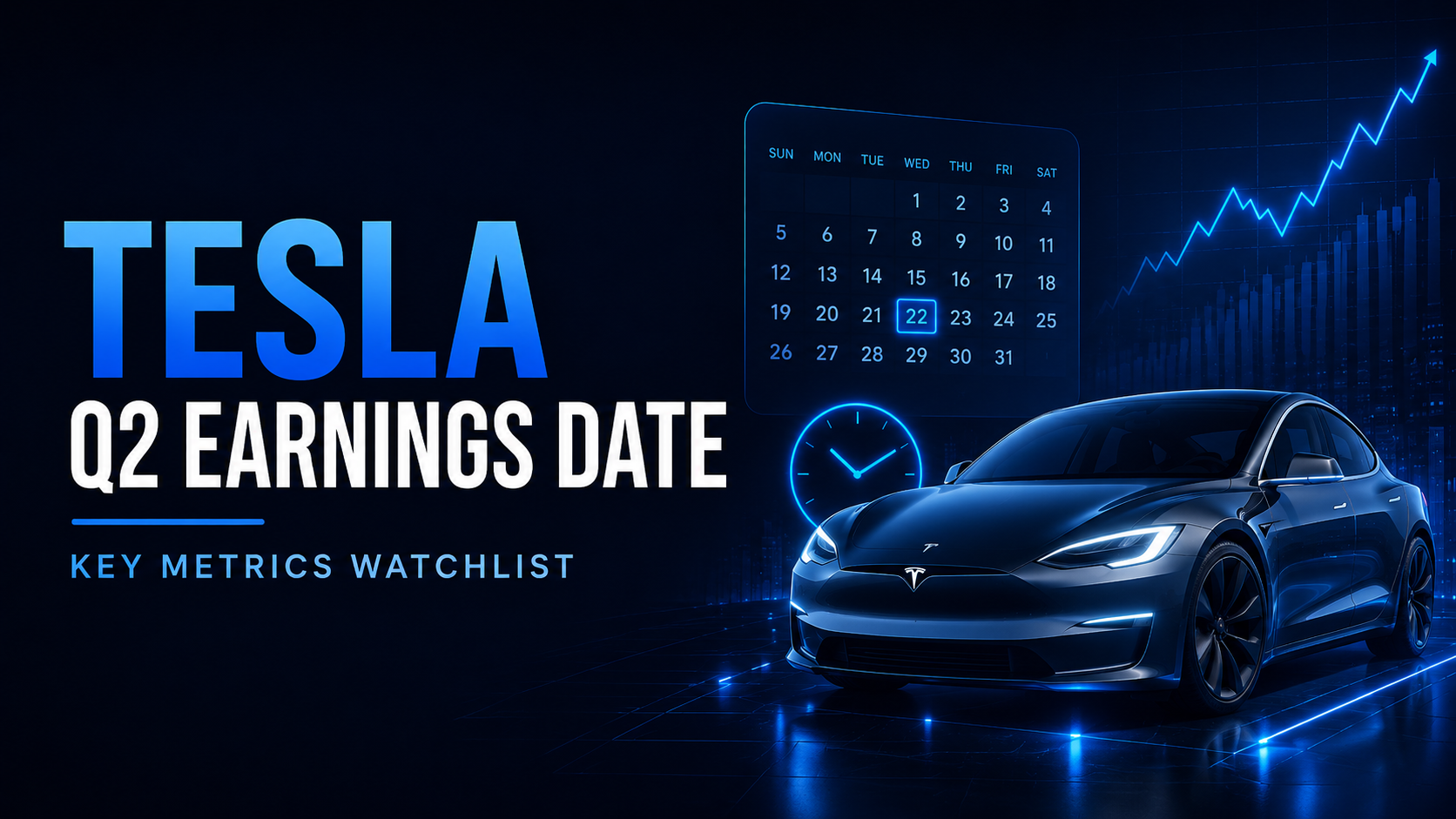
特斯拉2026年第二季度财报日期:发布时间、网络直播及关键指标
特斯拉2026年第二季度财报定于2026年7月22日(星期三)美国股市收盘后发布,管理层计划于美国中部时间下午4:30 / 东部时间下午5:30主持实时Q&A网络直播。第二季度的更新和网络直播将通过特斯拉的投资者关系网站提供,并在电话会议后提供存档重播。 这不仅仅是另一个普通的特斯拉财报日。特斯拉已经报告了超预期的交付季度:在2026年第二季度,公司生产了451,758辆汽车,交付了480,126

特斯拉2026年第一季度财报回顾:交付量反弹,但利润率质量仍是真正的考验
特斯拉于2026年4月22日美国股市收盘后公布了其2026年第一季度的财务业绩。该公司本季度交付了358,023辆汽车,创造了224亿美元的总营收,并报告归属于普通股股东的GAAP净利润为4.77亿美元。总GAAP毛利率提升至21.1%,而营业利润率达到4.2%。 核心信号不仅在于特斯拉的交付量从去年同期的疲软基数中恢复。更重要的问题是:更高的交付量、FSD相关营收、更低的单车成本以及改善的汽车毛