

Introduction
In the volatile world of AI Companions (AIC) trading, effective risk management is not just a best practice—it's essential for survival. While many traders focus primarily on entry points and profit targets, the most successful investors understand that protecting capital is equally important. This article examines real-world case studies of AIC traders who faced significant challenges and emerged stronger through strategic risk management.
AI Companious (AIC) represents a unique convergence of artificial intelligence, virtual reality, augmented reality, and blockchain technology, creating deeply personalized digital companions that evolve with users. This innovative approach to digital relationships introduces specific volatility patterns and risk factors that traders must navigate carefully. The AIC token operates on the Binance Smart Chain with a total supply of 1 billion AIC tokens, of which approximately 750 million are currently in circulation.
By studying these experiences, both novice and experienced traders can develop more robust approaches to AI Companious investment that withstand market turbulence. These practical lessons offer valuable insights that can be immediately applied to your own trading strategy, potentially saving you from costly mistakes while optimizing your returns in the dynamic AIC marketplace. The token has demonstrated significant price volatility, having reached an all-time high of $0.547823 in February 2025 and a low of $0.017494 in September 2024, representing a volatility range that demands sophisticated risk management approaches.
Case Study 1: AI Companious Volatility Management and Position Sizing
During the February 2025 market peak, when AI Companious experienced its all-time high of $0.547823 before subsequent corrections, trader Sarah Martinez avoided the devastating losses that affected many peers by implementing a strict position sizing strategy. Martinez never allocated more than 5% of her total portfolio to any single AIC position, regardless of conviction level. This approach was complemented by scaling into positions gradually rather than deploying capital all at once.
The most successful traders during volatile periods consistently employed volatility-adjusted position sizing, where position sizes were inversely proportional to the asset's historical volatility. Given that AI Companious has demonstrated extreme price movements—dropping from its all-time high to current levels around $0.45—prudent traders automatically reduced their exposure by 25-35% during periods of heightened volatility. This dynamic approach prevented overexposure during unpredictable market swings while maintaining sufficient position size to benefit from favorable movements.
Additionally, many utilized trailing stops that widened during high volatility periods rather than fixed stop-losses, preventing premature exits while still providing downside protection. For AIC, traders implemented trailing stops of 18-22% during the consolidation phases following major price movements. This strategy proved particularly effective given AI Companious's tendency for sharp reversals, allowing traders to remain positioned during temporary pullbacks while protecting against sustained downtrends.
The token's 24-hour trading volume to market cap ratio of 1.02% indicates moderate liquidity conditions, requiring traders to adjust position sizes accordingly to avoid slippage during entry and exit. Experienced traders limited individual orders to no more than 2-3% of the daily trading volume to minimize market impact and ensure efficient execution at desired price levels.
Case Study 2: Avoiding Common Security Pitfalls
The September 2024 period, when AIC reached its lowest price of $0.017494, coincided with increased phishing attacks targeting holders of emerging AI-related tokens. Analysis of security incidents affecting AI Companious holders revealed that victims typically fell into predictable security traps: using the same password across multiple platforms, failing to enable two-factor authentication, and clicking links from unverified sources claiming to offer AIC staking rewards or exclusive access to AI companion features.
In contrast, users who avoided losses implemented a defense-in-depth strategy. This included hardware wallets for cold storage of significant AIC holdings, separate 'hot' wallets with minimal balances for active trading on MEXC, and email addresses dedicated exclusively to cryptocurrency accounts. Given that AI Companious operates on the Binance Smart Chain, users also needed to be vigilant about smart contract interactions and token approvals.
Post-incident interviews with security experts highlighted the effectiveness of regular security audits of connected applications and revocation of unnecessary permissions, particularly for users exploring the AI Companious platform and its ecosystem features. The integration of AI, VR, and AR technologies creates multiple potential vulnerability points, making comprehensive security practices essential.
Multi-signature wallet configurations proved particularly effective for larger AIC holdings, requiring multiple approvals for transactions and providing an additional layer of protection against unauthorized access. Traders holding positions exceeding $10,000 in AI Companious value consistently reported implementing multi-signature setups with trusted parties or separate devices controlling individual signing keys.
The BSC ecosystem's smart contract nature requires users to understand token approval mechanics, where granting unlimited approval to decentralized applications can expose entire wallet balances to potential exploits. Security-conscious AIC holders limited approvals to specific transaction amounts rather than granting unlimited access, even when interacting with the official AI Companious platform.
Case Study 3: Recovery Strategies for AI Companious After Market Downturns
Following the September 2024 market low when AIC traded at $0.017494—a decline of over 96% from its eventual February 2025 all-time high—investor James Thompson executed a methodical recovery strategy that ultimately resulted in substantial portfolio growth despite the initial setback. Rather than panic-selling at the bottom, Thompson first conducted a thorough reassessment of AI Companious's fundamentals to determine if his investment thesis remained valid.
The psychological component proved crucial—Thompson maintained a trading journal documenting both emotional states and market analysis, which prevented impulsive decisions during periods of market fear. His tactical approach included dollar-cost averaging back into AIC at predetermined price intervals rather than attempting to time the absolute bottom. Over the subsequent six months leading to the February 2025 peak, this disciplined approach resulted in returns exceeding 3,000% despite the substantial volatility throughout the recovery period.
Other successful recovery strategies observed across multiple case studies included rebalancing portfolios to maintain target allocations and strategic accumulation during distribution periods. Traders who identified the 60% allocation to liquidity, CEX, market making, and marketing ecosystem as potentially inflationary carefully monitored token unlock schedules and supply dynamics to optimize their accumulation timing.
Fundamental analysis reinforcement played a critical role in recovery decisions. Successful traders regularly reassessed whether AI Companious's core value proposition—combining AI, VR, AR, and blockchain technologies for personalized virtual companions—remained competitive and viable. They monitored platform development milestones, partnership announcements, and ecosystem growth metrics to validate their continued investment.
The recovery period also demonstrated the importance of liquidity management. Traders recognized that AIC's ranking around #218-224 by market capitalization indicated emerging asset status with associated liquidity constraints. Recovery strategies incorporated limit orders at strategic price levels rather than market orders, allowing traders to accumulate positions without significantly impacting prices while building positions during the recovery phase.
Case Study 4: Balancing Risk and Reward in AI Companious Trading Strategies
Examination of trading data from successful AIC traders revealed that the most consistently profitable participants maintained an average risk-reward ratio of 1:3, never risking more than $1 to potentially gain $3. This principle informed all aspects of their trading strategy, from entry points to exit planning. During periods of extreme market sentiment, successful traders adjusted this ratio to become even more conservative, sometimes requiring 1:4 or 1:5 risk-reward profiles.
Stop-loss implementation varied significantly based on market conditions. During trending markets—such as the recovery from September 2024's $0.017494 low to October 2025's approximately $0.46 level—successful traders used wider percentage-based stops of approximately 20-25% from entry for AI Companious. This wider tolerance accommodated the token's inherent volatility while preventing premature exits during strong trending moves.
In ranging markets, traders employed volatility-based stops calculated using technical indicators appropriate for AIC's price action patterns. The token's demonstrated ability to swing between $0.444095 and $0.471748 in a single 24-hour period requires adaptive stop-loss placement that accounts for normal price fluctuations without unnecessarily limiting positions.
For diversification, top-performing portfolios typically limited AI Companious exposure to 10-20% of their total cryptocurrency holdings, with complementary positions in established layer-1 blockchains, other AI-focused tokens, and stablecoins to hedge against AIC-specific risks while maintaining exposure to the broader crypto ecosystem and the emerging AI sector. This allocation recognized AIC's positioning within both the social media and AI crypto sectors, allowing traders to balance sector-specific exposure.
Take-profit strategies incorporated multiple exit points rather than single targets. Successful traders scaled out of positions at predetermined levels, typically taking 30-40% profits at the first target (representing a 1:2 risk-reward), another 30-40% at the second target (1:3 risk-reward), and allowing the remaining position to run with a trailing stop. This approach maximized returns during strong moves while securing profits incrementally to reduce regret if reversals occurred.
The tokenomics structure—with 60% allocated to liquidity, CEX, market making, and marketing ecosystem; 15% to the core team; 10% each to presale and partnerships/development; and 5% to advisors—informed risk management decisions. Traders monitored potential selling pressure from team allocations and partnership distributions, adjusting position sizes and timing around anticipated unlock events.
Conclusion
These case studies demonstrate that successful AI Companious risk management combines technical tools with psychological discipline. The most resilient traders consistently prioritize capital preservation alongside growth potential, implement robust security practices, and structure trading plans with favorable risk-reward profiles. The unique characteristics of AIC—its innovative combination of AI, VR, AR, and blockchain technologies creating personalized virtual companions—introduce specific volatility patterns and risk factors that demand tailored management approaches.
The token's demonstrated price range from $0.017494 to $0.547823 illustrates the dramatic opportunities and risks inherent in AI Companious trading. Successful traders navigate this volatility through disciplined position sizing, adaptive stop-loss placement, comprehensive security measures, and methodical recovery strategies following downturns. By applying these battle-tested approaches on a reliable platform, you can navigate the inherent volatility of cryptocurrency markets more effectively while protecting your investments.
For up-to-date AI Companious price information and trading tools that support these risk management strategies, visit the MEXC AI Companious Price page, where you can access real-time data, check AIC staking availability to earn rewards on your holdings, and execute your trading plan with confidence. MEXC's user-friendly interface provides the comprehensive resources needed to make your AIC investment experience smooth and informed, with tools specifically designed to implement the risk management lessons outlined in these real-world case studies.
Description:Crypto Pulse is powered by AI and public sources to bring you the hottest token trends instantly. For expert insights and in-depth analysis, visit MEXC Learn.
The articles shared on this page are sourced from public platforms and are provided for informational purposes only. They do not necessarily represent the views of MEXC. All rights remain with the original authors. If you believe any content infringes upon third-party rights, please contact service@support.mexc.com for prompt removal.
MEXC does not guarantee the accuracy, completeness, or timeliness of any content and is not responsible for any actions taken based on the information provided. The content does not constitute financial, legal, or other professional advice, nor should it be interpreted as a recommendation or endorsement by MEXC.
Learn More About Sleepless AI
View More
Is AMD a Good Stock to Buy in 2026? (And How to Trade It with Crypto)
NVDA Dividend Analysis: Why Trading Futures on MEXC is the Better Play in 2026
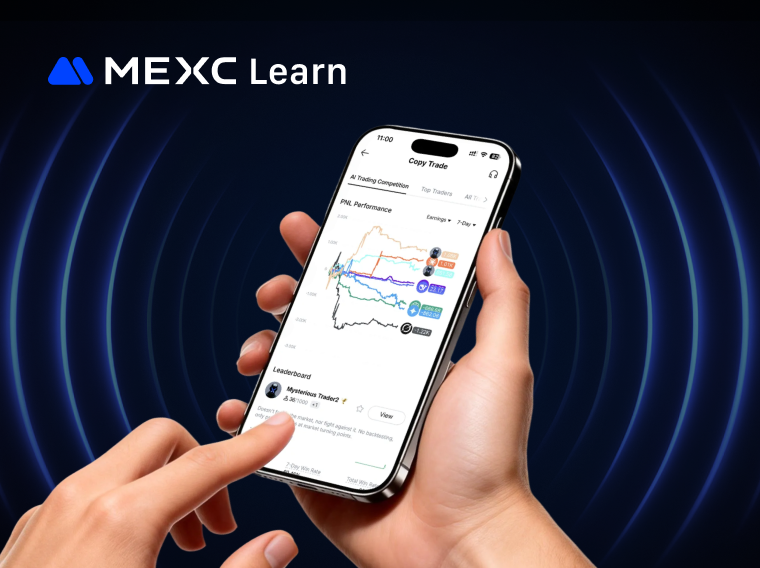
What Is MEXC AI Model Copy Trade?
- What Is AI Model Copy Trade? AI Model Copy Trade is an intelligent Copy Trade feature launched by MEXC that enables you to effortlessly follow AI models for automated trading. The MEXC platform
Latest Updates on Sleepless AI
View More
VanEck CEO Flags Crypto as Q1 2026 Risk-On Play Amid Fiscal Clarity

Musk's first interview in 2026: Exploring the impact of AI, robotics, energy, and the US-China competition on the near future.

SK Hynix unveils $12.9B AI chip packaging expansion
HOT
Currently trending cryptocurrencies that are gaining significant market attention
Crypto Prices
The cryptocurrencies with the highest trading volume
Newly Added
Recently listed cryptocurrencies that are available for trading