BitcoinWorld Sam Bankman-Fried’s Daring Hint: Is a Presidential Pardon His Next Legal Move? From a federal prison cell, former crypto titan Sam Bankman-Fried has sent a cryptic signal that’s rippling through legal and financial circles. His recent social media activity, commenting on a controversial presidential pardon, is being widely interpreted as a calculated hint about his own desperate hopes for freedom. This move places the spotlight squarely back […] This post Sam Bankman-Fried’s Daring Hint: Is a Presidential Pardon His Next Legal Move? first appeared on BitcoinWorld.BitcoinWorld Sam Bankman-Fried’s Daring Hint: Is a Presidential Pardon His Next Legal Move? From a federal prison cell, former crypto titan Sam Bankman-Fried has sent a cryptic signal that’s rippling through legal and financial circles. His recent social media activity, commenting on a controversial presidential pardon, is being widely interpreted as a calculated hint about his own desperate hopes for freedom. This move places the spotlight squarely back […] This post Sam Bankman-Fried’s Daring Hint: Is a Presidential Pardon His Next Legal Move? first appeared on BitcoinWorld.


Sam Bankman-Fried’s Daring Hint: Is a Presidential Pardon His Next Legal Move?

2025/12/03 06:10
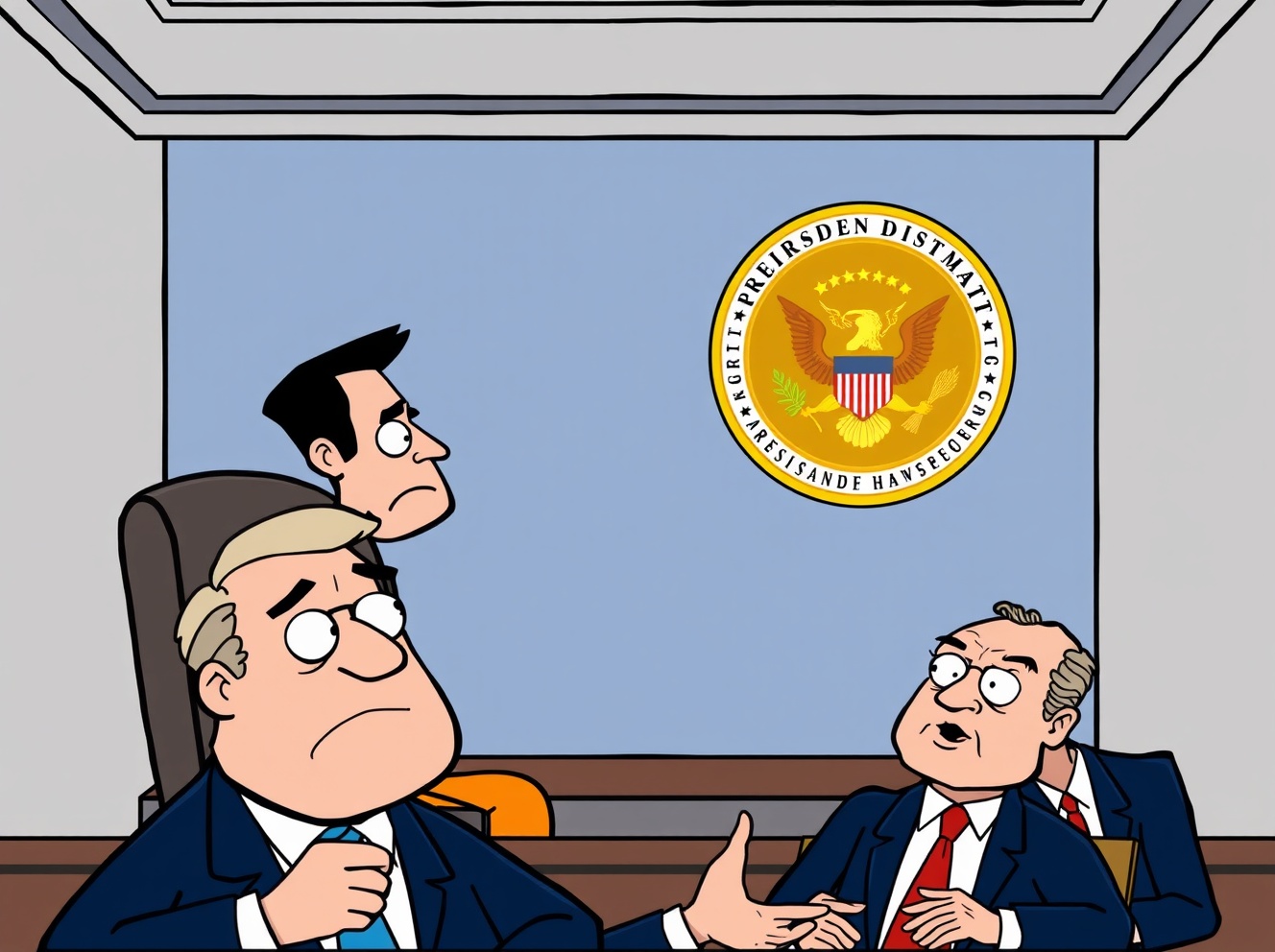
Cartoon illustration of Sam Bankman-Fried's hinted strategy for a presidential pardon in a courtroom setting.

BitcoinWorld

Sam Bankman-Fried’s Daring Hint: Is a Presidential Pardon His Next Legal Move?

From a federal prison cell, former crypto titan Sam Bankman-Fried has sent a cryptic signal that’s rippling through legal and financial circles. His recent social media activity, commenting on a controversial presidential pardon, is being widely interpreted as a calculated hint about his own desperate hopes for freedom. This move places the spotlight squarely back on the Sam Bankman-Fried pardon speculation and raises profound questions about justice, power, and the future of cryptocurrency regulation.

What Did Sam Bankman-Fried Actually Say?

According to a report by The Block, the incarcerated FTX founder resurfaced on the platform X. His comment focused on former President Donald Trump’s pardon of Juan Orlando Hernández, the ex-President of Guatemala convicted on drug trafficking charges. Bankman-Fried’s statement that Hernández was “more deserving than anyone” immediately sparked analysis. Legal experts and journalists noted the subtext: this appears to be an indirect, public appeal for his own clemency. Therefore, by praising a contentious pardon, he subtly invites comparison to his own case.

Why is a Sam Bankman-Fried Pardon Such a Long Shot?

The path to a presidential pardon for SBF is fraught with monumental obstacles. First, he was convicted in a landmark 2023 trial on seven counts of fraud and conspiracy for misappropriating billions in customer funds. The scale of the crime is unprecedented in the crypto space. Second, he is currently in the process of appealing his 25-year sentence, a legal avenue that must typically be exhausted before pardon petitions are seriously considered. The public and political appetite for such a move appears minimal.

  • Severity of Crimes: Convictions for wire fraud and conspiracy carry immense weight.
  • Ongoing Appeals: The judicial process is still active.
  • Victim Impact: Thousands of FTX customers lost their savings.
  • Political Climate: Pardoning a figure synonymous with financial fraud could be highly unpopular.

What Does This Tell Us About SBF’s Legal Strategy?

This public hint reveals a strategic layer beyond his formal court appeals. By engaging in the public discourse on pardons, Bankman-Fried is attempting to shape the narrative around his case. He may be testing the waters of public opinion or aiming to position himself as a candidate for mercy in a future political administration. However, this tactic carries significant risk. It could be perceived as arrogance or a lack of remorse by the very authorities who hold the power to grant a Sam Bankman-Fried pardon.

The Bigger Picture: Crypto and the Long Arm of the Law

This saga is more than just one man’s fight for freedom. It serves as the definitive case study for accountability in the cryptocurrency industry. Regulators and prosecutors point to the FTX collapse and SBF’s conviction as proof that existing laws can and will be enforced against digital asset fraud. The relentless pursuit of this case signals to other industry players that the era of operating in a legal gray area is conclusively over. The question of a Sam Bankman-Fried pardon now intertwines with broader debates about how society treats white-collar crime of the digital age.

Conclusion: A Gauge for Justice in the Digital Age

Sam Bankman-Fried’s indirect plea for a pardon is a stark reminder that his legal battle has entered a new, political phase. While his formal appeal works through the courts, this public maneuver seeks to influence the court of public opinion and future executive power. The likelihood of a Sam Bankman-Fried pardon remains exceedingly low, but the mere discussion of it forces a crucial conversation. It compels us to examine how justice is served when traditional finance collides with technological innovation, and what redemption, if any, looks like after a multi-billion dollar betrayal of trust.

Frequently Asked Questions (FAQs)

Q: What exactly did Sam Bankman-Fried say about the pardon?
A: On social media, he commented on Donald Trump’s pardon of former Guatemalan President Juan Orlando Hernández, stating Hernández was “more deserving than anyone.” Observers see this as an indirect hint toward his own desire for clemency.

Q: Can a US president pardon Sam Bankman-Fried?
A> Yes, a sitting US president holds the constitutional power to issue pardons for federal crimes. However, it is an extraordinary measure typically considered after all appeals are exhausted and often involves a formal review process.

Q: Is SBF still appealing his conviction?
A> Yes. Sam Bankman-Fried was sentenced in March 2024 and his legal team has already filed notices to appeal the conviction and the 25-year sentence. This appeals process is his primary legal path forward.

Q: Why would a pardon for SBF be controversial?
A> A pardon would be highly controversial due to the magnitude of the fraud (billions in customer losses), the high-profile nature of the case, and the message it might send about accountability for financial crimes in the crypto industry.

Q: Has any US president pardoned a similar financial fraud figure?
A> While presidents have pardoned various white-collar criminals, a pardon for a figure convicted of fraud on the scale of the FTX collapse, and at such a contemporary juncture, would be without modern precedent.

Q: What happens next in SBF’s legal case?
A> The immediate next step is the progression of his appeal through the United States Court of Appeals for the Second Circuit. This process can take many months or even years to complete.

Did this analysis of Sam Bankman-Fried’s potential pardon strategy surprise you? Share this article on X or LinkedIn to continue the conversation about justice, crypto, and the limits of executive power. Your perspective matters in shaping this ongoing story.

To learn more about the latest trends in crypto regulation and legal accountability, explore our article on key developments shaping the cryptocurrency landscape and future institutional adoption.

This post Sam Bankman-Fried’s Daring Hint: Is a Presidential Pardon His Next Legal Move? first appeared on BitcoinWorld.

Disclaimer: The articles reposted on this site are sourced from public platforms and are provided for informational purposes only. They do not necessarily reflect the views of MEXC. All rights remain with the original authors. If you believe any content infringes on third-party rights, please contact service@support.mexc.com for removal. MEXC makes no guarantees regarding the accuracy, completeness, or timeliness of the content and is not responsible for any actions taken based on the information provided. The content does not constitute financial, legal, or other professional advice, nor should it be considered a recommendation or endorsement by MEXC.

You May Also Like

US Prosecutors Seek 12-Year Prison for Do Kwon Over Terra Collapse

US Prosecutors Seek 12-Year Prison for Do Kwon Over Terra Collapse

        Highlights:  US prosecutors requested a 12-year prison sentence for Do Kwon after the Terra collapse. Terraform’s $40 billion downfall caused huge losses and sparked a long downturn in crypto markets.  Do Kwon will face sentencing on December 11 and must give up $19 million in earnings.   US prosecutors have asked a judge to give Do Kwon, Terraform Labs co-founder, a 12-year prison sentence for his role in the remarkable $40 billion collapse of the Terra and Luna tokens. The request also seeks to finalize taking away Kwon’s criminal earnings.  The court filing came in New York’s Southern District on Thursday. This is about four months after Kwon admitted guilt on two charges: wire fraud and conspiracy to defraud. Prosecutors said Kwon caused more losses than Samuel Bankman-Fried, Alexander Mashinsky, and Karl Sebastian Greenwood combined.  U.S. prosecutors have asked a New York federal judge to sentence Terraform Labs co-founder Do Kwon to 12 years in prison, calling his role in the 2022 TerraUSD collapse a “colossal” fraud that triggered broader crypto-market failures, including the downfall of FTX. Sentencing is… — Wu Blockchain (@WuBlockchain) December 5, 2025  Terraform Collapse Shakes Crypto Market Authorities explained that Terraform’s collapse affected the entire crypto market. They said it helped trigger what is now called the ‘Crypto Winter.’ The filing stressed that Kwon’s conduct harmed many investors and the broader crypto world. On Thursday, prosecutors said Kwon must give up just over $19 million. They added that they will not ask for any additional restitution. They said: “The cost and time associated with calculating each investor-victim’s loss, determining whether the victim has already been compensated through the pending bankruptcy, and then paying out a percentage of the victim’s losses, will delay payment and diminish the amount of money ultimately paid to victims.” Authorities will sentence Do Kwon on December 11. They charged him in March 2023 with multiple crimes, including securities fraud, market manipulation, money laundering, and wire fraud. All connections are tied to his role at Terraform. After Terra fell in 2022, authorities lost track of Kwon until they arrested him in Montenegro on unrelated charges and sent him to the U.S. Do Kwon’s Legal Case and Sentencing In April last year, a jury ruled that both Terraform and Kwon committed civil fraud. They found the company and its co-founder misled investors about how the business operated and its finances. Jay Clayton, U.S. Attorney for the Southern District of New York, submitted the sentencing request in November.  TERRA STATEMENT: “We are very disappointed with the verdict, which we do not believe is supported by the evidence. We continue to maintain that the SEC does not have the legal authority to bring this case at all, and we are carefully weighing our options and next steps.” — Zack Guzmán  (@zGuz) April 5, 2024  The news of Kwon’s sentencing caused Terraform’s token, LUNA, to jump over 40% in one day, from $0.07 to $0.10. Still, this rise remains small compared to its all-time high of more than $19, which the ecosystem reached before collapsing in May 2022. In a November court filing, Do Kwon’s lawyers asked for a maximum five-year sentence. They argued for a shorter term partly because he could face up to 40 years in prison in South Korea, where prosecutors are also pursuing a case against him. The legal team added that even if Kwon serves time in the U.S., he would not be released freely. He would be moved from prison to an immigration detention center and then sent to Seoul to face pretrial detention for his South Korea charges.    eToro Platform    Best Crypto Exchange   Over 90 top cryptos to trade Regulated by top-tier entities User-friendly trading app 30+ million users    9.9   Visit eToro eToro is a multi-asset investment platform. The value of your investments may go up or down. Your capital is at risk. Don’t invest unless you’re prepared to lose all the money you invest. This is a high-risk investment, and you should not expect to be protected if something goes wrong. 
Share
Coinstats2025/12/06 02:14
Cashing In On University Patents Means Giving Up On Our Innovation Future

Cashing In On University Patents Means Giving Up On Our Innovation Future

The post Cashing In On University Patents Means Giving Up On Our Innovation Future appeared on BitcoinEthereumNews.com. “It’s a raid on American innovation that would deliver pennies to the Treasury while kneecapping the very engine of our economic and medical progress,” writes Pipes. Getty Images Washington is addicted to taxing success. Now, Commerce Secretary Howard Lutnick is floating a plan to skim half the patent earnings from inventions developed at universities with federal funding. It’s being sold as a way to shore up programs like Social Security. In reality, it’s a raid on American innovation that would deliver pennies to the Treasury while kneecapping the very engine of our economic and medical progress. Yes, taxpayer dollars support early-stage research. But the real payoff comes later—in the jobs created, cures discovered, and industries launched when universities and private industry turn those discoveries into real products. By comparison, the sums at stake in patent licensing are trivial. Universities collectively earn only about $3.6 billion annually in patent income—less than the federal government spends on Social Security in a single day. Even confiscating half would barely register against a $6 trillion federal budget. And yet the damage from such a policy would be anything but trivial. The true return on taxpayer investment isn’t in licensing checks sent to Washington, but in the downstream economic activity that federally supported research unleashes. Thanks to the bipartisan Bayh-Dole Act of 1980, universities and private industry have powerful incentives to translate early-stage discoveries into real-world products. Before Bayh-Dole, the government hoarded patents from federally funded research, and fewer than 5% were ever licensed. Once universities could own and license their own inventions, innovation exploded. The result has been one of the best returns on investment in government history. Since 1996, university research has added nearly $2 trillion to U.S. industrial output, supported 6.5 million jobs, and launched more than 19,000 startups. Those companies pay…
Share
BitcoinEthereumNews2025/09/18 03:26