BitcoinWorld Critical Bitcoin Bear Market Signal: 100-1,000 BTC Wallet Buying Slows Dramatically Is a major shift in Bitcoin’s market structure underway? A crucial on-chain metric is flashing a warning sign that seasoned investors watch closely. According to a recent analysis by CryptoQuant’s Julio Moreno, buying pressure from a key investor cohort—addresses holding between 100 and 1,000 BTC—has slowed significantly. This slowdown has broken a long-term upward trendline, […] This post Critical Bitcoin Bear Market Signal: 100-1,000 BTC Wallet Buying Slows Dramatically first appeared on BitcoinWorld.BitcoinWorld Critical Bitcoin Bear Market Signal: 100-1,000 BTC Wallet Buying Slows Dramatically Is a major shift in Bitcoin’s market structure underway? A crucial on-chain metric is flashing a warning sign that seasoned investors watch closely. According to a recent analysis by CryptoQuant’s Julio Moreno, buying pressure from a key investor cohort—addresses holding between 100 and 1,000 BTC—has slowed significantly. This slowdown has broken a long-term upward trendline, […] This post Critical Bitcoin Bear Market Signal: 100-1,000 BTC Wallet Buying Slows Dramatically first appeared on BitcoinWorld.


Critical Bitcoin Bear Market Signal: 100-1,000 BTC Wallet Buying Slows Dramatically

2025/12/06 07:25
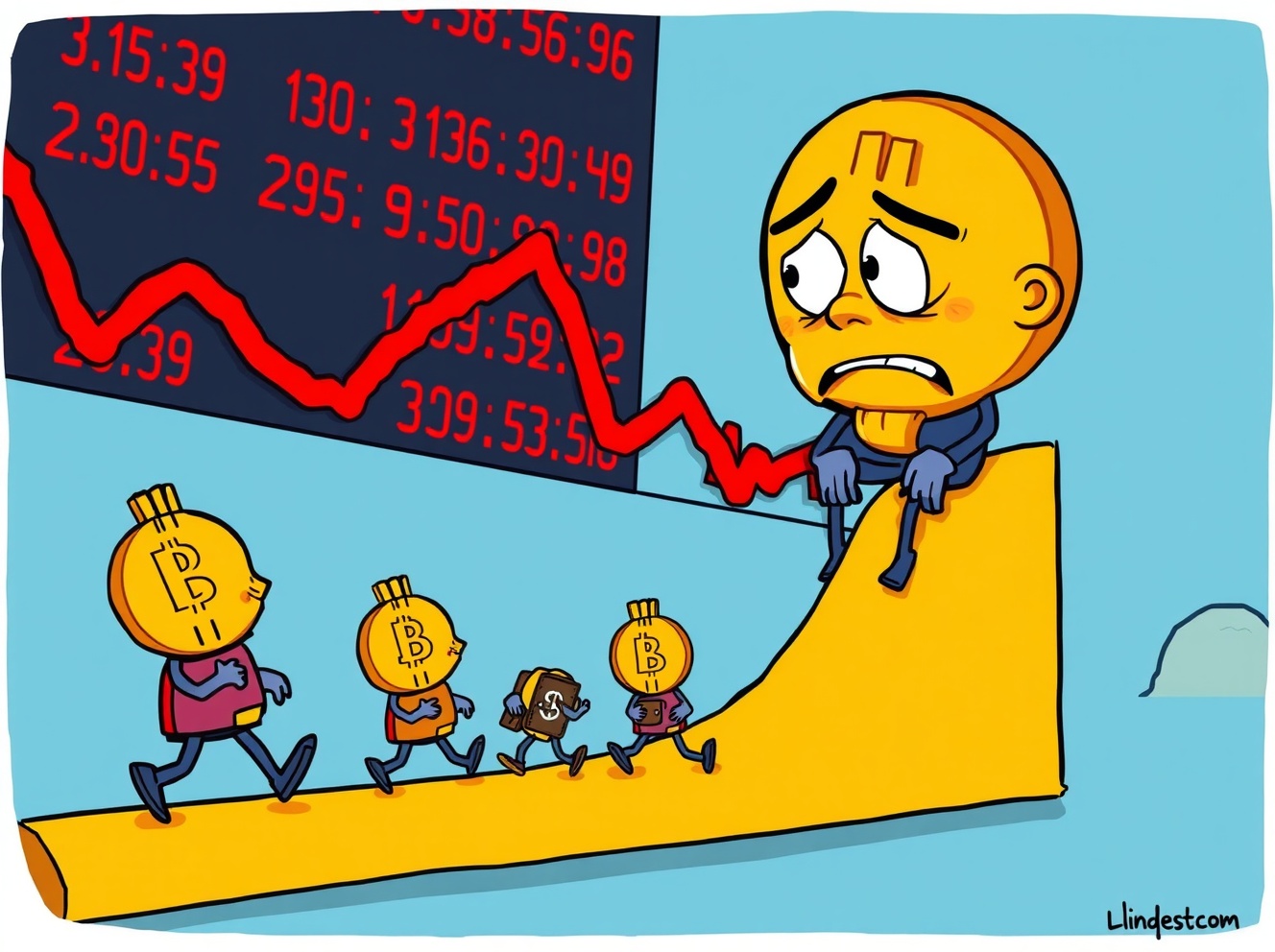
A cartoon Bitcoin bear market signal showing large investors reducing purchases on a downward chart.

BitcoinWorld

Critical Bitcoin Bear Market Signal: 100-1,000 BTC Wallet Buying Slows Dramatically

Is a major shift in Bitcoin’s market structure underway? A crucial on-chain metric is flashing a warning sign that seasoned investors watch closely. According to a recent analysis by CryptoQuant’s Julio Moreno, buying pressure from a key investor cohort—addresses holding between 100 and 1,000 BTC—has slowed significantly. This slowdown has broken a long-term upward trendline, suggesting a pivotal change in market dynamics. For anyone tracking the Bitcoin bear market potential, this data point is impossible to ignore.

What Does the 100-1,000 BTC Wallet Data Reveal?

Julio Moreno, a senior analyst at the on-chain analytics firm CryptoQuant, has pinpointed a concerning trend. The cohort of wallets holding between 100 and 1,000 BTC, which importantly includes addresses for Exchange-Traded Funds (ETFs) and corporate treasuries, is showing weakened demand. Their cumulative annual purchases have fallen sharply.

  • Peak Purchase: 965,000 BTC at the all-time high.
  • Current Purchase Level: 694,000 BTC.

This represents a substantial drop. Moreno concludes that this decline in demand from such a significant player group is a strong indicator that the market may have entered a bear market phase. This isn’t just retail sentiment; it’s a signal from some of the market’s largest and most informed entities.

Why is This Investor Cohort So Important?

You might wonder why this specific group matters more than others. The answer lies in their profile and influence. Addresses in the 100-1,000 BTC range are typically not held by everyday retail investors. Instead, they represent:

  • Institutional Capital: This includes Bitcoin ETF holdings and corporate treasury allocations (like those from MicroStrategy or Tesla).
  • Sophisticated Whales: High-net-worth individuals or investment funds with a deep understanding of market cycles.
  • Market Stability: Their consistent buying has historically provided a foundation of support during corrections.

When these deep-pocketed investors slow their accumulation, it removes a major source of buy-side pressure. This can leave the market more vulnerable to downward moves, reinforcing the Bitcoin bear market thesis.

How Does This Signal a Potential Bitcoin Bear Market?

The technical breakdown of the long-term trendline is the critical chart pattern. Think of this trendline as a measure of consistent institutional faith. For months or even years, this group’s buying activity formed a reliable upward slope on the chart. The recent break below this line is a technical confirmation of the weakening fundamental data.

Therefore, it’s not just that purchases are down. The pattern of support has been violated. This combination of factors—reduced buying volume from key players and a broken technical structure—creates a compelling argument for a shift in the market cycle. It suggests a period of consolidation or decline, a hallmark of a bear market, may be taking hold.

What Should Investors Do With This Information?

This analysis serves as a crucial data point, not a crystal ball. However, it provides actionable context for your strategy. First, understand that on-chain analytics like this offer a view into the actions of major holders, which often precede price movements. Second, this signal suggests increasing caution may be prudent.

Consider reviewing your portfolio’s risk exposure and ensuring you have a plan for different market scenarios. Remember, a Bitcoin bear market phase, while challenging, also creates opportunities for long-term accumulation at lower price points for those who are prepared.

Conclusion: A Vital Metric Demands Attention

The slowdown in buying from 100-1,000 BTC wallets is a stark warning from the blockchain itself. When the market’s most substantial and presumably well-informed participants pull back, it’s a trend that demands respect. While no single indicator guarantees the future, this breakdown in institutional accumulation pressure is a powerful piece of evidence supporting the bear market entry thesis. Investors should monitor this and other on-chain metrics closely to navigate the potentially shifting tides ahead.

Frequently Asked Questions (FAQs)

Q1: Does this signal guarantee a Bitcoin price crash?
A: No single metric guarantees future price action. This is a strong warning sign of weakening demand from a critical cohort, but it must be considered alongside other market factors like macroeconomic conditions and broader adoption trends.

Q2: Who is Julio Moreno and why should I trust this analysis?
A: Julio Moreno is a Senior Analyst at CryptoQuant, a leading provider of on-chain data and analytics for cryptocurrencies. His analysis is based on transparent, verifiable blockchain data rather than opinion.

Q3: What other signs should I look for in a bear market?
A: Other signs include sustained price trading below key moving averages (like the 200-day), negative funding rates in perpetual futures markets, and a general decline in market sentiment and trading volume.

Q4: Can a bear market be a good thing for investors?
A: For long-term, disciplined investors, bear markets can present opportunities to accumulate assets at lower prices, a strategy often referred to as “dollar-cost averaging.” However, it requires a strong stomach for volatility.

Q5: How long do Bitcoin bear markets typically last?
A: Historically, Bitcoin bear markets have varied in length, often lasting several months to over a year. They are part of the natural market cycle.

Q6: Do ETF flows still affect this wallet cohort?
A> Yes, significantly. A large portion of the BTC in this 100-1,000 range is held by custodians for spot Bitcoin ETFs. Slowing purchases by this cohort directly reflects slowing net inflows into these ETFs.

Found this analysis of key Bitcoin bear market signals insightful? Help other investors stay informed by sharing this article on X (Twitter), LinkedIn, or your favorite crypto forum. Knowledge is power, especially in volatile markets!

To learn more about the latest Bitcoin trends, explore our article on key developments shaping Bitcoin institutional adoption.

This post Critical Bitcoin Bear Market Signal: 100-1,000 BTC Wallet Buying Slows Dramatically first appeared on BitcoinWorld.

Disclaimer: The articles reposted on this site are sourced from public platforms and are provided for informational purposes only. They do not necessarily reflect the views of MEXC. All rights remain with the original authors. If you believe any content infringes on third-party rights, please contact service@support.mexc.com for removal. MEXC makes no guarantees regarding the accuracy, completeness, or timeliness of the content and is not responsible for any actions taken based on the information provided. The content does not constitute financial, legal, or other professional advice, nor should it be considered a recommendation or endorsement by MEXC.

You May Also Like

Coinbase Vs. State Regulators: Crypto Exchange Fights Legal Fragmentation

Coinbase Vs. State Regulators: Crypto Exchange Fights Legal Fragmentation

US-based crypto exchange Coinbase has made a significant appeal to the Department of Justice (DOJ) regarding a wave of lawsuits aimed at its operations. The company is urging federal action to address what it describes as an “increasingly fragmented and hostile” regulatory landscape for the crypto market. Coinbase Urges Federal Action  In a recent letter, Coinbase highlighted the steps taken by the current Administration to create a more equitable framework for digital asset regulation. This includes the introduction of stablecoin legislation and two pending bipartisan market-structure bills aimed at fostering uniformity in the oversight of cryptocurrencies.  Coinbase argues that these initiatives have begun to mitigate the adverse effects of the previous Administration’s enforcement-driven regulatory approach.  However, the company warns that certain states are perpetuating this problematic trend by adopting “expansive and flawed” interpretations of securities laws and implementing new licensing requirements that undermine the federal government’s pro-innovation stance. Related Reading: REX Shares Claims Its DOGE And XRP Spot ETFs Will Be Approved By US SEC Tomorrow They make an example with the Oregon Attorney General, who has filed a lawsuit against Coinbase, claiming that many digital assets traded on its platform qualify as alleged unregistered securities.  The letter affirms that the suit not only targets Coinbase but also encourages other states to address what the Attorney General perceives as a regulatory gap left by federal authorities.  Similarly, the New York Attorney General has initiated legal action to regulate transactions involving digital assets based on decentralized protocols as securities, further complicating the regulatory environment. Coinbase has faced cease-and-desist orders from four states, which demand the company halt its retail staking services. These orders are deemed by Coinbase as “legally unfounded and inconsistent.” Unified Framework For Digital Assets In light of these challenges, the letter to the DOJ calls for urgent federal intervention to establish broad preemption provisions. The crypto exchange argues that preemption has historically been an effective tool for addressing state interference in national markets, referencing past Congressional actions. Coinbase contends that the current patchwork of state regulations not only disrupts market efficiency but also leads to unequal access to cryptocurrency services based on geographic location. Related Reading: Citi’s Ethereum Forecast: No New All-Time High Expected, Year-End Target At $4,300 To remedy these issues, Coinbase advocates for Congress to adopt legislation that would exempt federally regulated digital assets from state blue-sky laws and clarify that state licensing requirements do not apply to crypto intermediaries.  Additionally, the company urges the SEC to expedite rulemaking and provide clearer guidance on why digital asset transactions and services, including staking, should not be classified as securities. Such clarity would help prevent states from imposing conflicting regulations based on their interpretations of securities laws. Featured image from Shutterstock, chart from TradingView.com
Share
NewsBTC2025/09/18 15:00
Maryland Man Sentenced for Allegedly Aiding North Korea’s US Company Infiltration and Sensitive Data Access

Maryland Man Sentenced for Allegedly Aiding North Korea’s US Company Infiltration and Sensitive Data Access

The post Maryland Man Sentenced for Allegedly Aiding North Korea’s US Company Infiltration and Sensitive Data Access appeared on BitcoinEthereumNews.com. North Korea’s IT workers infiltrated US companies through a Maryland man’s scheme, earning over $970,000 while enabling access to sensitive government systems. This operation supported the regime’s cyber activities, including crypto hacks that stole $2 billion in 2025, funding nuclear programs. Minh Phuong Ngoc Vong sentenced to 15 months in prison for aiding North Korean infiltration. He used fake credentials to secure jobs at 13 US firms, passing work to overseas conspirators. North Korea stole $2 billion in crypto in 2025 via hacks, totaling over $6 billion recently, per blockchain analytics firm Elliptic. Discover how North Korea’s IT infiltration and crypto hacking schemes threaten US security. Learn the details of the Maryland case and regime’s $6B theft. Stay informed on cybersecurity risks today. What is North Korea’s IT Infiltration Scheme in US Companies? North Korea’s IT infiltration scheme involves covertly placing regime-affiliated workers into US companies using fake identities to generate revenue and access sensitive systems. In a recent Maryland case, Minh Phuong Ngoc Vong was sentenced to 15 months in prison and three years of supervised release for facilitating this for three years across 13 companies. The operation netted over $970,000, much of which funded North Korea’s weapons programs through software work performed by overseas actors, including those in China near the border. How Does North Korea Use Crypto Hacking to Fund Its Programs? North Korea employs sophisticated cyber groups to target cryptocurrency exchanges and wallets, stealing digital assets that convert to fiat for regime funding. According to blockchain analytics firm Elliptic, these groups pilfered approximately $2 billion in cryptocurrencies in 2025 alone, contributing to a total exceeding $6 billion in recent years from hacks on platforms like Bybit and Upbit. This influx directly supports nuclear and missile development, as confirmed by US intelligence assessments. Experts note the regime’s…
Share
BitcoinEthereumNews2025/12/06 09:12