Startups On Our Radar spotlights African startups solving African challenges with innovation. This week, we explore five African startups in the education, fintechStartups On Our Radar spotlights African startups solving African challenges with innovation. This week, we explore five African startups in the education, fintech
5 African startups transforming payments, programming, and pedagogy
For feedback or concerns regarding this content, please contact us at crypto.news@mexc.com
Startups On Our Radar spotlights African startups solving African challenges with innovation. In our previous edition, we featured seven game-changing startups pioneering healthcare, transportation, education, and artificial intelligence. Expect the next dispatch on December 26, 2025.
This week, we explore five African startups in the education, fintech, software development, and artificial intelligence sectors and why they should be on your watchlist. Let’s dive into it:
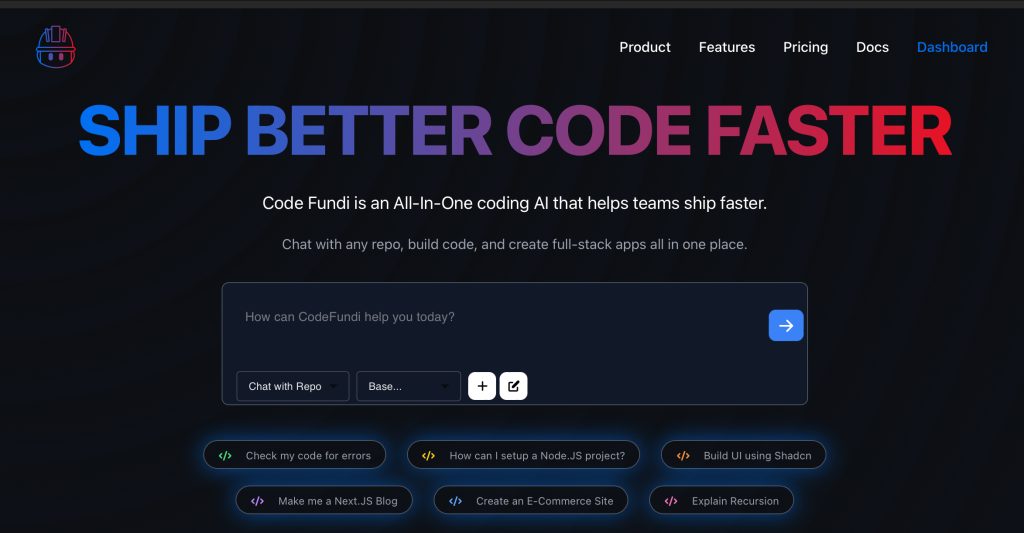
CodeFundi is turning AI agents into a software teammate for global development teams (AI, Kenya)
Felix Waweru, a software engineer with a decade of experience, founded CodeFundi in 2023 to solve the reliability and maintenance issues plaguing software development. He realised that while writing code is a part of the job, testing, documentation, debugging, and long-term maintenance are often slow, error-prone, and too complex to manage manually. CodeFundi addresses this with its all-in-one AI solution that automates coding, testing, and documentation to help teams maintain software faster and more reliably.
Rather than have users copy and paste snippets into a chatbot, CodeFundi connects directly to a team’s codebase, such as repositories hosted on GitHub, to understand an entire software project. This allows users to interact with their codebase through a conversational interface to understand complex packages or generate new features. On the backend of this conversation, CodeFundi uses multiple specialised AI agents with different roles. One conducts research and deeply analyses the code, another maintains contextual memory of the user and organisation, and a third compiles results into actionable outputs.
This setup allows the platform to automatically identify bugs, generate fixes, write tests to validate those fixes, and produce detailed technical documentation explaining how each part of the code works. The platform also includes analytics that show teams which programming languages or components dominate their projects.
CodeFundi operates on a subscription model ranging from a $5 monthly starter plan to a $1,000 monthly enterprise tier that offers on-premise hosting for data security or region-specific deployments. The startup also offers credit-based usage and an API, currently in beta testing, that allows companies to embed CodeFundi’s AI agents directly into their own products.
Why we’re watching: CodeFundi is modelling its system on how real engineering teams work. It breaks software development into discrete tasks handled by multiple collaborating AI agents, which mirrors the separation of responsibilities between frontend, backend, testing, and documentation teams. Waweru says that this approach improves reliability and reduces the forgetfulness that can occur when one AI handles everything.
The startup competes with tools focused solely on testing, such as Zof AI, and other AI product development platforms like Kasa AI and Bolt AI. They have secured partnerships with Google Cloud, Microsoft for Startups, and Cognition AI, the team behind Devin. CodeFundi claims to have acquired 5,000 users across 47 countries since its launch, and says it has crossed $1,000 in monthly recurring revenue as a bootstrapped business.
TalkPDF AI wants to turn PDFs into interactive tutors in local languages (Edtech, Nigeria)
TalkPDF AI is an AI-powered learning assistant built to help students move from regular memorisation to real understanding. The idea came when founder Lukman Abimbola saw his younger sister struggle to prepare for her West African Senior School Certificate Examination (WASSCE). Despite spending hours rereading chemistry textbooks, she could not explain basic concepts because she was memorising words instead of trying to understand the concepts. Her breakthrough came when Abimbola asked her to explain the ideas back to him in Yoruba, as if she were teaching a younger cousin.
That moment shaped Abimbola’s core insight: that many students fail because they are forced to learn complex ideas in a second language, with no way to validate whether they truly understand what they’ve studied. To solve this language-induced learning crisis, TalkPDF AI converts textbooks and PDFs into an interactive audio tutor in English, Yoruba, Hausa, Igbo, and Pidgin. A student uploads a text-based study material, and the system instantly converts it into natural-sounding audio in the learner’s preferred language.
As the student listens, the AI pauses at key concepts and activates what Abimbola calls an explain-back mode, asking the learner to explain the idea in their own words. If the student repeats textbook jargon or gives a memorised definition, the system pushes back and asks for a simpler explanation, prompting them to explain as if they were teaching a 10-year-old. Each chapter is graded with an understanding score, as users can earn bronze, silver, or gold badges. The system also schedules spaced repetition for concepts the learner has not fully mastered.
TalkPDF AI is currently in beta and has sold 43 out of 50 paid beta slots, with full launch scheduled for early 2026. The startup operates a freemium model, with a limited free tier offering five minutes of audio per day, and a Student Pro plan priced at ₦40,000 ($27.47) yearly, which includes unlimited uploads, full explain-back mode, offline downloads, and all supported languages.
Why we’re watching: TalkPDF AI stands out from competitors like uLesson, Gradely, and MyLesson for combining active learning with local-language support. By merging active validation, which refuses to let students fake understanding, with offline functionality and local language support, the startup addresses African infrastructure challenges of data costs and language barriers.
TalkPDF AI is planning B2B licensing deals with universities, the West African Examinations Council (WAEC), the Joint Admissions and Matriculation Board (JAMB), and an expansion into K–12 exam preparation. The startup is preparing a pre-seed raise to fund product development, campus ambassadors, and university pilots.
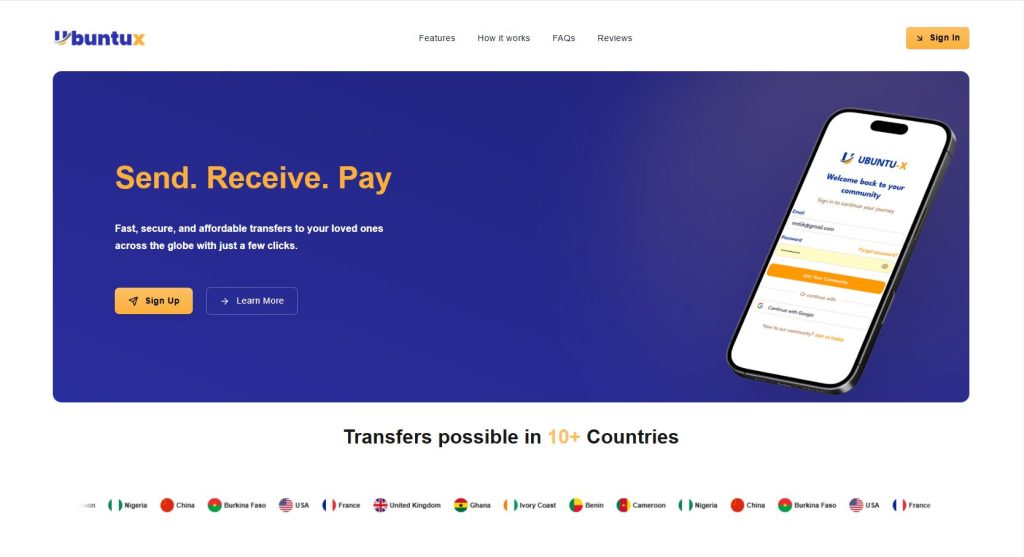
Ubuntu X wants to unlock global payments for Francophone Africa (Fintech, Cameroon)
Founded by Manuel Songfack, Njinowo Brandon, Miamo Karl, and Fitzgerald Mouliom, Ubuntu X is a Cameroon-based cross-border payments and remittance startup building infrastructure to move money seamlessly across African countries and the rest of the world. The founders observed that global transactions from the U.S. or Europe are seamless. However, sending money from Cameroon to neighbours like Nigeria or Benin or to major trade hubs like China remains slow and expensive.
Ubuntu X is building a mobile-native payment gateway that connects local payment methods across countries. Its solution is a ‘network of networks’ that connects local mobile money wallets, including MTN and Orange Money, directly to international payment endpoints such as Alipay in China and Access Bank in Nigeria. The system currently supports remittances and payments, with plans to add cryptocurrency purchases and virtual cards.
Users sign up on the web platform, complete a one-time know-your-customer (KYC) process that includes personal details, ID upload, and a selfie check. Once verified, they select their local payment method and input the receiver’s details. The founders claim that transactions are reviewed by validators and are typically completed within 5 to 10 minutes.
Ubuntu X launched operations in January 2025 and initially processed transactions manually, using stablecoins and merchant accounts in destination countries before it began automating workflows through APIs. The startup charges between 2% and 4% on remittance transactions, 1% on payments, and plans to charge 1% each on crypto purchases and virtual card issuance.
Why we’re watching: Ubuntu X is tackling the persistent problem of fragmented payment rails across African countries. While regional remittance startups like Reasy facilitate transfers to China, it requires the recipient to have a Chinese bank account, whereas Ubuntu X integrates directly with digital wallets like Alipay. Similarly, legacy players like MoneyGram rely on an agent-to-agent model that requires physical presence. The startup also positions itself against crypto platforms like Binance by promising simpler onboarding and direct mobile money integration.
Ubuntu X claims to have processed over 100 million CFA ($178,000) in remittance volume, with over 55% of transactions flowing from African countries to China. The startup is planning to raise $200,000 for product development and plans to launch virtual cards by June 2026 to further democratise online spending for users who cannot afford traditional prepaid bank cards.
SabiScholar wants to make online learning work offline for Nigerian students (Edtech, Nigeria)
Founded by Divine Iloh, a US-based data analytics manager, SabiScholar is a learning management system (LMS) for secondary schools and universities to deliver courses, resources, assignments, assessments, and results digitally. The product was born from Iloh’s insights into the limitations of digital learning platforms like the National Open University, which still requires students to take physical classes.
On the platform, schools can access an array of curriculum-aligned courses, currently covering WAEC, JAMB, and NECO subjects. Institutions can import SabiScholar’s own internal learning material or upload materials of their own. It also allows teachers to manage students, mark assignments, track results, and view performance dashboards. On the other side, students can log in, learn through video courses, complete assignments, and access school resources.
So far, the startup claims to have completed a pilot phase involving around 2,900 secondary school students across Nigeria, who used the platform to prepare for O-level exams.
Although the platform is currently online-only, SabiScholar is designing an offline delivery model built on AI. The approach uses predictive downloading to ensure that learning isn’t disrupted by poor bandwidth. This AI teacher monitors a student’s deadlines and network availability, automatically pre-downloading course materials during off-peak hours or whenever a stable connection is detected. This ensures assignments and videos are available on the device before they are due.
The platform also includes a career recommendation engine, SabiCareer, that uses student history and subject preferences to suggest career paths and universities. SabiScholar expects revenue to come from state-level and institutional partnerships, where governments and schools subscribe to deliver digital learning at scale.
Why we’re watching: SabiScholar is distinguishing itself by solving the infrastructure hurdles that limit edtech adoption in Africa, specifically bandwidth reliability. Unlike global competitors such as Coursera or Udemy, which may lack local context, SabiScholar is building for schools, empowering them with infrastructure, curriculum, content, and operations, rather than going directly to the consumer.
Get The Best African Tech Newsletters In Your Inbox
Select your country Nigeria Ghana Kenya South Africa Egypt Morocco Tunisia Algeria Libya Sudan Ethiopia Somalia Djibouti Eritrea Uganda Tanzania Rwanda Burundi Democratic Republic of the Congo Republic of the Congo Central African Republic Chad Cameroon Gabon Equatorial Guinea São Tomé and Príncipe Angola Zambia Zimbabwe Botswana Namibia Lesotho Eswatini Mozambique Madagascar Mauritius Seychelles Comoros Cape Verde Guinea-Bissau Senegal The Gambia Guinea Sierra Leone Liberia Côte d'Ivoire Burkina Faso Mali Niger Benin Togo Other
Select your gender Male Female Others
Subscribe
Bit68 wants to replace traditional apps with agentic AI interfaces (Software Development, Egypt)
Founded in 2014 by software engineer Ibrahim Gharbawi, Bit68 is a software services company that builds and scales products for entrepreneurs and corporate clients, with a growing focus on AI-driven and agentic interfaces. The company started as a web development firm but has expanded its services to include e-commerce, mobile applications, digital transformation, and AI-enabled solutions.
With a team of about 80 people, Bit68 operates as a consultancy rather than a product-based business, conducting brainstorming sessions with stakeholders to define solutions that automate internal processes efficiently. Bit68 interfaces with Large Language Models (LLMs), including paid, open-source, and pre-trained models, directly with a client’s database, allowing users to interact with services through a chat interface rather than standard application menus.
Why we’re watching: As more businesses move to adopt AI into their product offerings, Bit68 stands out with its approach to integrating AI into a user’s product. Instead of treating AI as a bolt-on feature, the company is actively pushing clients toward agentic interfaces that sit on top of existing databases and services. The company’s recent partnership with South Africa-based offshoring firm SoluGrowth to grow its South African presence and its expansion beyond Egypt into the MENA region suggests Bit68 is positioning itself as a cross-regional partner for AI-led digital transformation.
That’s all for today. Expect our next dispatch on December 19th. Know a startup we should feature next? Please nominate here.
Disclaimer: The articles reposted on this site are sourced from public platforms and are provided for informational purposes only. They do not necessarily reflect the views of MEXC. All rights remain with the original authors. If you believe any content infringes on third-party rights, please contact crypto.news@mexc.com for removal. MEXC makes no guarantees regarding the accuracy, completeness, or timeliness of the content and is not responsible for any actions taken based on the information provided. The content does not constitute financial, legal, or other professional advice, nor should it be considered a recommendation or endorsement by MEXC.