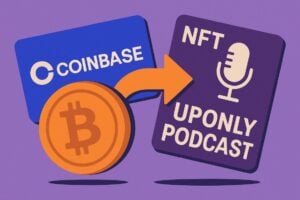
Coinbase paid Cobie $25 million to buy the UpOnly NFT, and the coinbase uponly nft acquisition aims to fund an eight-episode relaunch.Coinbase paid Cobie $25 million to buy the UpOnly NFT, and the coinbase uponly nft acquisition aims to fund an eight-episode relaunch.

Coinbase Uponly NFT: $25M Purchase Revives UpOnly Podcast 2025
2025/10/21 16:11

Coinbase paid Cobie $25 million to buy the UpOnly NFT, and the coinbase uponly nft acquisition aims to fund an eight-episode relaunch beginning 21 October 2025.

The exchange confirmed the move via social channels and framed it as part of a broader content strategy; see Coinbase’s announcement. 

UpOnly NFT: Why did Coinbase buy it from Cobie?

Was this a coinbase nft acquisition and coinbase usdc transaction?

Coinbase confirmed the $25 million purchase from trader Jordan “Cobie” Fish, signalling a move into owned media assets.

The exchange characterised the deal as supporting a podcast relaunch, but payment rails and whether the transfer used USDC on-chain remain to be confirmed. 

How does cobie uponly nft provenance factor?

Cobie is identified as the original creator and seller. Provenance and on-chain transfer records should document the token’s history, though the exact transfer path requires verification. For legal context on NFT rights and IP, see Perkins Coie on NFT IP.

How will the NFT burn condition shape the uponly podcast revival?

Does the NFT burn condition affect crypto podcast nft rights?

Reports say the token includes a burn condition that, if triggered, compels Cobie to restart the show and could change ownership dynamics. Coinbase has not released the underlying contract, so triggers and downstream effects remain listed. 

The burn clause may align creator and buyer incentives but can also complicate downstream IP rights without explicit assignment clauses. Legal advisers warn that burn mechanics must be coupled with clear IP mapping and escrow language to avoid unintended revocations, as noted by Perkins Coie.

The burn condition and contractual triggers should be reviewed by counsel and on-chain auditors before traders infer market effects. 

What will the UpOnlyTV eight-episode season deliver? In brief:

Will this restart the uponlytv podcast episodes and uponly podcast revival?

Coinbase says the acquisition will fund an eight-episode season aimed at restoring the show’s interview format and audience engagement. Cobie is named as the prior steward; production timing and editorial terms have not been published and are marked. 

For investors, the transaction ties a high-profile media asset to a major exchange, creating measurable KPIs for audience growth and potential sponsorship links. Operational details and on-chain records will be needed to assess the full financial structure — we will update as disclosures appear. 

Coinbase bought the UpOnly NFT for $25 million to relaunch the UpOnly podcast as an eight-episode season on 21 October 2025 (2025-10-21); contract specifics and transaction rails remain to be verified.


Disclaimer: The articles reposted on this site are sourced from public platforms and are provided for informational purposes only. They do not necessarily reflect the views of MEXC. All rights remain with the original authors. If you believe any content infringes on third-party rights, please contact service@support.mexc.com for removal. MEXC makes no guarantees regarding the accuracy, completeness, or timeliness of the content and is not responsible for any actions taken based on the information provided. The content does not constitute financial, legal, or other professional advice, nor should it be considered a recommendation or endorsement by MEXC.

You May Also Like

BFX Presale Raises $7.5M as Solana Holds $243 and Avalanche Eyes $1B Treasury — Best Cryptos to Buy in 2025

BFX Presale Raises $7.5M as Solana Holds $243 and Avalanche Eyes $1B Treasury — Best Cryptos to Buy in 2025

BFX presale hits $7.5M with tokens at $0.024 and 30% bonus code BLOCK30, while Solana holds $243 and Avalanche builds a $1B treasury to attract institutions.
Share
Blockchainreporter2025/09/18 01:07
OCC Findings Suggest Major U.S. Banks Restricted Access for Digital Asset Firms Amid Debanking Probe

OCC Findings Suggest Major U.S. Banks Restricted Access for Digital Asset Firms Amid Debanking Probe

The post OCC Findings Suggest Major U.S. Banks Restricted Access for Digital Asset Firms Amid Debanking Probe appeared on BitcoinEthereumNews.com. The Office of the Comptroller of the Currency (OCC) has confirmed that nine major U.S. banks engaged in debanking practices from 2020 to 2023, restricting access for digital asset firms and other sectors. This marks the first official acknowledgment of these policies, which limited services based on customer types, affecting crypto businesses significantly. OCC report highlights inappropriate distinctions by banks like JPMorgan Chase and Bank of America, targeting crypto and high-risk sectors. Nine banks reviewed showed similar policies restricting customer access without objective risk assessments. Impacted industries include digital asset firms, with potential referrals to the Attorney General for unlawful practices. Discover how major U.S. banks’ debanking policies hit crypto firms hard, per OCC’s 2025 report. Learn the implications for digital assets and what regulators are doing next—stay informed on banking risks today! What Are the OCC’s Findings on Banks Debanking Crypto Firms? Banks debanking crypto firms involves major financial institutions limiting or denying services to digital asset businesses based on perceived risks, as detailed in a recent Office of the Comptroller of the Currency (OCC) report. From 2020 to 2023, nine of the largest U.S. banks implemented policies that required escalated reviews or outright restrictions for certain customers, including those in the crypto sector. This practice, now publicly confirmed, underscores ongoing tensions between traditional banking and emerging digital asset industries. How Did These Debanking Practices Affect Digital Asset Companies? The OCC’s six-page report, released on Wednesday, revealed that institutions such as JPMorgan Chase, Bank of America, Citigroup, Wells Fargo, U.S. Bancorp, Capital One, PNC Financial Services Group, Toronto-Dominion Bank, and Bank of Montreal made distinctions among customers that were deemed inappropriate. For digital asset firms, this meant heightened scrutiny or complete denial of banking services, hindering operations in an already volatile market. The regulator noted that these policies spanned…
Share
BitcoinEthereumNews2025/12/11 11:01