The post The GENIUS Act goes against the ethos of crypto appeared on BitcoinEthereumNews.com. Disclosure: The views and opinions expressed here belong solely to the author and do not represent the views and opinions of crypto.news’ editorial. The CEOs of crypto companies led the applause when Donald Trump signed the GENIUS Act on July 18, and many even attended the signing of the Act. I did not applaud because I think GENIUS goes against the ethos of crypto. Summary Framed as consumer protection, the GENIUS Act ultimately strengthens U.S. financial dominance and compliance barriers — sidelining smaller players and limiting financial sovereignty, especially in the Global South. High regulatory costs mean only large institutions can compete, locking out the innovators and entrepreneurs who built crypto and undermining its mission of democratizing finance. Decentralization as resistance: To preserve crypto’s original ethos of permissionless access and inclusion, the Global South must lead by building decentralized, peer-to-peer systems that reject dependency on U.S.-defined “safe” crypto. Trump said it himself. The whole point of GENIUS is to “cement U.S dominance of global finance.” That’s not good for anyone who isn’t from the U.S. – and it won’t be great for the little guy in the long run. It’s definitely not good for people in the Global South. A special focus of GENIUS was consumer protection because it required issuers of stablecoins to publish reports to enhance transparency while providing a framework for the regulation of custody, safekeeping, limitations on stablecoin activities, as well as financial stability and AML compliance. This is a big part of the problem.  Compliance always hurts the little guy, and, when it comes to banking, it doesn’t matter if you’re a little guy in the Deep South or the Global South. The cost of compliance means large institutions will dominate crypto. It’s already happening. They’ll decide who has access to finance, who can use… The post The GENIUS Act goes against the ethos of crypto appeared on BitcoinEthereumNews.com. Disclosure: The views and opinions expressed here belong solely to the author and do not represent the views and opinions of crypto.news’ editorial. The CEOs of crypto companies led the applause when Donald Trump signed the GENIUS Act on July 18, and many even attended the signing of the Act. I did not applaud because I think GENIUS goes against the ethos of crypto. Summary Framed as consumer protection, the GENIUS Act ultimately strengthens U.S. financial dominance and compliance barriers — sidelining smaller players and limiting financial sovereignty, especially in the Global South. High regulatory costs mean only large institutions can compete, locking out the innovators and entrepreneurs who built crypto and undermining its mission of democratizing finance. Decentralization as resistance: To preserve crypto’s original ethos of permissionless access and inclusion, the Global South must lead by building decentralized, peer-to-peer systems that reject dependency on U.S.-defined “safe” crypto. Trump said it himself. The whole point of GENIUS is to “cement U.S dominance of global finance.” That’s not good for anyone who isn’t from the U.S. – and it won’t be great for the little guy in the long run. It’s definitely not good for people in the Global South. A special focus of GENIUS was consumer protection because it required issuers of stablecoins to publish reports to enhance transparency while providing a framework for the regulation of custody, safekeeping, limitations on stablecoin activities, as well as financial stability and AML compliance. This is a big part of the problem.  Compliance always hurts the little guy, and, when it comes to banking, it doesn’t matter if you’re a little guy in the Deep South or the Global South. The cost of compliance means large institutions will dominate crypto. It’s already happening. They’ll decide who has access to finance, who can use…

The GENIUS Act goes against the ethos of crypto

Disclosure: The views and opinions expressed here belong solely to the author and do not represent the views and opinions of crypto.news’ editorial.

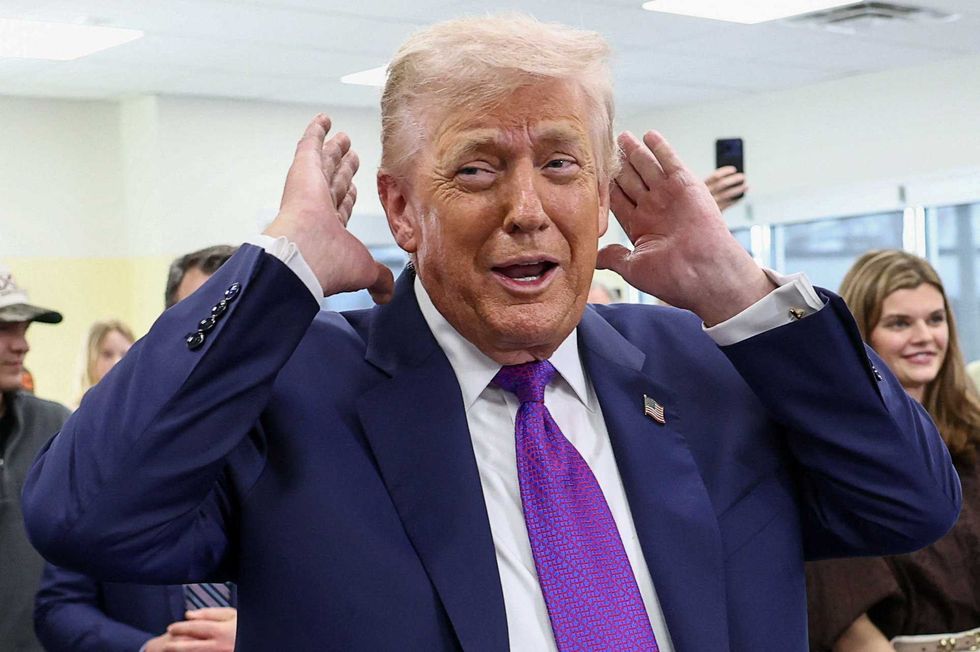
The CEOs of crypto companies led the applause when Donald Trump signed the GENIUS Act on July 18, and many even attended the signing of the Act. I did not applaud because I think GENIUS goes against the ethos of crypto.

Summary

  • Framed as consumer protection, the GENIUS Act ultimately strengthens U.S. financial dominance and compliance barriers — sidelining smaller players and limiting financial sovereignty, especially in the Global South.
  • High regulatory costs mean only large institutions can compete, locking out the innovators and entrepreneurs who built crypto and undermining its mission of democratizing finance.
  • Decentralization as resistance: To preserve crypto’s original ethos of permissionless access and inclusion, the Global South must lead by building decentralized, peer-to-peer systems that reject dependency on U.S.-defined “safe” crypto.

Trump said it himself. The whole point of GENIUS is to “cement U.S dominance of global finance.” That’s not good for anyone who isn’t from the U.S. – and it won’t be great for the little guy in the long run. It’s definitely not good for people in the Global South.

A special focus of GENIUS was consumer protection because it required issuers of stablecoins to publish reports to enhance transparency while providing a framework for the regulation of custody, safekeeping, limitations on stablecoin activities, as well as financial stability and AML compliance. This is a big part of the problem. 

Compliance always hurts the little guy, and, when it comes to banking, it doesn’t matter if you’re a little guy in the Deep South or the Global South. The cost of compliance means large institutions will dominate crypto. It’s already happening. They’ll decide who has access to finance, who can use their own money, and where they can use it. They’ll shut out the little guys, and that will hurt people in the Global South. That’s why I think GENIUS goes against the ethos of crypto.

I have long been controversial in my views about privacy and the trustless doctrine of crypto. I have urged users to self-custody, telling them not to keep crypto in their wallets on my old company’s platform. I temporarily closed down my old business and called for users to resist trading with U.S.-based companies due to privacy concerns and regulatory constraints.

Despite my pleas, most crypto users continue to allow exchange platforms to safeguard their coins, and most crypto advocates support the GENIUS legislation. Two influential crypto advocacy groups even pushed back against a group of banks that proposed changes to the legislation.

This is how far we have come. The supposed advocates for crypto are defending legislation that helps subvert the crypto mission. Those of us who were around when crypto first gained traction thought it would democratize money and become a tool to help and protect the little guys. Now, industry groups — and most crypto CEOs — are saying how great it is that we can trust the government to safeguard our crypto.

Crypto analysts say a federal regulatory scheme will not only protect consumers. It will also end the confusion that often arises when companies attempt to negotiate conflicting state laws. Regulation will also strengthen the U.S. dollar’s role in crypto because most stablecoins are dollar-pegged. Some industry experts even think GENIUS will foster innovation because money will become more available if it’s put to work in a clearer regulatory environment. Unsurprisingly, I disagree.

Crypto was started by little guys. They are the innovators and entrepreneurs, and this legislation will now make it harder for new entrepreneurs to get their businesses off the ground. Crypto is being taken over by the big guys, the elites, and they don’t care about the crypto mission of democratizing money. They don’t want it to be permissionless and trustless. They want to control it.

In its entirety, the GENIUS Act is just one piece of a broader shift, a global effort to absorb crypto into the traditional financial order. For many in the Global North, this move feels like a maturing step. But for those of us in the Global South, it feels like colonization taking form digitally, creating economic dependency. By using the GENIUS Act as their tool, the U.S. and its allies would define what “safe” crypto looks like. The second that takes shape, we’ll lose the freedom that made crypto initially revolutionary.

The irony is that the very same compliance rules that empower Wall Street will hamper innovation in Nairobi, Caracas, and Dhaka. In these places, young entrepreneurs use crypto not for speculation but for survival. For these regions, access to crypto represents dignity, allowing them the ability to earn, trade, and save, all without waiting for permission from a bank that never wanted to serve them. Right now, GENIUS risks reversing that progress, as it is wrapping financial freedom in red tape and pretentiously calling it “protection.”

Moving forward, the tangible solution is to build independent, decentralized systems grounded in peer-to-peer trust, eliminating institutional approval. Creating a truly open financial network that belongs to the people who use it means we cannot rely on U.S. lawmakers or corporate executives to protect this mission. We must protect it ourselves by choosing platforms that honor the original spirit of crypto — permissionless, borderless, and inclusive.

Unless all of us in the Global South resist U.S. attempts to manipulate us into following their lead, it won’t be long before the elites who control our currencies take complete control of crypto. If crypto is to fulfill its promise, the Global South must stop being a passive participant and become a leader in defining the next phase of this movement. True innovation won’t come from Washington or Silicon Valley — it will come from communities that use crypto to reclaim financial independence from the ground up.

Time is running out.

Ray Youssef

Ray Youssef is a prominent entrepreneur and humanitarian in the global crypto industry. He is the founder of NoOnes, a peer-to-peer platform designed to expand financial freedom across emerging markets, and a former CEO of Paxful, one of the world’s largest P2P Bitcoin marketplaces. Youssef has focused his career on building tools that empower underserved communities, particularly in Africa, the Middle East, and Latin America. His work combines advocacy for crypto adoption with a strong stance against financial censorship, making him a leading voice on how digital assets can transform access to money in the Global South.

Source: https://crypto.news/the-genius-act-goes-against-the-ethos-of-crypto/

Market Opportunity
The AI Prophecy Logo
The AI Prophecy Price(ACT)
$0,02302
$0,02302$0,02302
-%0,90
USD
The AI Prophecy (ACT) Live Price Chart
Disclaimer: The articles reposted on this site are sourced from public platforms and are provided for informational purposes only. They do not necessarily reflect the views of MEXC. All rights remain with the original authors. If you believe any content infringes on third-party rights, please contact service@support.mexc.com for removal. MEXC makes no guarantees regarding the accuracy, completeness, or timeliness of the content and is not responsible for any actions taken based on the information provided. The content does not constitute financial, legal, or other professional advice, nor should it be considered a recommendation or endorsement by MEXC.

You May Also Like

Polygon Tops RWA Rankings With $1.1B in Tokenized Assets

Polygon Tops RWA Rankings With $1.1B in Tokenized Assets

The post Polygon Tops RWA Rankings With $1.1B in Tokenized Assets appeared on BitcoinEthereumNews.com. Key Notes A new report from Dune and RWA.xyz highlights Polygon’s role in the growing RWA sector. Polygon PoS currently holds $1.13 billion in RWA Total Value Locked (TVL) across 269 assets. The network holds a 62% market share of tokenized global bonds, driven by European money market funds. The Polygon POL $0.25 24h volatility: 1.4% Market cap: $2.64 B Vol. 24h: $106.17 M network is securing a significant position in the rapidly growing tokenization space, now holding over $1.13 billion in total value locked (TVL) from Real World Assets (RWAs). This development comes as the network continues to evolve, recently deploying its major “Rio” upgrade on the Amoy testnet to enhance future scaling capabilities. This information comes from a new joint report on the state of the RWA market published on Sept. 17 by blockchain analytics firm Dune and data platform RWA.xyz. The focus on RWAs is intensifying across the industry, coinciding with events like the ongoing Real-World Asset Summit in New York. Sandeep Nailwal, CEO of the Polygon Foundation, highlighted the findings via a post on X, noting that the TVL is spread across 269 assets and 2,900 holders on the Polygon PoS chain. The Dune and https://t.co/W6WSFlHoQF report on RWA is out and it shows that RWA is happening on Polygon. Here are a few highlights: – Leading in Global Bonds: Polygon holds 62% share of tokenized global bonds (driven by Spiko’s euro MMF and Cashlink euro issues) – Spiko U.S.… — Sandeep | CEO, Polygon Foundation (※,※) (@sandeepnailwal) September 17, 2025 Key Trends From the 2025 RWA Report The joint publication, titled “RWA REPORT 2025,” offers a comprehensive look into the tokenized asset landscape, which it states has grown 224% since the start of 2024. The report identifies several key trends driving this expansion. According to…
Share
BitcoinEthereumNews2025/09/18 00:40
Vitalik Buterin Reveals Ethereum’s Long-Term Focus on Quantum Resistance

Vitalik Buterin Reveals Ethereum’s Long-Term Focus on Quantum Resistance

TLDR Ethereum focuses on quantum resistance to secure the blockchain’s future. Vitalik Buterin outlines Ethereum’s long-term development with security goals. Ethereum aims for improved transaction efficiency and layer-2 scalability. Ethereum maintains a strong market position with price stability above $4,000. Vitalik Buterin, the co-founder of Ethereum, has shared insights into the blockchain’s long-term development. During [...] The post Vitalik Buterin Reveals Ethereum’s Long-Term Focus on Quantum Resistance appeared first on CoinCentral.
Share
Coincentral2025/09/18 00:31
Academic Publishing and Fairness: A Game-Theoretic Model of Peer-Review Bias

Academic Publishing and Fairness: A Game-Theoretic Model of Peer-Review Bias

Exploring how biases in the peer-review system impact researchers' choices, showing how principles of fairness relate to the production of scientific knowledge based on topic importance and hardness.
Share
Hackernoon2025/09/17 23:15