The company now has until July 13 to regain compliance or face possible delisting. Canaan shares are down about 60% over the past year, with the company acknowledging it may pursue a reverse stock split if needed. On the other hand, Michael Saylor signaled another potential Bitcoin purchase by Strategy after the firm added $1.25 billion worth of Bitcoin last week. Strategy now holds 687,410 BTC at an average purchase price of $75,353.
Canaan Stock Under Pressure
Crypto mining hardware maker Canaan Inc. received a formal warning from Nasdaq after its share price fell below the exchange’s minimum listing requirements. Canaan disclosed on Friday that Nasdaq contacted the firm earlier in the week to notify it that it was no longer compliant with listing rules because its shares traded below the $1 minimum bid price for 30 consecutive business days.
Statement from Canaan
Under Nasdaq rules, Canaan has been granted a 180-day grace period, running until July 13, to regain compliance. To meet the requirement, the company’s shares must close at or above $1 for at least 10 consecutive trading days.
Canaan’s stock last traded above the $1 threshold on Nov. 28 and has struggled to recover since then. On Friday, shares closed at $0.79, down nearly 4% on the day, and the stock has not traded above $3 since December of 2024. Over the past 12 months, Canaan’s share price has fallen roughly 63%.
Canaan stock price over the past 12 months (Source: CoinCodex)
The warning comes at a time when many crypto mining firms are facing structural challenges. A growing number of miners shifted some or all of their operations toward supplying computing power for artificial intelligence workloads, which has reduced demand for traditional crypto mining rigs. This shift has weighed on hardware manufacturers like Canaan.
Canaan said that if it fails to regain compliance by the July deadline, Nasdaq staff may still grant additional time if the company applies for an extension. As part of that process, Canaan acknowledged it could pursue a reverse stock split, which reduces the number of outstanding shares in order to increase the per-share price. If Nasdaq ultimately determines that Canaan cannot realistically meet the requirements, the company could face delisting.
The situation is very similar to the challenges faced by other firms. In December, Bitcoin treasury company Kindly MD received a similar Nasdaq notice after trading below $1 for 30 days, while in August the exchange delisted Windtree Therapeutics, triggering a steep sell-off.
For Canaan, the next few months will be critical as it seeks to stabilize its stock and avoid a similar fate.
Saylor Teases Another Bitcoin Buy
While the struggles of other crypto companies are mounting, Michael Saylor once again suggested that a major Bitcoin purchase by Strategy may be imminent. In a post on X over the weekend, Saylor shared a chart from StrategyTracker showing Bitcoin price movements alongside the timing of Strategy’s previous Bitcoin buys. The post was captioned simply “Bigger Orange,” a phrase Saylor has repeatedly used in the past to tease upcoming purchases.
The hint comes just days after Strategy added $1.25 billion worth of Bitcoin to its balance sheet. The company began 2026 with a purchase of 1,283 BTC for roughly $116 million on Jan. 4, before following up with a much larger acquisition of 13,627 BTC for $1.25 billion on Jan. 11. Strategy has shown no signs of slowing its Bitcoin accumulation this year, despite broader market volatility and scrutiny of its capital structure.
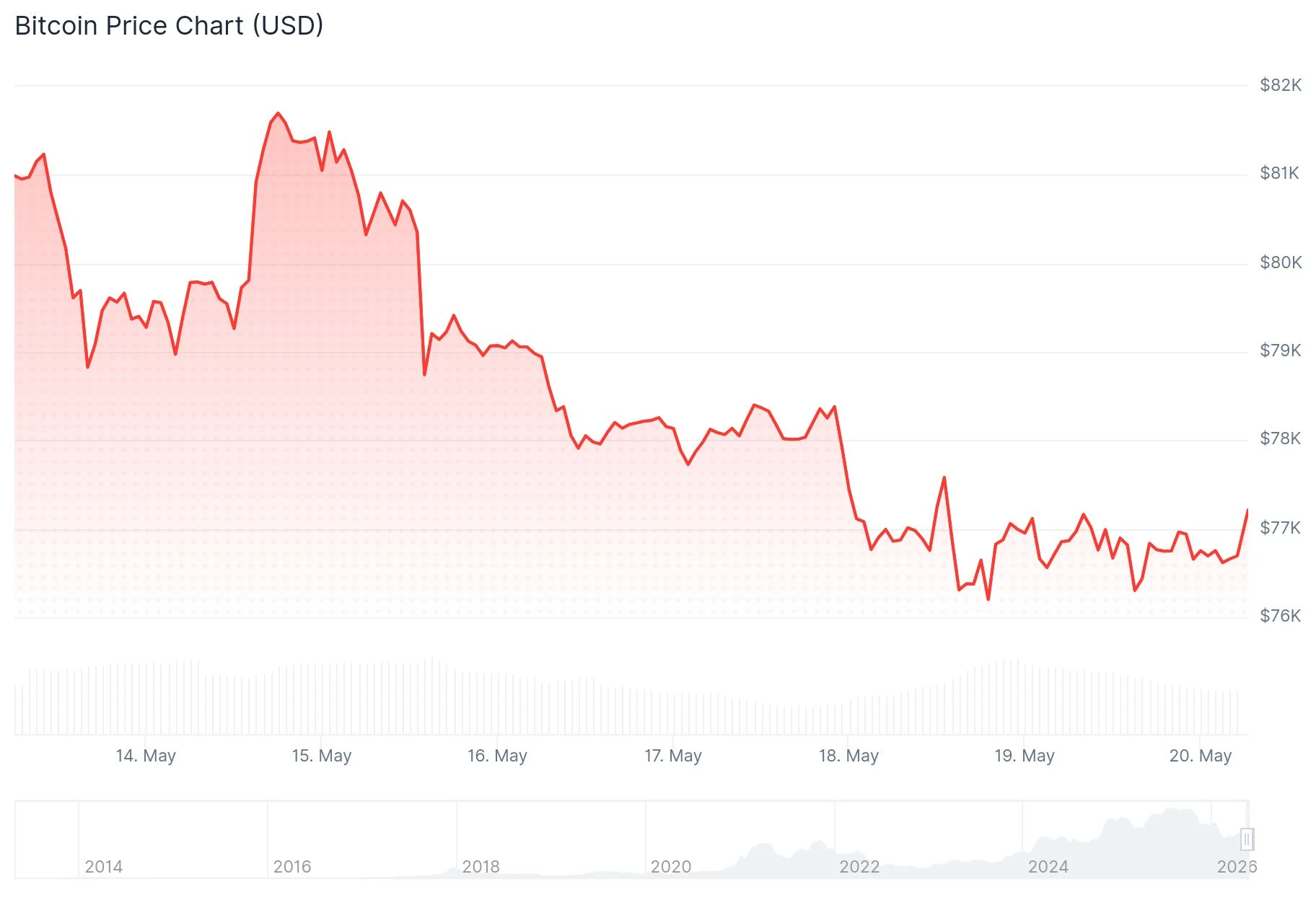
According to data from StrategyTracker, the firm now holds 687,410 BTC, which was acquired at an average price of $75,353 per coin. With Bitcoin currently trading close to $92,500, Strategy’s Bitcoin reserves are still firmly in profit.
BTC’s price action over the past 24 hours (Source: CoinCodex)
Despite this, Strategy’s equity performance has told a different story. Over the past 12 months, the company’s share price has fallen by roughly 52.7%, with shares trading around $173.71 as of mid-January, according to CoinCodex. The decline reflects investor concerns about the firm’s reliance on debt to fund its Bitcoin strategy. Strategy raised capital primarily through the issuance of short-term convertible notes, which allows debt holders to convert their holdings into equity at a later date.
Those concerns are expected to intensify in late 2027 and 2028, when holders of billions of dollars’ worth of convertible notes will gain the option to convert, potentially putting pressure on the company to raise large amounts of capital. While Strategy repeatedly stated that it has sufficient resources to manage these obligations, it has also acknowledged that selling a portion of its Bitcoin holdings could be an option if liquidity becomes constrained.
Source: https://coinpaper.com/13847/canaan-faces-nasdaq-delisting-risk-as-shares-sink